Pragya Bhatt | yogawithpragya

Browsing Category

Travels

Travels

Auroville: Off the Beaten Track

July 17, 2022

After our trip to the Koti Lingeshwara temple, a bunch of us were itching to go exploring again.  We decided to go to Auroville, as  Pondicherry is (frankly) too commercial, and Auroville is still largely unexplored.  And when you’re traveling with a fashion designer, a yoga teacher, a biker and a couple of spirit junkies you’re sure to have an interesting time.

Kalarigram

Kalarigram is perhaps the best kept secret of Auroville.  Established in 2010, it is a centre for imparting traditional Kalaripayattu training.  Kalari = space for training; payattu = practice.  It’s a martial art that originated in Kerala and is over 3000 years old.  Like yoga, Kalari is taught in the guru-shishya parampara and also draws heavily from rituals and myths found in Hinduism.  Along with movement, kalari artists also learn Ayurvedic methods of healing the body.  What drew me to kalaripayattu was the similarity with yogasana.  I enjoy the dynamic movements that seem to tell a story in motion.  Kalarigram conducts regular online and offline kalari classes, and also offers Ayurveda, Yoga and meditation classes and workshops.
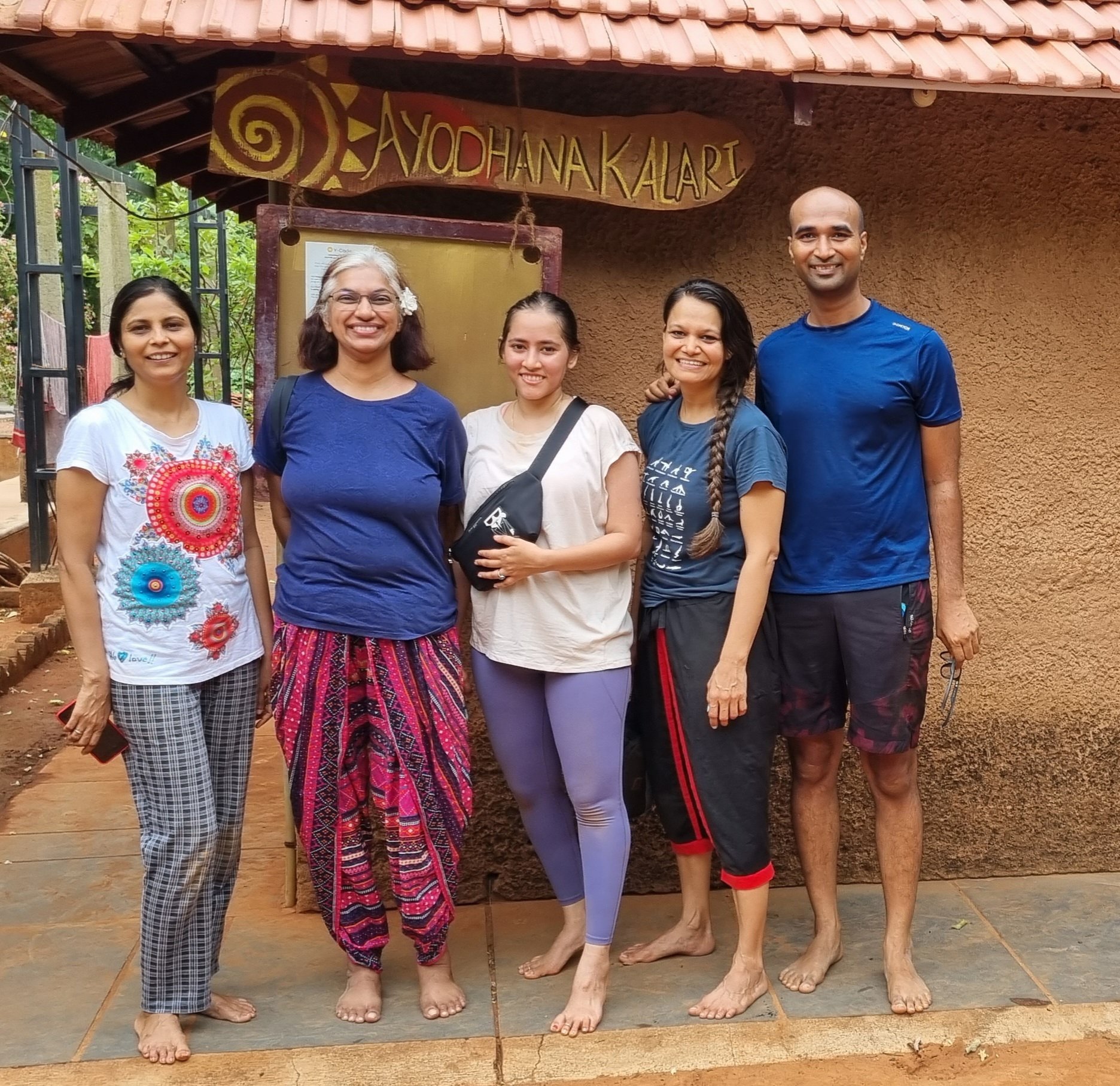
Beaming after an invigorating kalari session.

The institute allows people to come and watch the classes.  A class was already in session when we arrived, and we sat watching the expert students practicing in synchrony on the damp red earth.  Once the class was over, we also joined them.  It was a treat for me to practice in the traditional style; and for the rest of us, it was the best possible intro to kalari.
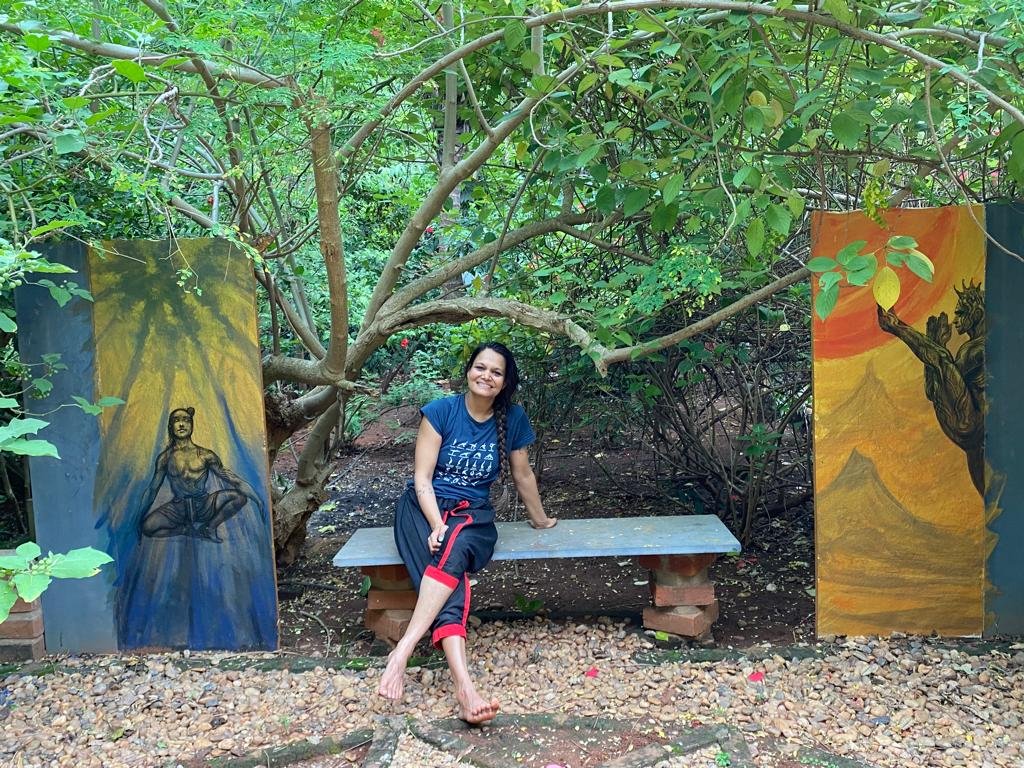
 

Very happy for the experience and looking forward to going back.

Mason & Co.

Mason & Co. is a chocolate brand founded by two chocolate lovers settled in Auroville.  They work directly with framers in South India to source and harvest the best quality cacao.  Their focus is on education and giving back to society, and they employ an all-women team to handcraft their delicious products.  I discovered this brand on my first trip to Auroville a couple of years ago.  Since then they’ve expanded their range of chocolates to include several unique flavors.  You can also find this brand on Amazon and Flipkart, and I highly recommended it!

Reflexology

On the way back from Kalarigram, Sowmya took us to visit a talented sidhar she had met on her previous visit.  He practices in a small tin hut next to a nondescript road in Auroville.  All of us were interested in his therapy and we arranged for him to visit our guest house.  He uses reflexology as a diagnostic tool, and then prescribes traditional herbal medicine accordingly.
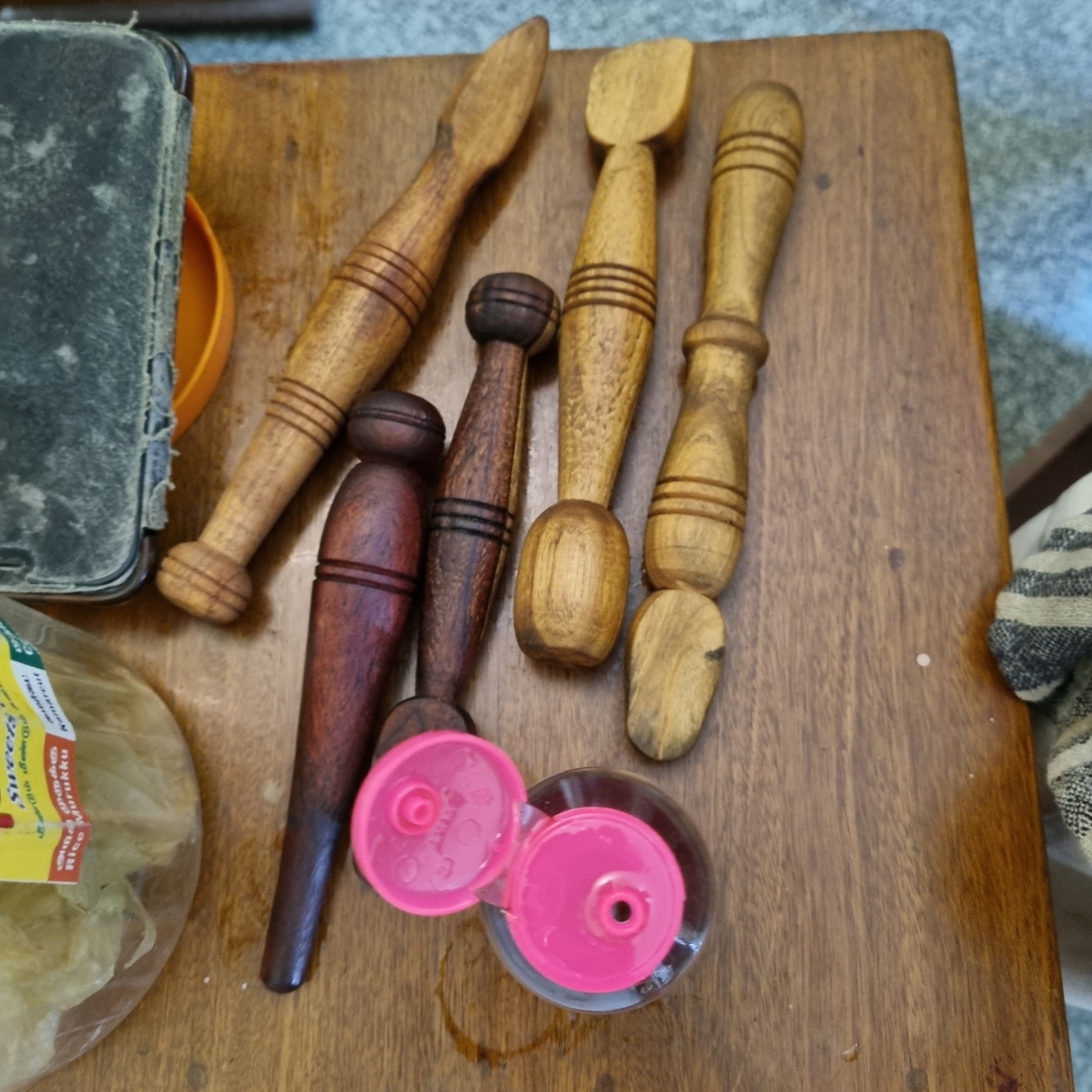
Tools used to activate various points on the foot..  This reflexology massage can be excruciatingly painful, and he uses several wooden tools and oils.

Intrigued by his methodology, I asked him to tell us a little more about his healing practice.  That’s when he told us that this therapy was part of Siddha therapy.  I had studied about Siddha medicine during my Master’s, and was quite excited to meet a true-blue Siddhar in the flesh.

The Siddha system is an ancient system of healing that originated in Tamil Nadu.  It was outlawed by the Indian government for some time, but gained legitimacy again under AYUSH (Ayurveda, Yoga, Unani, Siddha, Homeopathy) – an initiative to optimally develop and propagate ancient system of Indian medicine.  Siddha healers believe that disease is caused by an imbalance in the three humours of the body – and a combination of diet, lifestyle, herbs and massage can bring equilibrium back into the body.  I would be remiss if i didn’t mention that he actually diagnosed each of the five of us accurately, which only strengthened our belief in his abilities.

He later gave me his business card!  His name is Senthil, and he speaks very limited English.  If you’re interested in alternative medicine, or would like to experience his massage and healing skills you can contact him on 8526399894.
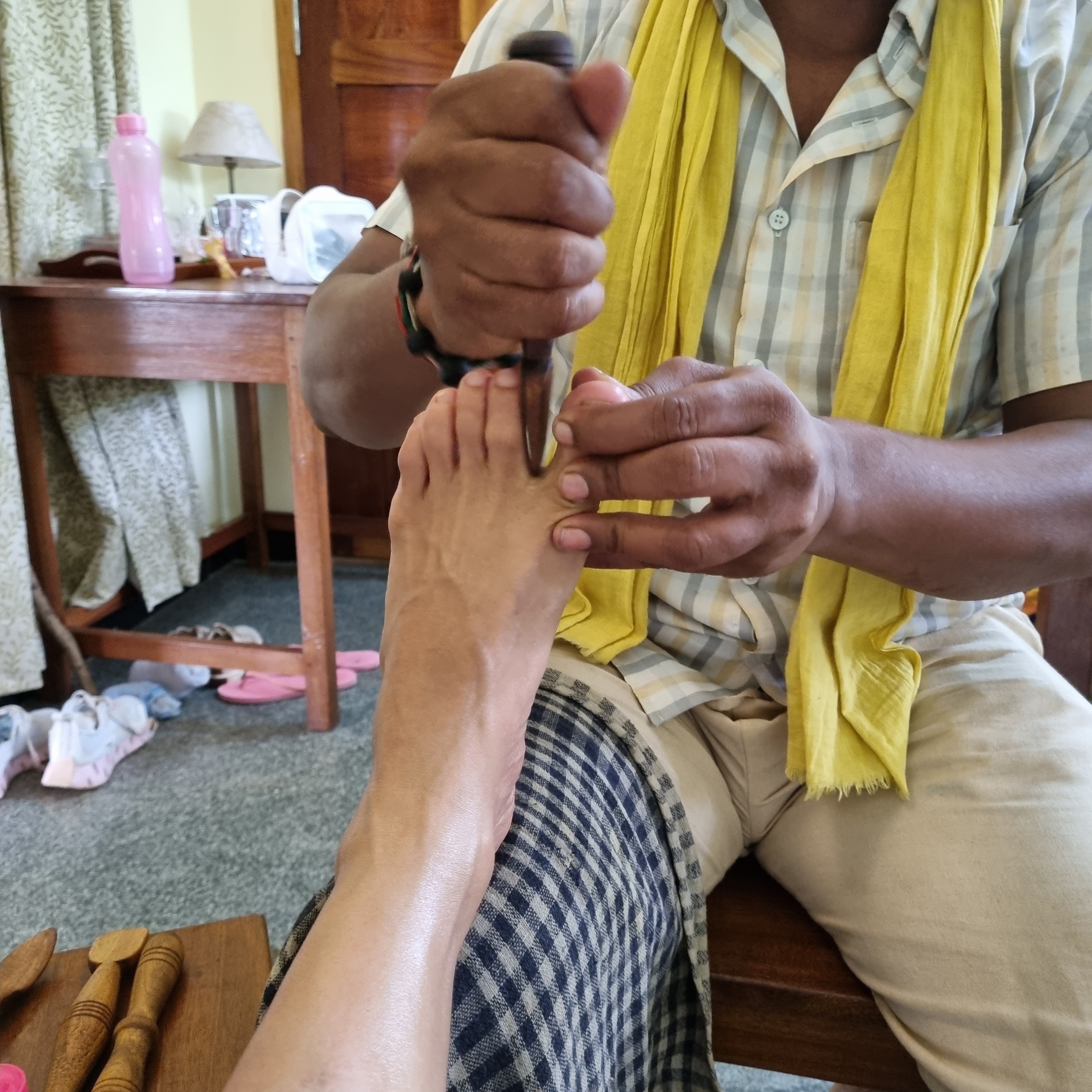
Painful – but I got it done twice!

The Bookshop & Paper Making Factory at the Aurobindo Ashram

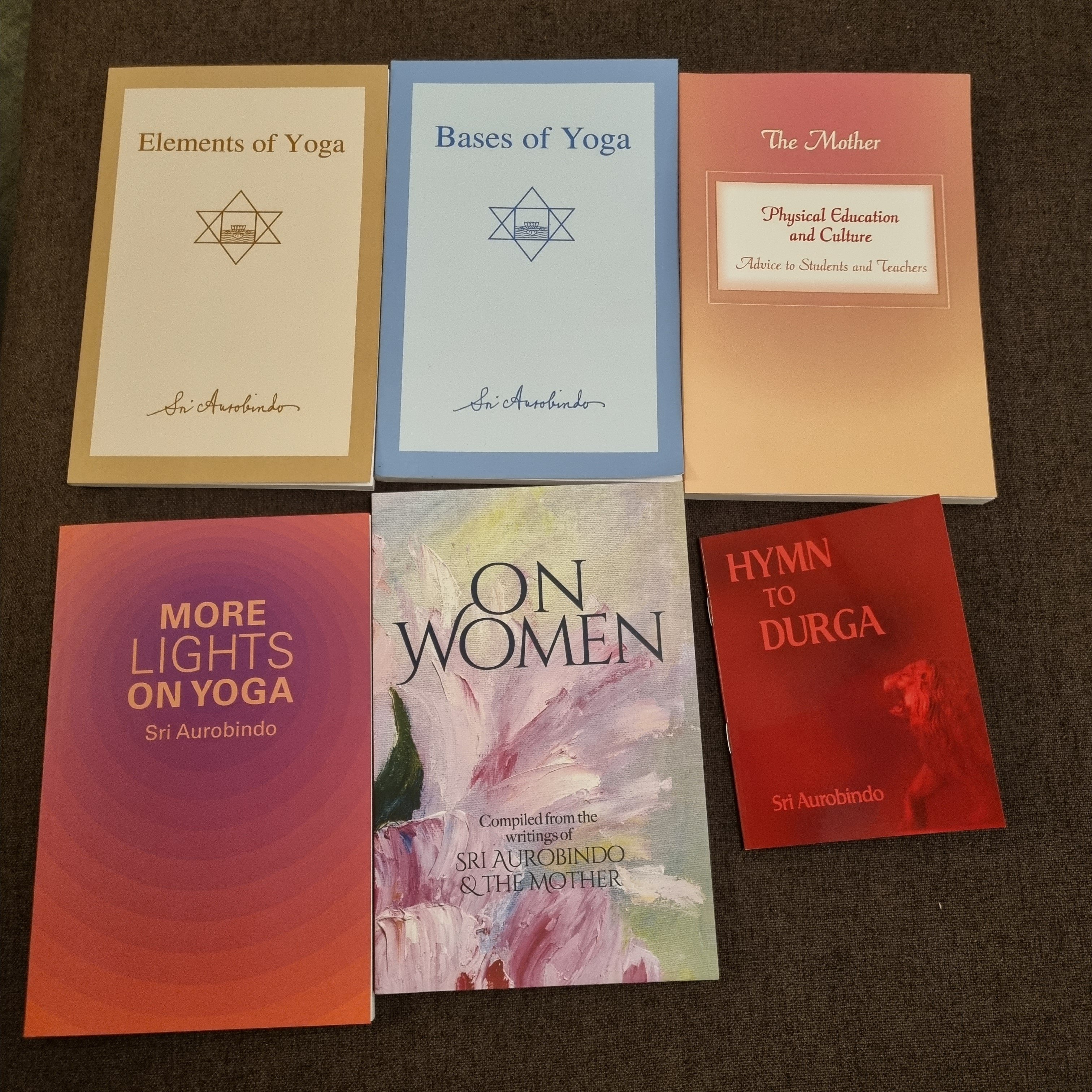
During my last visit to the Sri Aurobindo Ashram, I breezed through the entire place, eager to get to the paper making factory down the corner.  This time however, I wanted to take a closer look at the publications.  On my recent Sringeri trip I’d had the pleasure of making the acquaintance of a Kannada translator closely associated with the publishing wing of the ashram.  To my delight, there were several books on yoga and physical culture which piqued my interest.

The Paper Making Factory is closed on account of Covid, but the gift shop was open and I picked up several bookmarks, notebooks and even a visiting card holder!
 

Blessings from Lakshmi the Temple Elephant

While walking through the French Colony in Pondicherry, we were lucky to cross the Arulmigu Manakula Vinayagar Temple when Lakshmi, the temple elephant, was on her evening walk.  The Vinayagar Temple is a Ganesha temple and there are several stories about its legend and power.  Getting blessed by Lakshmi is considered super auspicious – it is believed that her blessings will grant you your innermost wishes and remove any obstacles on your path.
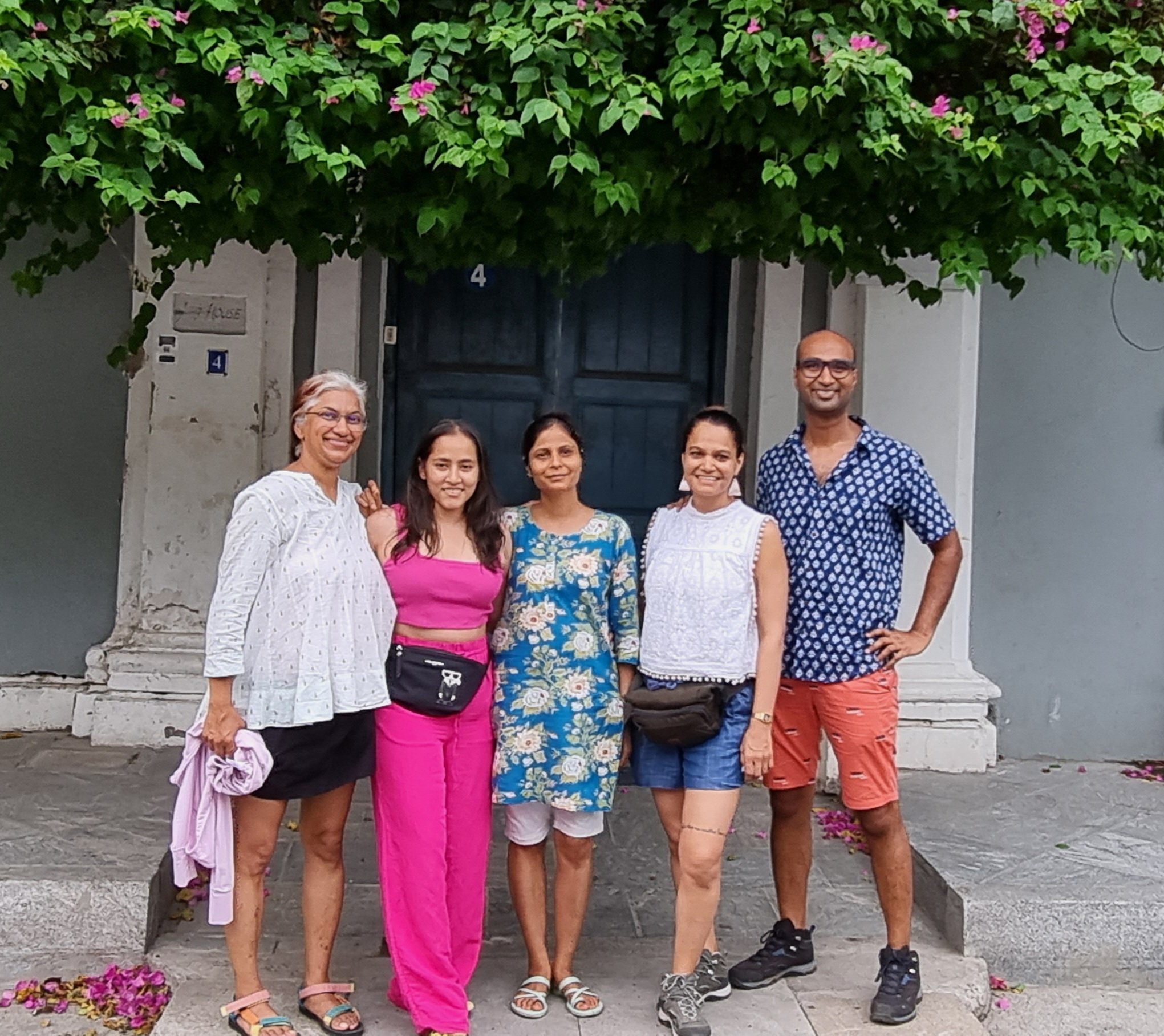
In the lanes of the French Colony, happy after receiving all the blessings possible from Lakshmi.


After this trip I realise that the best trips are with the most unlikely people.  After all – Sowmya took us to Senthil and Lakshmi and Priti took us to the Hidesign outlet.  It was Ritu who would calm us down when we were cranky and hungry and Animesh who suggested relaxing at the rooftop restaurant (Bay of Buddha) post a sunset walk on the Promenade.  After all, don’t even the mundane places and experiences become special when you’re in the company of someone special?
Travels Temple Tours

The Temple of One Crore (10 Million!!!) Lingas

July 5, 2022

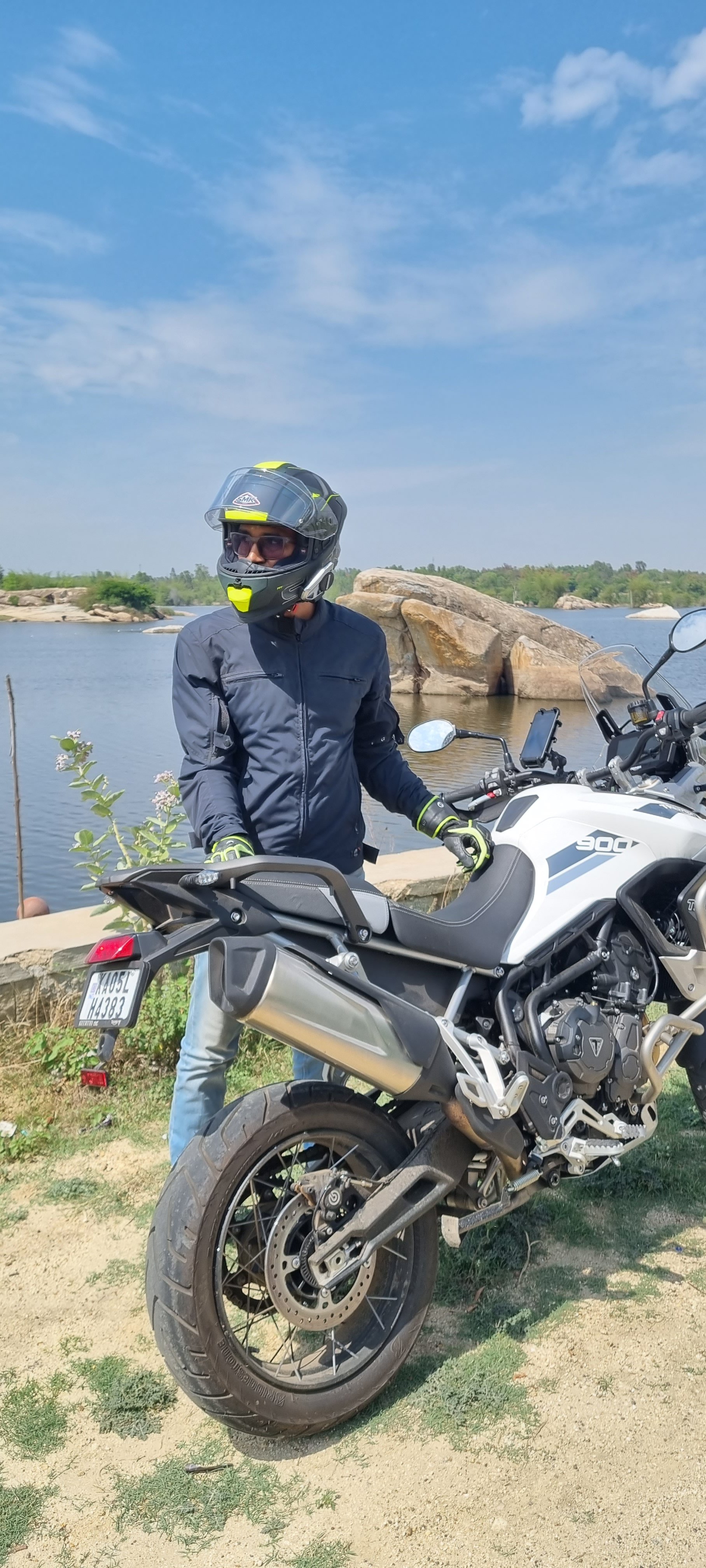
A picture that perfectly encapsulates our biking trips – open skies, lots of nature and jazzy outfits.

After becoming owners of a majestic Triumph Tiger 900 cc recently, Animesh has been on the lookout for weekend trips from Bangalore.  Every once in a while, I also accompany him.  I’m not a fan of speed or big bikes – but I love me a short trip .  So when my friend Sowmya added us to a WhatsApp group to plan a weekend trip, we immediately jumped at the chance. We packed a small backpack for our day trip to the Kotilingeshwara Temple.


The Kotilingeshwara Temple

The temple is in a small town called Kammasandra in the Kolar district of Karnataka.  Kolar is about 2.5 hours from Bangalore and the route is scenic and beautiful.  Riding a bike certainly has an element of adventure, and literally gives you a different view than in a car.

Animesh and I had never heard of the temple, but a quick Google search showed us that the temple is the site of the largest shivalinga in Asia.  The linga measures about 108 ft and there’s a huge Nandi bull installed in front of it.  A 108 ft shivalinga is hard to imagine…until you’re about a kilometre away from the site and can see it looming above everything else in the vicinity.  As we approached the temple, it was clear that they were used to tourists.  They ushered us in to the ticket counter – where we purchased tickets for Rs. 20/- each.


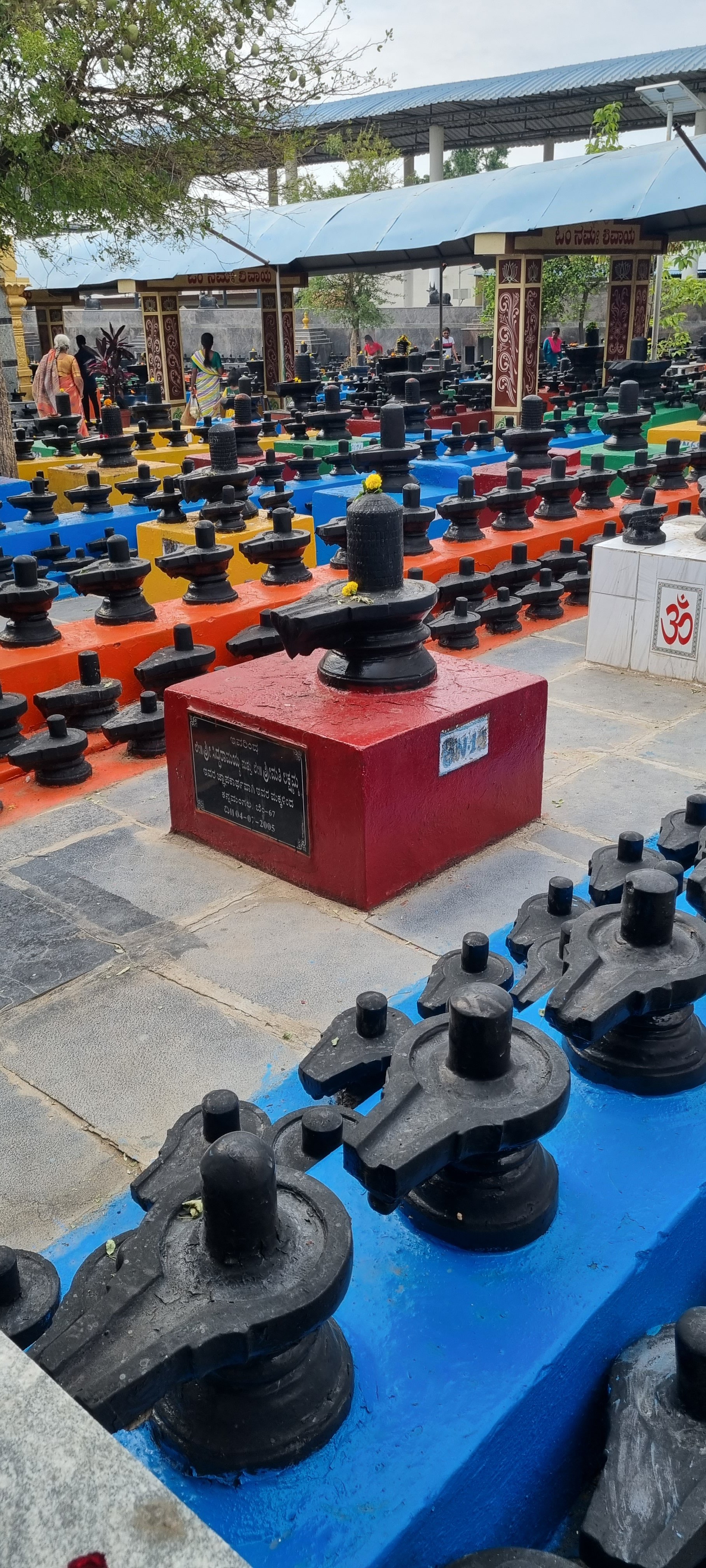
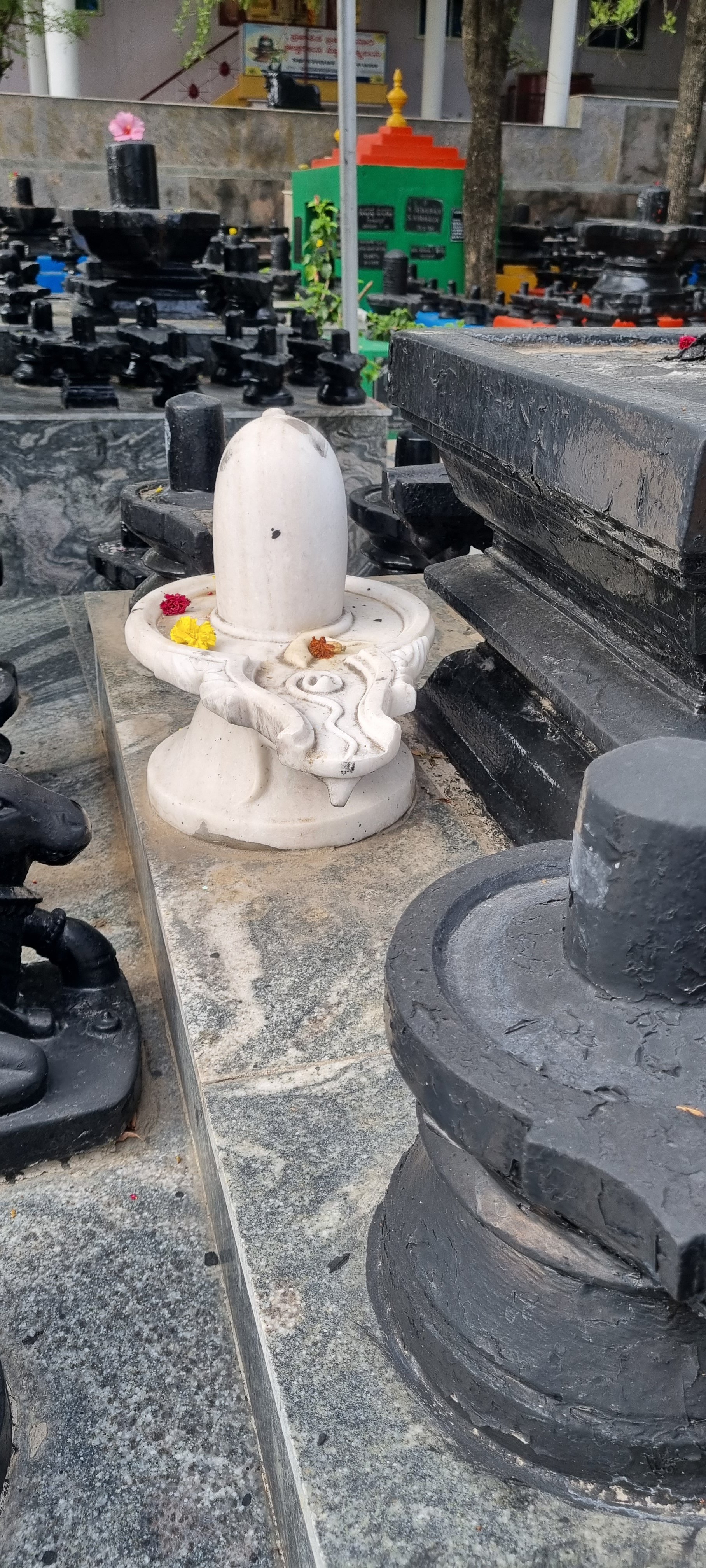
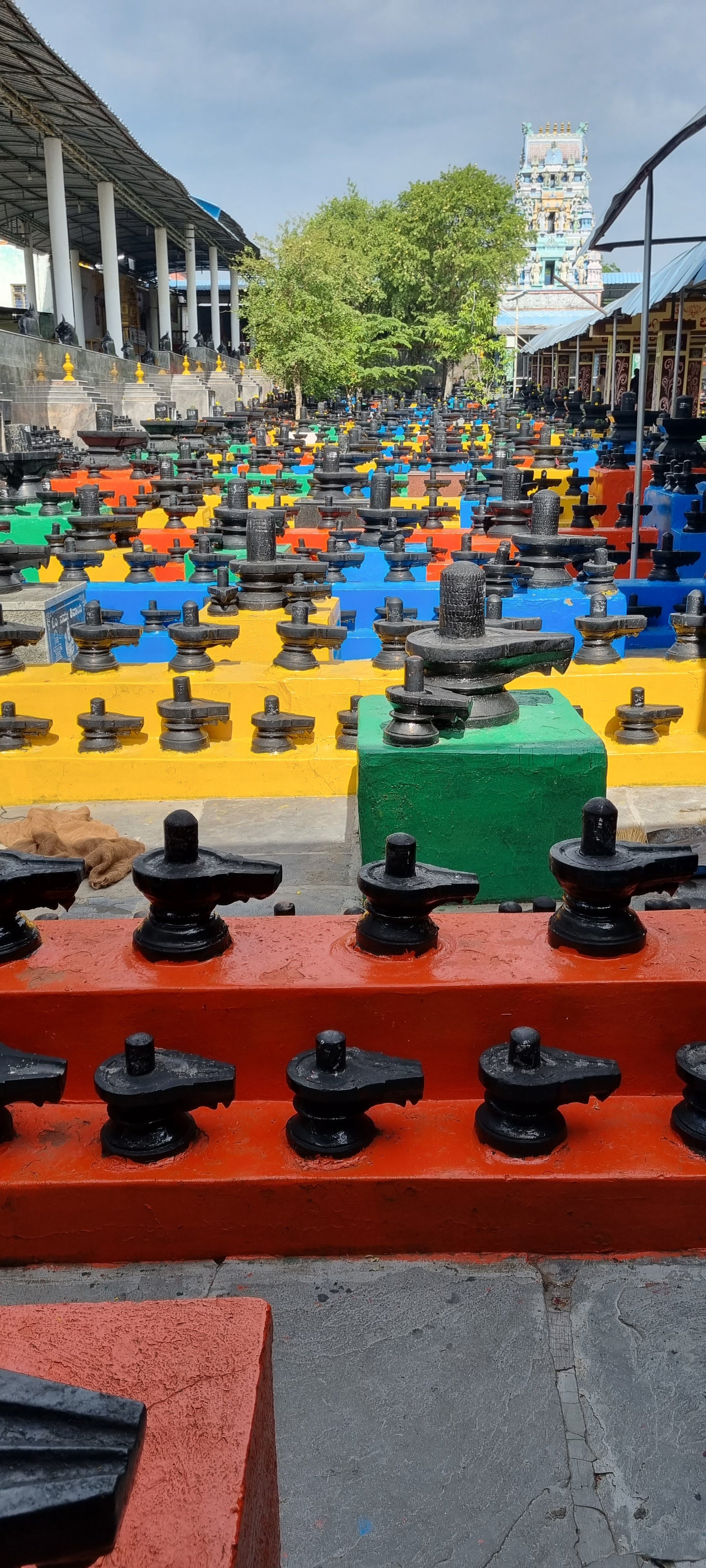
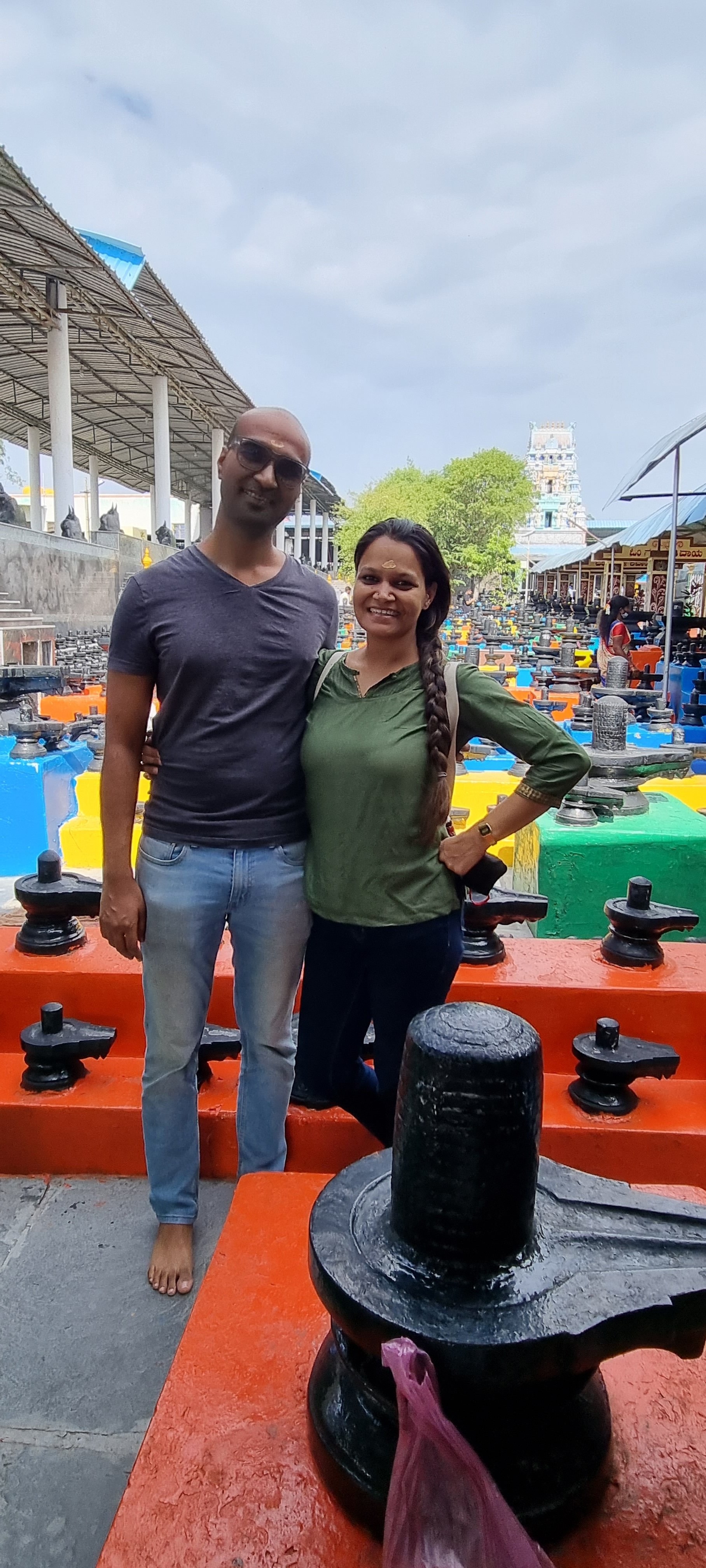
The temple is also believed to be the site of the most number of shivalingas in the world. ‘Koti’ is the Kannada word for 1 crore.  1 crore = 10 million.  We didn’t know this when we visited the temple.  We thought the temple contained 10,000 shivalingas.  But as we walked around and saw that there were shivalingas as far as the eyes could see, we realised that there must be more.  Animesh did a quick calculation and determined that there were at least 50,000 lingas.  Now we know that there were 10 million of them, in all sizes and one was even white.


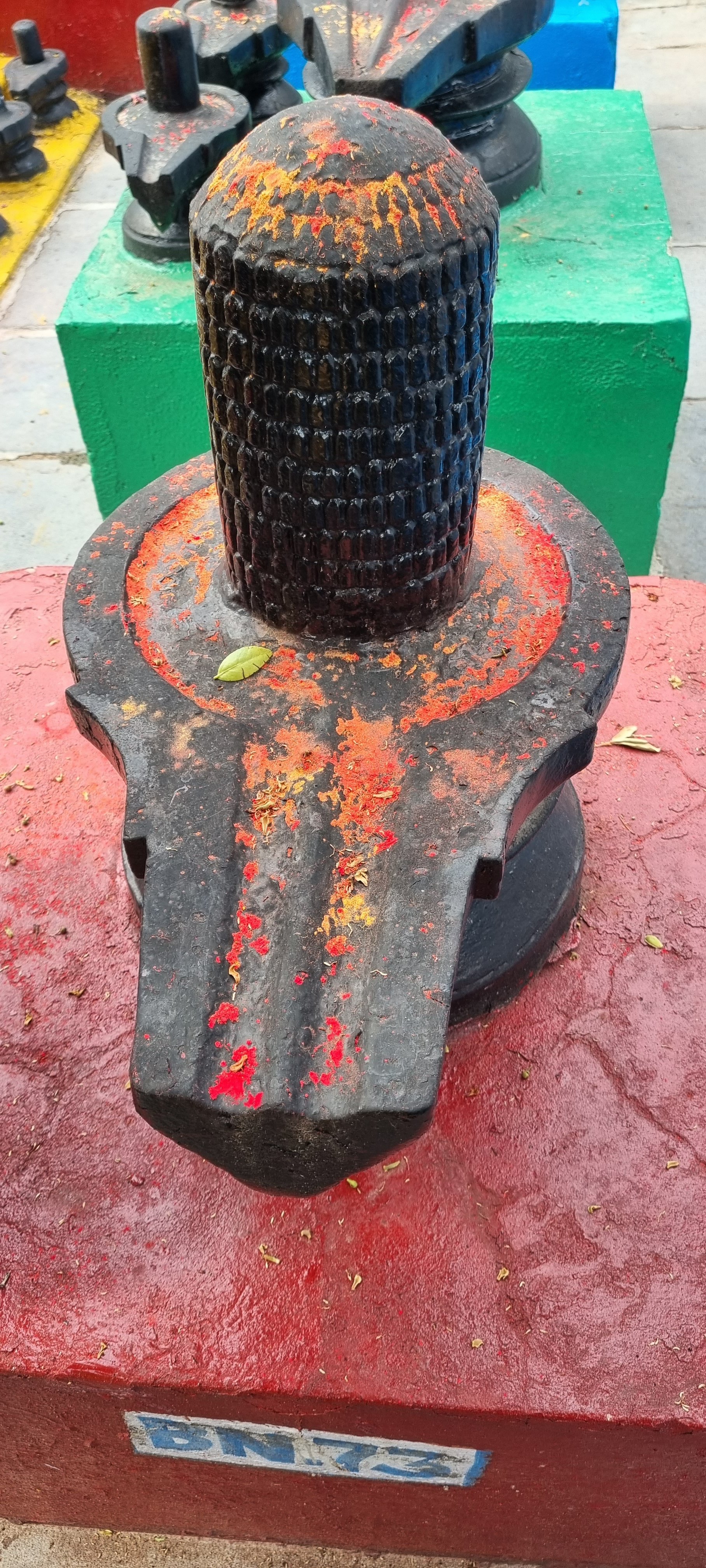
As usual, Sowmya and I tried to find information about the temple from any priest who would deign to talk to us.  One of them told us that the number of lingams grows every day as people make votive offerings to the temple in the form of shivalingas.  The cost of getting a shivalinga installed is Rs. 6000/-.  As we walked around we saw that many of the lingas were covered with haldi and kumkum, which means many people return to pay obeisance to the shivalingas.

The temple itself is quite modern in its outlook.  There are neat lines to get into the main building, and the priest will ask you your name, your family name and names of anyone you want to pray for; and proceed to chant a few shlokas for your wellbeing and for your wishes to come true.  For Rs. 100/- you can do a special puja for Goddess Annapurna as well.


Something riveting about a white Shivalinga in a sea of black ones.


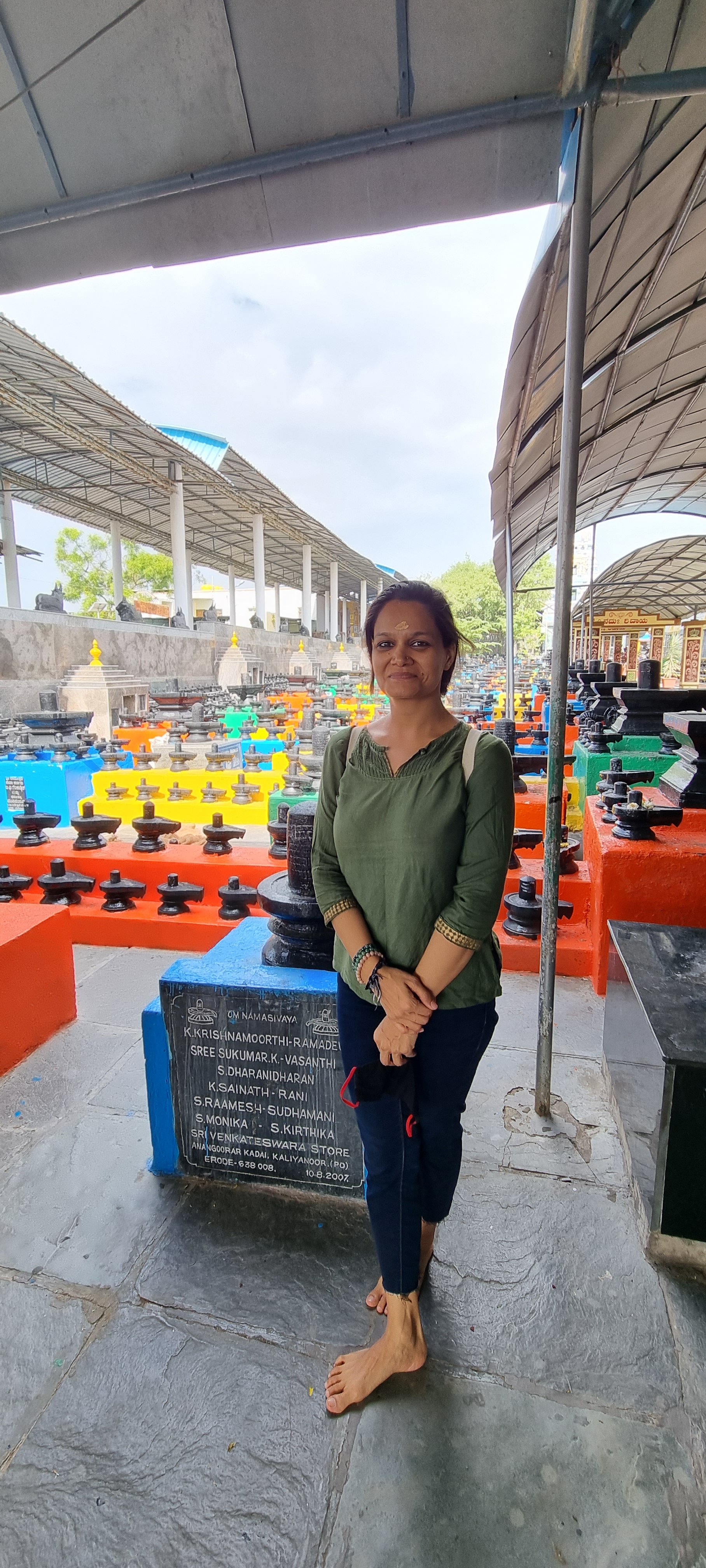
Shivalingas as far as the eye can see.


You’ll find shivalingas of all sizes in the Kotilingeshwara temple.


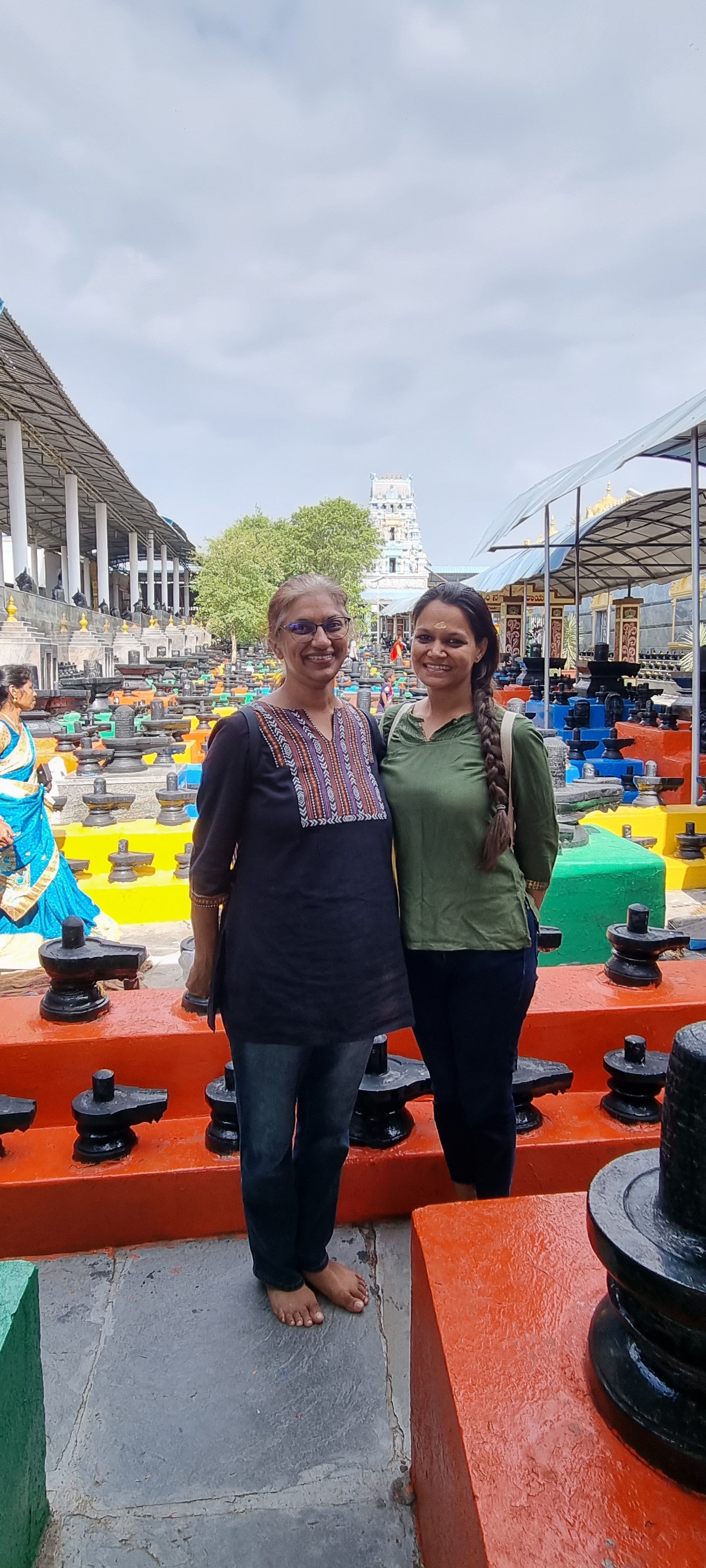
Happy Tourists


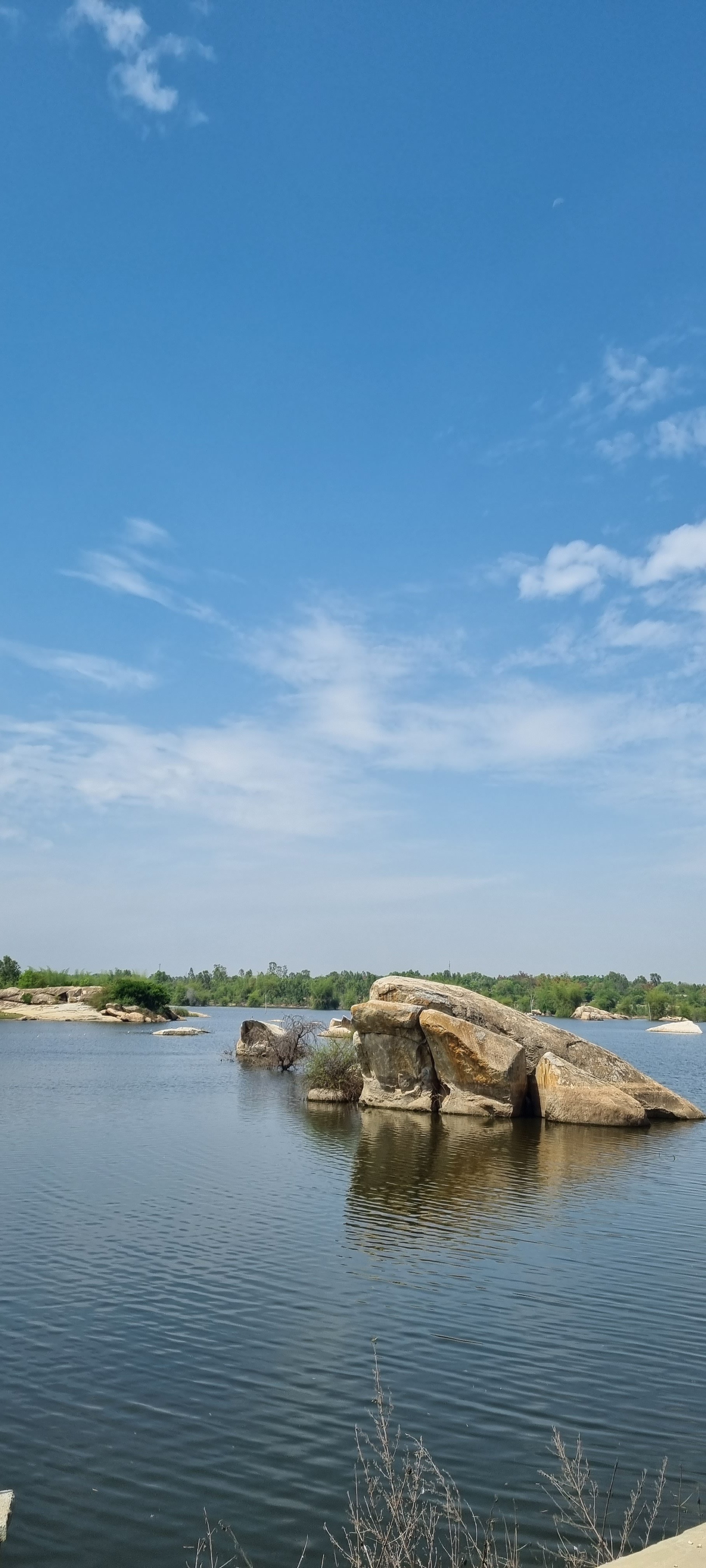
The beautiful scenery you encounter on road trips in Karnataka.


Here’s another blog you might enjoy, from my trip to the ancient Perur Pateeshwara temple in Coimbatore.

Travels

A Temple That Keeps Time – The Vidyashankara Temple of Sringeri

June 27, 2022

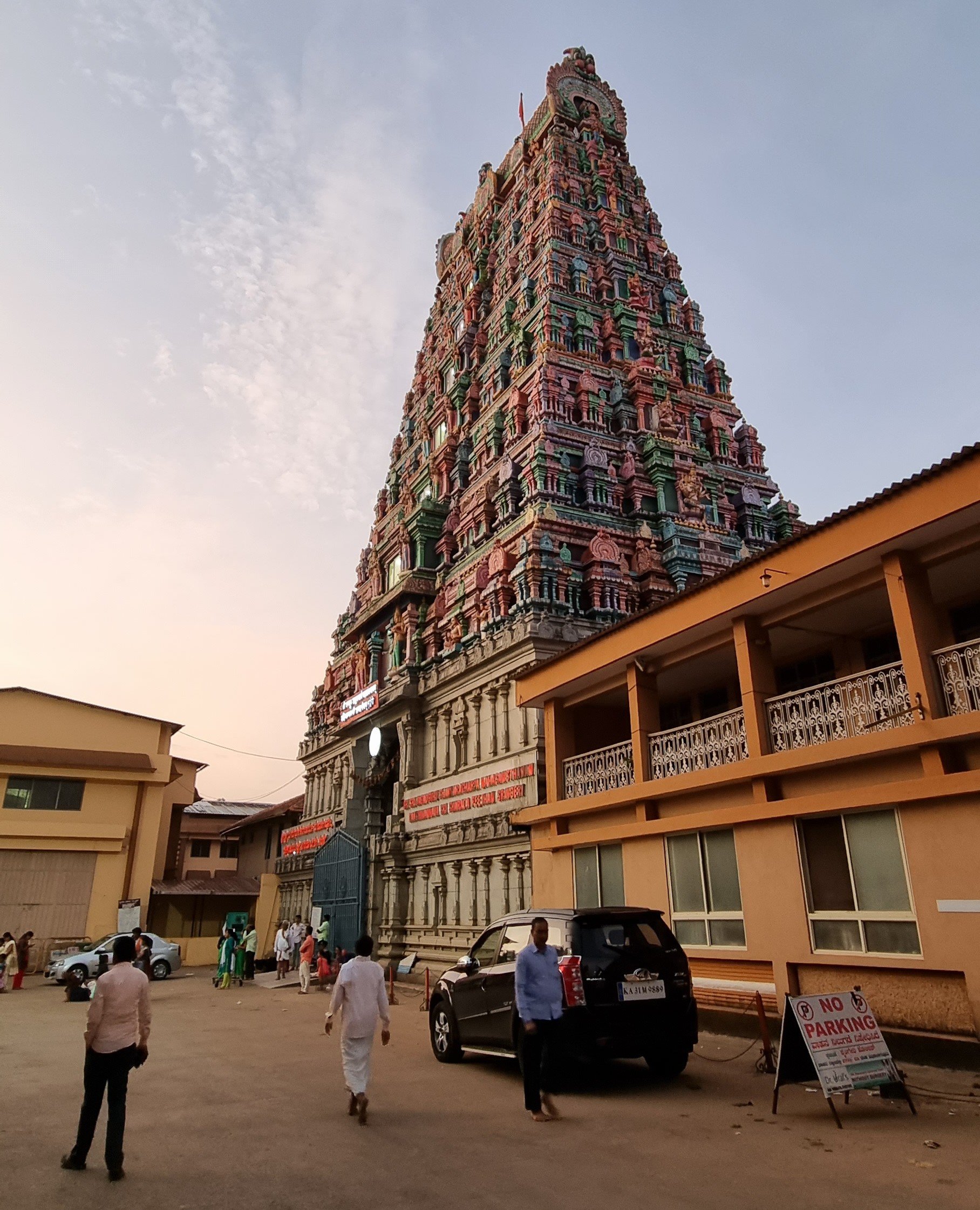
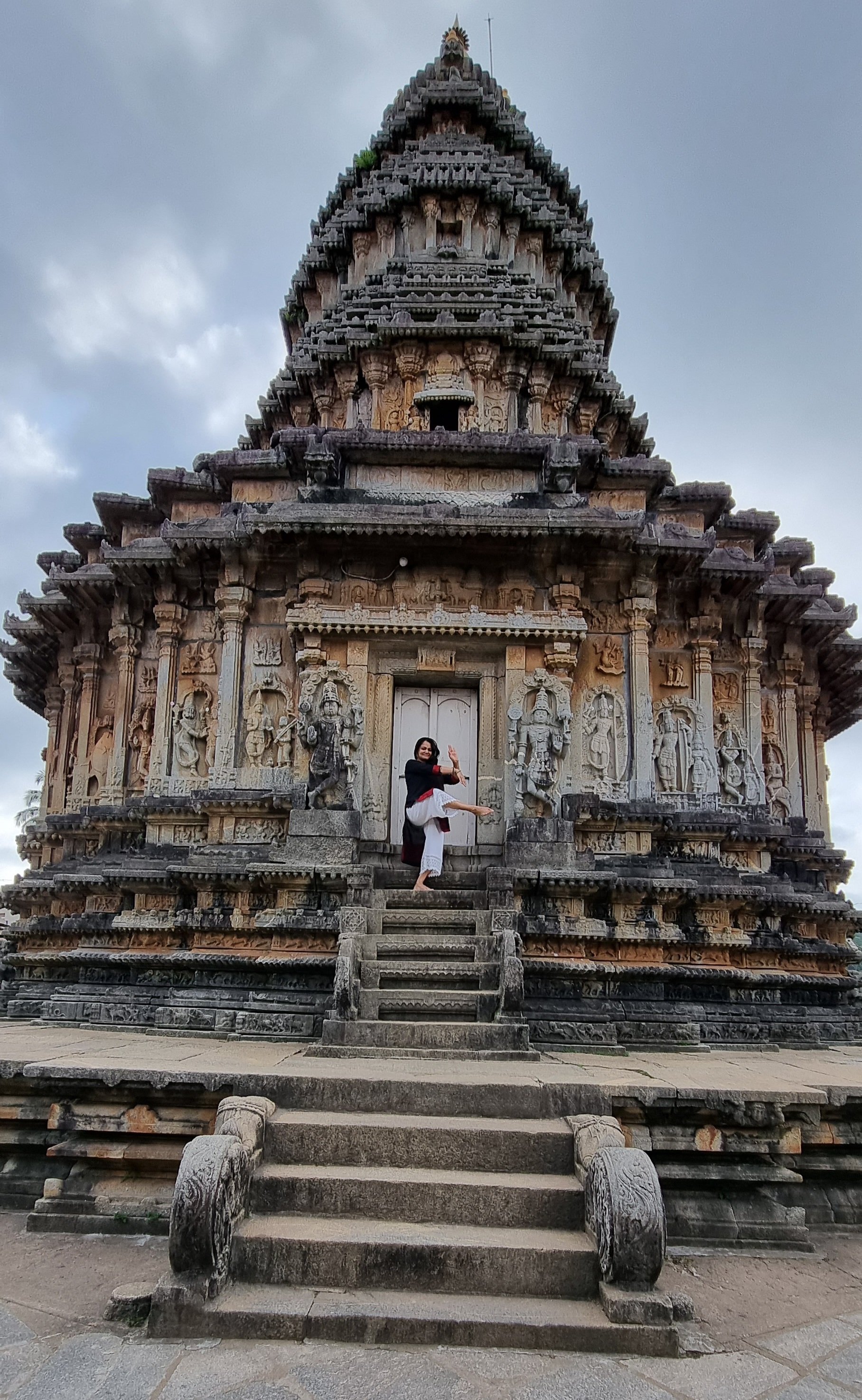
[The beautiful gopuram early in the morning. Gopura means the light of knowledge, according to Mr. Sharma.]

Yoga yoga everywhere!


A couple of weeks ago I had the good luck and privilege of being a part of a group of scholars for a trip to the Vidyashankar temple in Sringeri.  The group consisted of various intellectuals involved in the study of the Indic culture.  We had writers, scholars, professors, dancers etc amongst us.  We were to be led by Mr. Viswa N Sharma, author of ‘Sringeri Vidyasankara Temple Astronomical Theater’, a book where he has chronicled his decade long study of the temple.  Of particular interest to us were the pillars of the zodiac found in the mandapam of the temple.

Lately I’ve started to appreciate the art, architecture and history enshrined in the temples of India and elsewhere.  As my yoga studies deepen, I have started to appreciate the interconnectedness between spirituality, worship, history, yoga, dance and Life.  Sometimes I catch myself wondering if this is perhaps an indication of a natural deepening of my interest in yoga – after all, from the gross we move to the subtle – from our asana practice on the mat we move towards the yoga found in our worlds.

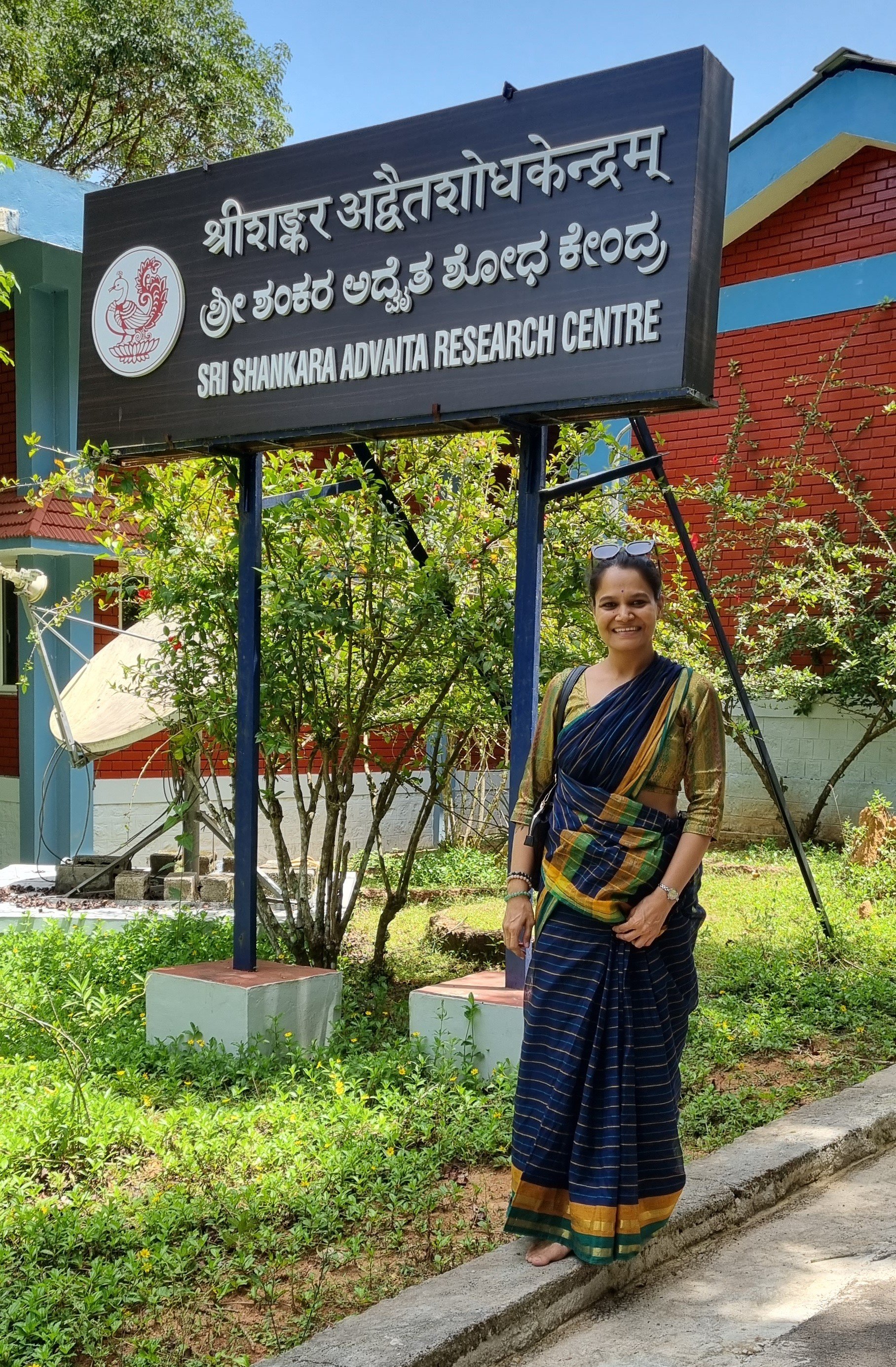
The research center was inaugurated in the year 2000 and has over 10,000 books. It also has a vast collection of about 3000 manuscripts, and there are ongoing efforts to preserve and translate these.

The Ancient Town of Sringeri

Sringeri is a quaint temple town nestled in the Western Ghats.  Its location ensures a moderate temperature year round.  This is a boon to devotees coming to visit the numerous ancient and splendid temples in this place.  A boon too for scholars of Advaita Vedanta doing research at the Sri Shankara Advaita Research Center.  The center is off limits to visitors, but we were lucky (and connected).  We spent time in their library, looking at rare manuscripts and speaking to the scholars.

This town is also popular on the pilgrim route because Adi Shankaracharya chose to establish the first of his four mathas in this location.  Legend has it that he meditated across from the site of the Vidyashankara temple.  One day, as his meditations ended, he saw a frog giving birth and a cobra using its hood to protect it from the sun. He sensed something holy and peaceful about the land and decided to make it the site of the temple.

The temple promotes learning, knowledge, debate and supports study and scholarly pursuits.  We were granted an audience with the current Shankaracharya, my first experience of this kind.  The Shankaracharya exudes an aura of learning, peace and quietude that is relatable.  The faith and belief here is not blind, but based on reasoning and study.  When the temple learned that we were a group of scholars, they felicitated us with books, prasadam and saris.  There are many interesting books in the bookstore – I’d highly recommend a visit if you’re at the temple.

The Sun Temple at Sringeri

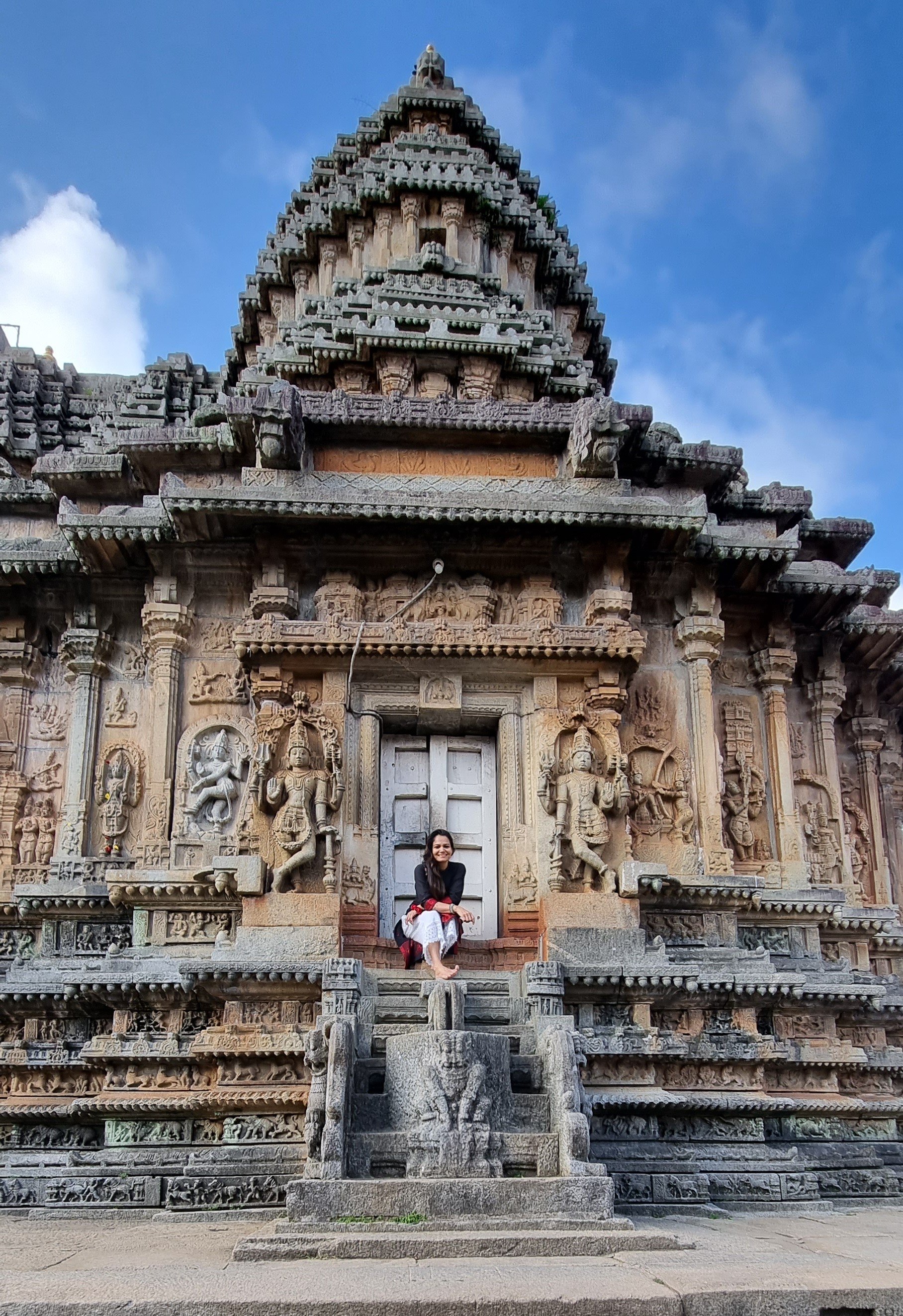
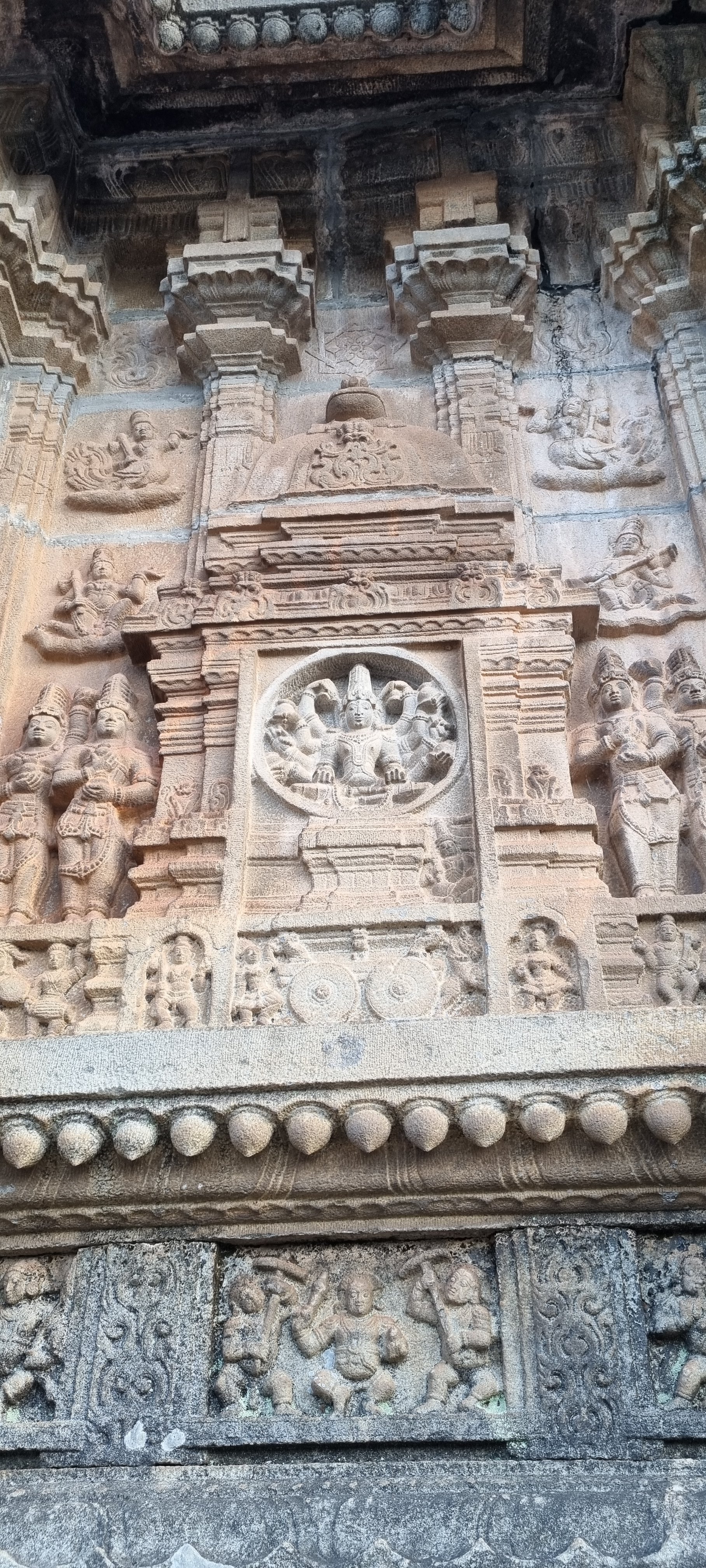
The Vidyashankara Temple is a 14th century temple.  It represents an era when Indian temples were also used to keep time.  This temple is unique because the navaranga (the hall inside a temple sometimes used as a dance platform or a stage) contains 12 pillars dedicated to the signs of the zodiac.  As we circumambulated the temple Mr. Sharma told us this represents breaking free of our entanglements with the world.  We walk barefoot in temples and other places of worship to allow the sacred energy  to permeate our bodies.  He also told us the structure of the temple represents our movement from the gross to the subtle to reach moksha.  The act of going to a temple is symbolic of our journey from this realm to the next.

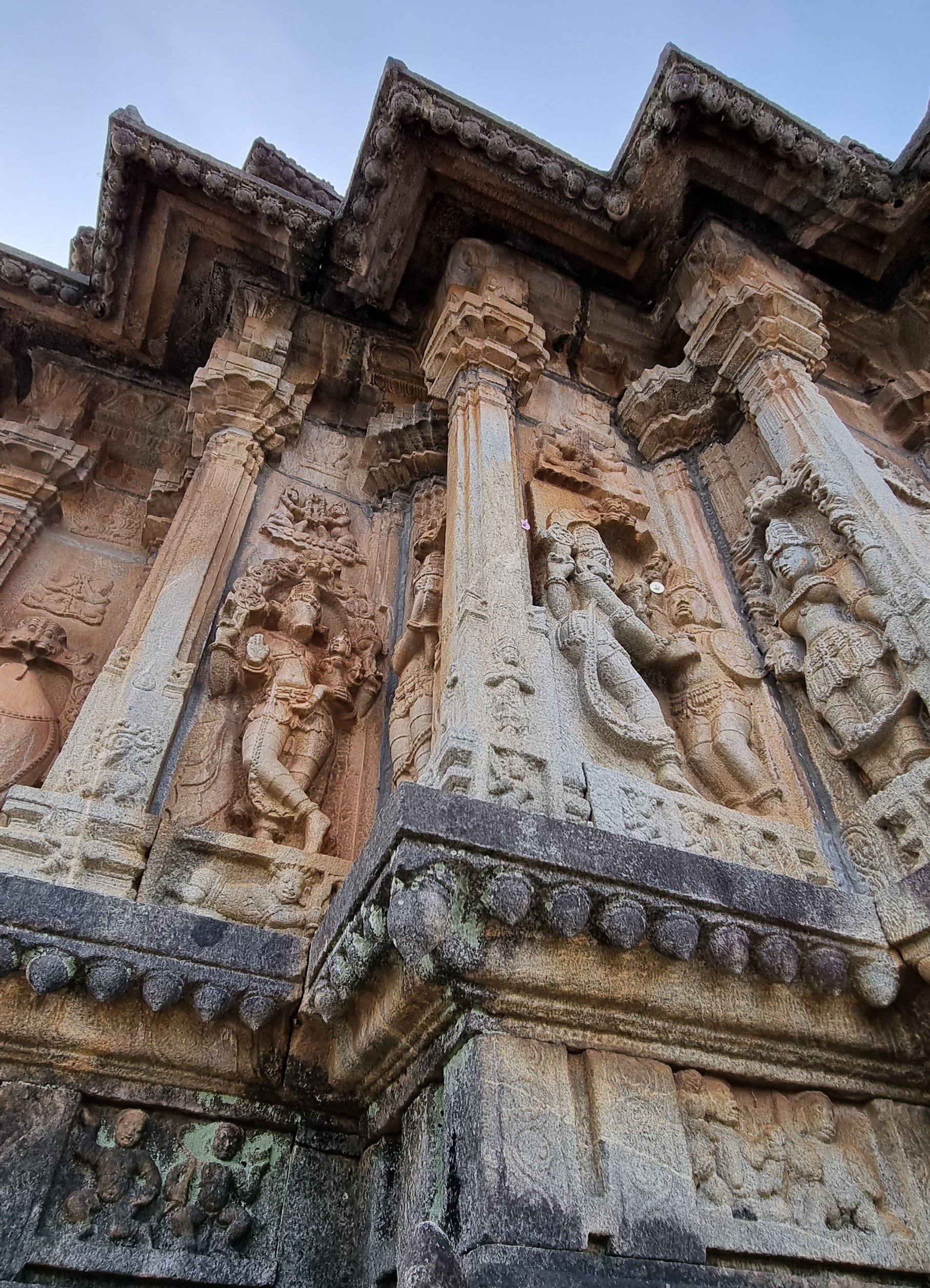
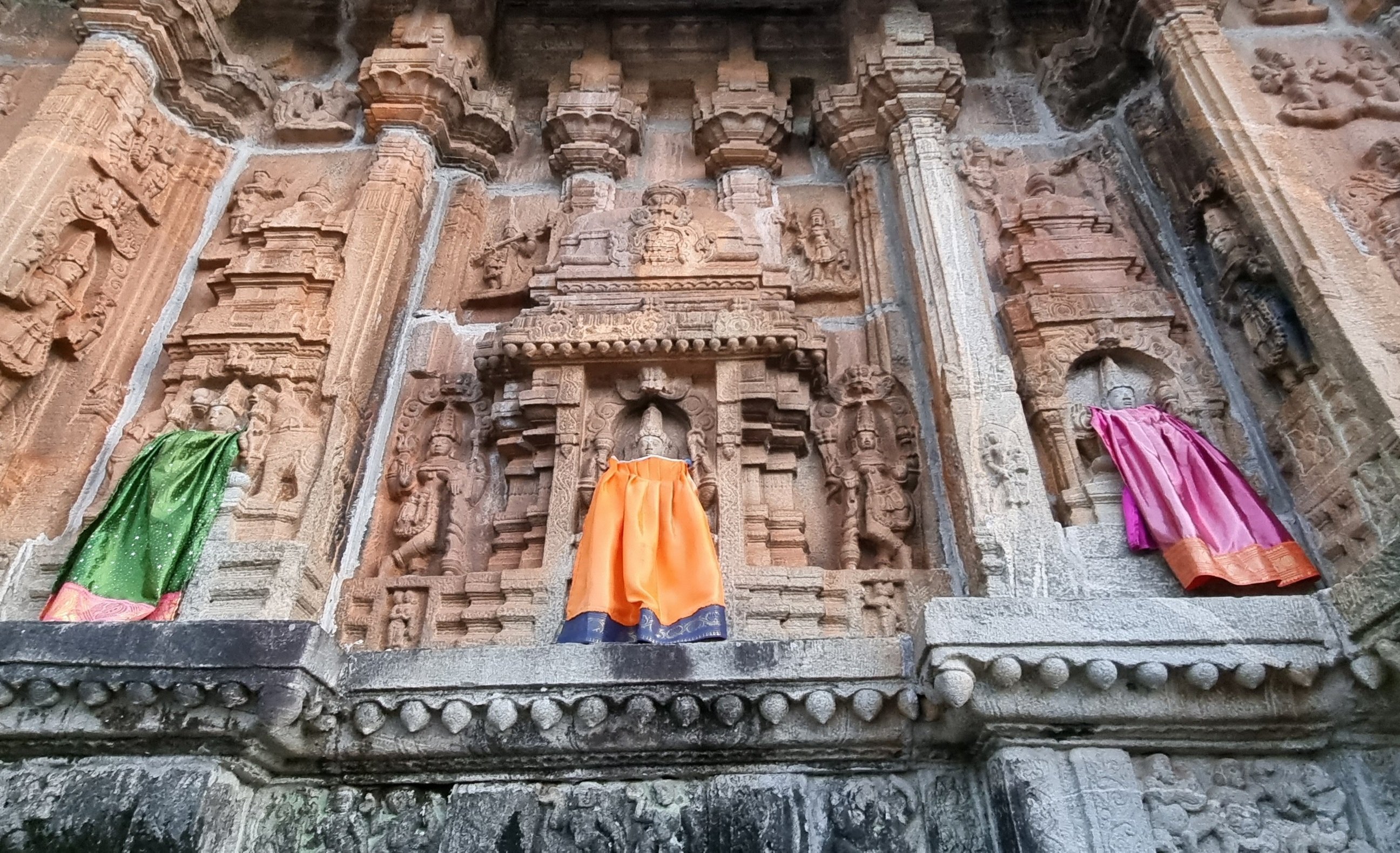
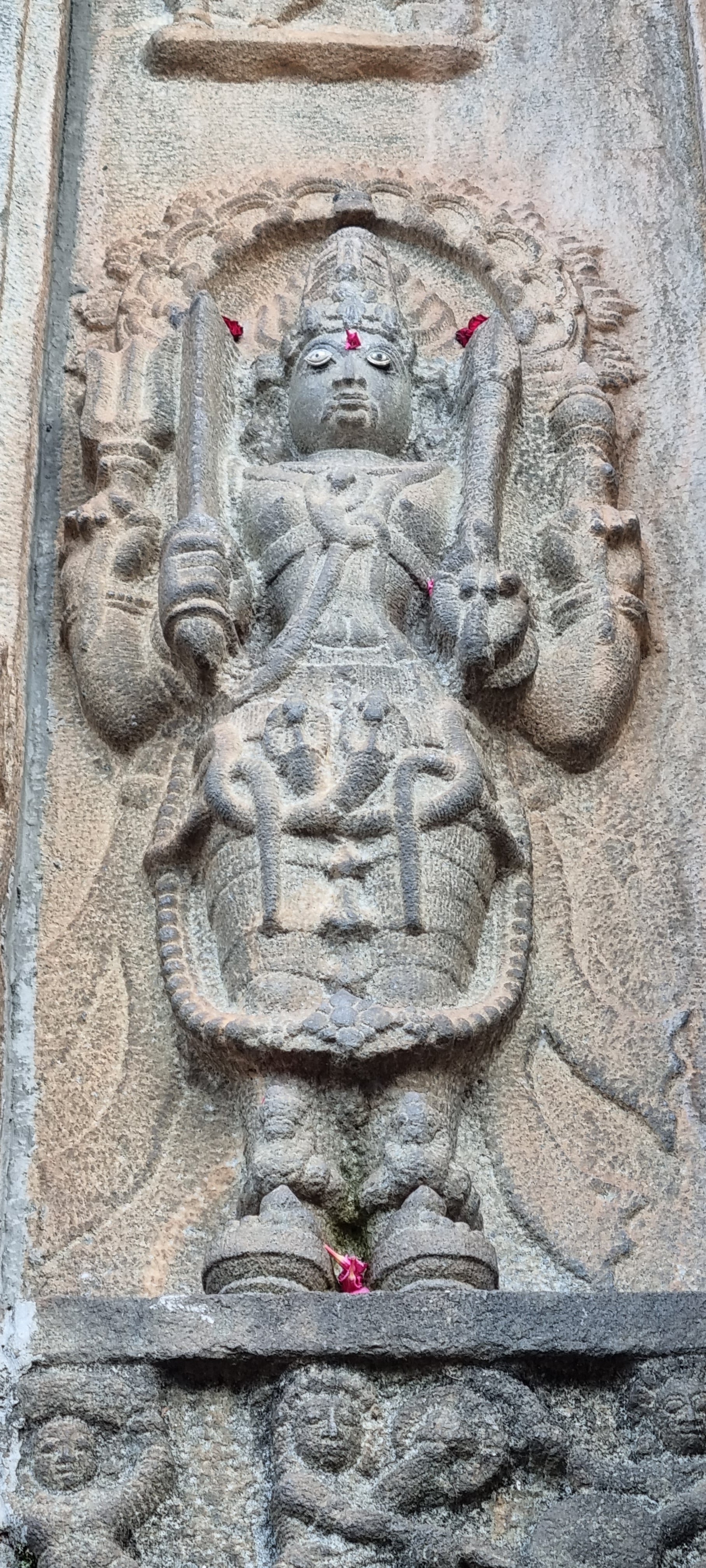
The intricate carvings on the temple walls. We spent substantial time studying the workmanship of these carvings.


The divine feminine – worshipped here and in all temples. This is on the outer walls of the temple.


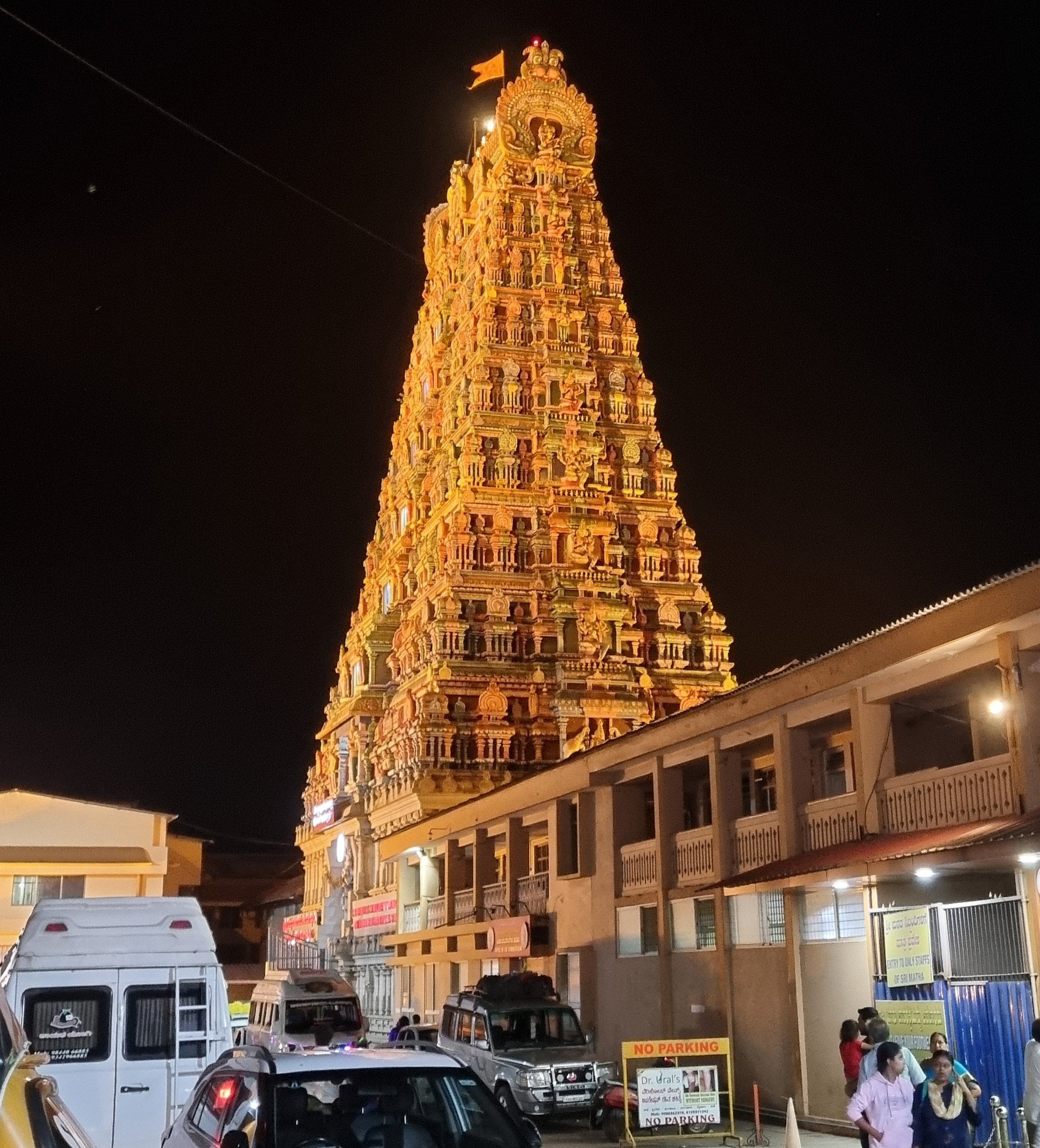
The best thing about staying in the temple complex was getting to see it all lit up in the night.


The Yoga Connection

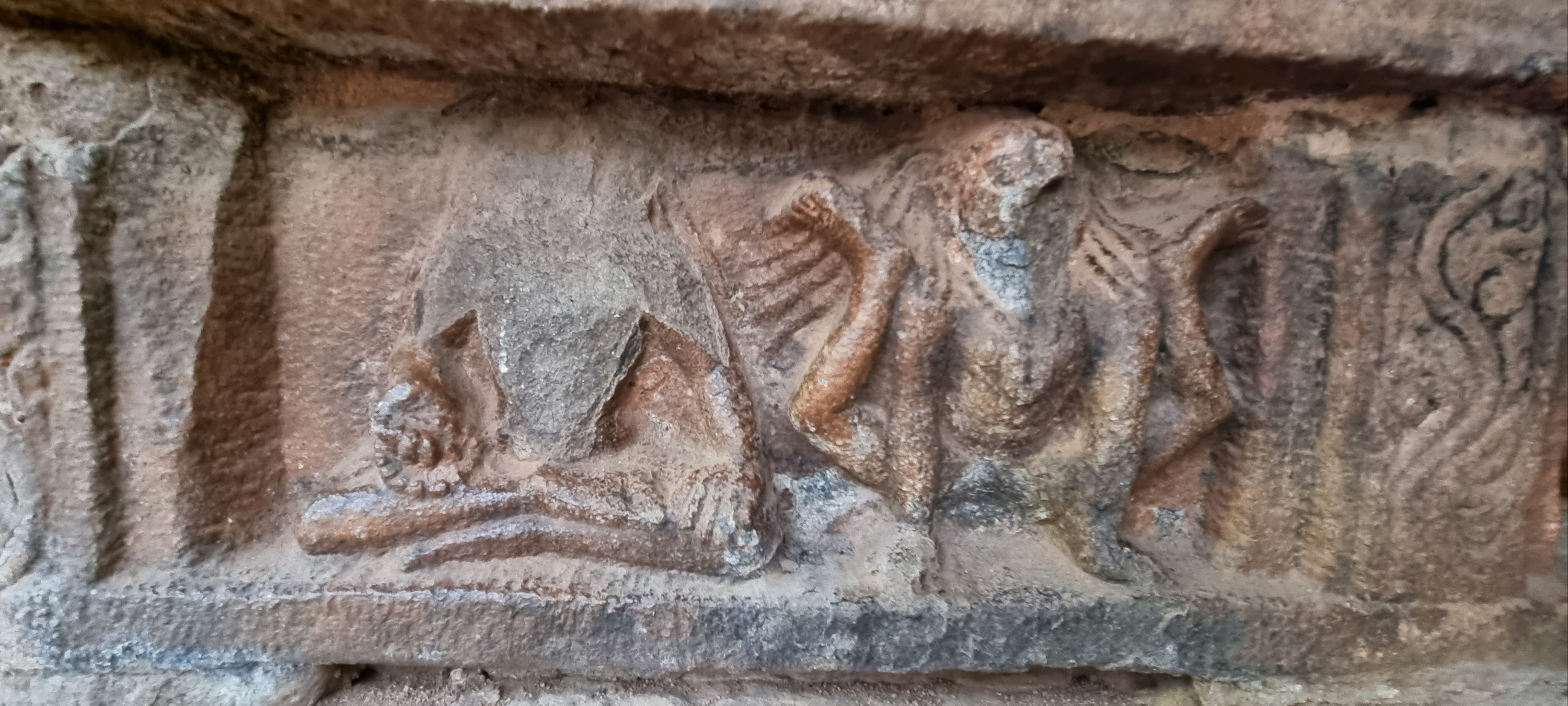
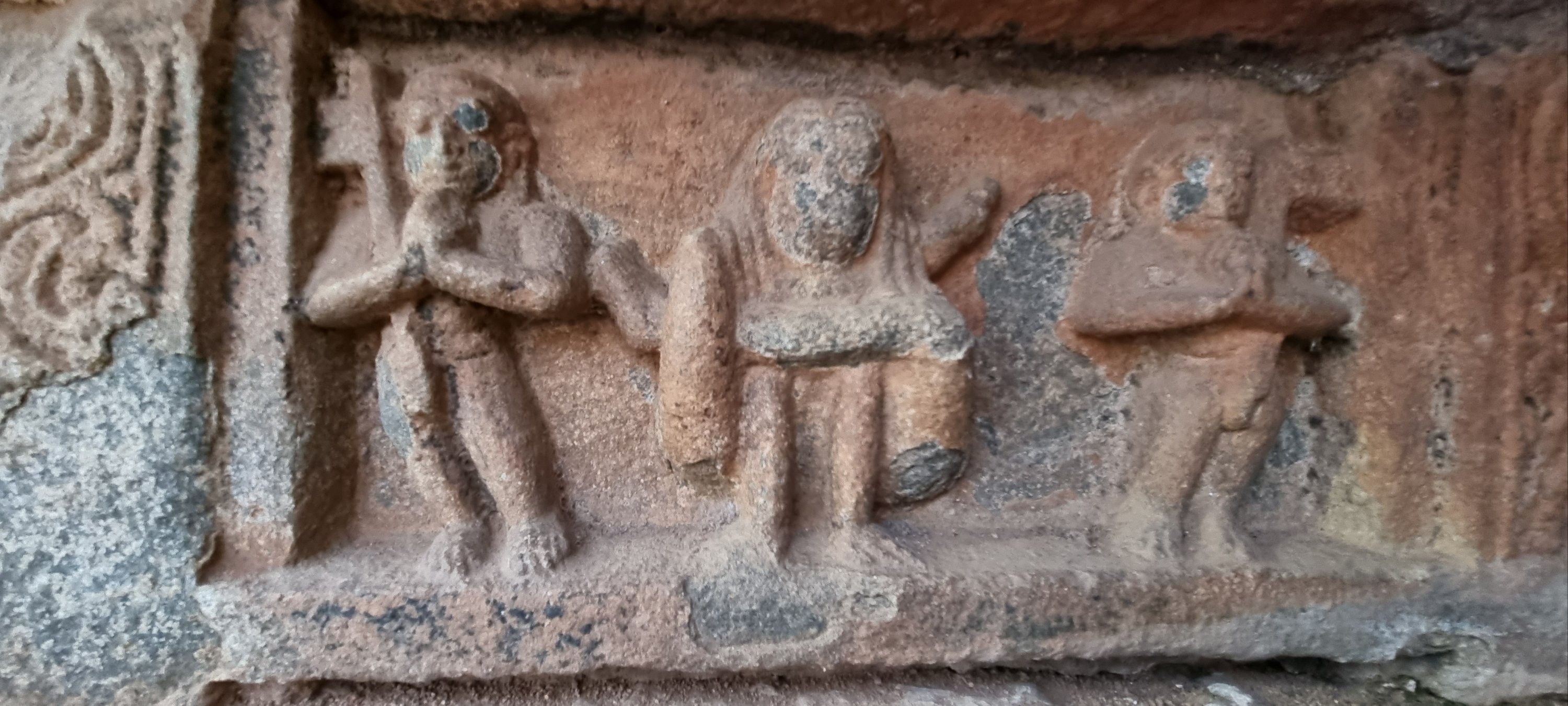
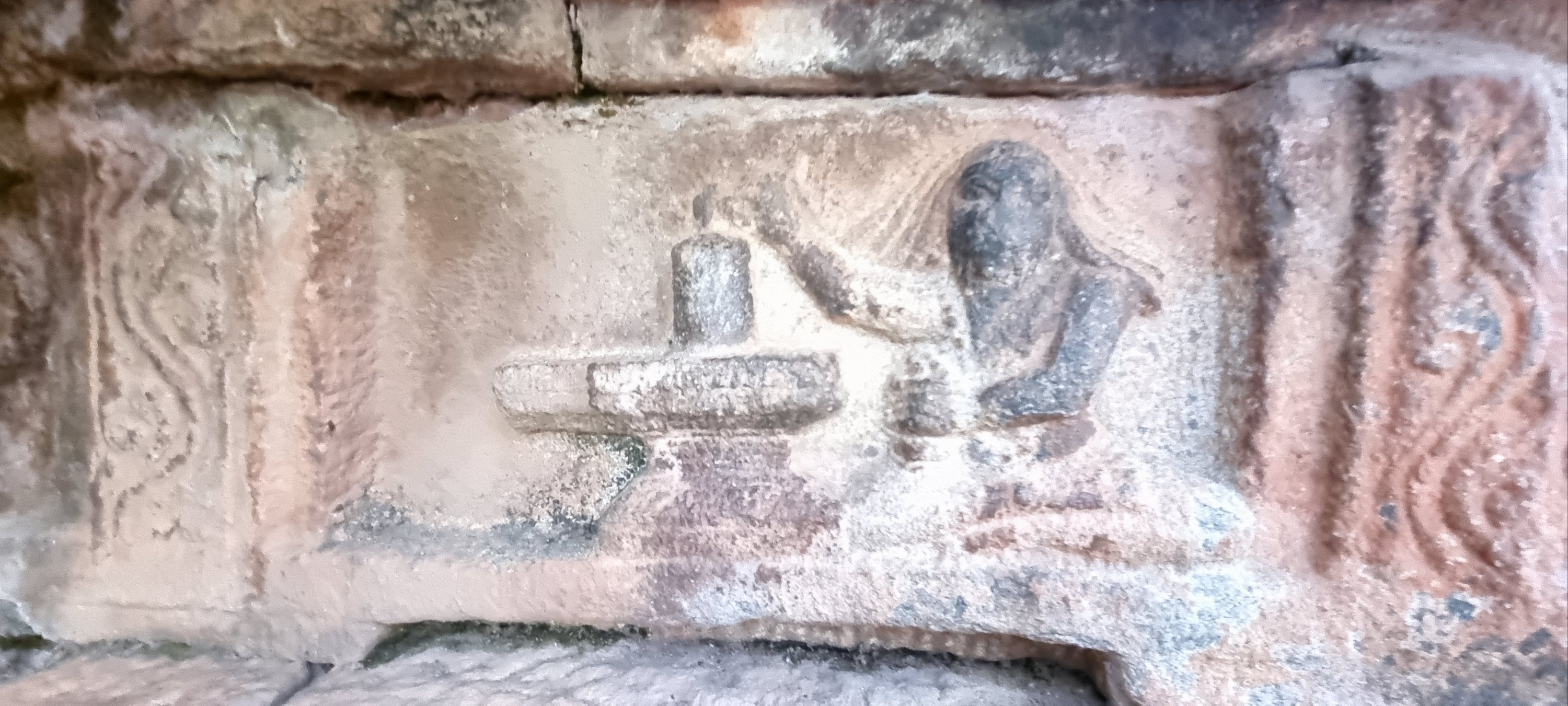
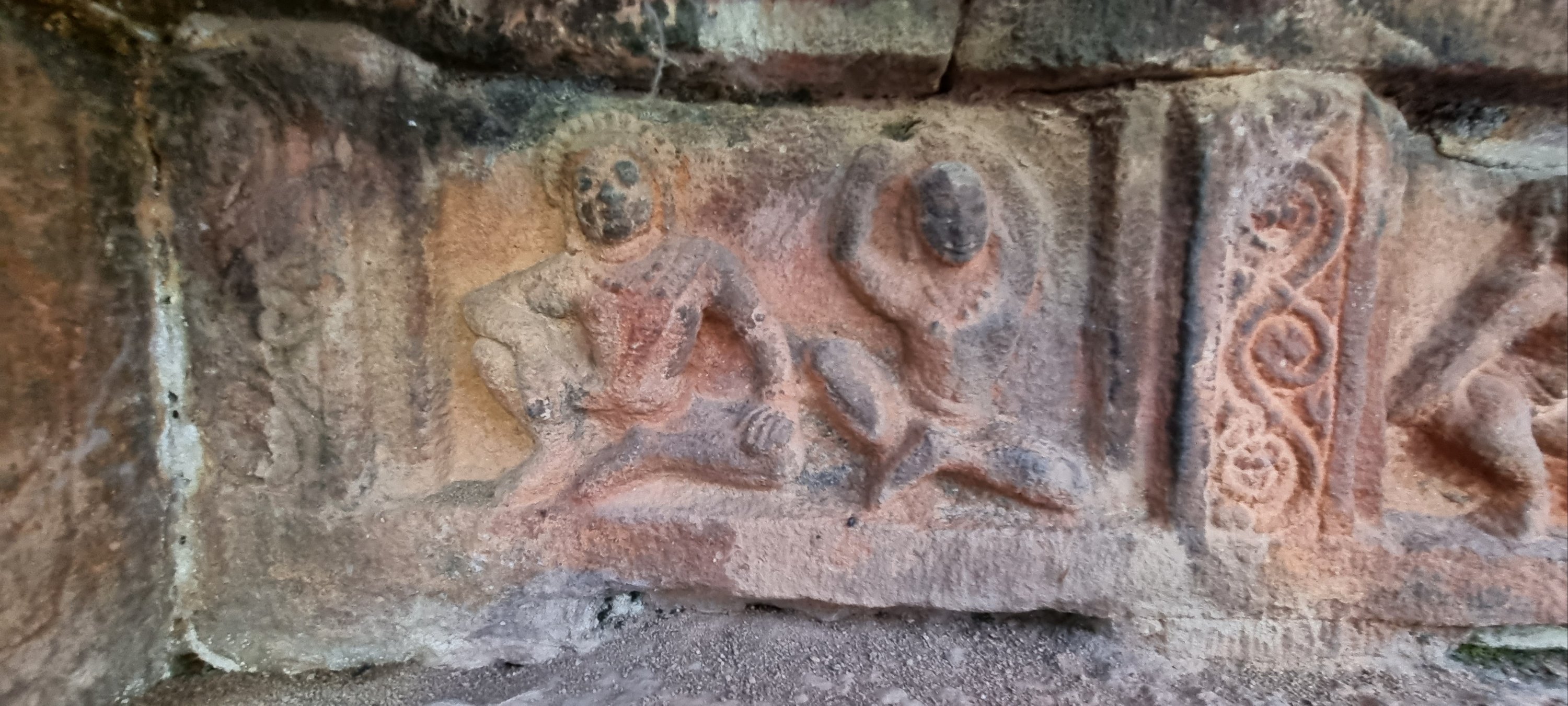
As usual, I focused on the yoga connection.  I found many carvings on the temple walls depicting yogasanas.

Look closely – arm balance with one leg behind the head.


Looks like a yogi with long hair/dreadlocks worshiping Shiva (Adiyogi).


Asanas found in dance as well as yoga.


Natrajasana for my dance teacher.


If you want to learn more about this temple, here’s an interesting paper I found about the temple: Aspects of Observational Astronomy in India: The Vidyasankara Temple at Sringeri.  Another temple I had a wonderful time at was the Perur Pateeshwara temple, check out that blog too.


Yoga Travels

Swimming With the Sharks (A Maldivian Honeymoon)

March 19, 2022

I learned how to swim pretty late in life (early 30s) thanks to a Mrs. Vardhan who was generous with her patience and with her time.  I wanted to learn because it’s a wonderful workout, and therapeutic at that.  Little did I know that one day I’d be swimming with sharks in the expanse of the great Indian Ocean.

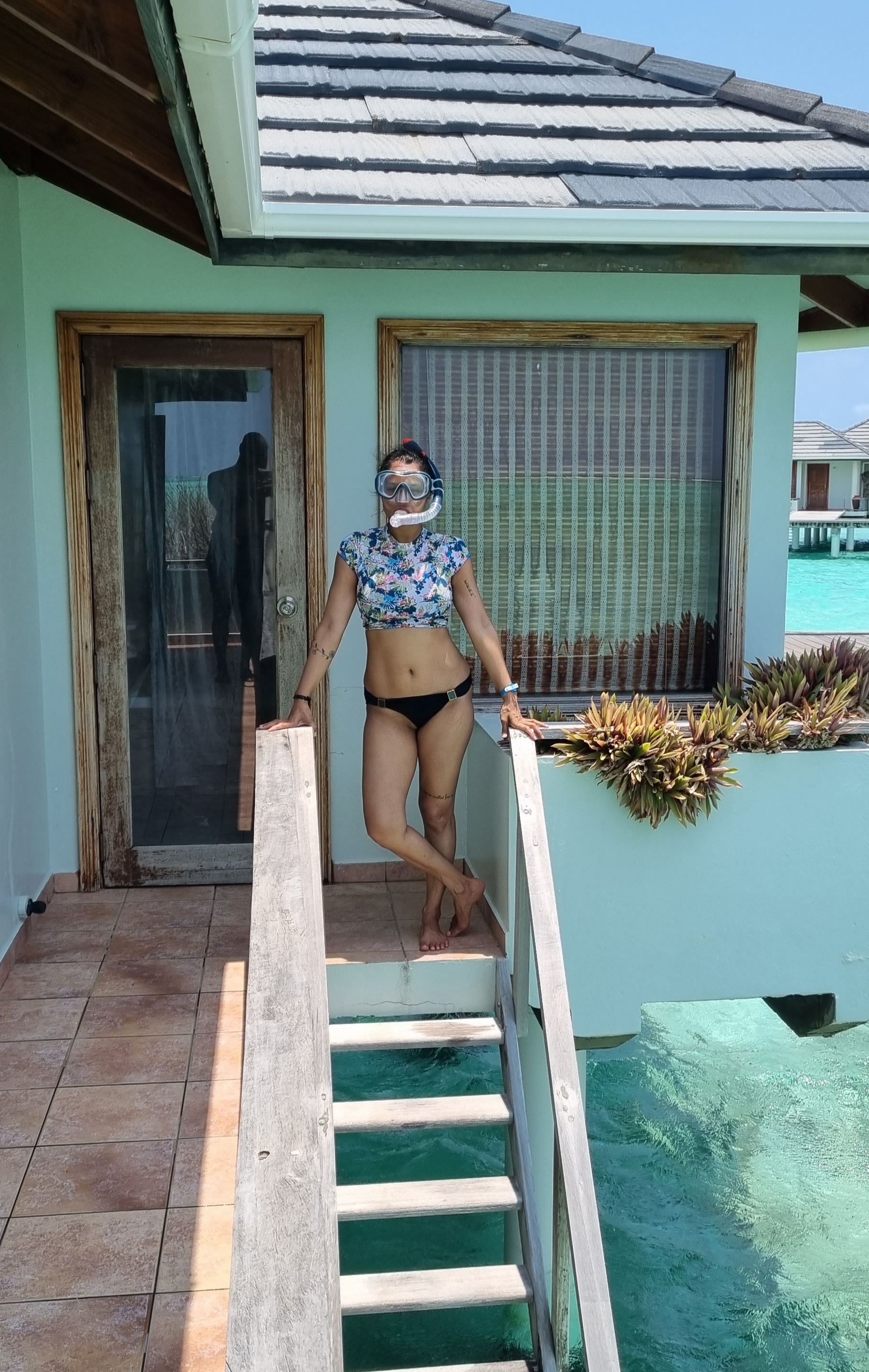
All set to snorkel near our water villa. Sea life differs from area to area and we looked forward to seeing the variety of fish surrounding the island.

My first experience of snorkelling was years ago during a school trip to the Andamans.  My memories of that experience aren’t particularly fun, so I wasn’t overjoyed about snorkelling in the Maldives (at the Sun Island Resort).  But Animesh was super excited, and so off we went.  It wasn’t until I got into the choppy waters with the snorkelling gear jammed tightly over my face did I recognise that the discomfort I was feeling was actually a sense of fear.  I was out of my territory – I’ve spent years training myself to breathe deeply through my nose.  Breathing through the snorkel with my mouth felt strange, unnatural and very very uncomfortable.

BKS Iyengar famously said, “Your nose is for breathing and your mouth is for eating.  If you breathe through your mouth I will put food in your nose.”  Under the water, with tiny (and not so tiny) fish flitting all around me, I strained to inhale and exhale through my mouth.  And then it dawned on me that a truly flexible human isn’t one who is able to breathe rhythmically when on a yoga mat with the intention  of doing so.  True flexibility is being able to breathe in whatever way the situation demands.  So, as I struggled to get comfortable in the depths of the Indian Ocean, I forced myself to calm down.  I started to engage my lungs to breathe deeply and rhythmically through my mouth.

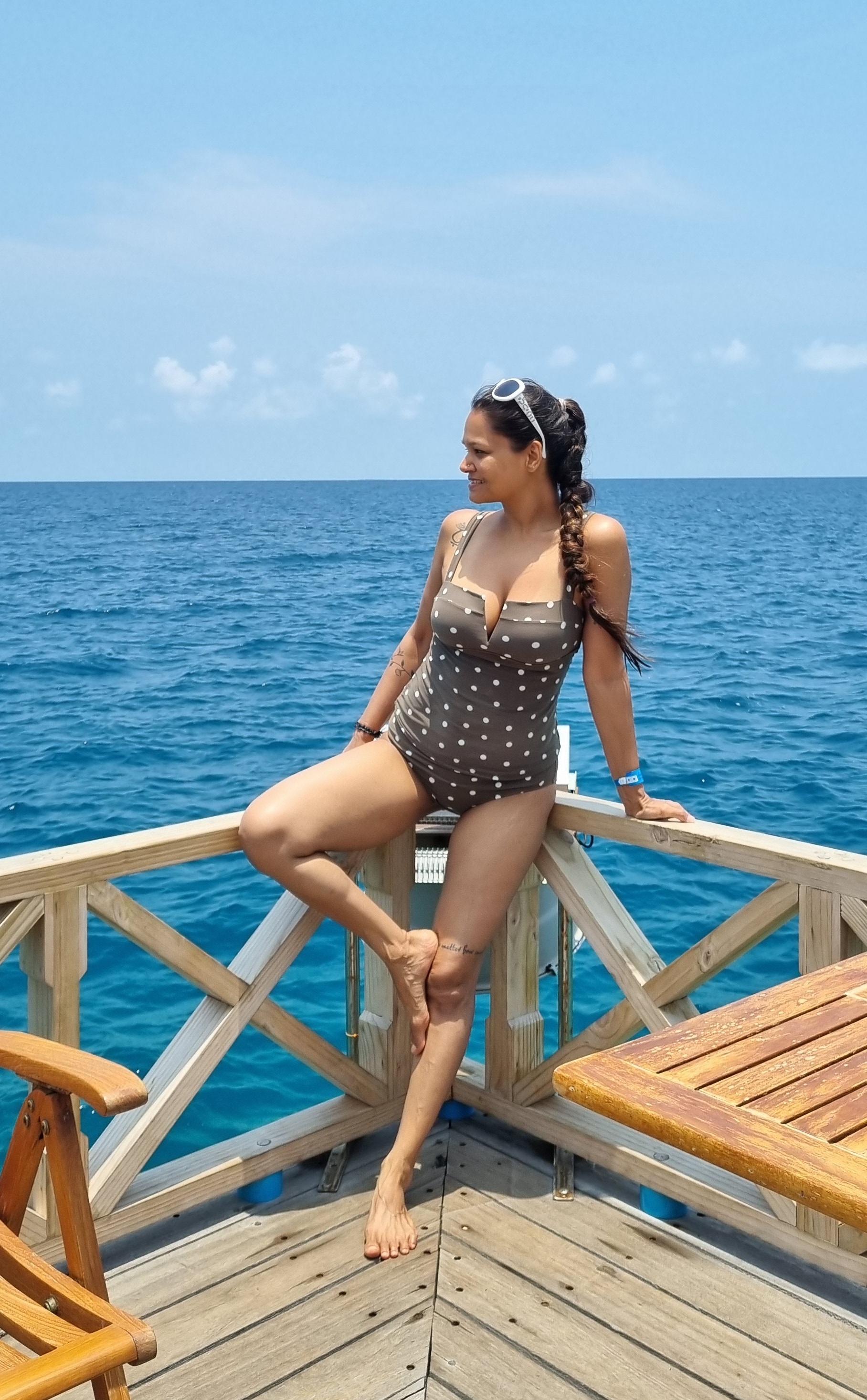
A lazy tree pose on deck. Happy to see the sharks and other fish up close.

Recently I lectured my students about the importance of cultivating a self-practice. When there is no self-practice, yoga is merely an activity confined to our mats and we remain limited to and by our physical boundaries.  Our physical boundaries are a fraction of what we are as humans.  The expanse of the human mind is more vast than the Indian Ocean, and just as interesting.  When we practice by ourselves, devoid of the expectation of cues and the ‘experience’, we can begin (and hope) to tap into this space.  In this space lies the ability to breathe better when needed, to calm down and detach, to relate to others more intelligently, to listen to the wisdom our inner voice and to marvel at the plethora of life in the universe,

Once I worked this out in my mind, swimming in the ocean seemed like an extension of my practice.  I observed more, moved my arms and legs in different ways, swam in place or in circles, didn’t panic at the sight of sharks or a little water in my face mask, and most importantly, was able to explore more of the deep blue sea


Travels Ashrams

A Dip in Sacred Waters

March 7, 2022
adi yogi

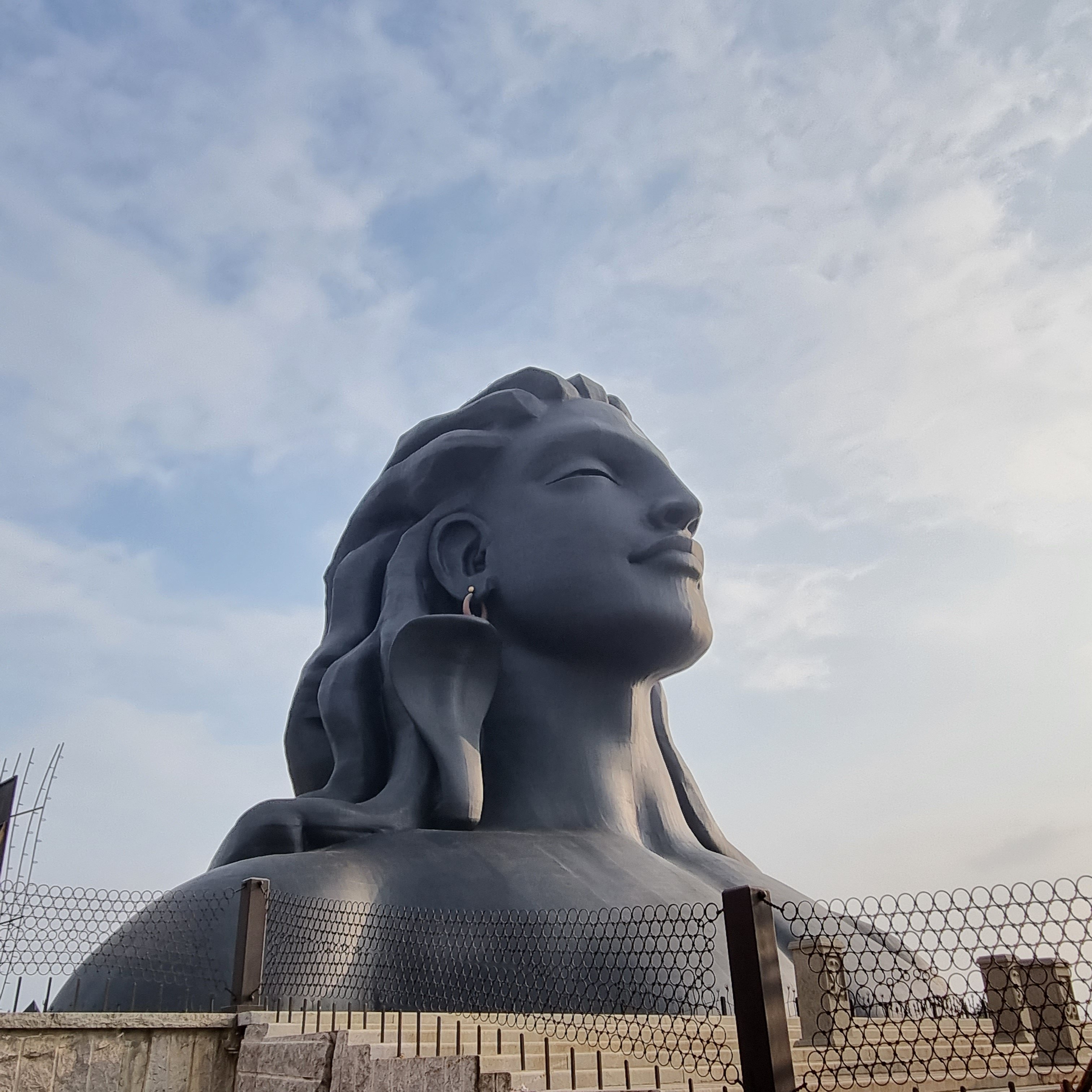
The Adi Yogi statue is built of steel and placed on a raised platform. It’s visible as you enter the Isha Yoga centre.

A dip in sacred waters is a mainstay of Indian civilisation, and it’s common to see people taking a dip in one of the numerous rivers in the country.  I never thought I’d actually do it myself one day…

Isha Yoga Center

Sowmya and I arrived at Isha Yoga centre early one morning, hoping to beat the usual crowds.  But the day we chose was only 4 days ahead of Maha Shivratri and the devout were up and they were about.  Hordes of selfies were being taken in front of the Adi Yogi.  It was only 8 am, but the places was bustling with activity.  A large stage was being constructed and barricades were being erected to keep the imminent crowds in check.  Announcements were blaring from the speakers.

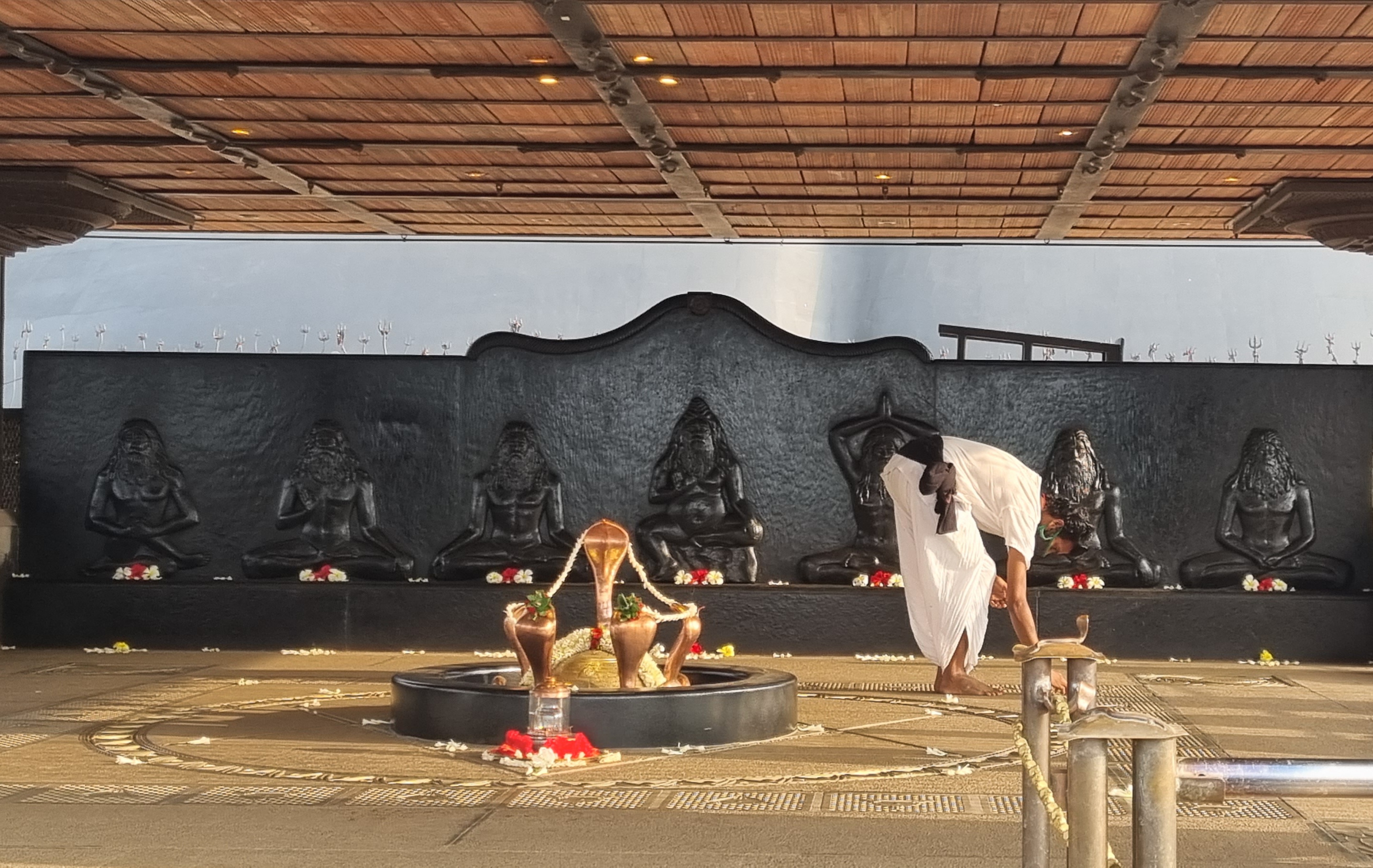
A beautiful mural of 7 siddhas. In the temple in front of the Adi Yogi temple at the Isha Yoga Centre.

In front of the Adi Yogi statue is a temple where daily homas are done.  We reached the temple as special morning prayers on account of Mahashivaratri were were being conducted.  We had a chance to sit around the fire listening to the chanting.  There is a metal lingam in the centre of this temple (several people were doing parikramas around it).  Coiled around the lingam are 5 metal serpents of various heights.  Behind is a beautiful mural of 7 siddhas.  Several people were doing the sashtanga namaskars in front of these statues and the lingam.

After about 10 minutes we got up and decided to walk further into the ashram.  Before entering into the grounds of the main ashram, we were asked to deposit our phones and other valuables (except our wallets) at the security.  We were also allowed to take our towels into the ashram, for which we were given a bag at the security.

Purification by Kunda

The Isha Yoga Centre has two kundas – water tanks for men and women to bathe in and thereby purify themselves.  The Surya kunda is for men and Chandra kunda is for the women.

To bathe in the kunda, you’ll be given ochre robes by the centre.  You will need to take a shower first.  I was hoping no one would notice that my hair was dry, but they did, and I was promptly sent back to the showers to rinse my hair.

The kunda is artfully designed.  As we descended the large stone steps, I was reminded of the Kamakhya temple.  Unlike the Kamakhya temple, the Chandra kunda is man-made and designed to be rustic yet elegant.  It is carefully cultivated class – a 5 star temple water tank – as Sowmya puts it.  Silence is mandatory here, and it seems to reverberate within the tastefully designed stone dome of the kunda, adding to the somber mood.  There is a small waterfall on one side and as I descended the metal stairs on one end, I felt the weight of the heavy silence closing in on me.  The kunda is windowless, and the cold water is about 4 feet deep.  There is a huge shivalingam in the centre – made of a stone base and a metal dome jutting out of the water.  We circumambulated the lingam in the water, savouring the resistance of the water on our relaxed limbs, the splashing sound soothing to the ears too.


Bhairavi Temple

Once we exited the Chandra kunda we decided to visit the Bhairavi Temple.  This too has a cave-like structure and early in the morning the sounds of the aarti and accompanying chanting were steadily reaching a crescendo.  The devotees were engrossed in their devotional practices, and there was no social distancing.  Not too keen to be a part of the melee we decided to exit.


Dhyana Lingam

We continued practicing our silence as we entered a doorway to get to the famed Dhyana Lingam.  On either side of the hallway leading to the Dhyana Lingam there are stone murals depicting various scenes from mythology about devotion.  Sowmya and I were happy to see a huge statue of Sage Patanjali.  The Dhyana Lingam is housed inside a huge dome shaped hall specially made for meditation.  The shivalingam stands tall and imposing in the center of this hall and is decorated with flowers.  There are squares compartments cut into the walls to sit and meditate in.  There is no artificial light here, and the style is similar to the Chandra kunda – stone, understated, elegant.  For a fee you can also light a lamp and offer rudraksha of various prices to the Dhyana lingam.

Sowmya and I found a square each and enjoyed some of the serenity for half an hour.

Tamarind Tree & The Nandi Bull

After a bit of shopping at the gift shop (I picked up their famous sambramani) and some breakfast (steaming hot idlis and some pongal), we decided to walk past the famous tamarind tree and the nandi in front of it.  The Nandi is five times the size of a real one, and made entirely of black stone.  The tamarind tree is covered with threads and other pieces of cloth (mostly fuchsia, red or black).  Those who complete the challenging Shivanga sadhana gain the privilege of tying these cloths/threads on this tamarind tree.  The Shivanga sadhana is a special 42 day sadhana that only the most devout can complete.  It is believed that our sweat contains our samskaras and when these are absorbed (along with our sweat) into the clothes we wear.  By tying these clothes around the branches of the tamarind tree, we rid ourselves of our samskaras.


The experience of the rituals and worship at Isha yoga differed so much from our experience at the Perur temple, just a few kilometres away.  It is said that there are as many beliefs as there are people in India.  Experiences like this one certainly gives us insight into just how complex, intricate  beliefs, culture and traditions can be.

If like me you’re a temple buff, then make sure to check out this blog about the Koti Lingeshwara temple on the outskirts of Bangalore, a temple that has one million shivalingas!