Yoga

The Real Kahwah

December 3, 2012

The first time I had Kashmiri Kahwah was at Dilli Haat.  I loved it but couldn’t get my hands on the recipe or the leaves.  I next had it in a friend’s house and even posted a picture of it: http://www.facebook.com/pages/Yoga-With-Pragya/279129782153926?ref=hl#!/photo.php?fbid=393815357352034&set=pb.279129782153926.-2207520000.1354508624&type=3&theater.  As you can see this tea comes from a tea bag.  So it was a pleasant surprise when a few days ago I went over to a friend’s house and she made me real authentic Kahwah.  The people in Kashmir drink Kahwah because it builds up the body’s immunity and keeps it warm.  And all those dried fruits will give you the glowing skin that everyone wants.  So here goes:

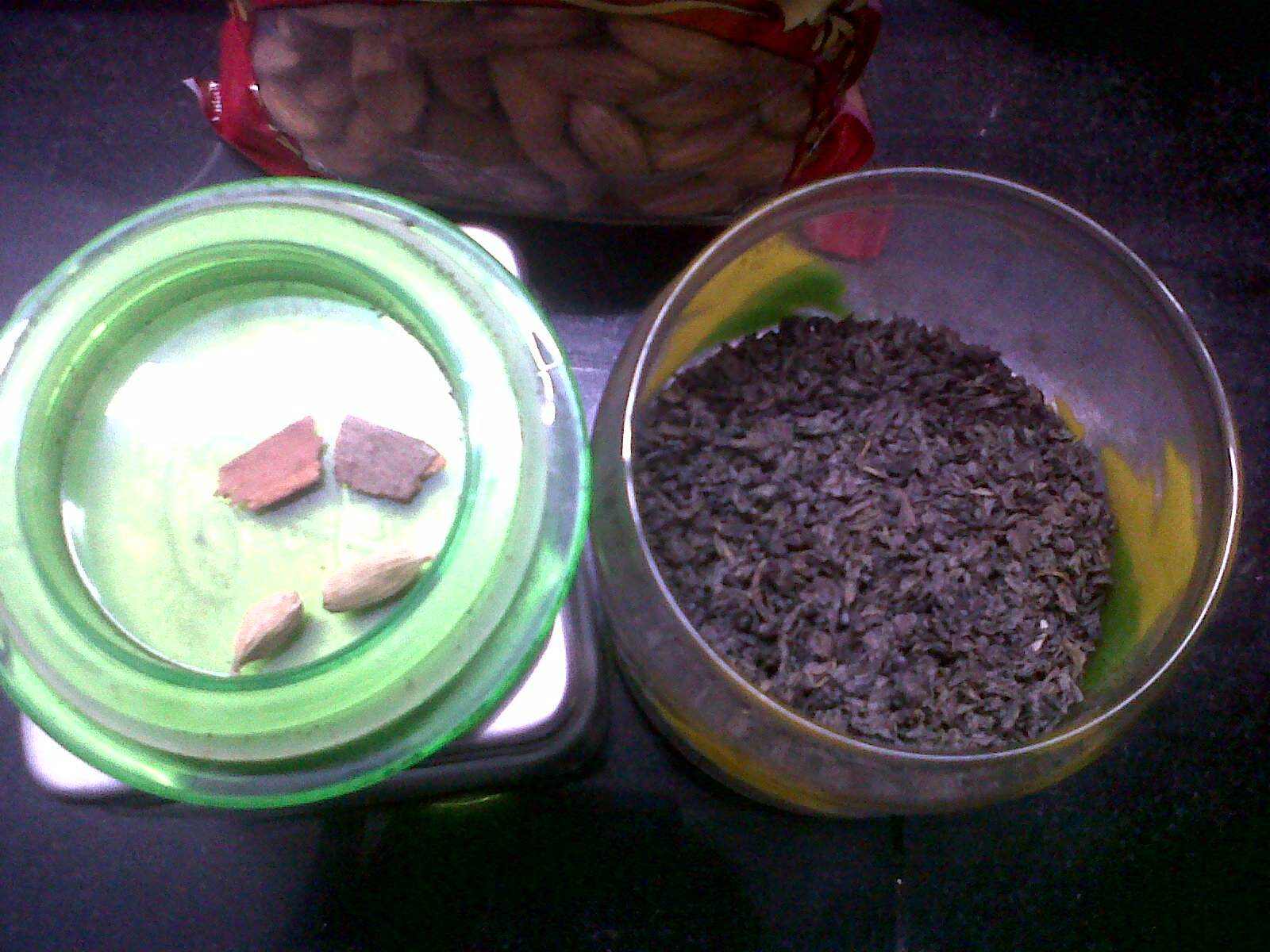
1.  Take some cardamom, cinnamon and almonds.  Pictured here are the Kahwah leaves as well.

IMG-20121124-00252

2.  Boil some water and put the Kahwah leaves in.  Crush and add the cardamom as well.  Boil until you can see the color of the water changing and can smell the essence of the cardamoms.

IMG-20121124-00254

3.  Crush the almonds and put them in the cups/glasses that you’re going to drink in.

IMG-20121124-00257

4.  Pour the Kahwah and serve :).

And the best part was that my friend had an entire jar of Kahwah leaves sent over the next day, so now I can have it whenever I want.

Yoga

Diwali Gift: Ayurvedic Kajal!!!

November 12, 2012

According to Ayurveda you should use kajal (kohl, surma, eyeliner) for its health benefits.  I use a lot of kajal and am always on the lookout for smudge proof kajal.  But I feel that if the product is smudge proof then maybe they are using a lot of chemicals (parabens etc) which could irritate the skin and your eyes.  And if we have a healthier alternative then why not try that?  So when I heard that Ayurveda recommends the use of kajal, I decided to do a bit of research about why and how.

I found out that Ayurveda recommends kajal for its cooling and healing properties for the eyes.  In hot regions men and women used kajal made with camphor to keep their eyes protected from the heat and glare of the sun.  When made using other spices (I made mine using ajwain), then the kajal can help in keeping eyes clean and infection free.

So when a friend of mine told me how to make kajal at home I promptly decided to make my own.  Here’s how you can also make it:

1.  Soak cotton in mustard oil overnight.  You can also use ghee, camphor or almond oil.

2.  The next morning make a wick using this cotton.  Put ajwain and neem inside the wick (optional).

3.  Take a diya (I used an earthenware diya.  You can use a silver or copper vessel as well.)

4.  Cover the flame with a bowl and let the soot collect there.

5.  Once the wick has burned out then collect the soot in a small box.

You can use this powder with your finger or get a small brush and use that.  It’s smudge proof and great for the eyes.  Here’s a picture of my kajal:

Image

Food Wellness Yoga

It’s that time of year again…My Navratra Detox

October 16, 2012
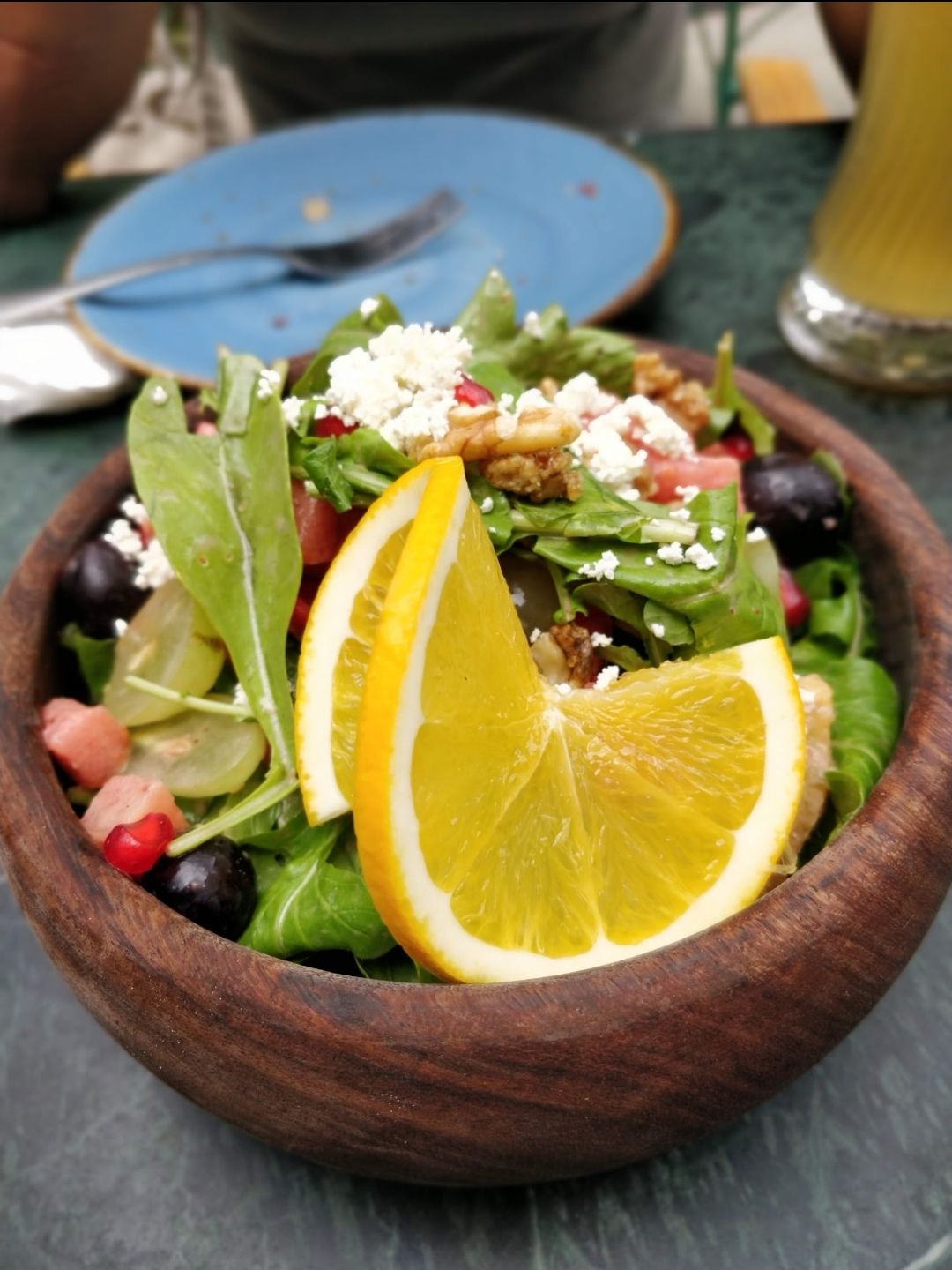
A bowl full of health.

Today is the first day of the Navratra period and although I don’t consider myself a very religious person I still feel that this is a good time for everyone to clean up and make space for a healthier and more fulfilling life.  You could decide to let go of stale emotions, bad habits, bad people, old clothes etc.  When you start thinking about it there are so many things in our lives that don’t add any value to the quality of our lives.  These nine days are a good time to reflect and to jettison the unneeded and the unwanted. Continue Reading

Yoga

Intentions, sankalp, prayers….

October 4, 2012

Often yoga sessions start with an intention, a sankalp or a prayer.  I don’t think yoga is connected to any religion, but I do believe that yoga and spirituality are entertwined.  There are many shlokas found in the upanishads and other ancient scriptures that are used to begin and end yoga sessions.  Below are the ones that I use in my class.

Opening Prayer

Om sahanavavatu, saha nou bhunaktu,

Saha Viryam karvavahai,

Tejasvi navadhitamastu ma vidvisavahai.

Om Santih Santih Santih (Taitt. Upanishad)


May he protect us both, May he nourish us both;

May we both work together with great energy;

May our studies be enlightened and fruitful;

May we not hate each other,

Om Peace, Peace, Peace.


Closing Prayer

Sarve bhavantu sukhinah,

Sarve santu niramayah,

Sarve bhadrani pasyantu,

Ma kascit dukhabhag bhavet,

Om Santih Santih Santih


May all be happy,

May all be free from diseases,

May all see things auspicious,

May none be subjected to misery.

Om Peace, Peace, Peace.

Yoga

Walking and the Brahma Muhuratam

September 28, 2012

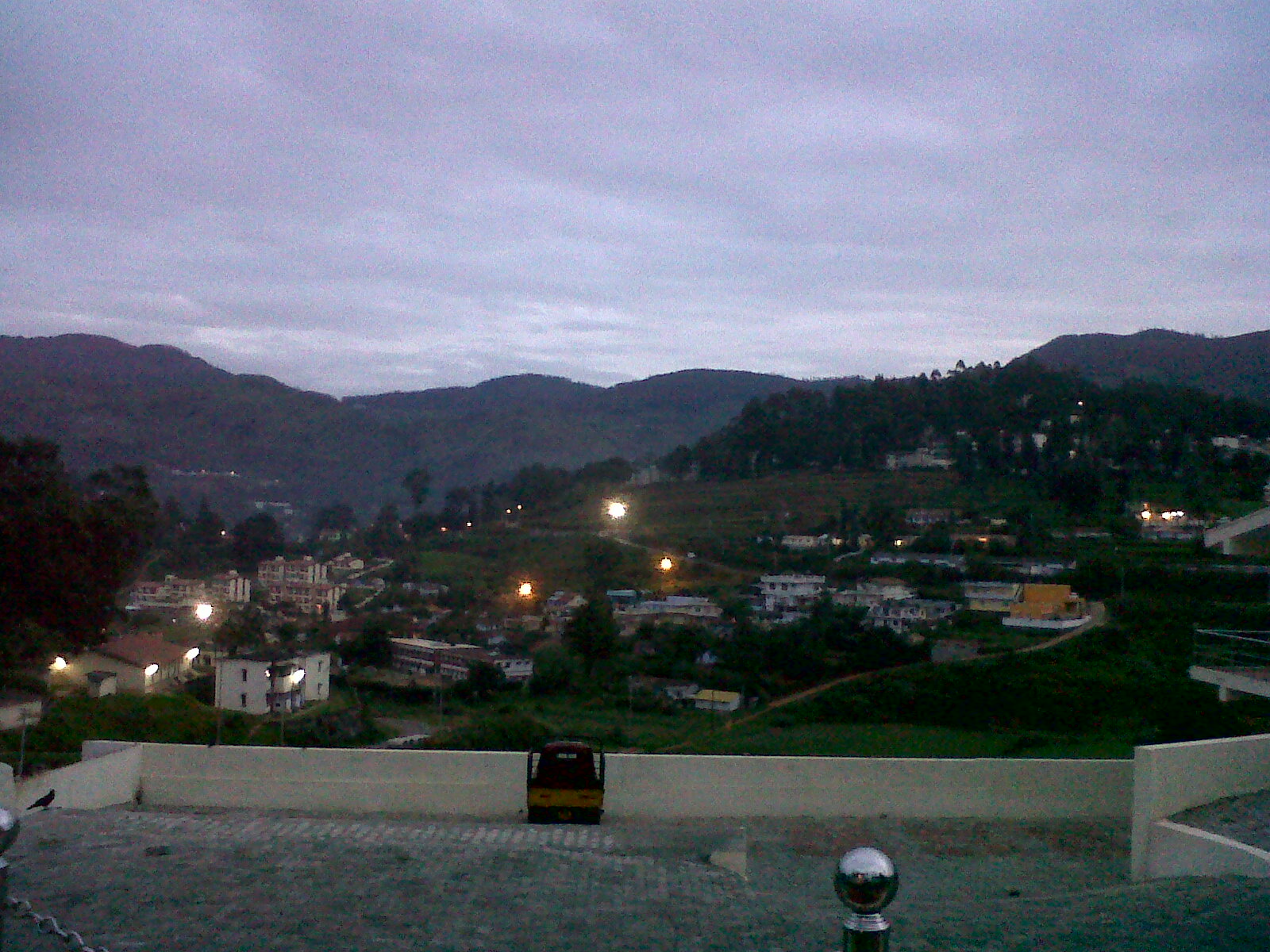
I got an early start to my day today, at the Brahma muhuratam to be precise.  Brahma muhuratam occurs one and a half hours before sunrise and considered the best for meditation.  It is believed that at this time the air is charged with powerful electromagnetic particles and this intensifies any spiritual practice or sadhana.  Some even believe that the Ozone layer is closest to the earth at this time and so the air is pure and clean and inhaling this air and allowing it to permeate your pores has numerous health benefits.  Since I was wide awake I decided to walk around the hills a bit, something I haven’t done in a long time, but which I enjoy.  As usual, I practiced ‘mindful walking’.  I made a note of how the air feels and smells, all the sounds, the feel of the ground under my feet, the temperature…basically practicing awareness in something as mundane as walking.

When I came back, about an hour later I felt energetic and happy (fresh air and exercise always make me happy), and so I decided to extol the virtues of walking on my blog.  Here goes:

  1. Walking is an excellent form of mild exercise.  It cost nothing but a good pair of walking shoes.
  2. You get a lot of time to meditate on yourself and your life.  So it gives you a chance to reflect and contemplate.
  3. If walking early in the morning you get to walk around with no traffic or people rushing about, and kids making a lot of noise.
  4. If you power walk then it helps in controlling your cholestrol levels, increases your endurance, improves your balance, releases endorphins so you’re happy and feel better about yourself.
  5. Good for your back!

And finally, if you’re waking up to walk around the time of the Brahma muhuratam then you get clear, glowing skin and strong, powerful lungs as well.

So start your day at the Brahma muhuratam with a walk.


Wellness Yoga

Before and After

September 22, 2012

For a while now I’ve been talking to people about my weight loss journey and how I managed to go from a hefty 69 kgs to a healthier 54 kgs.  However, most people would just nod politely (even those who asked me about how I lost so much weight) and move on to another topic of conversation (usually something about healthy eating or exercising).  Until two days ago, while cleaning out my laptop, I came across and old photo of mine.  I decided to do a ‘Before and After‘ picture because, honestly speaking, the journey to losing weight is long, arduous, lonely and fraught with self doubt.  The fact that I’ve been through it, and have the pictures to prove it is inspirational not only for me, but I realize now, for a lot of other people as well.

Although it’s great to see how far I’ve come on the journey to shape myself not only physically but emotionally and spiritually as well, I have to say that it wasn’t easy to put up the ‘Before’ picture for the world to see and also (invariably) to judge.  I felt the familiar hesitation that comes with the vanity that is only human.  At one point, the thought “I was so fat!” overpowered the thought “Wow!  I’ve come so far!”  However, yoga not only gives us physical strength but also emotional strength and I told myself that that was me and it’s nothing to be hesitant about.  I looked at the picture again and told myself that though I was many many kgs heavier, I was smiling and glowing.  And many years later, I still am :).  So I put up the picture and realized how powerful a visual medium can be.  By the evening there were close to 50 people (many who were probably coming to the page for the first time) who had commented/liked the picture.  Many said that it was inspiring, others asked for advice still others expressed disbelief.  By the end of today, after many hours of thinking about all I’ve been through on the elusive quest for weight loss, I decided that a blog was in order.

Continue Reading

Yoga

The 12 Mantras.

September 13, 2012

Yesterday we did the 108 Surya Namaskars with the 12 mantras.  Performing the Surya Namaskar is also a spiritual exercise where you are offering your respect, prayers, salutations to the Sun, the only real source of energy.  Therefore, the 12 mantras are a tribute to the sun god.  Below are the 12 mantras:

1.  Aum hram mitraya namah.

2.  Aum hrim ravaye namah.

3.  Aum hrum suryaya namah.

4.  Aum hraim bhanave namah.

5.  Aum hraum khagaya namah.

6.  Aum hrah pusne namah.

7.  Aum hram hiranyagarbhaya namah.

8.  Aum hrim maricaye namah.

9.  Aum hrum adityaya namah.

10.  Aum hraim  savitre namah.

11.  Aum hraum arkaya namah.

12.  Aum hrah bhaskaraya namah.


Food

Turmeric: The Wonder Spice

August 14, 2012

A few weeks ago, in an attempt to make my food purer I decided to ditch store bought spices in favor of hand ground spices.   I noticed that the it I ground at home smelled and looked better than the one I bought from the store.  It even made the food taste better.  Although I knew it has a plethora of health benefits, I wanted to know a bit more about this spice.  I looked up some health benefits of turmeric and have come to believe it’s a wonder spice.

1.  It’s a natural antiseptic so use it on your skin for cuts and wounds.  In fact, go out and get a tube of our very own Vicco Turmeric Cream :).  It also helps in healing damaged skin and even psoriasis.

2.  I love that the Indian diet has it in pretty much every dish.  We end up eating healthy by default.  Turmeric inhibits the spread of prostate and breast cancer.

3.  It’s is a natural detoxifier and aids in weight-loss!!!  Add a pinch to some lemon water.

4.  It has anti-inflammatory properties so it’s good for arthritis, gout etc.

5.  For clean skin and a healthy glow: Mix a pinch of turmeric with a handful of gram flour and use it as a scrub.  Beware – too much turmeric and you’ll look yellow instead of golden, so stick to a pinch.  (Tried and tested!)

6.  It helps in combating high cholesterol, diabetes, cold, flu and menstrual cramps.  Which explains why turmeric tea has become so popular of late.

Be careful not to overdo anything though.  Too much of a good thing is also not good.  Incorporate turmeric slowly but consistently in your diet or skin care regime and give it time.  The benefits will be gradual, but worth the wait.

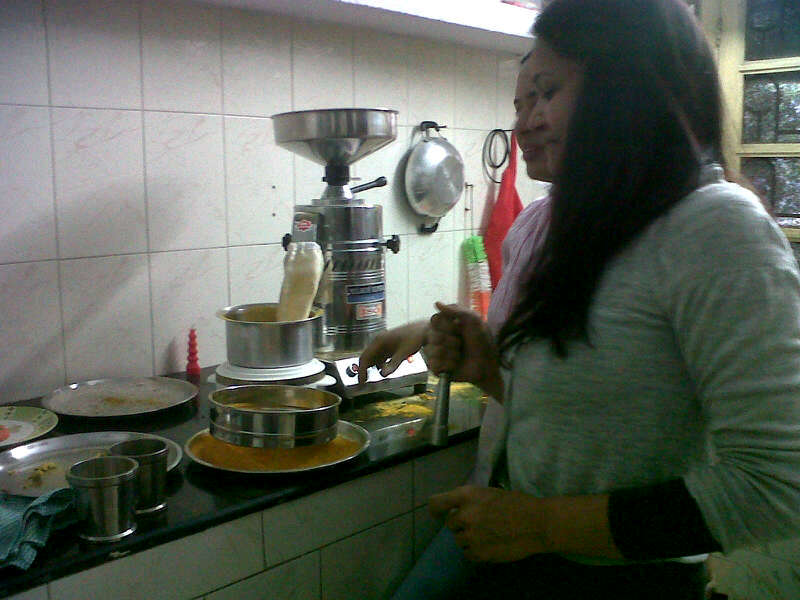
Grinding fresh turmeric at home.

Grinding fresh turmeric at home.

Yoga

Yoga for the Hills.

August 12, 2012

Salubrious?! Not really…As I browsed through the Hoot magazine, I discovered that the WGC used to be called the ABC club – Asthma, Bronchitis and Cough!  And rightly so.  Within a week of arriving in Wellington my allergies started acting up, my nose was stuffed and eyes watery.  Try as I might my hands and feet would never seem to get warm!  Some reach for the medicine cabinet, but what about those who don’t want to infuse their systems with chemicals and toxins?  I searched for answers in my practice and compiled a list of simple things you can do daily to combat the effects of this ‘salubrious’ climate:

1.  Surya namaskar.  Do either the 10 round or the 12 round, but practice every day!  The practice of Surya namaskar gets your blood circulation going and generates heat in your body.  So you remain warm and your body is able to fight against disease more effectively.  At a spiritual level it brings a balance to your entire system including your metabolism.  Surya namaskar is an effective way to loosen up, stretch, massage and tone joints, muscles and internal organs of the body.  Those who have high blood pressure, coronary artery diseases, or have had a stroke should not practice the surya namaskar.  People with back conditions should consult their doctors before practicing.  Do NOT practice on the first three days of your cycle if you experience any adverse effects of practicing during menstruation.

2. Kapal bhati.  Sit in any comfortable meditative asana (padmasana, ardha padmasana or sukhasana).  Make sure your head and spine are straight and your hands are resting on your knees.  Close your eyes and ensure that your whole body is relaxed.  Now exhale forcefully through both nostrils with a forceful contraction of your abdomen.  Let your inhalation be passive.  Your exhalations should be from your abdomen.  Consciously relax your shoulders, neck and facial muscles.  Practice kapalbhati on an empty stomach.  Do not practice before sleeping as this might cause sleeplessness.  Those suffering from any kind of heart disease, high blood pressure, vertigo, epilepsy, stroke, hernia or gastic ulcer should NOT practice kapalbhati.  Also do not practice during menstruation and pregnancy.

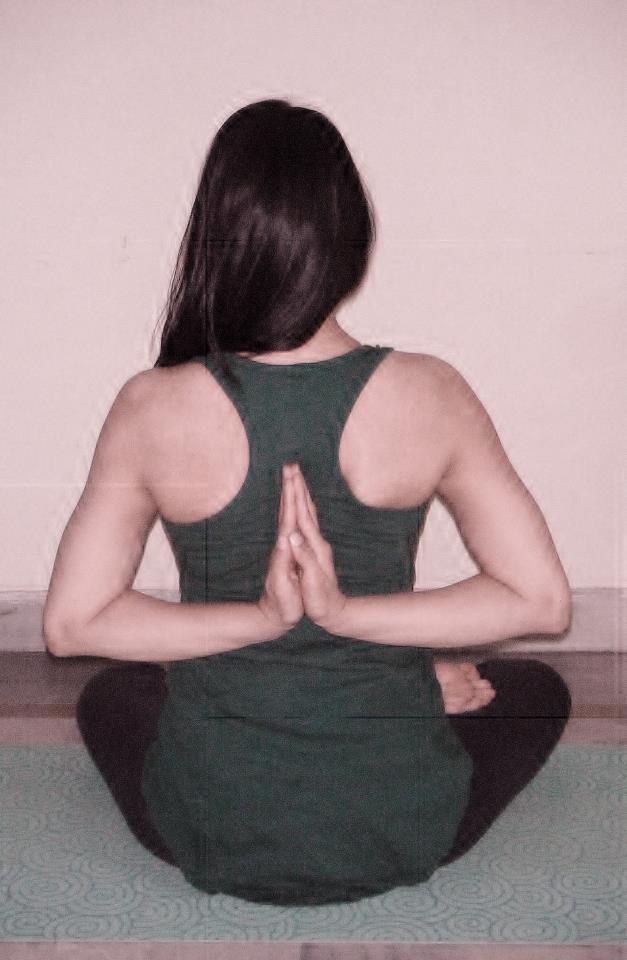
3. Paschima Namaskarasana.  Stand or sit comfortably.  Gently take your hands behind you and join them in a namaskar behind your back.  Make sure that your palms are touching each other from the base to the top.  Ensure the same for your fingers.  This is a little challenging but works really well to open up your chest and strengthen your upper body.  Consciously relax your shoulders and don’t forget to breathe!  Paschima Namaskarasana expands your chest and allows your lungs to breathe more deeply.  Increased oxygen into your system reduces depression.  This asana relieves cervical spondylosis, increases the flexibility of the upper body, arms, elbows and wrists.  Do NOT do this asana if you have stress related headaches, migraines, low blood pressure or insomnia.

Image

4. Jal neti.  You will need sterile lukewarm water, a neti pot and some salt.  Add about half a tea spoon of salt to the water.  The temperature and taste of this water should be similar to your tears.  Stand straight and make sure your body weight is evenly distributed between your feet.  After filling your neti pot with this water insert the nozzle into your right nostril.  Do NOT use any force.  Open your mouth and breathe freely through your nose.  Slowly tilt your head to the left and adjust the position of your head until you feel the water from the pot entering your right nostril.  The force of gravity will enable the water to flow out from your left nostril.  Once done, block your right nostril and exhale forcefully and repeatedly through your left to ensure that any residual water comes out.  Any leftover salt water it may irritate the nasal passage and manifest the symptoms of a cold.  After this fill your neti pot again and repeat this on the left side.

The benefitsof jal neti are numerous.  Ithelps to clear nasal passages by removing mucus and pollution.  It also helps alleviate symptoms of cold, hypersensitivity, headache, sinusitis and bronchitis.  It improves the sense of smell and even helps in maintaining good health of the ears, eyes and throat!  Jal neti helps the practitioner maintain a fresh and youthful appearance by removing the muscular tension from the face.  Do NOT practice if you have had a recent ear infection or a nasal septum operation.  Also avoid it a few days after a bleeding nose.

5.  Drink warm water!  Needless to say, you must stay hydrated throughout the season.  Warm water also helps flush out toxins from your system so you create space for more of the good things in life such as fun, good health and yoga!
Yoga

To do or not to do…

July 8, 2012

For the past couple of days I’ve been getting a lot of questions about yoga’s stance on drinking alcohol and eating meat.  Some people have also told me that the reason they don’t practice yoga is because they can’t give up partying and ‘fun’. 

Yoga advocates acceptance – of yourself and of others.  It teaches us that we should be tolerant of ourselves and to love ourselves – including our flaws.  So to eat or not to eat meat is an individual choice.  Yoga gives us strength to stand behind what we feel is right.  It teaches us to really think about the choices that we make and take responsibility for them.  I have to accept the aches that will come after staying away from the mat for a few weeks.  I need to understand when my body can be pushed that little bit further and when I need to let go.  This understanding translates off the mat into life in the manner in which we decide what we feel like eating, drinking, watching and saying.  What makes us feel good?  Beyond eating and drinking we need to understand what kind of people we feel good with. The choices we make will reflect in the quality of our lives.  Yoga is not about subtracting from your life, it’s about adding value to your life.

So before you decide to put something in your mouth, or decide to say something, or even if you have to make a choice – take a moment to consider if you’re prepared to live with the consequences. 

Happy yoga 🙂