Pragya Bhatt | yogawithpragya

Travels

Two and a Half Days in Ho Chi Minh

May 18, 2023

Ho Chi Minh City is named after a former President of Vietnam, considered one of the most influential figures of the 20th century.  The city is the most populated city of Vietnam and has French colonial architecture everywhere.  The French buildings stand out and you can see them behind the facades of the new construction.

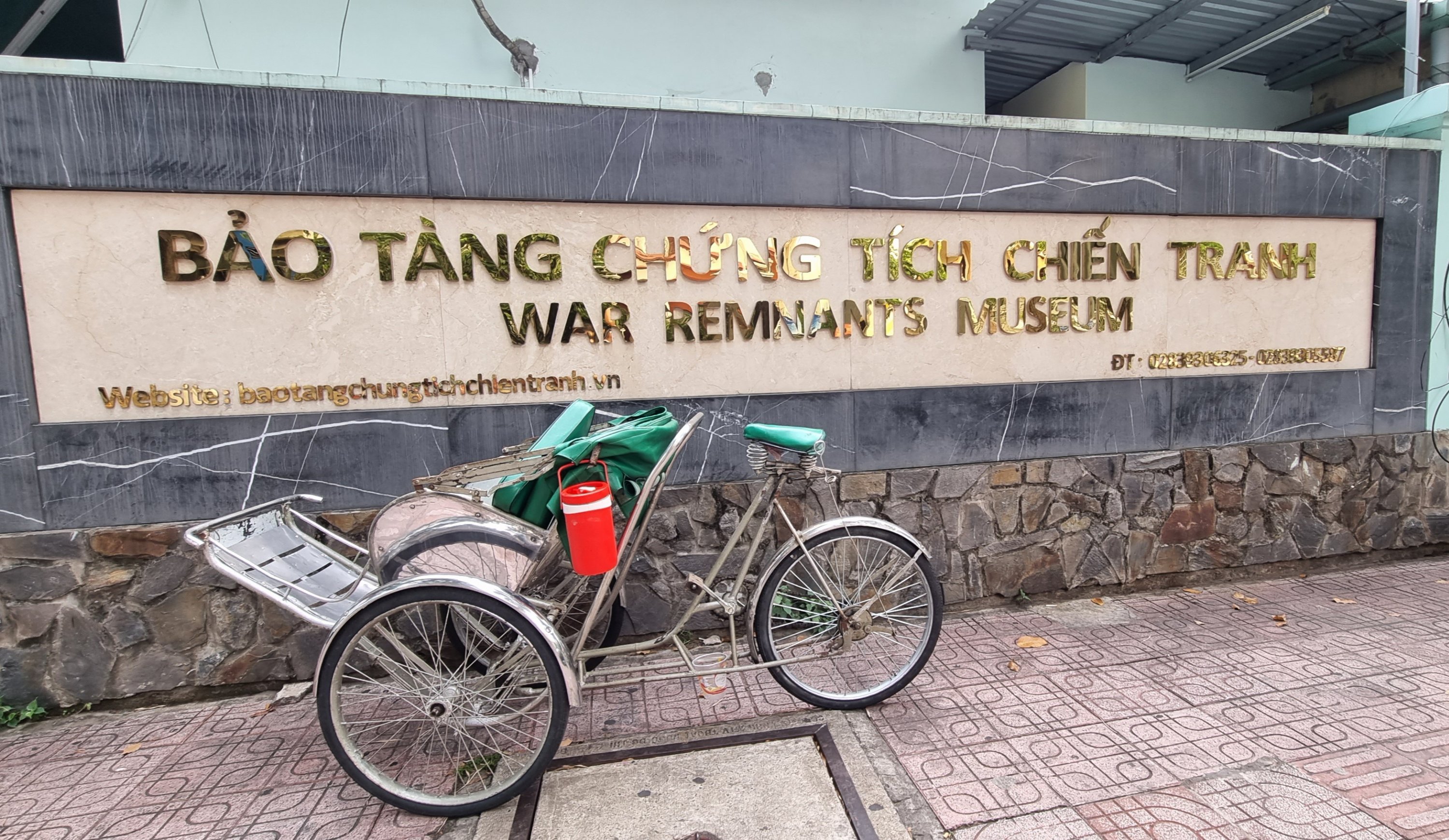
War Remnants Museum

Having spent some time in the US, I was aware of the Vietnam War and its importance in US history.  During this trip I understood the importance of the war for Vietnam.  Out of the three books I read in preparation for our holiday, two were about this war.  One was ‘Faith of Our Fathers‘ by John McCain and the other was ‘The Sorrow of War‘ by Bảo Nin.  So I was eager to visit this museum.  I’d recommend it to everyone.  It gives context, and gory details about the war.  There are photographs, army tanks and weaponry and even two foetuses inside a glass case (to show the impact of Agent Orange).  If you had just one day in Ho Chi Minh City – I’d suggest working this into your itinerary.
 

Memorial to Thích Quảng Đức

Thích Quảng Đức was a Buddhist monk who set himself on fire to protest the oppression of the Buddhists in South Vietnam, in 1963.  I’d read about this incident and seen the photo too, and a few days before our visit, I read that this happened in Ho Chi Minh City.  So we had to go.  This is a memorial not only to the monk, but a tribute to satya and ahimsa.  It’s not very crowded, because I think many tourists aren’t aware of this part of Saigon’s history.
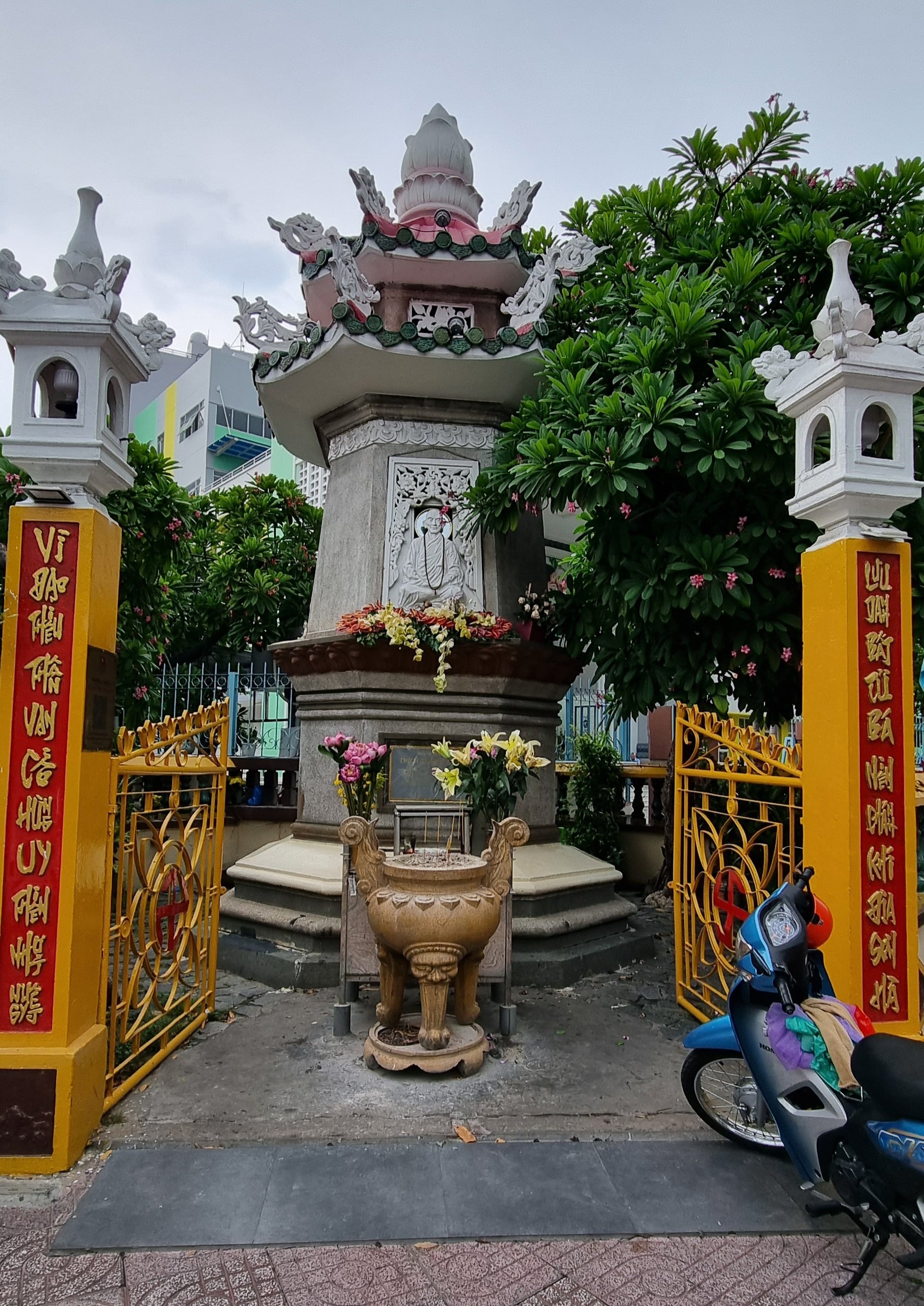
A temple in honor of Thích Quảng Đức at the intersection where he self-immolated himself.
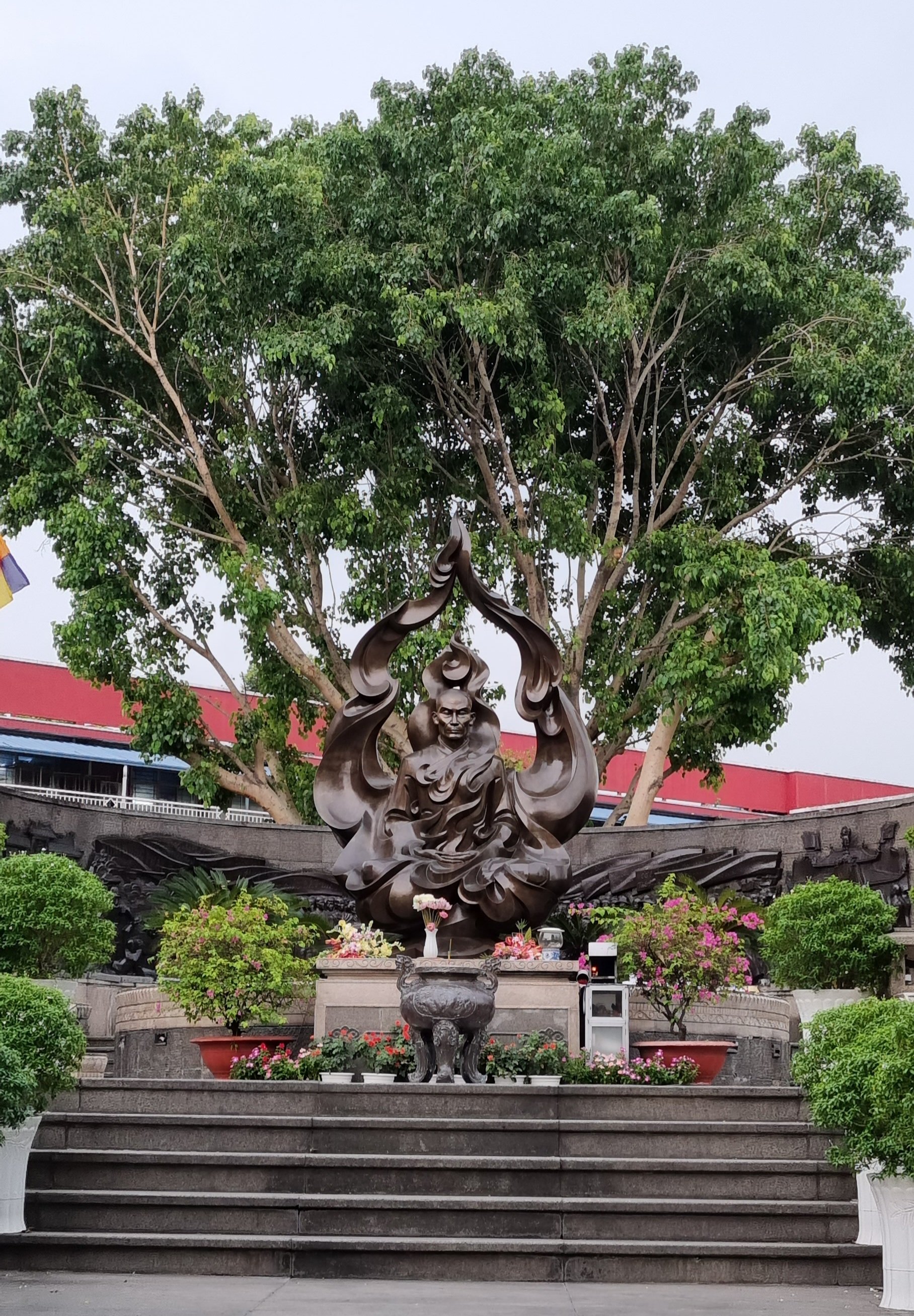
A temple in honor of Thích Quảng Đức at the intersection where he self-immolated himself.

This memorial has been constructed at the junction where the monk set himself on fire. You can walk around the statue and there is a wall that depicts the treatment of the Buddhists by the then Roman Catholic government behind this statue. There’s some incense that you can burn to pay your respects to the monk who made the ultimate sacrifice.

Majestic Hotel

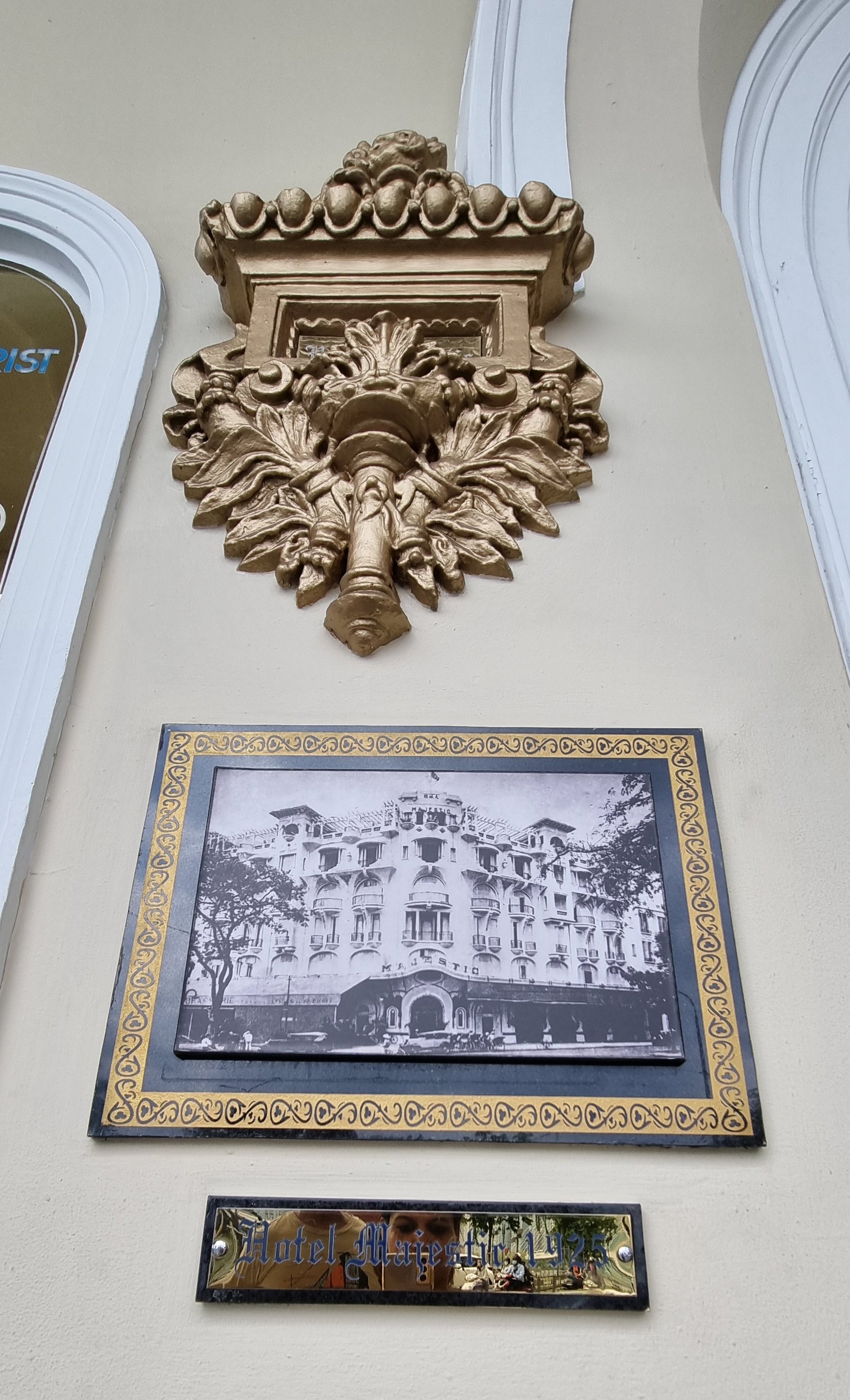
I love dining at historical/legendary/iconic spaces.  I feel like you can really soak in the vibe, instead of just walking through it.  It’s like Koshy’s or the Airlines Hotel in Bangalore.  So when I heard that the Majestic Hotel was one of the oldest hotels and has the best view of the Saigon river, I decided we had to go.  The food was good, but I really liked their Saigon-themed cocktails.  I had a Happy Saigon.
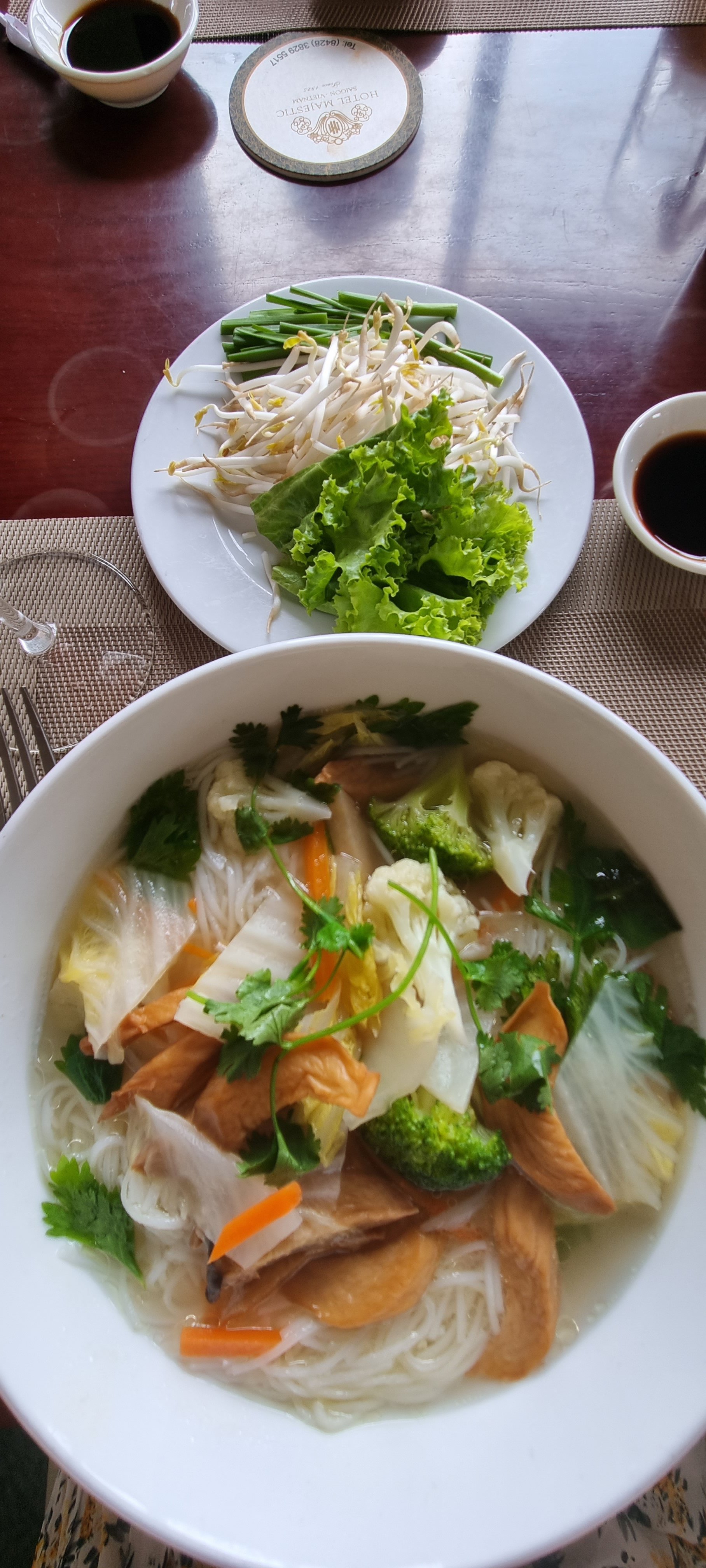
Noodle soup at the Majestic Hotel.

It’s nice that you can eat largely healthy food in Ho Chi Minh City, and I love their soups! Plus because of the heat, you’re going to be drinking more than eating.
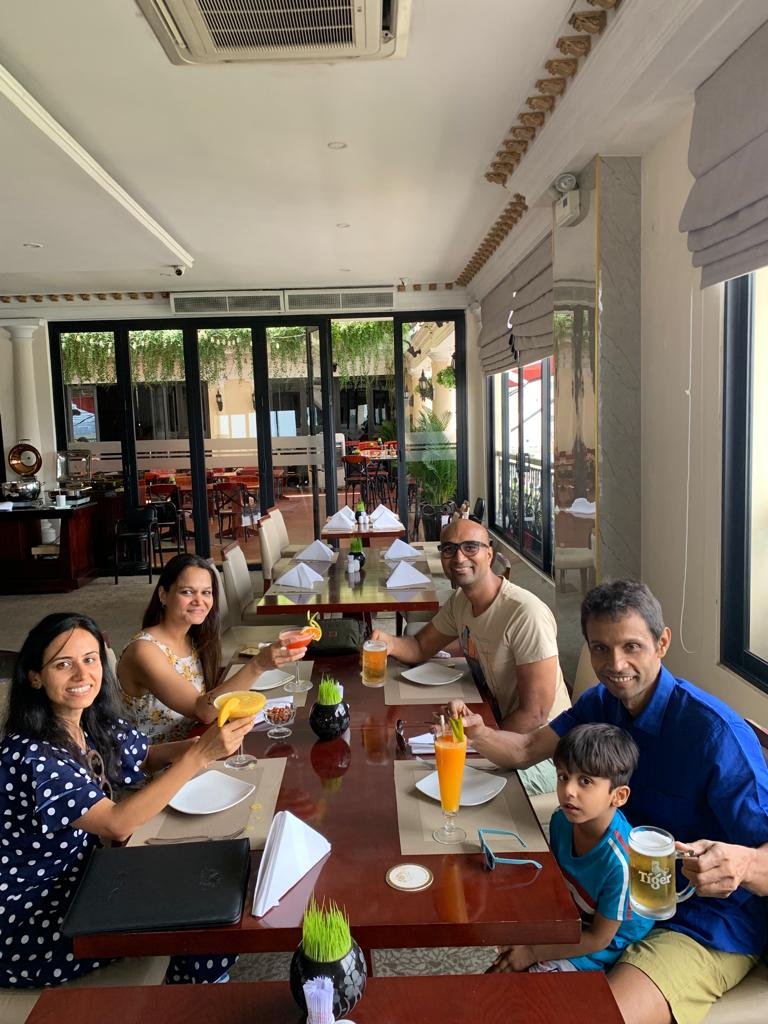
Happy Saigon.

Happy with my Happy Saigon and some friends!

Besides this we also at the 22z10 Bar, which had some great pizza.  The walking street was also fun, but very loud, so if that’s not your thing, then you can avoid it.  The egg coffee is great, but fills you up!  Ho Chi Minh City’s local market is called Ben Thanh Market, and it’s a great place to pick up souvenirs.

We’re all set to fly out from Ho Chi Minh City tomorrow afternoon.  But I’ve had a great time.  We’ve stuck to District 1, but there’s so much to do here and we didn’t feel we missed anything.
 

RIMYI Experiences Yoga & Vedanta Philosophy

The Ultimate Surrender – Intersection of Yoga & Vedanta

May 10, 2023

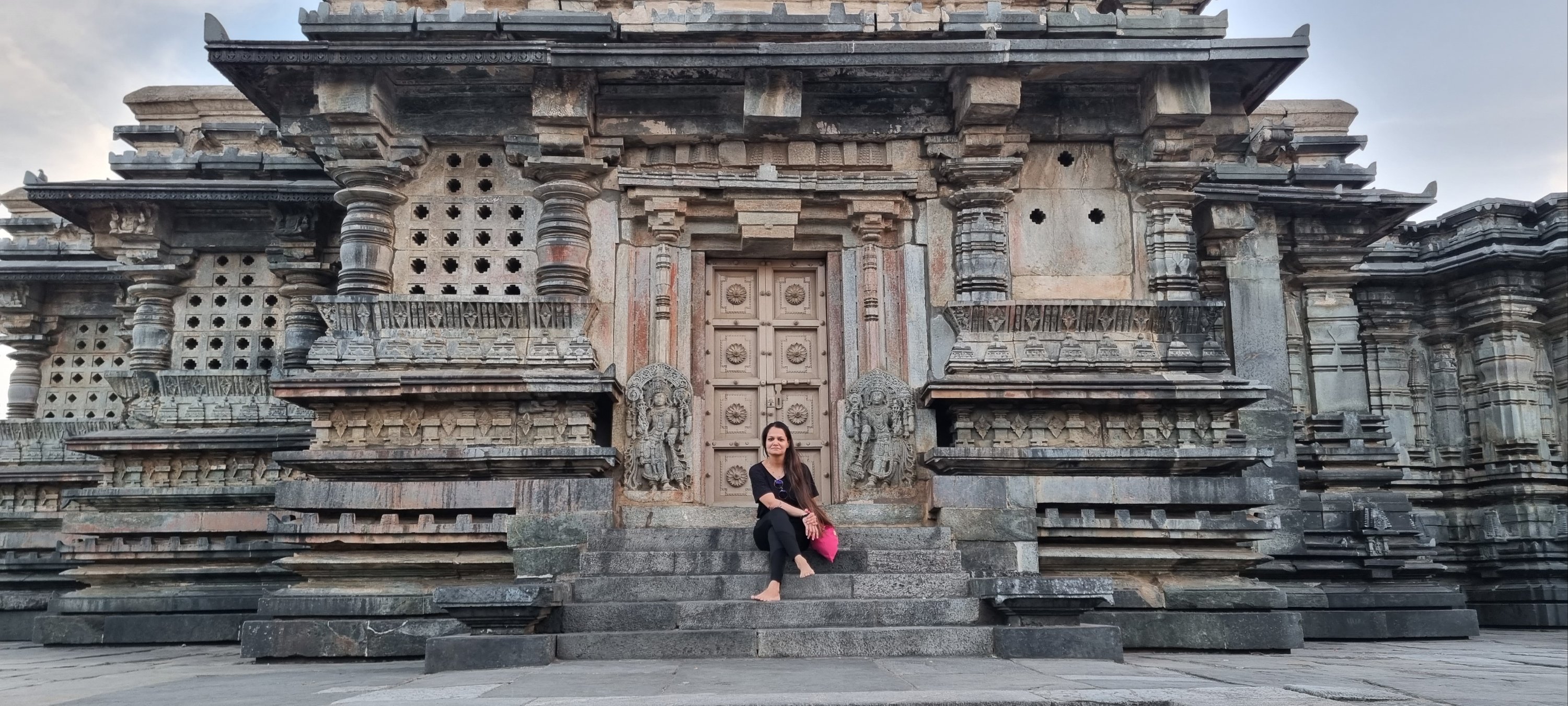
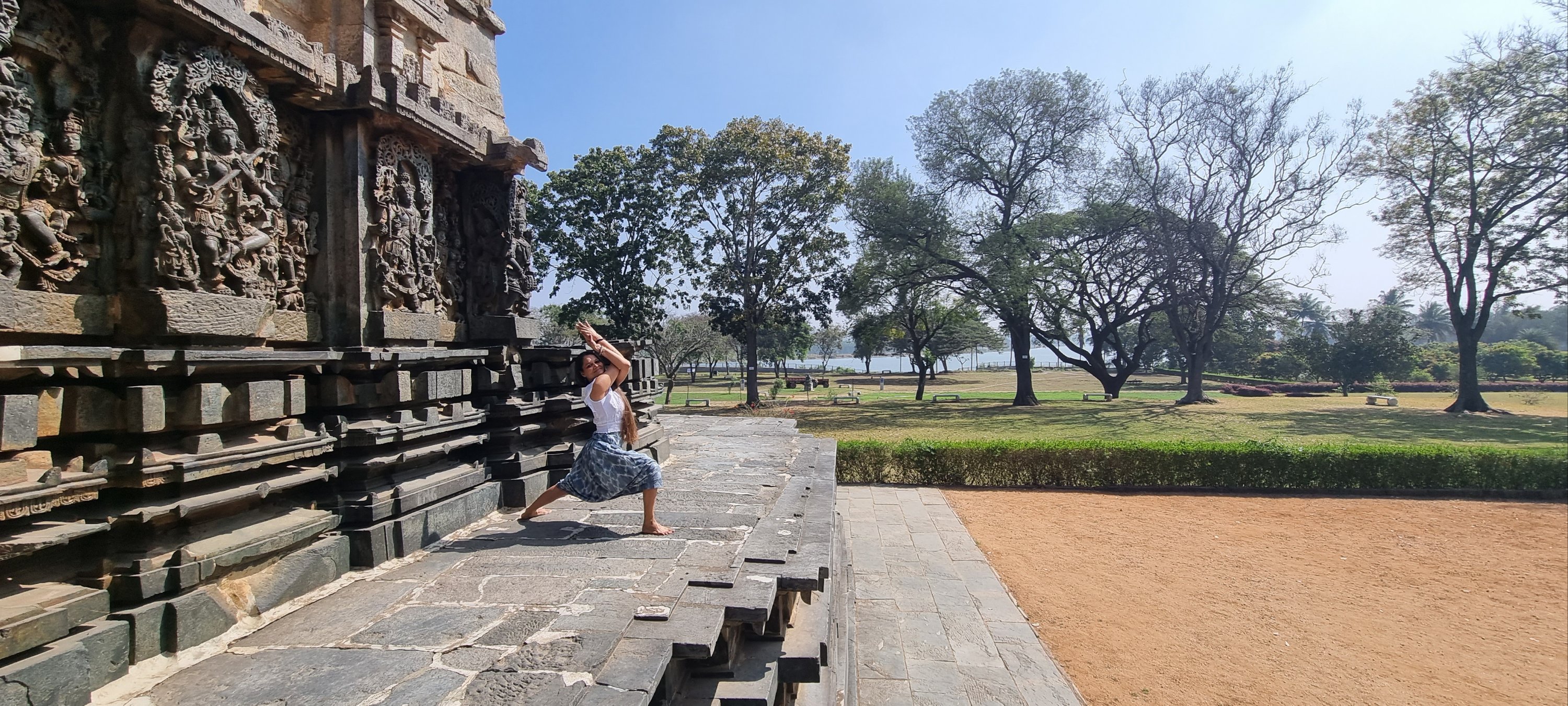
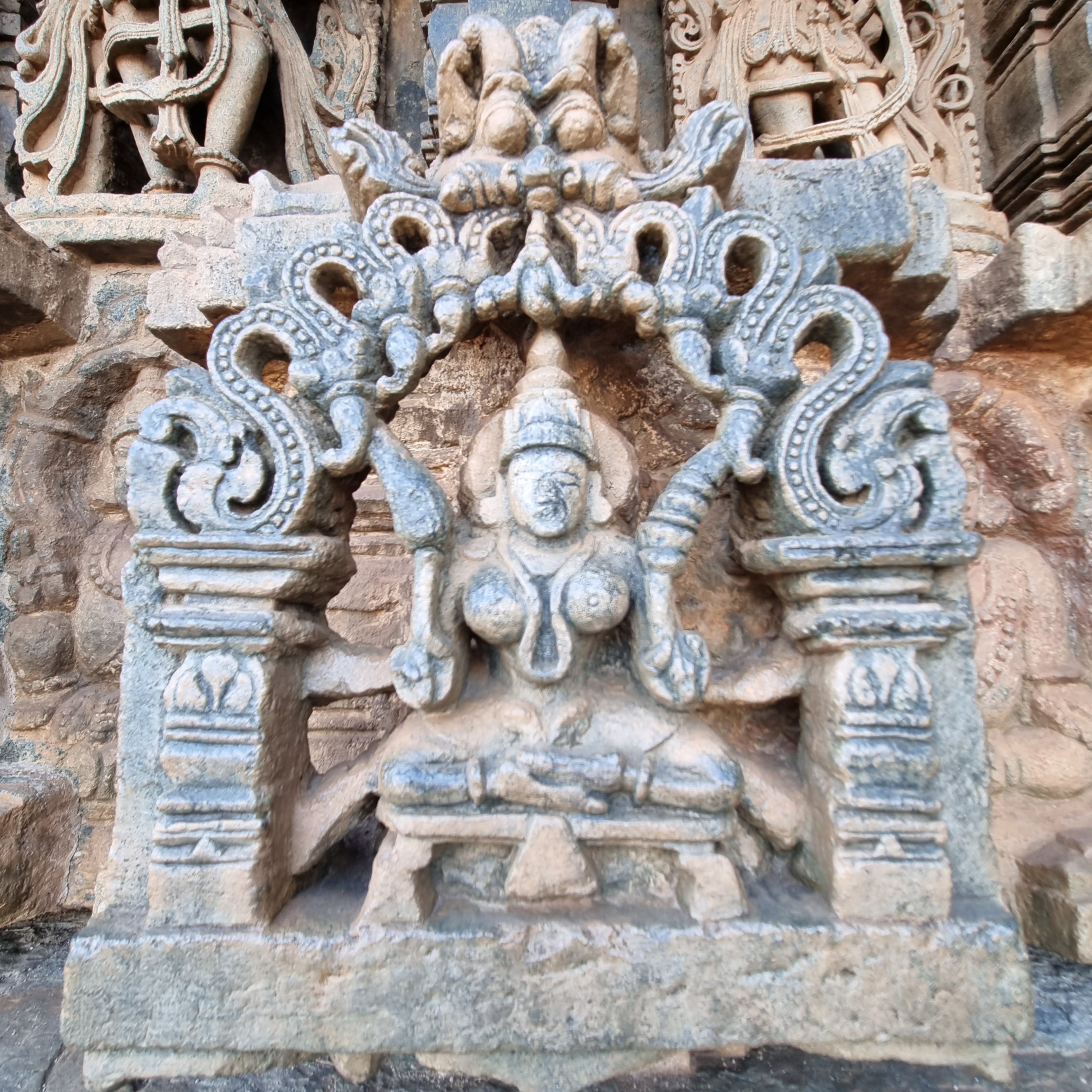
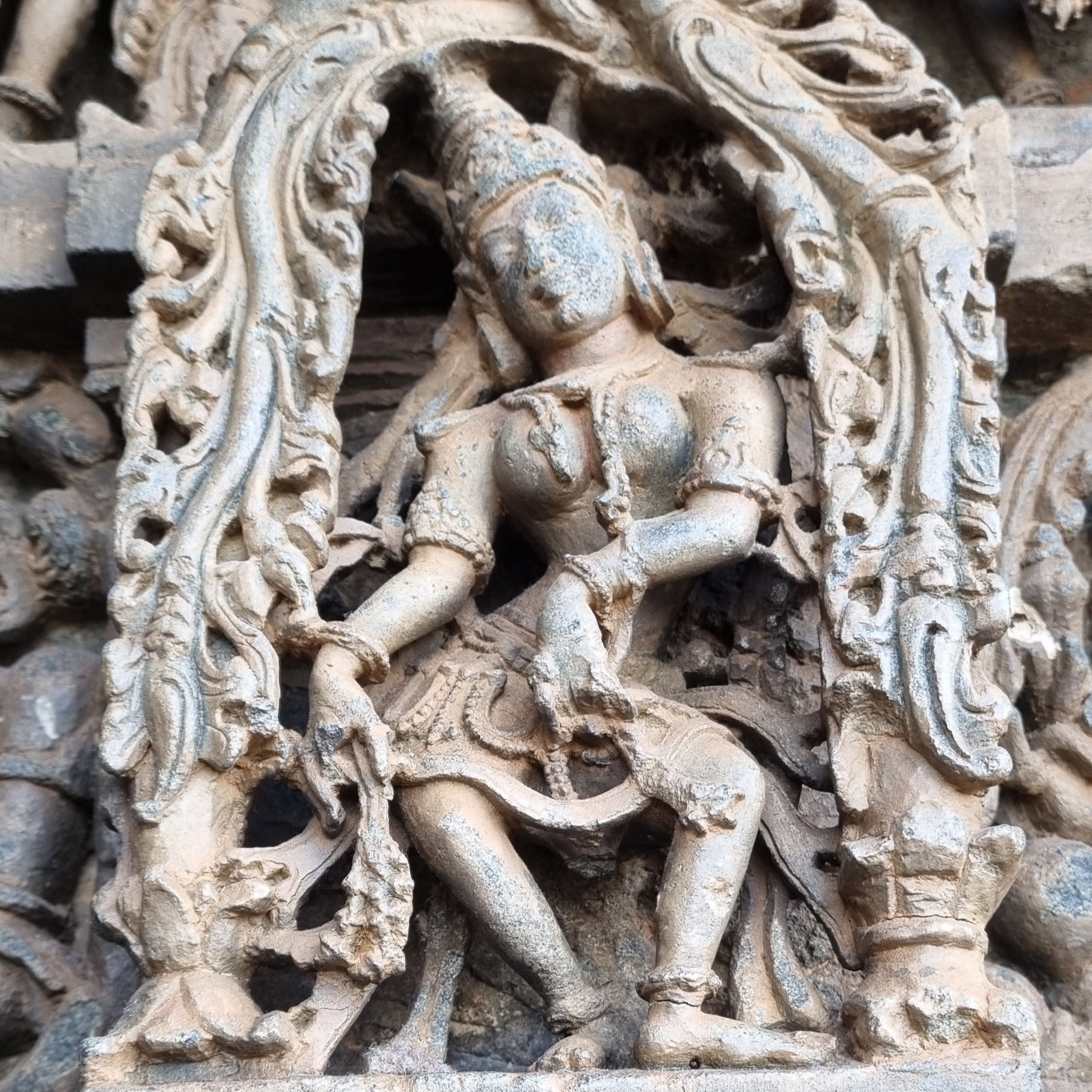
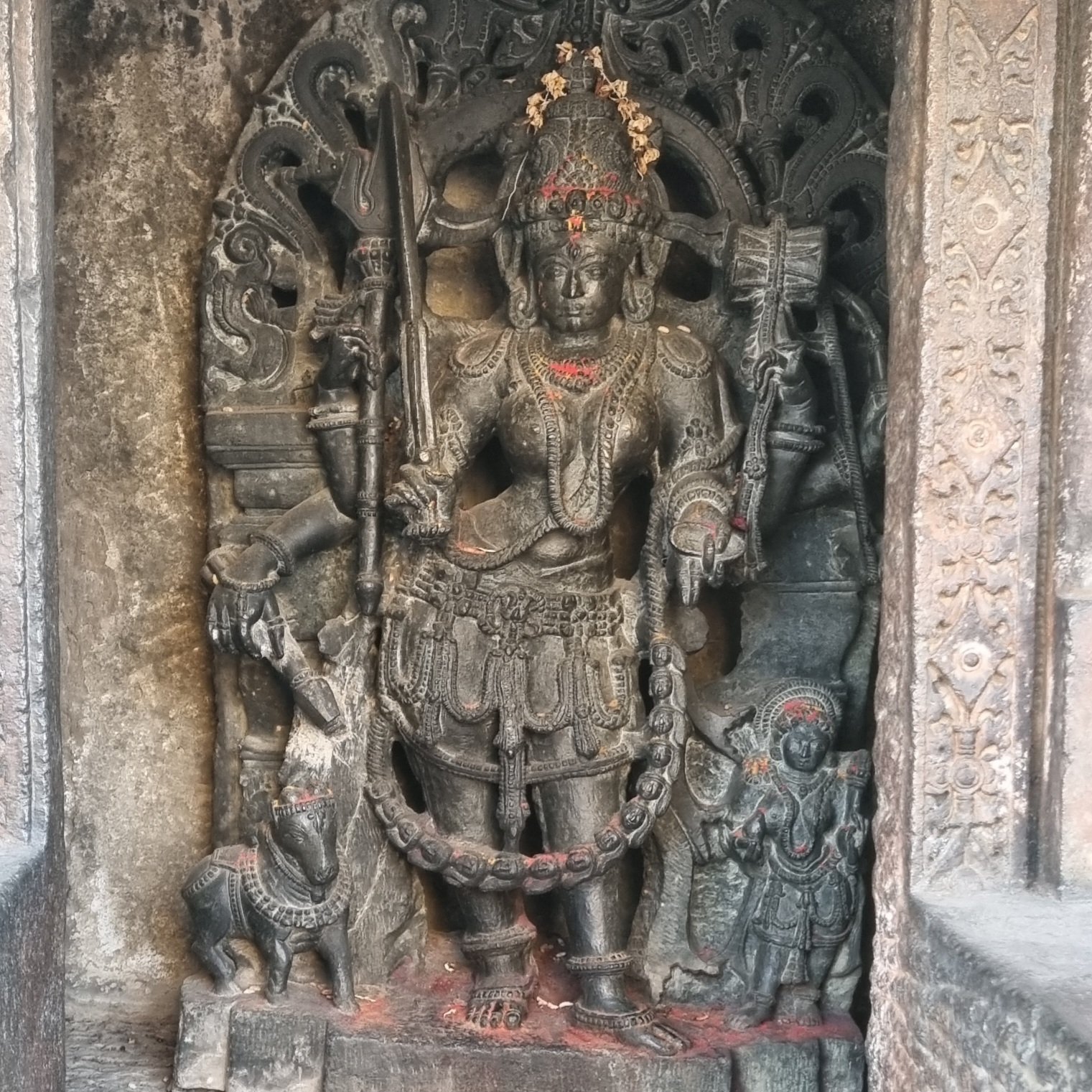
At the beautiful temples of Belur & Halebidu.

The philosophy of yoga and Vedanta sometimes intersect, and I love spotting this overlap in different classes.

During the last RIMYI class I took, Raya spoke about letting go.  When we talk about letting go of something, there is an assumption that you’re holding on to something.  It’s important to analyse this something.  How are you holding on to it?  Why are you holding on to it?  Once we analyse it, can we let it go?

To make it relevant to the asana practice Raya asked us to ask ourselves what we were feeling in the asana we were holding (Uttanasana).  What were we truly feeling?  Were we feeling our hamstrings hurting, or was the back hurting, or were we holding the abdomen too tight?  When you can identify what you are holding – you can begin to let it go.  “I let go of my back, I let go of my abdomen, I let go of….”  He asked us to do the same in Sirsasana, but focus on mental conditions/conditionings. He asked: Can letting go be voluntary?  Can we actively let go?

He gave us the example of how he came across a ratty old t-shirt when he was cleaning his cupboard.  Everyone tells you to let go of this old tee that you don’t even use anymore, but you can’t.  We need to understand that it’s not the object that we can’t let go – it’s the memories associated with it that we’re unable to let go.

What are we actually holding on to?  Can we analyse that similar to how we analysed Uttansana?  Mentioning yoga sutra 1.11 he asked us to ponder over what is the role of memory and cleansing the memory.  Can we actively identify and do something about?  Letting go of an old t-shirt is easier than letting go of memories.  Memories can be good, troublesome, traumatic, ecstatic.  How do we deal with this baggage of memories and how does it impact us?  Can we let go of attachment to the memory?  Can we actively let go of sad memories?  Going into parsva sirsasana he asked us to contemplate looking at the memory from a different angle.

अनुभूतविषयासंप्रमोषः स्मृतिः PYS 1.11

Memory is the unmodified recollection of words and experiences.


He spoke about two sutras that he would frequently speak to Guruji about:

सुखानुशयी रागः PYS 2.7

Pleasure leads to desire and emotional attachment.

दुःखानुशयी द्वेषः PYS 2.8

Unhappiness leads to hatred.

A person with a sense of discrimination should strive a balance between sukha and dukha instead of living a the mercy of these two.  There are so many triggers in life today – we are all used to certain manners, ways and customs.  But can we let go of getting triggered?  Raya told us that  us to actively open our drawers and pull things out and look at everything that comes out and ask ourselves if we are using it.  Have we been keeping certain memories in the cupboard, maybe even in the freezer.  And even in the freezer have they become rotten and started stinking?  Can we actively bring these memories out,  clean them up and throw them away?

How do we throw these memories away?  By turning it from klista to aklista.


वृत्तयः पञ्चतय्यः क्लिष्टाक्लिष्टाः PYS 1.5

The movement of consciousness are fivefold.  They may be cognizable or non-cognizable, painful (klista) or non-painful (aklista).

The fact that it happened remains, but the feeling associated with it goes.  Raya also stressed that we all want happiness, but we remember the sad things more – happiness has a shorter shelf life.  Happiness is like camphor or mercury – you can’t hold it, it evaporates.

Next in Sarvangasana, Raya asked us to finally consider what we can let of of intellectually.  He spoke of fear and how we’re all fearful of something.  But some are able to face their fear because they have practiced handling this fear.  Practice analysing your fears and insecurities – once analysed can we let them go?  After giving daanam in a temple, we pour water over our hands symbolically ‘washing away’ our attachment with what we’ve given.  We need to let go of claiming things – ‘I’ did this, ‘I’ own this etc.  The most difficult thing is to let go of this claim.  After letting go of these claims, can I let go of the ‘I’ itself?

When one moves from the grossest to the subtlest, neither the beginning is seen nor the end.

My Vedanta teacher always stresses the importance of balance in life.  It is important for us to seek pleasure, but also to accept that pleasure and pain come together.  As seekers we are encouraged to go after our dreams and desires, but we need to remember that the result of our pursuit depends on many factors.  Therefore, we can’t be swayed by victory or defeat, sukham or dukham.  We should pursue life according to dharma, and with the best of our physical, emotional and intellectual intent.  And surrender the results, fruits, fear and even happiness to a higher purpose.

What is left to surrender when I have surrendered everything?

My teacher explained the idea of surrender using verse 18.66 of the Bhagawad Gita.

सर्वधर्मान्परित्यज्य मामेकं शरणं व्रज |
अहं त्वां सर्वपापेभ्यो मोक्षयिष्यामि मा शुच: ||

In this shloka Lord Krishna is asking Arjuna for the ultimate surrender – the surrender of the ‘I’ or the ego.  Letting go of the ‘I’ in all the claims that I make.  Once I have surrendered everything, I surrender the ‘I’ too.  And in that way I merge with the One, the universal consciousness.


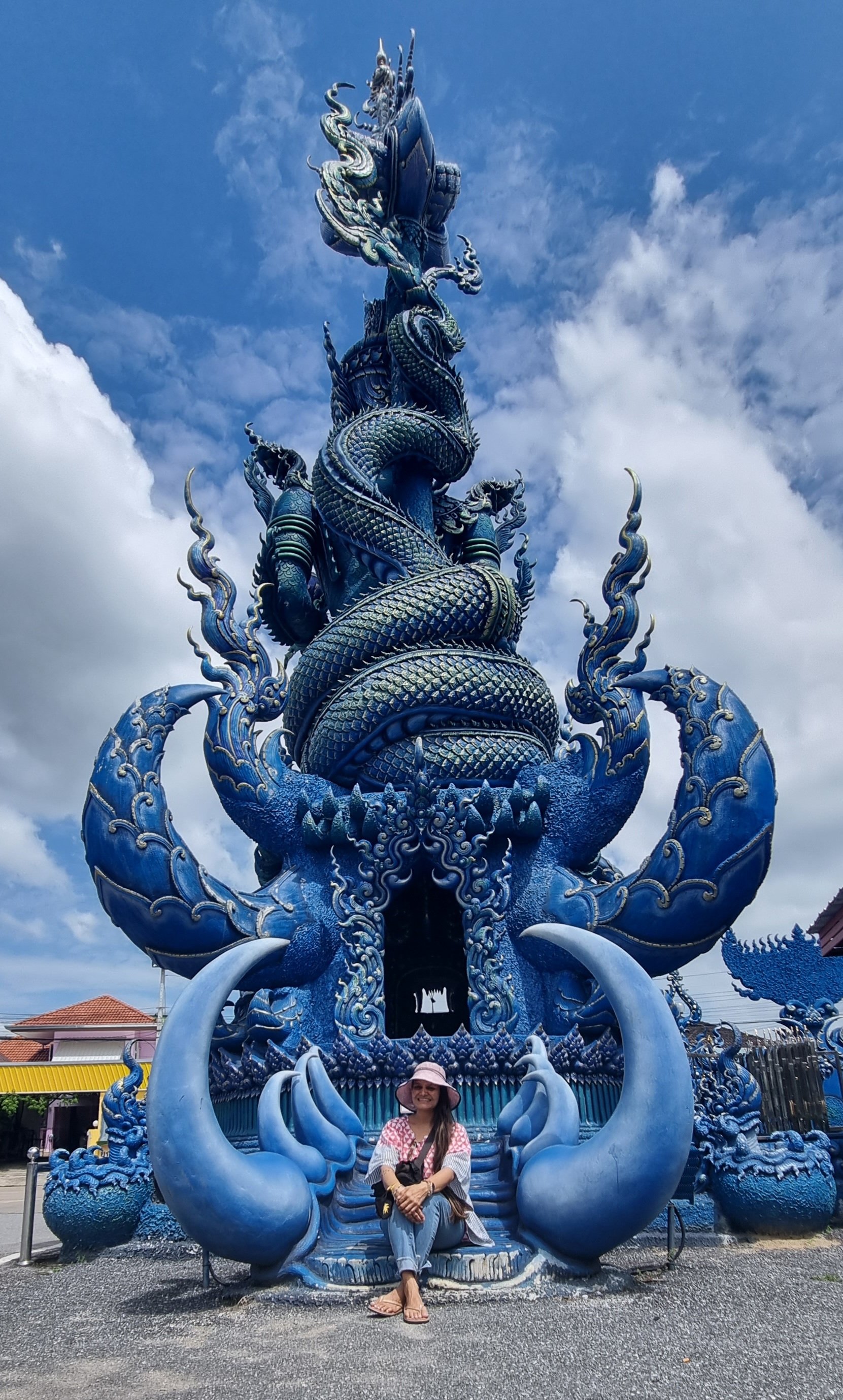
At the Blue Temple, Chiang Rai.

At the Blue Temple, Chiang Rai.


Books

Book Review: The Heart of the World

February 3, 2023
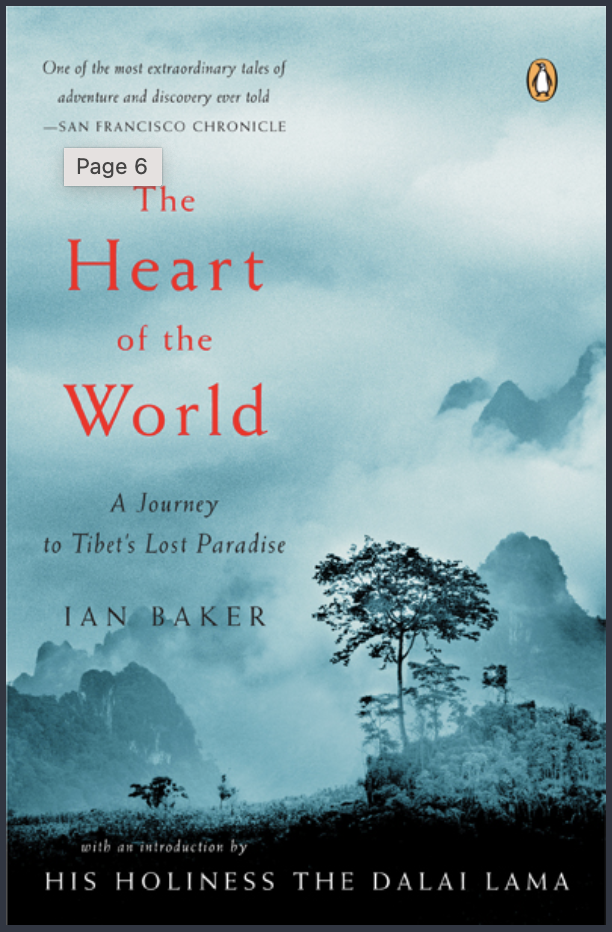
Heart of the World by Ian Baker

I read the pdf version of the book, but here’s the cover.


“How we view the world is a strange alchemy of cultural conditioning and personal choice.  One could cautiously avoid all geomorphic speculations or, like the Tibetans, allow the configurations of rock and water to guide one into more exalted thoughts and alternate ways of seeing.  As the Victorian poet Robert Browning wrote: “…a man’s reach should exceed his grasp.  Or what’s a heaven for?” – The Heart of the World by Ian Baker


I spent the last couple of days stealing bits of time here and there to finish reading ‘The Heart of the World’ by Ian Baker.  The book was on my radar for a while and was happy when my book club decided to read it.

‘The Heart of the World’ is really really long, but well written.  I felt the book took time to gain momentum.  It’s also challenging if you’re unfamiliar with the setting or the cultural context, because it makes it difficult to get immersed in the story.

I admit I hadn’t finished the book by the time the book club meeting happened.  But I’m glad I attended the meeting because I read the remainder of the book more intentionally.

Continue Reading

Travels

The Divine Feminine in Belur & Halebidu

January 30, 2023
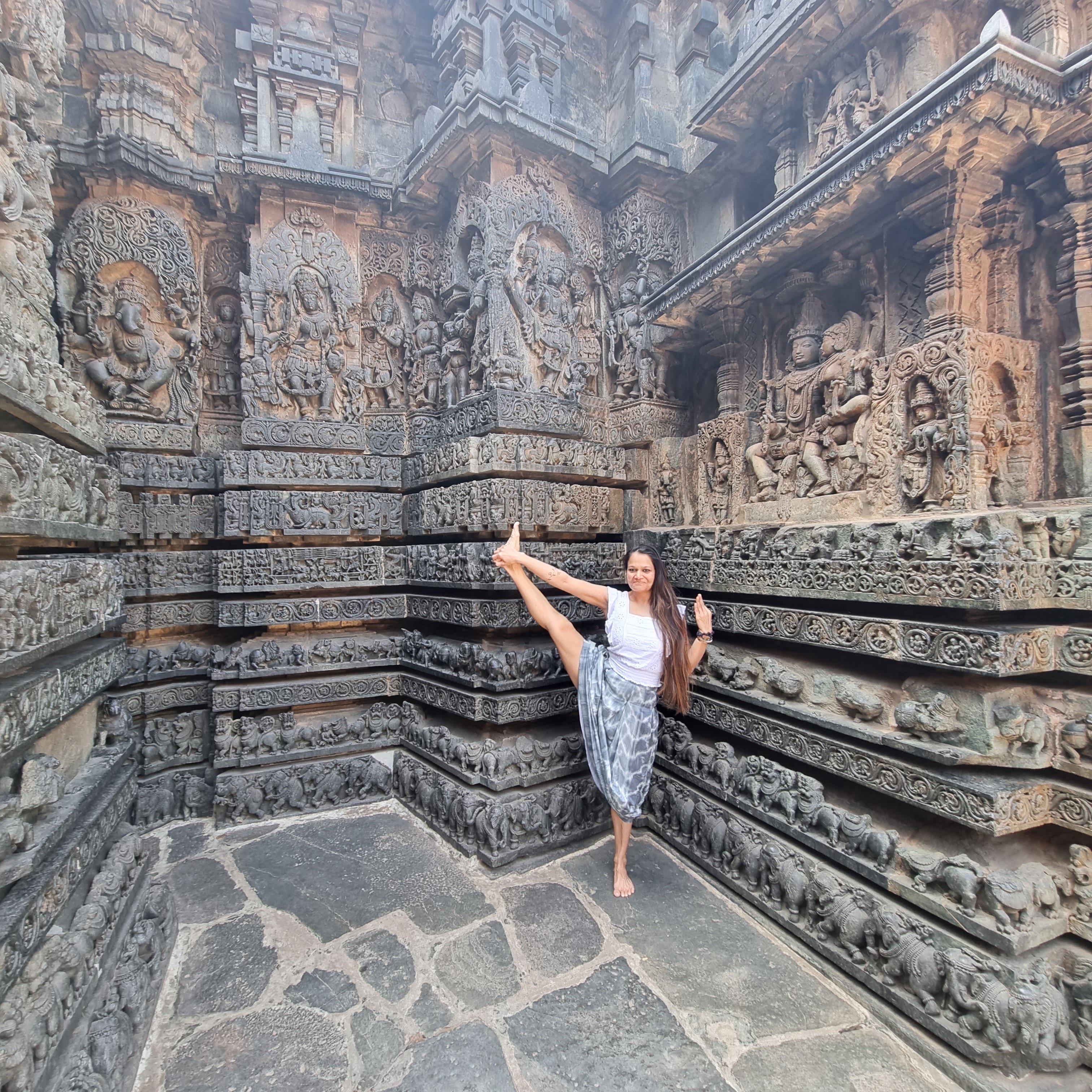
Posing around the temple.

Virbhadrasana with Garudasana arms on the jagati of the Halebidu temple.

It’s impossible to quantify or even qualify the impact of the divine feminine on our lives. The blurb for ‘In the Womb of the Goddess’ begins with: In our culture, we honour the feminine energy with music and with dance, with poetry and with song. It all started in the Womb of the Goddess.

This past weekend I had the opportunity to observe the feminine energy, symbolism and reverence depicted in the temples of Belur and Halebidu.  Those of you who follow me on Instagram might have seen a few of these highlights already.  I’m adding a lot more here.

Narasimha and the Intestines

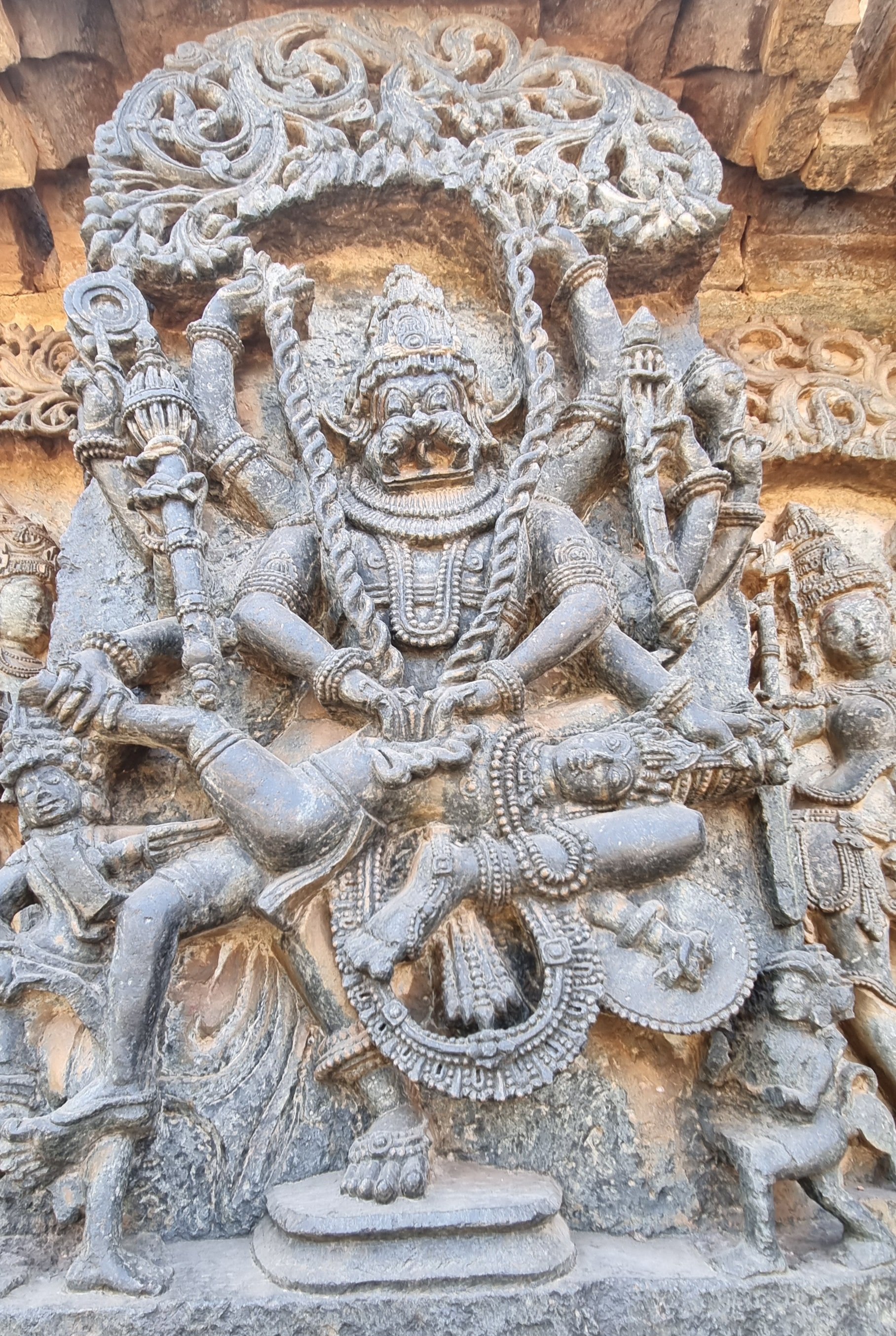
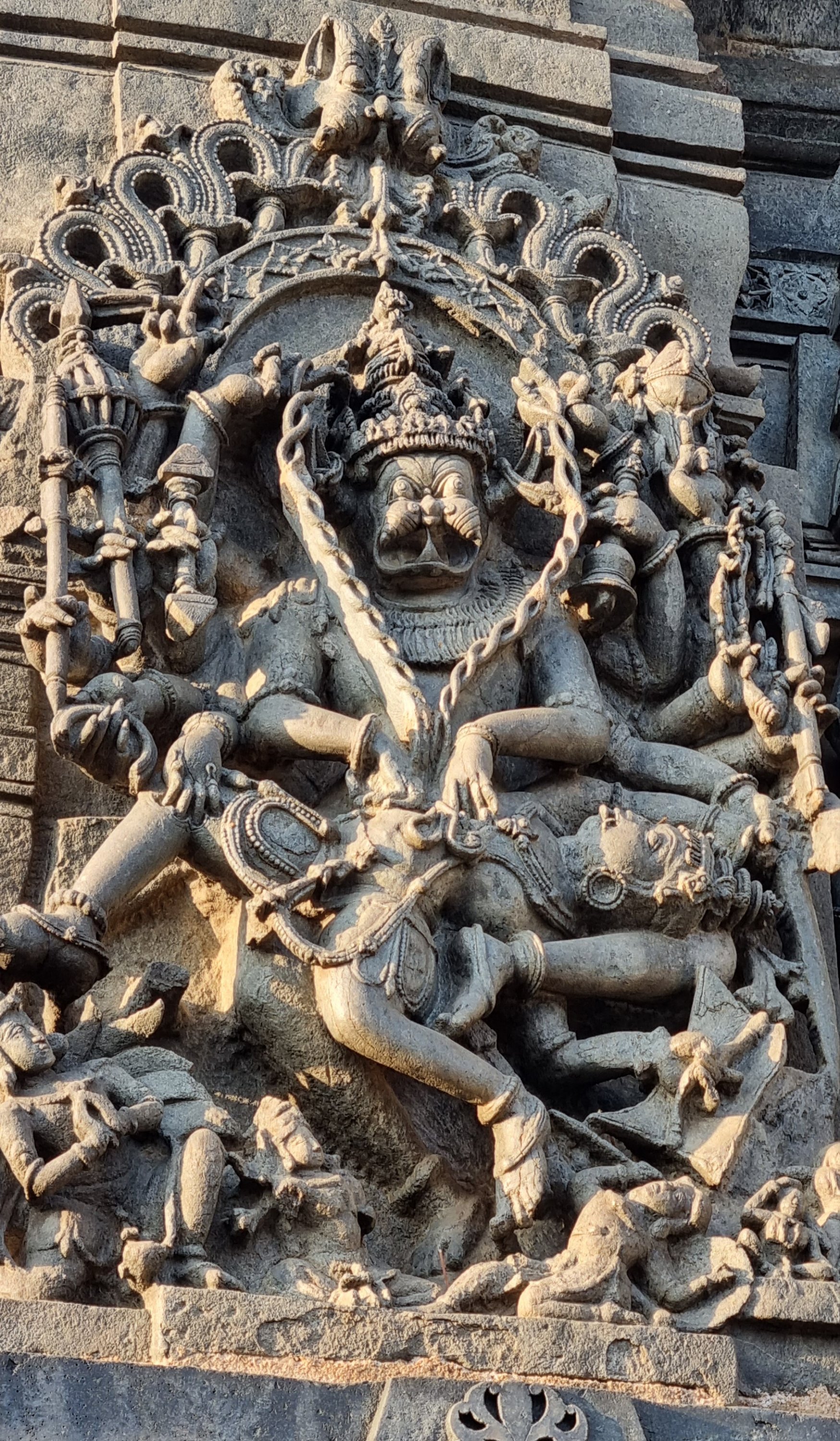
Carvings of Narasimha are everywhere.  Many in which he’s tearing Hiranyakshipu’s intestines out.  What he does with those intestines differ depending on your source.  Some say he wore them like a garland, others (like my guidebook) say he ate them.

Poor Hiranyakshipu.

Note the attention to detail in the jewellery. It actually looks like Hiranyakshipu’s necklace is draped over Narasimha’s leg. Also the facial expressions are uncanny – it actually appears he’s dead!


Narasimha.

Here we see a lot more of Hiranyakshipu’s jewellery – like his waist belt and his earrings. Note the expression on his face – he’s looking at Narasimha with unadulterated fear.


Garuda & Narasimha.

In this carving you can see Garuda under Narasimha. Here the intestines aren’t draped around the neck – in fact there’s only one strand which seems to be going into Narasimha’s mouth. This sculpture also inspired my Garudasana arms with Virbhadra legs – you can see Garuda has his legs in Virbhadrasana.


Trivikramasana

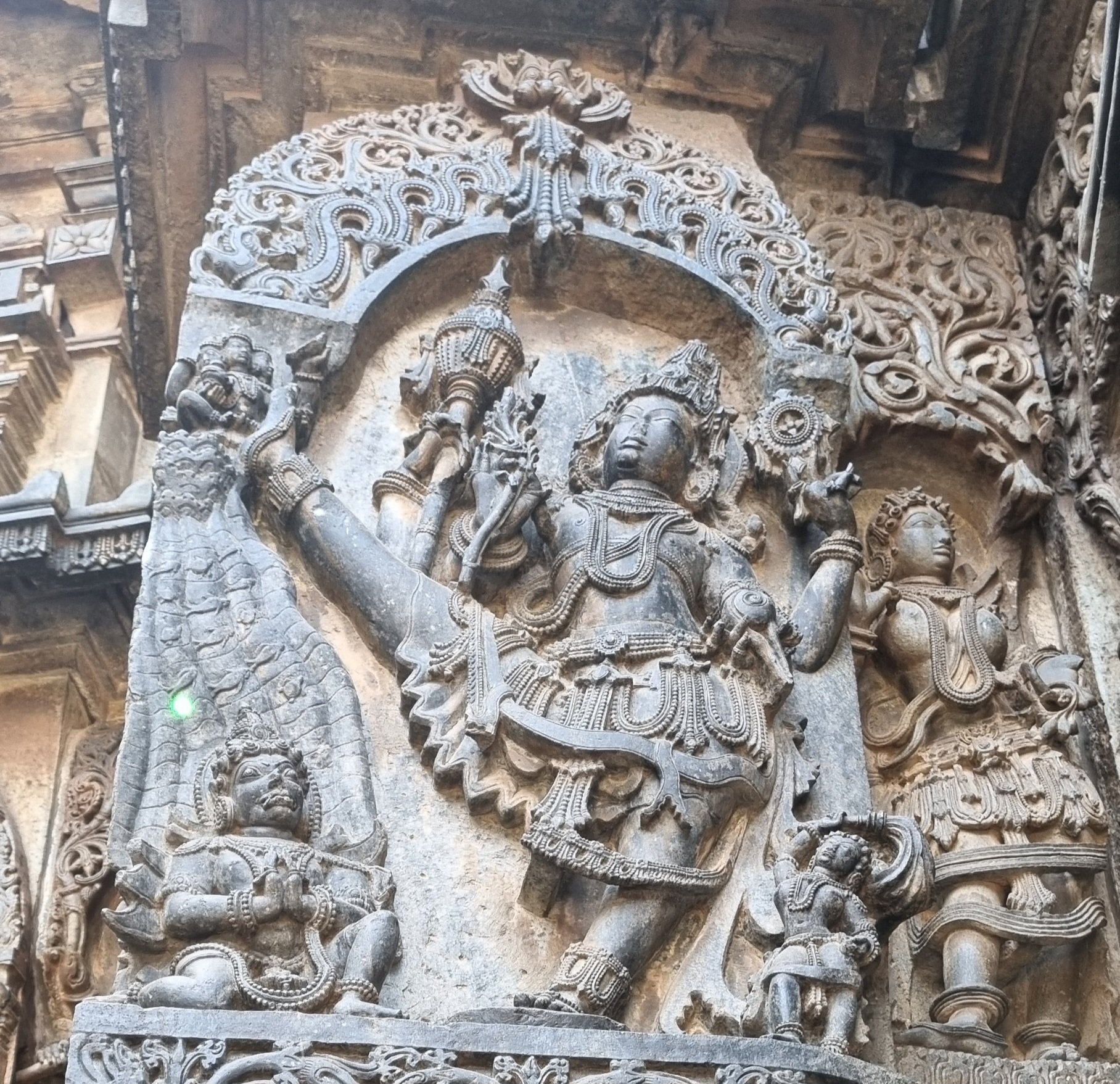
Vishnu is also known as Trivikrama – He of The Three Strides.  This avatar is mentioned in a story in the Rig Veda, where Vishnu measures out the three worlds.  He took three giant strides for the Earth, the heavens and the space between them.  This sculpture shows him with his leg raised – presumably mid-stride.

Trivikramasana.

Here we see a different story. Here Vishnu is in his avatar as Vamana. Vamana comes to earth to overthrow the demon Bali – who has gained control over Earth after defeating Indra. Bali is devout and conducts lots of rituals and pujas. Vamana attends on of these and asks Bali to grant him three feet of land to conduct his own puja. Bali agrees and Vamana grows into a giant. His first step is on Earth, the other on the Heavens and his final step is on Bali – with which he pushes Bali down into the netherworld. And order is restored to Earth once again.


Trivikramasana - an attempt.

Symbolism in Trivikramasana – are the steps we take bringing order into to our worlds or are we busy running haywire?


Noteworthy Sculptures

Last year I visited the Sun Temple in Konark and was struck by the explicit carvings depicting the Kamasutra.  I spotted a few of those in the temples at Belur and Halebidu too, but this section is for carvings I found more noteworthy.

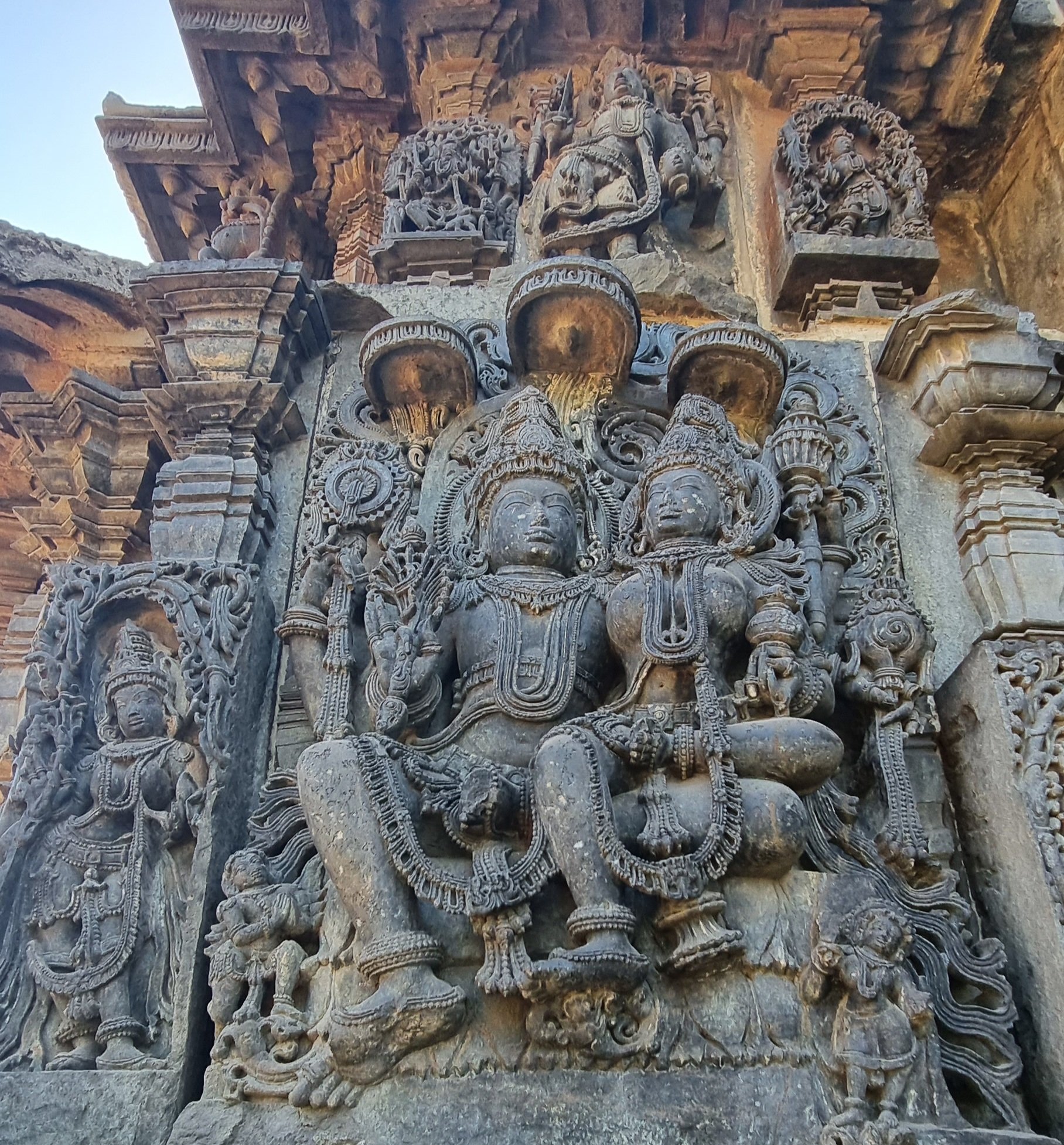
Gods in love.

Zoom in and take a look at the ornate jewellery. You can almost feel the weight of the long necklaces. Also the majestic postures – they are upright, but comfortable. Straight without being rigid. The way we’re supposed to be in our yogasanas.


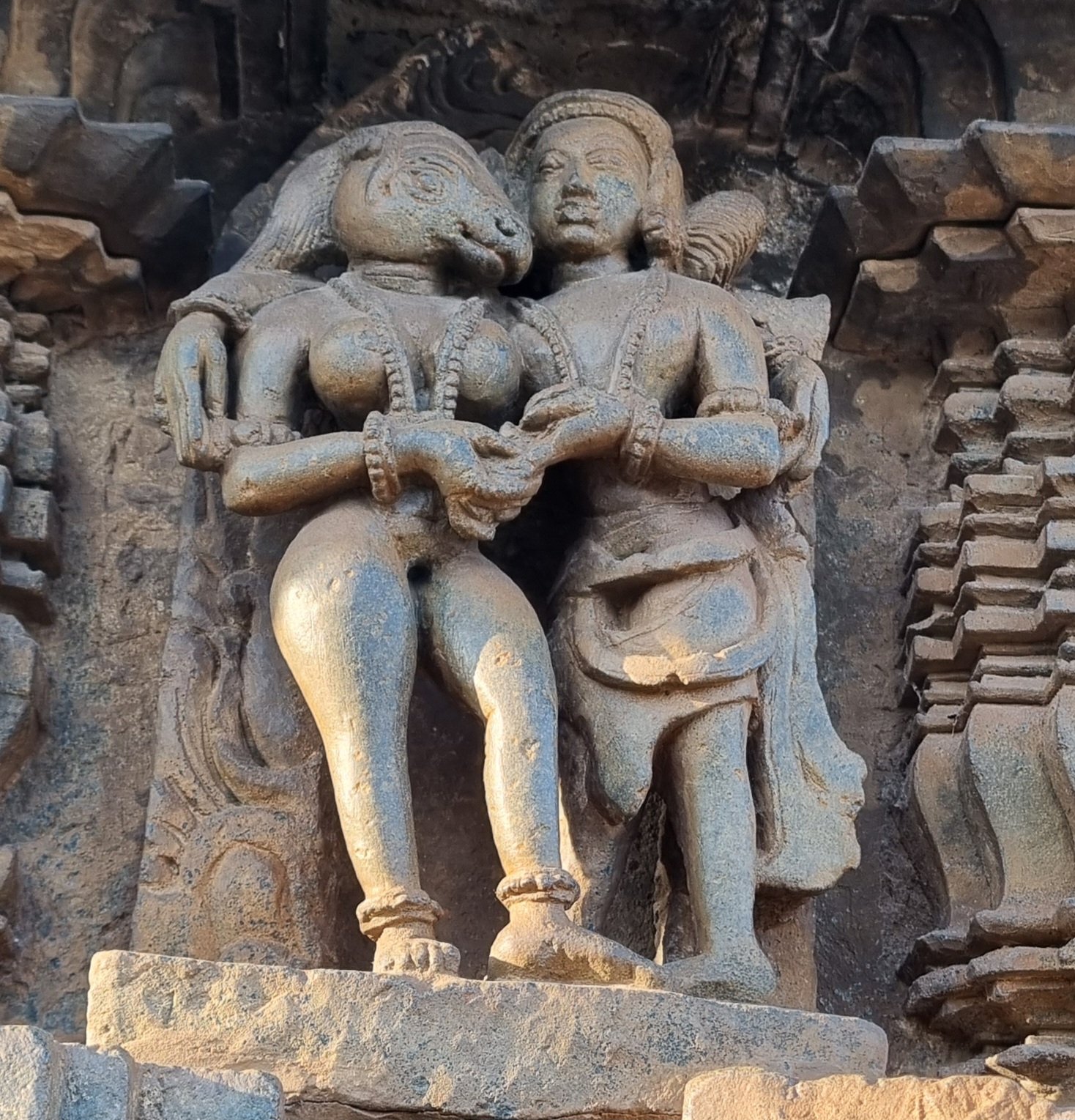
Love.

My guidebook actually said this sculpture shows us that love is blind. The man is in love with a woman with an animal’s head. According to the author this is a depiction of young love. I think we can come up with better interpretations.


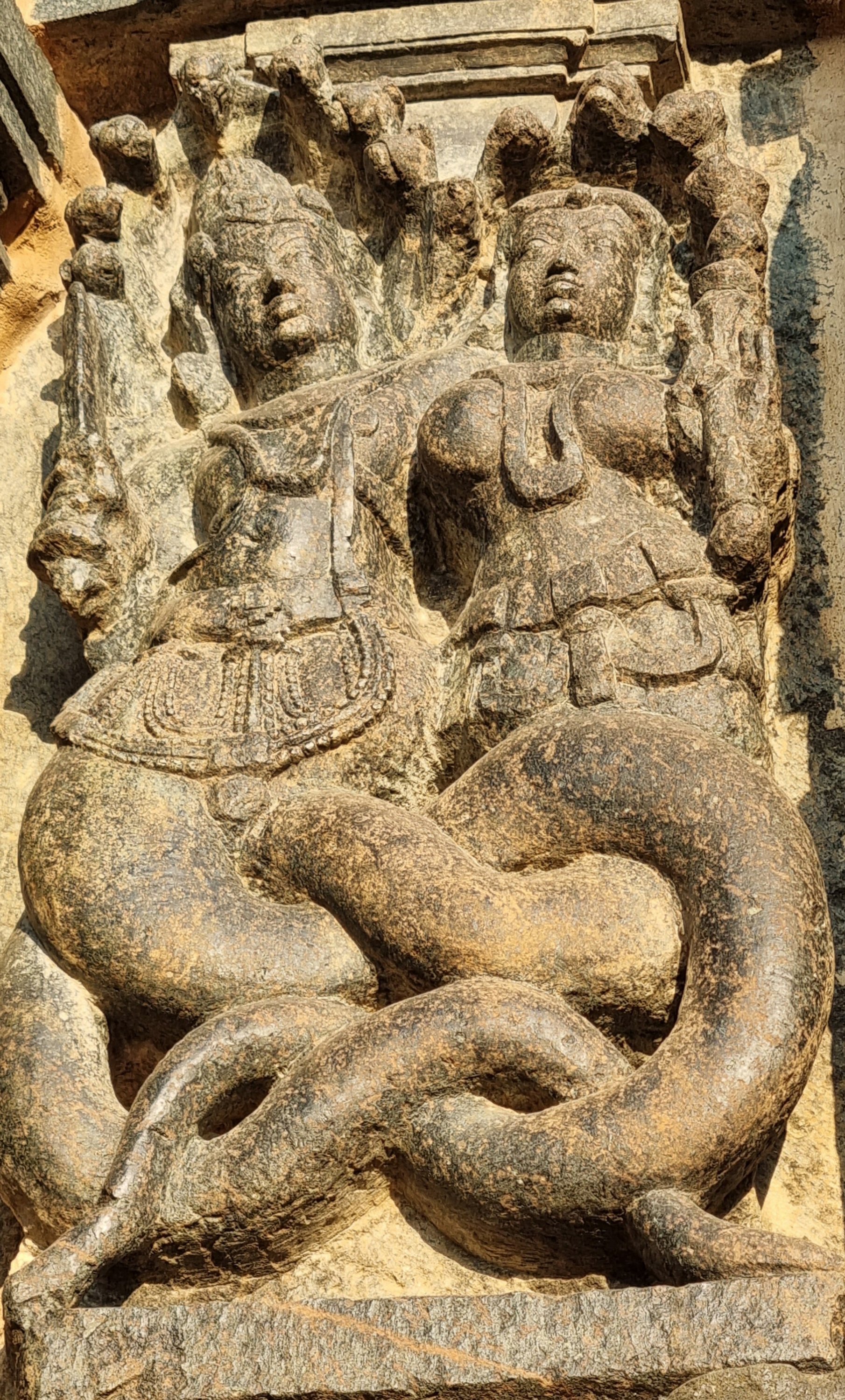
The Nagas.

Naga couple – divine or semi-divine beings with bodies that are half snake half human. Typical motifs in Hoysala architecture.


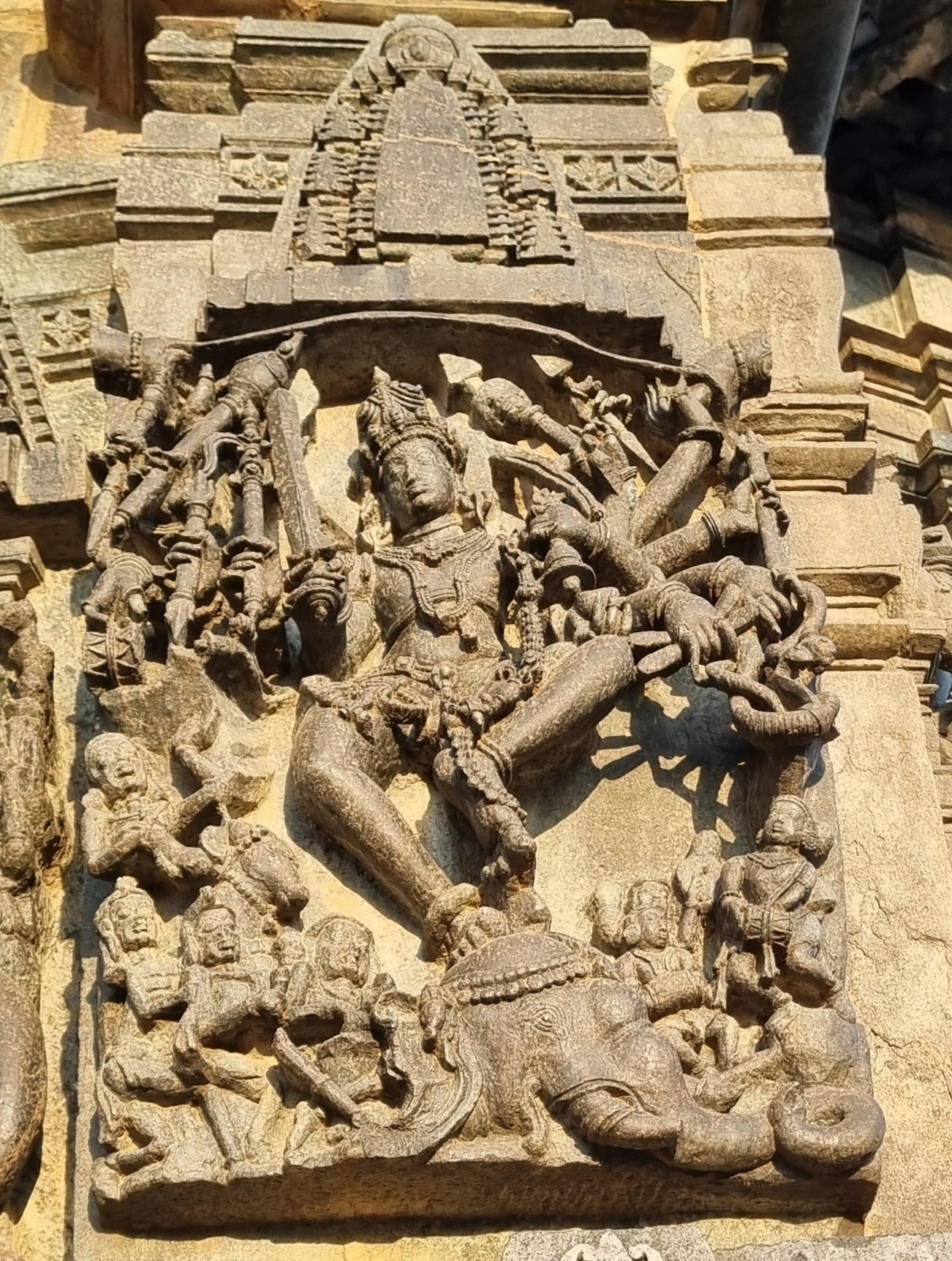
War scenes.

Kill an elephant and then dance on its head – some of the sculptures are quite gory.


Vishnu.

Vishnu pushing Bali into the netherworld. I love the details of the beads in the hand.

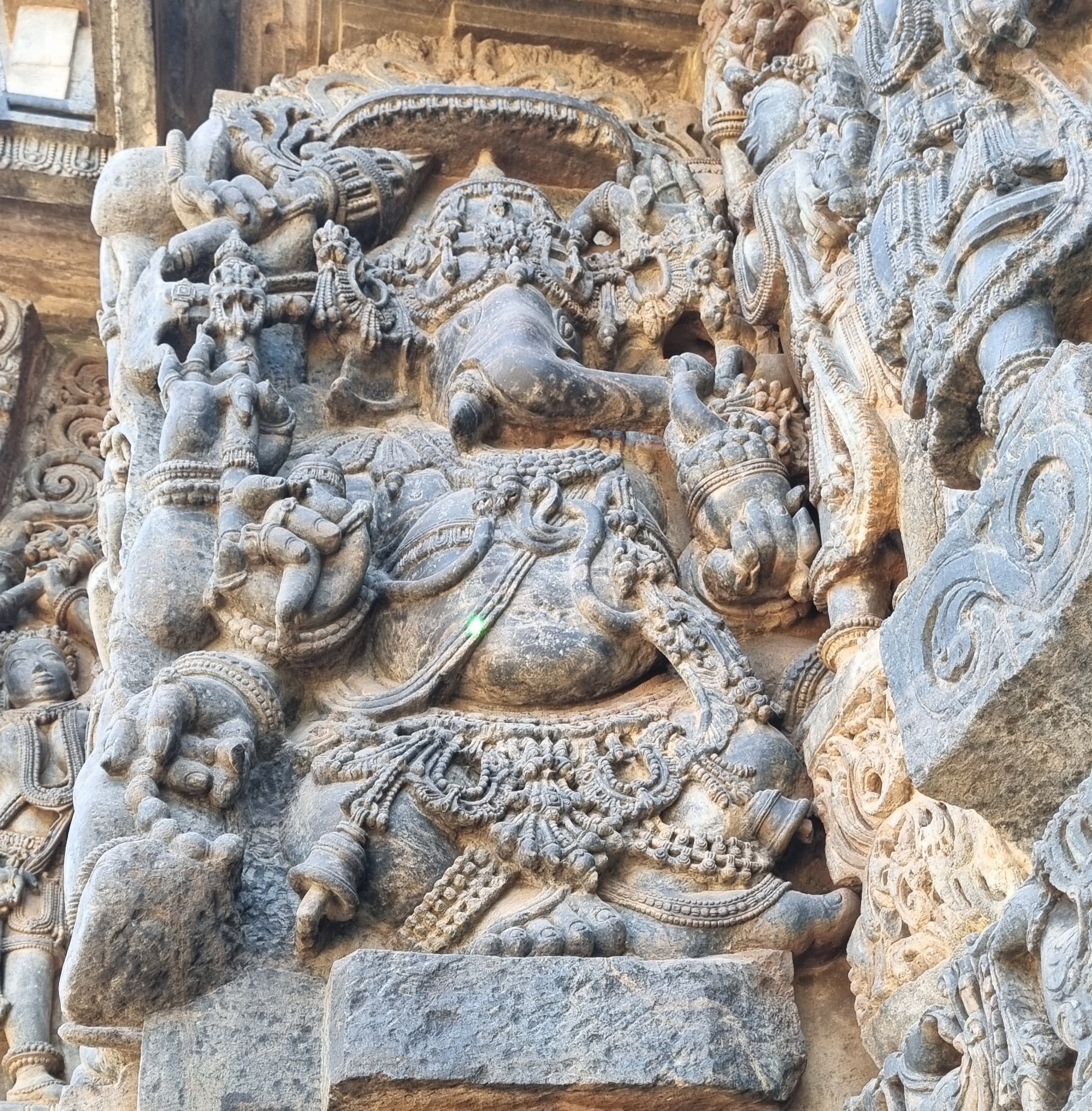
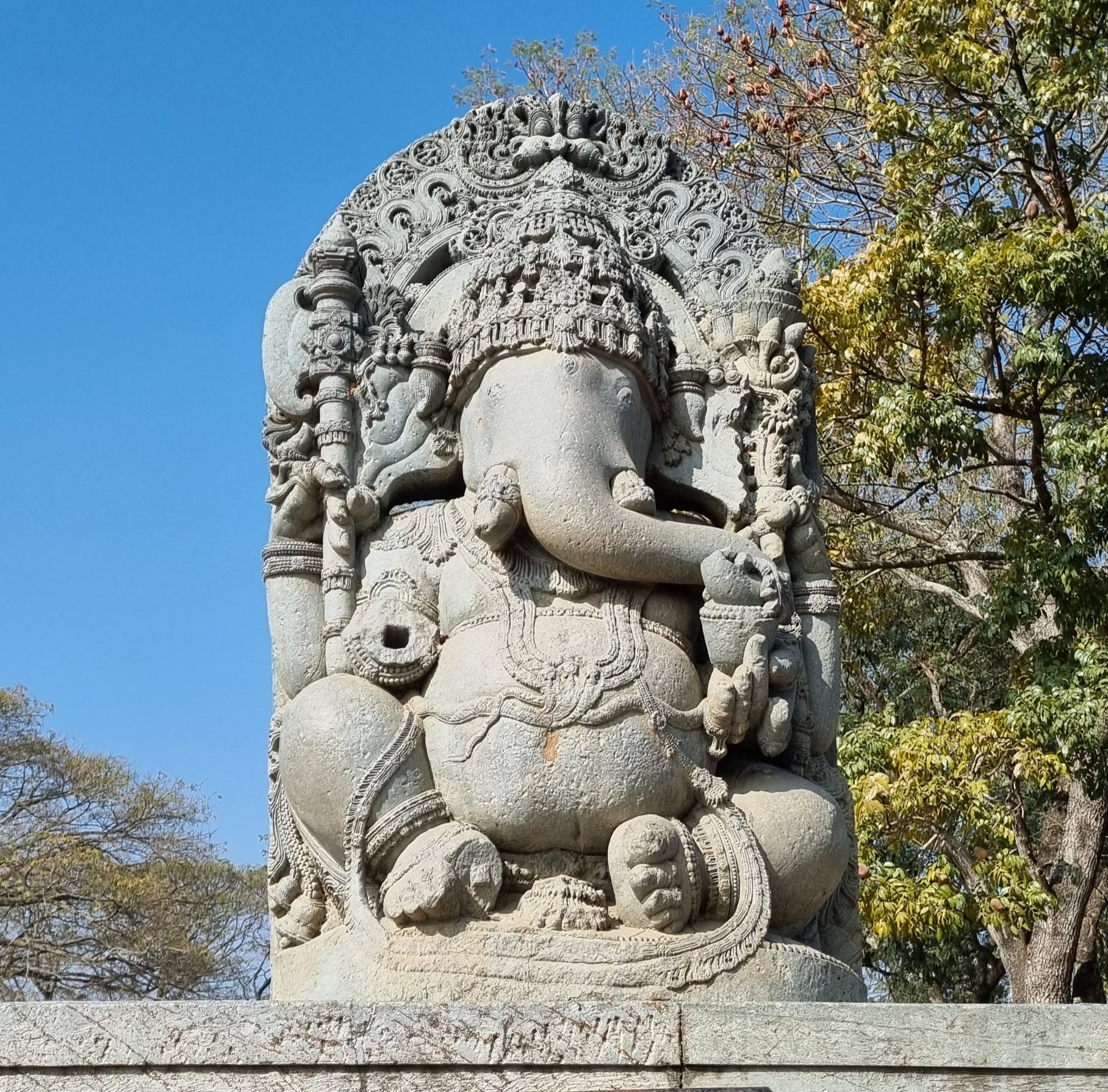
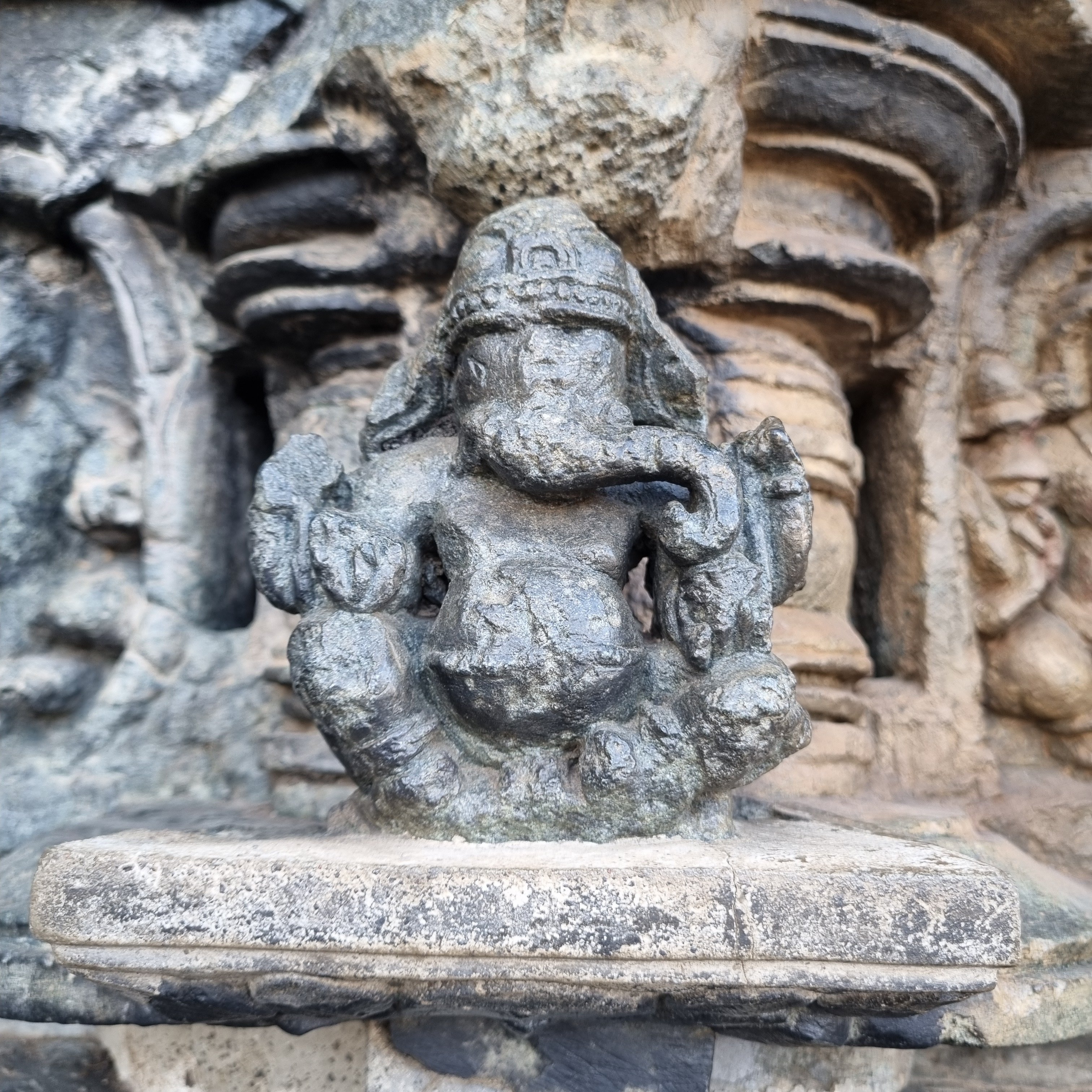
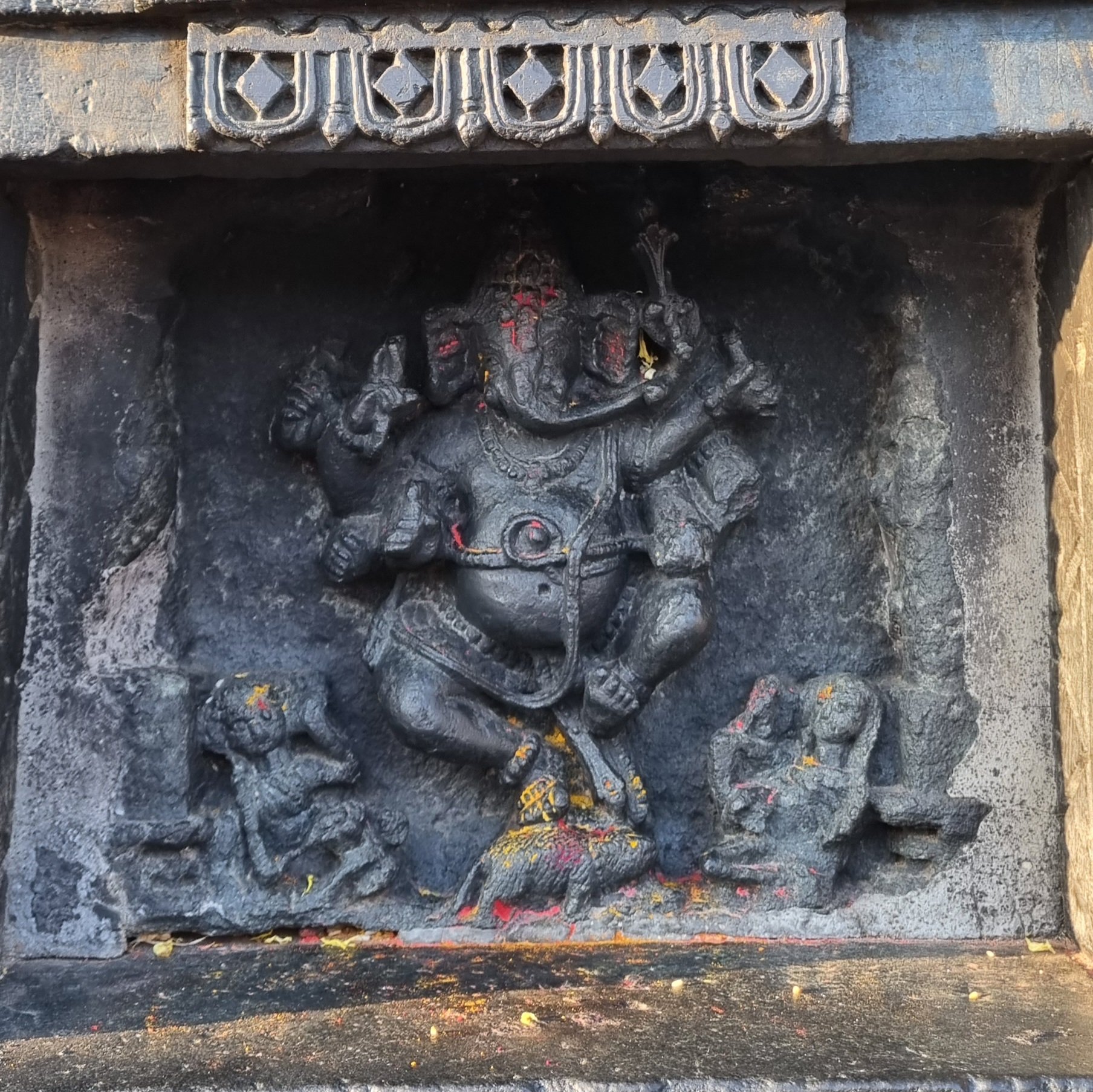
Ganesh Sculptures

Bejewelled Ganesh.

A sculpture on the outside of the Halebidu temple. It depicts Ganesh wearing ornate jewellery. I like the prayer beads in his right hand – and you can see the attention given to the fingers.


Ganesh.

This sculpture is at the entrance of the temple. Temple goers first get his darshan and then move on to the sanctum sanctorum.


Austere Ganesh.

This sculpture was in sharp contrast to the others – it seems unfinished (or perhaps chipped?). It has little or no ornamentation.


Ganesh.

Note the mouse under Ganesh’s feet – it appears to be having a hard time standing under the weight on him.

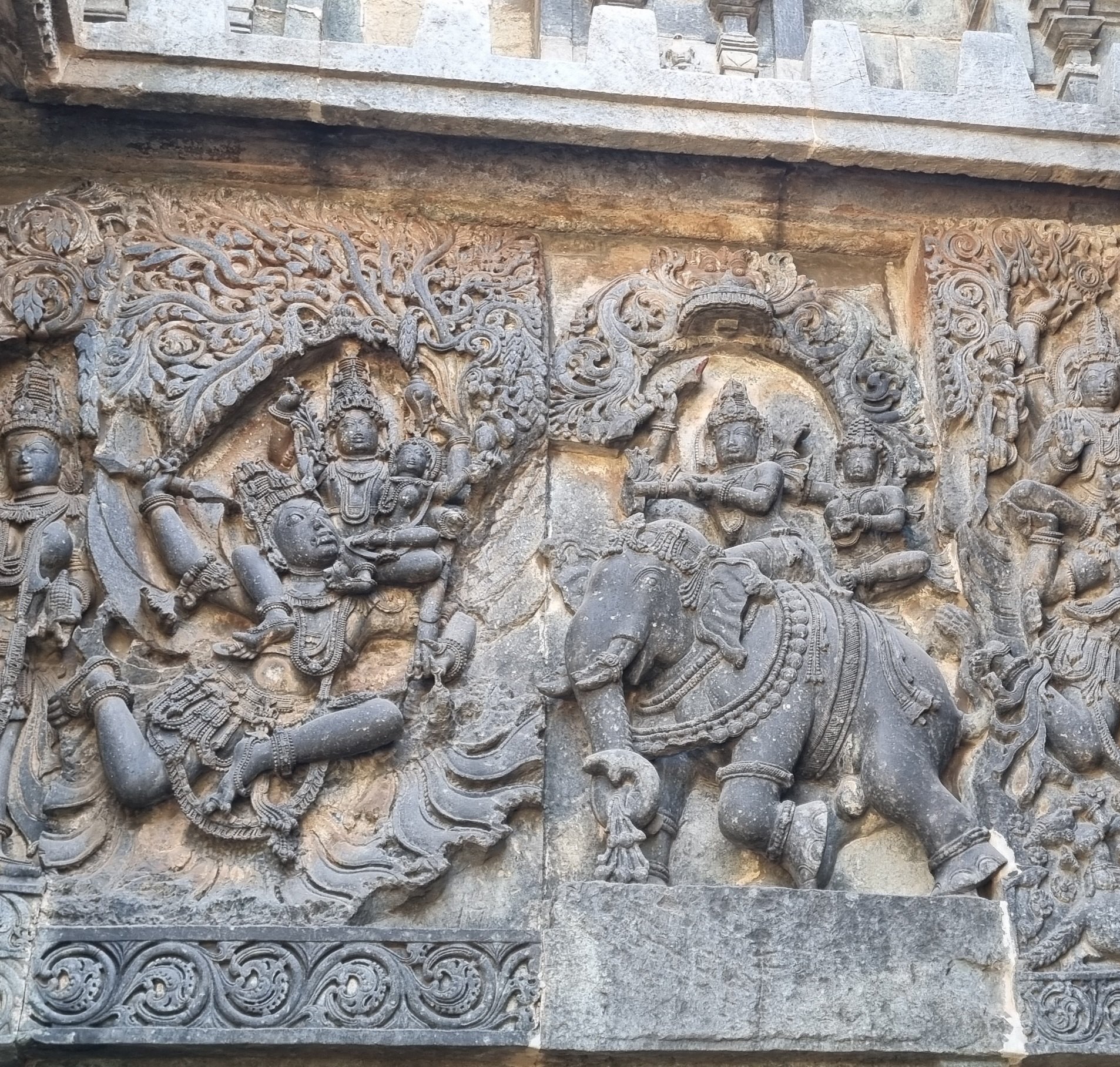
Scenes of War & Destruction

Wars are hugely significant in Indian mythology and provide symbolism through which many valuable teachings are exemplified.  Because of their importance, a lot of Indian art depicts war scenes.

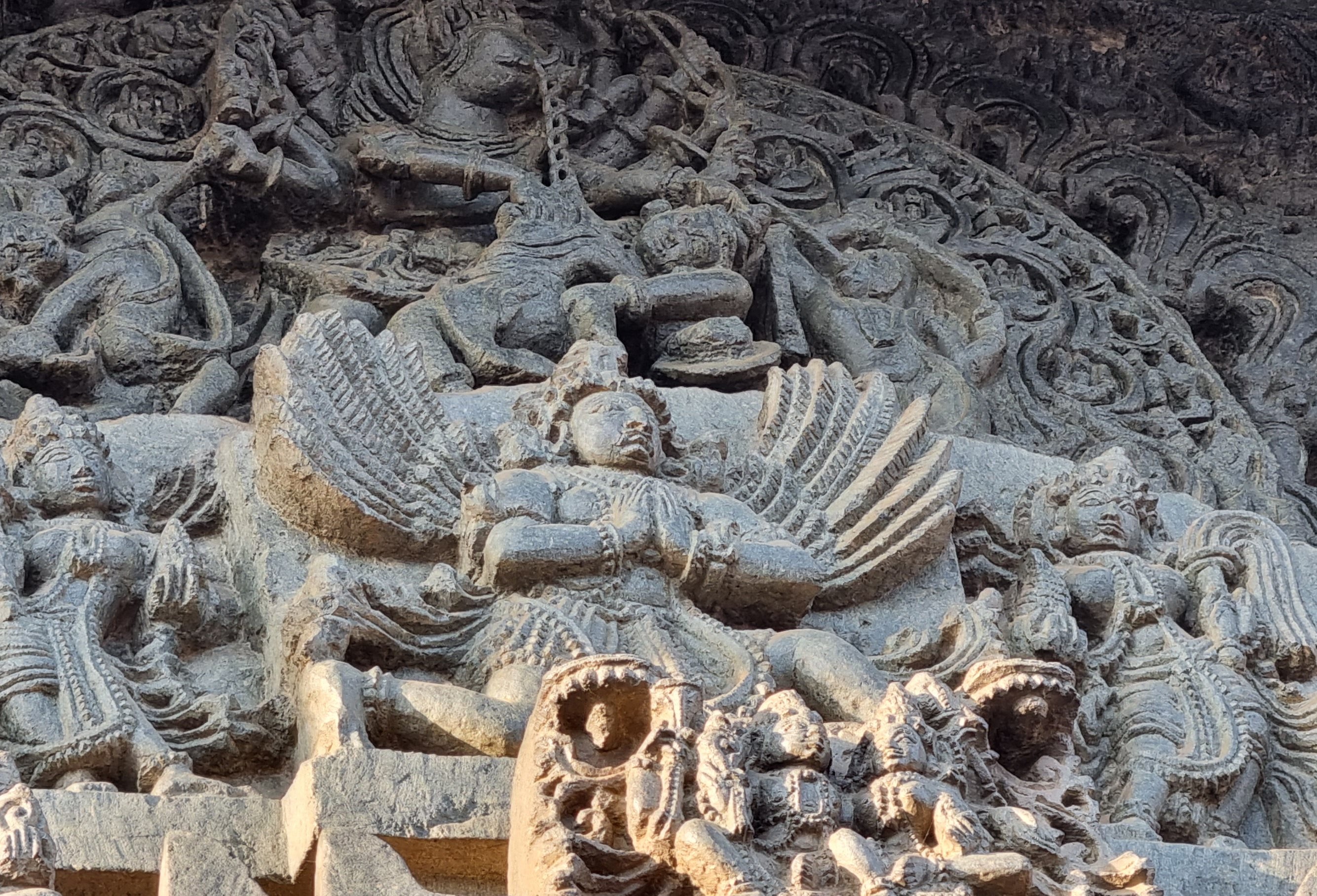
Indra, Vishnu, Airavat and Garuda.

Indra and Vishnu at war. Indra rides Airavat – his white elephant. Vishnu rides Garuda.


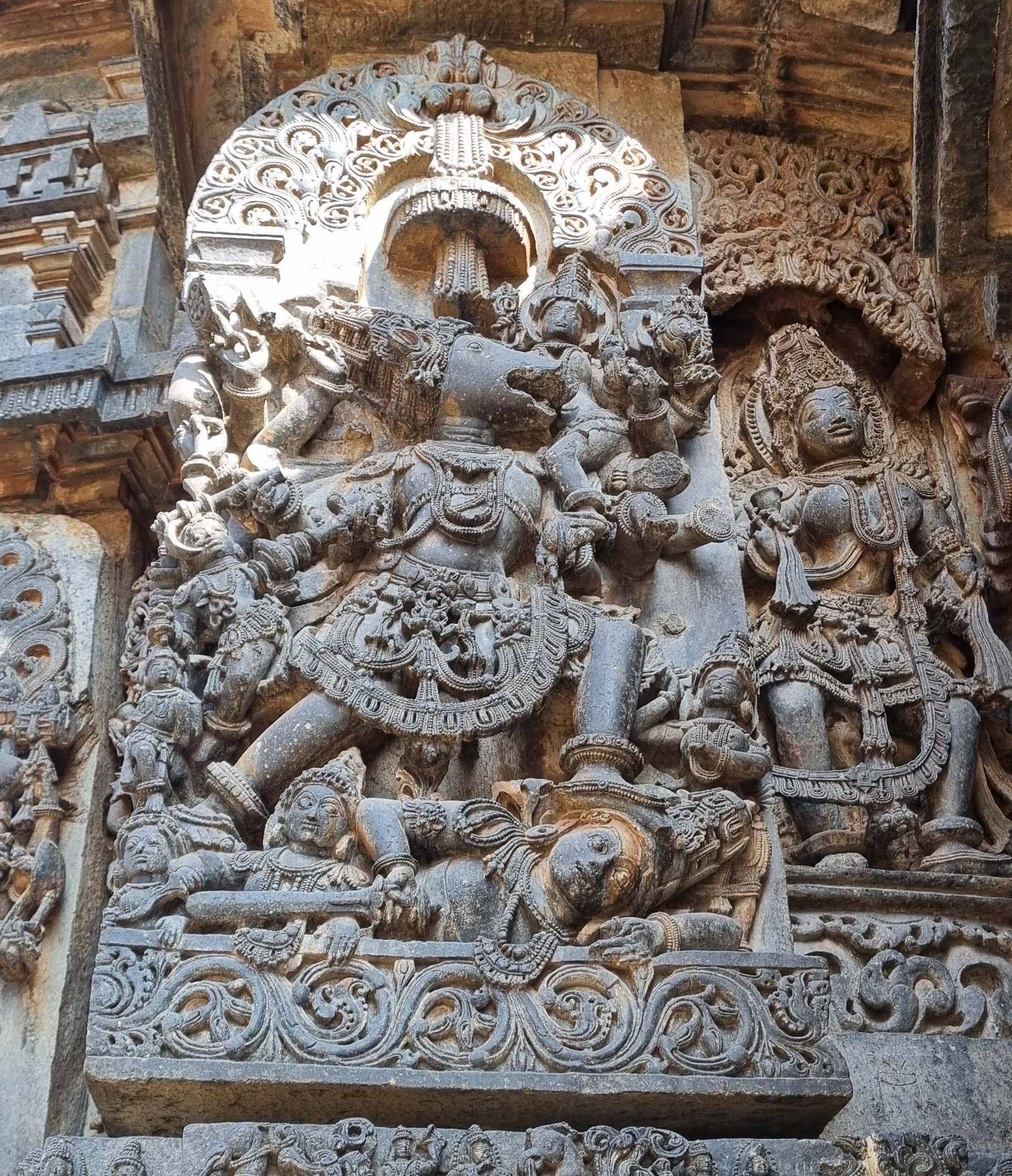
Varaha.

Vishnu in his 10th incarnation as Varaha (boar). Note the figures he’s trampling on – his stance is Virbhadra stance. His face shows the fierceness of an angry boar.


Sculptures of the Female

The difference between the male and female sculptures is always interesting.  Apart from the full breasts, the female sculptures seem to have more graceful lines and fluid motions.

Fluidity in stone.

Fluidity in stone.


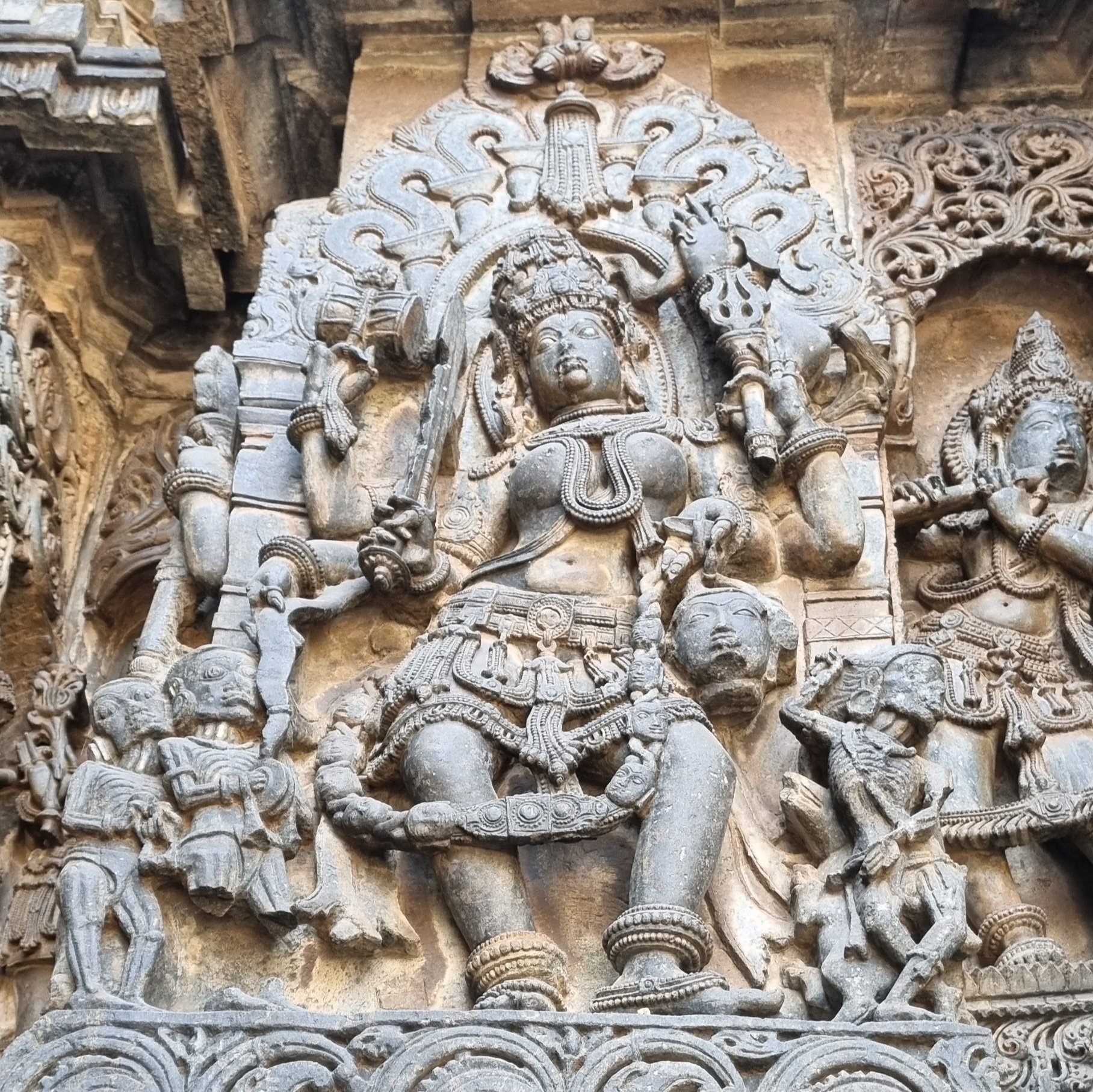
Kali - one of the most intriguing icons.

Kali – the icon I find most intriguing. Note the skull necklace and the severed head in her left hand. Look closely and you can see blood dripping from the sides of her mouth. Her helpers are emaciated with their bones visible – a contrast to her full, voluptuous figure.  She is the dark avatar of the Divine Feminine.


Perhaps Andal.

This might be Andal. She is depicted as one of Vishnu’s three wives and is called Ranganayaki. Here’s a carving of Andal I saw in the Perur Pateeshwara in Coimbatore.  As a manifestation of the Divine Feminine, she is a Bhakti Yogi.


Siddhasana.

A female figure in siddhasana – the austerity of the carving (no elaborate ornamentation) making me think that perhaps this was a female sage or teacher.  As a manifestation of the Divine Feminine she would be a jnana yogi.


Tribhanga dance position.

A dancer in tribhanga position – the line of beauty clearly depicted by the sculptor.


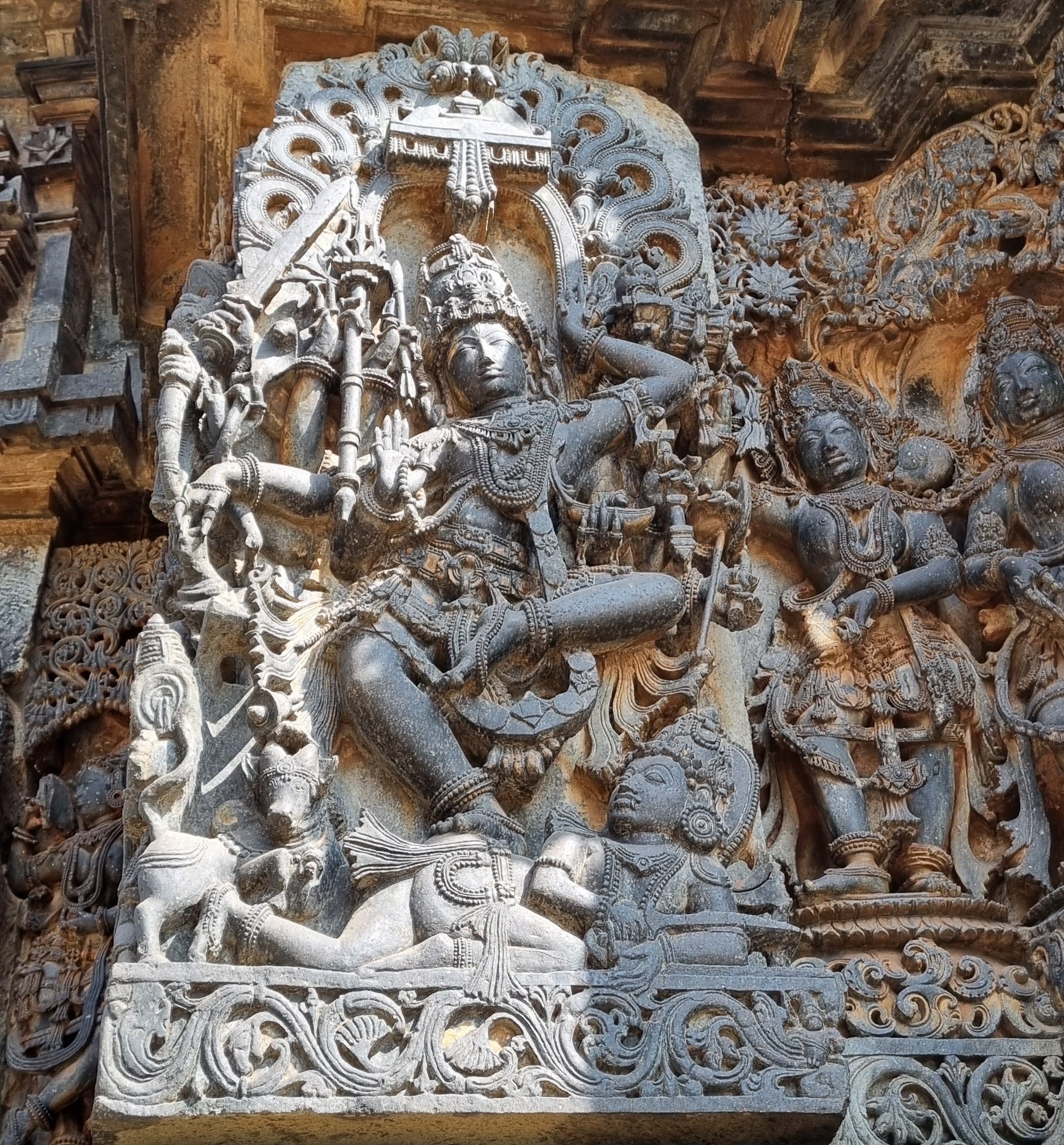
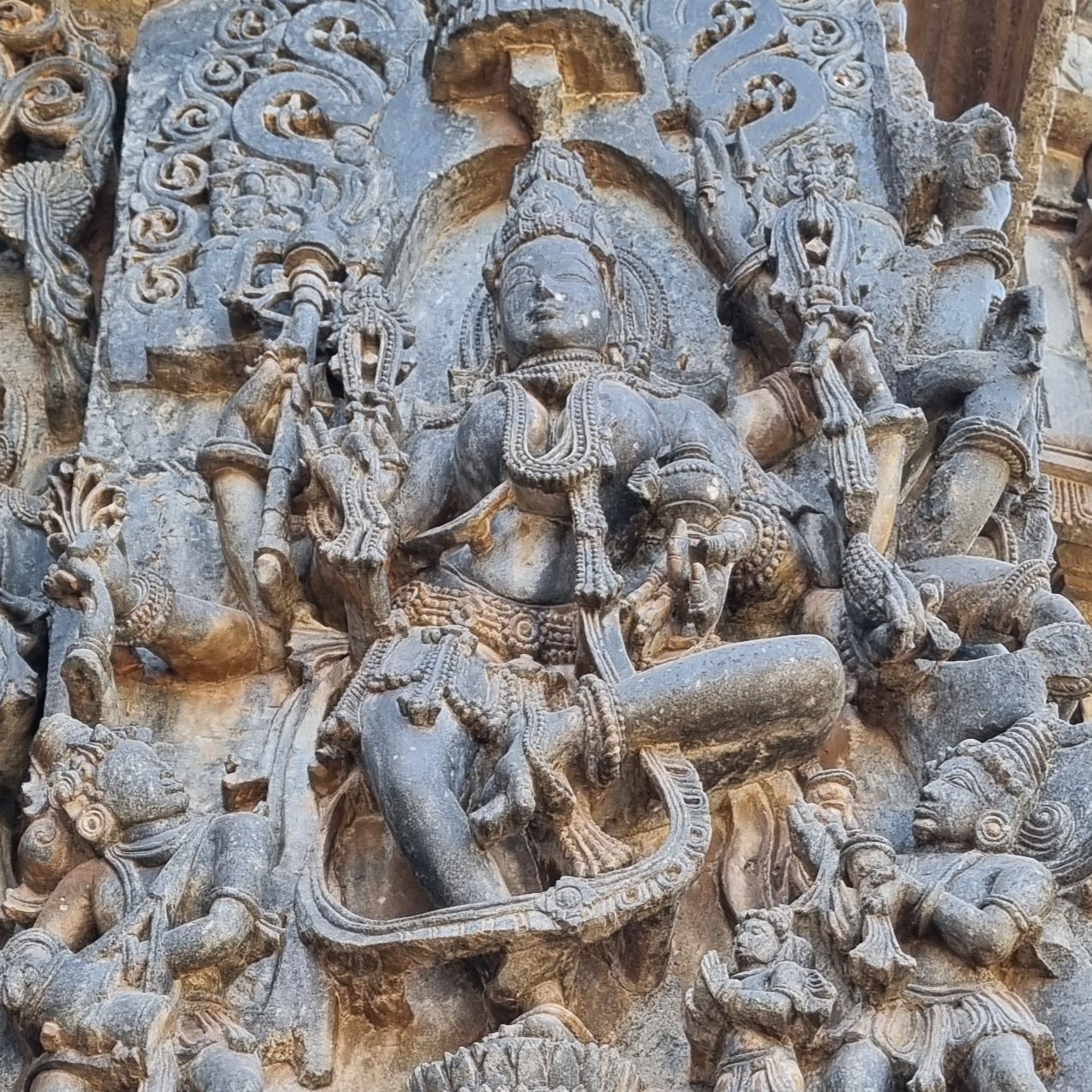
A female deity, perhaps Mohini.

A female deity, perhaps Mohini. However, she has a damru in one hand and a Nandi at her feet, which are markings of Shiva.

Boarding and Lodging

I can’t recommend the Hotel Mayura Velapuri Belur (A KSTDC) hotel enough.  It’s the best hotel in the area.  It’s clean, within walking distance of the temple, the staff is great and they have a restaurant which serves good food.


Travels

The Yogini Temple of Varanasi

December 12, 2022
Vishalakshi temple doorway.

“What foolish person, having reached Kashi – the very vessel in which the treasure of liberation is stored – would wish to go elsewhere in search of some trifling wealth?”

Little did I know that the Yoginis would find me in Varanasi as well.

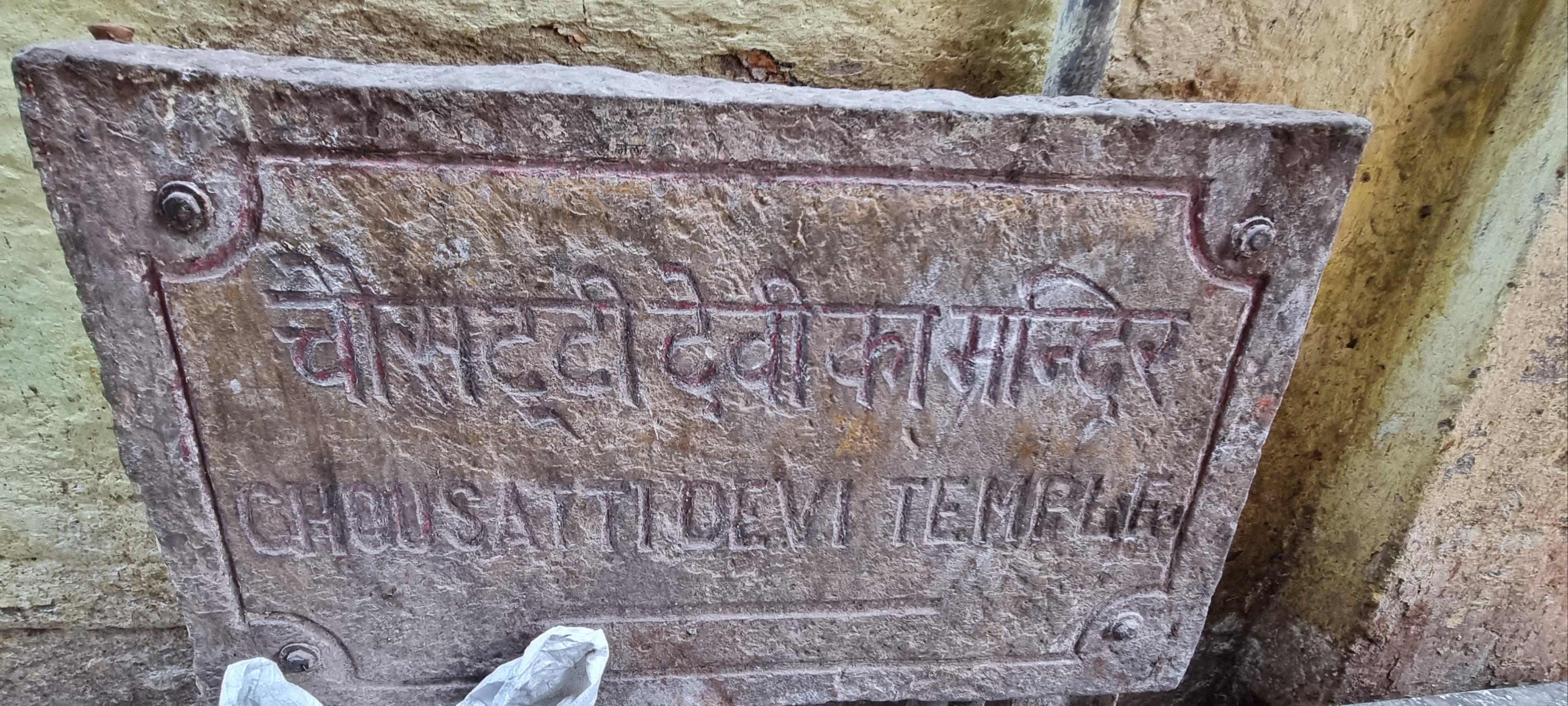
Our next stop was the Chausanthi Ghat. We had heard about the Yogini Temple there, but had also heard that it contained only one shrine, instead of 64 (like in Hirapur and Ranipur Jhariyal).

Shiva’s Exile From Kashi

There was a time when the Earth was in tatters. There was lawlessness and disorder everywhere and the Gods simply couldn’t control the chaos. Finally, Lord Brahma decided that he would ask King Divodasa for help. In addition to being an effective ruler, he was also honest and kind. He agreed to rule from Kashi and restore order back to Earth, but he had a condition. He wanted no interference from the Gods. During his rule the Gods were to remain in their world. Lord Shiva would have to leave Kashi for the duration of his rule.

With King Divodasa on the throne, the Earth thrived. After many years Lord Shiva found that he missed his beloved Kashi. He decided to send emissaries on his behalf to plead his case with King Divodasa. Amongst the many entities he sent were the Yoginis – all 64 of them.

The Yoginis came to Kashi and soon found themselves assimilating into city life. They found work amongst the city dwellers and were soon embedded in the fabric of the city. However, they were unable to find an opportunity to plead Lord Shiva’s case with King Divodasa. Unable to face Shiva with this defeat, they decided to remain in Varanasi.

Stone signboard for the Yogini temple.

Some scholars have even liked the city of Varanasi to a goddess, saying that it is an embodiment of Shiva’s Shakti. Which is why he yearned to come back to Kashi, he was suffering like a lover separated from his beloved.

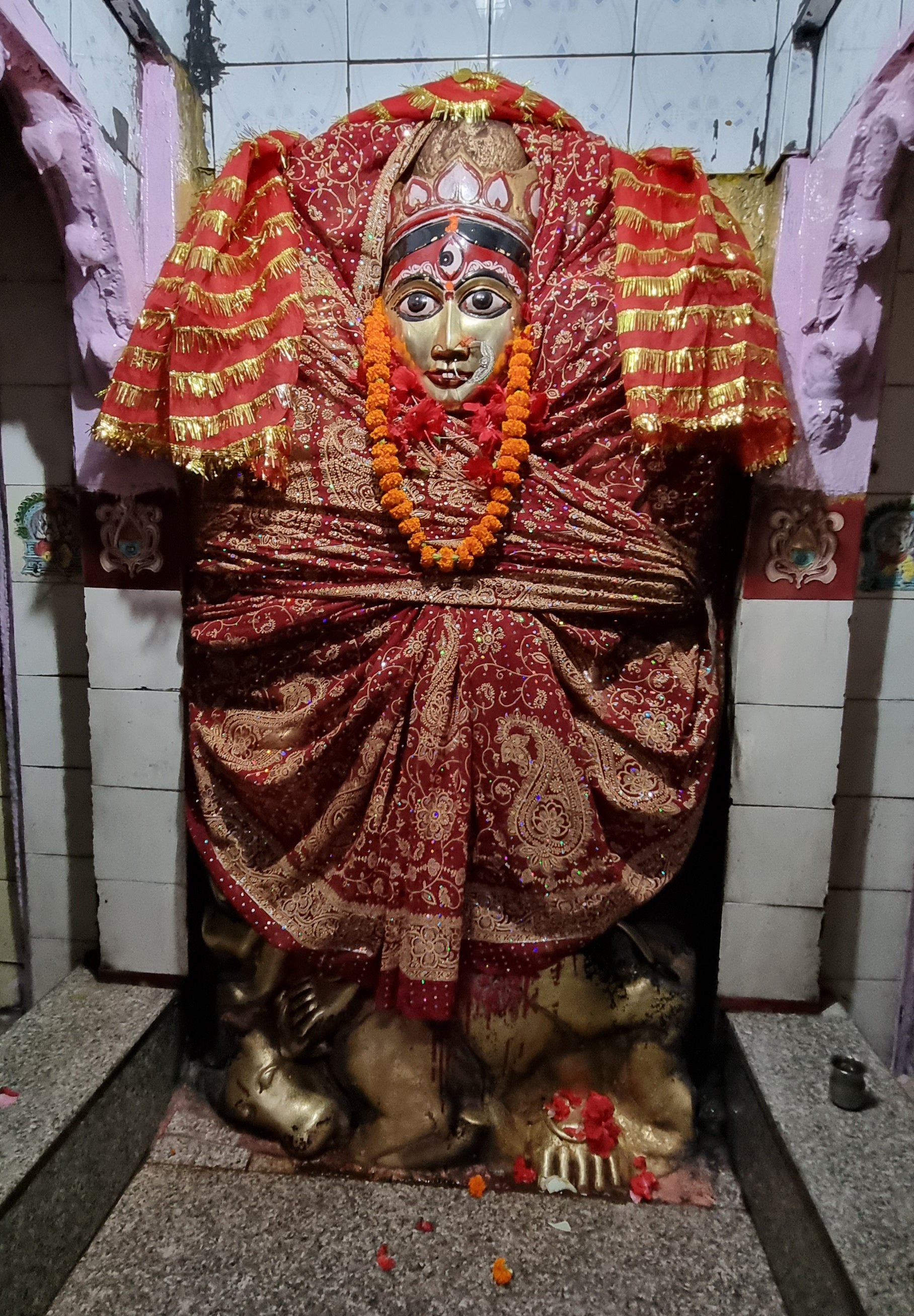
It is believed that once upon a time all 64 yoginis had temples in Varanasi, but today there exists only this one. “All of them, all that energy, is contained in this one Devi,” the priest explained. I looked at him uncertainly. The temple wasn’t hypaethral, which is what we popularly believe Yogini temples to be.

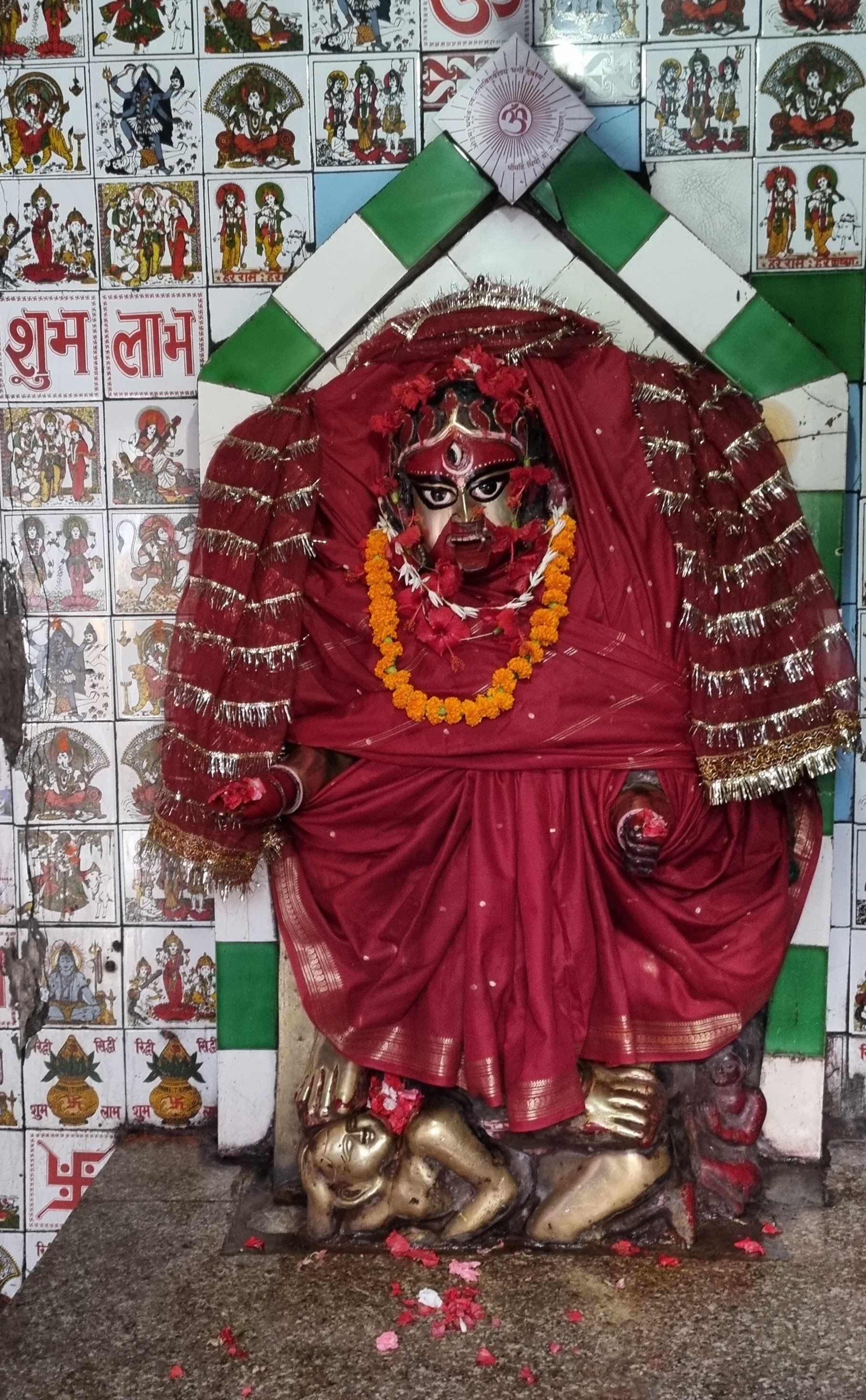
It was great that the pujari let us take a closer look at the statue of the Chausathi Yogini, and he answered all our questions.

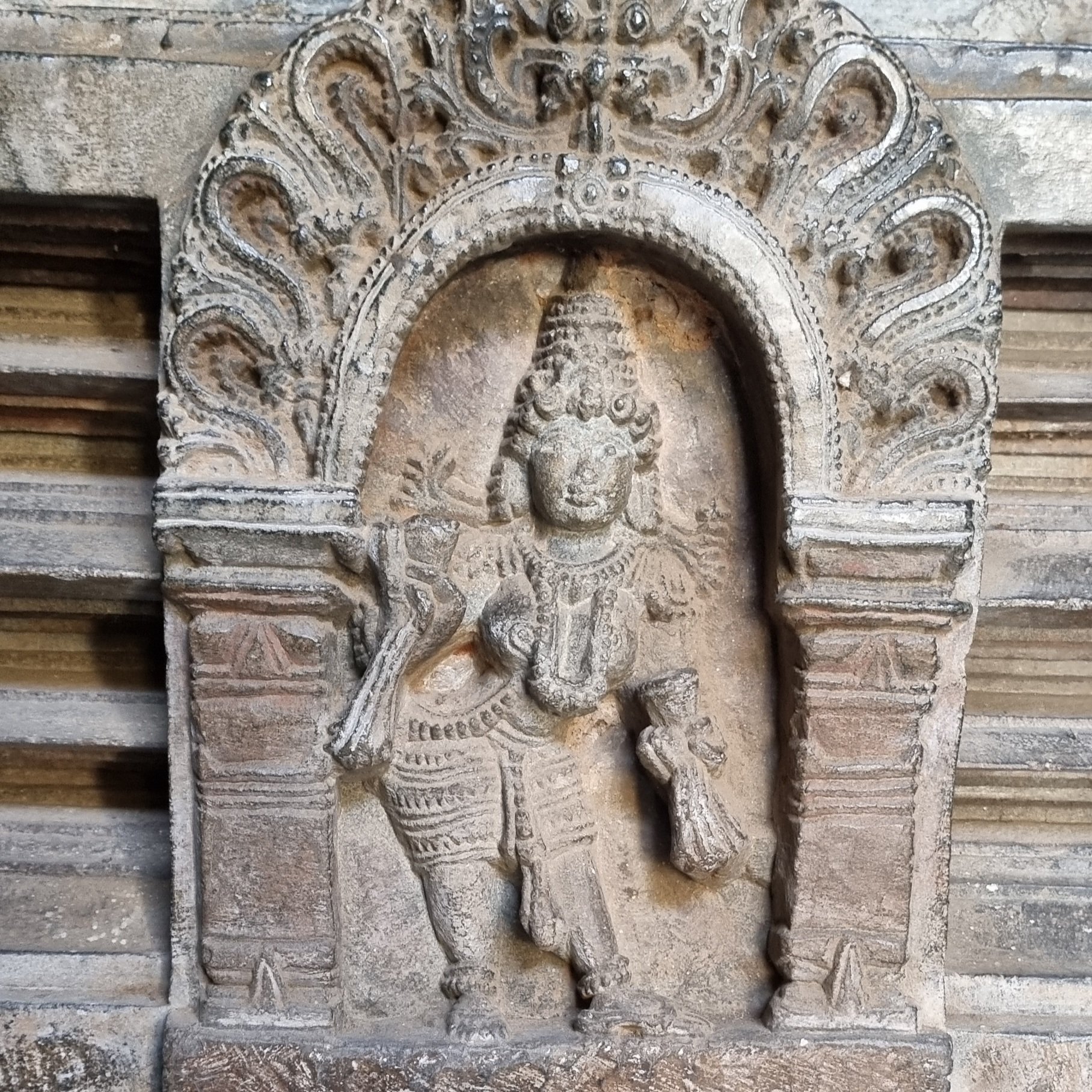
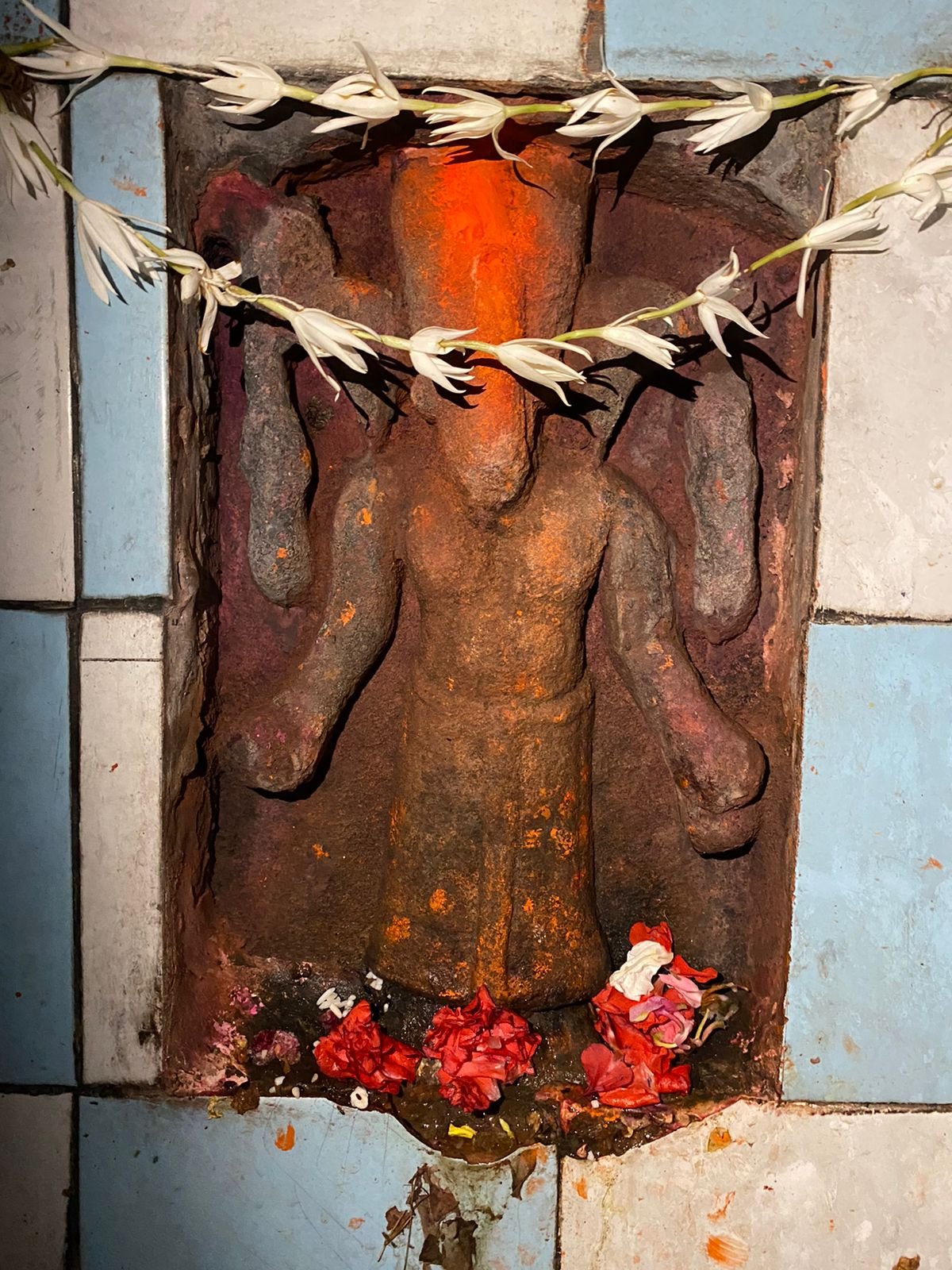
An interesting depiction of the Devi – note the third eye and the animal crushed under the feet. My favorite detail is the ornate nose pin.

The temple has a very small courtyard, where natural light streams in. The space between the temple walls and the sanctum sanctorum (where the parikrama is done) is dark (but not damp). And, interestingly, is filled with ancient shivalingas of different sizes!

Ancient collection of Shivalingas in the temple.

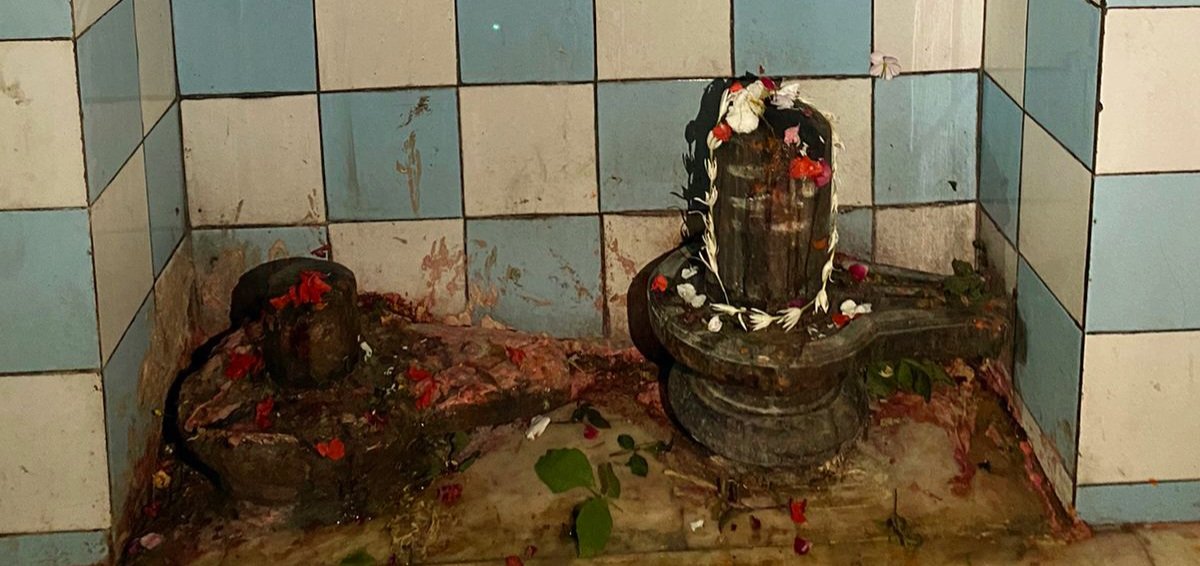
An interesting collection of Shivalingas. However, it was really dark and we had to use our phones to see them.

Temple wall carving.

This was carved into the wall, and reminded me a bit of the carvings in the Yogini temples in Orissa.

The Other Devi in the Chausanthi Yogini Temple

Standing opposite the Chausanthi Devi is another devi. From the face we could tell it was Kali Ma and we asked the pujari about the history of the statue. According to him, a King from Bengal once had a dream in which he was instructed to take the Devi to Banaras and make a home for her there. He is said to have sailed the Ganges and carried the statue up the steps of the Chausanthi Ghat and placed it here. The priest was unable to give us any specifics such as dates and names, relegating the story to the stuff of legends, but the story was compelling. I’ve tried to track down references to the story in multiple sources, but was unable to find anything.
As we turned to leave the Yogini temple, I asked the punditji his name. Pointing to the Chausanthi Yogini and Kala Ma he said “I serve two mas (mothers) so I’m known as ‘Ma-Ma’.”

We boarded our boat again to head to a temple particularly revered by the South Indians – the Vishalakshmi temple.

A Note on the Vishalakshi Temple

‘Vishalakshi’ is the ‘Wide Eyed Goddess’. The Vishalakshi temple was renovated in 1971 with a large contribution from the Tamil fraternity, and it has a completely different vibe from the Yogini temple. For starters, it is jam-packed.

Inside the temple it’s dim and the smoke from the large clusters of incense makes it difficult to see. The main deity is visible from the entrance.  It’s enveloped in hundreds of saris that devotees have offered to her. In fact, there is a stall selling saris inside the already crowded temple, and you can purchase one for the goddess if you want to. We elbowed our way through the enthusiastic devotees to get to the other side of the temple. The main deities are encased in glass boxes and the smoke and lack of light makes it difficult to see anything. There are numerous shivalingas here that you can offer your prayers to.
It’s dim inside the temple and the smoke from the large clusters of incense makes it difficult to see. You can see the main deity as soon as you enter. It’s enveloped in hundreds of saris that devotees have offered to her. In fact, there’s a stall selling saris inside the already crowded temple, and you can purchase one for the goddess if you want to. We elbowed our way through the enthusiastic devotees to get to the other side of the temple. The main deities are encased in glass boxes and the smoke and lack of light make it difficult to see anything. There are numerous shivalingas here that you can offer your prayers to.
The Vishalakshi temple finds a permanent place as one of the shakti peethas. Some say Sati’s eye fell at this location, while others say it was her earring. (For a background on this story see the “Natrajasana” chapter in my book Beyond Asanas.) This temple is also connected to two other goddesses – Kamakshi (Love-Eyed) from Assam and Meenakshi (Fish-Eyed) from Madurai.

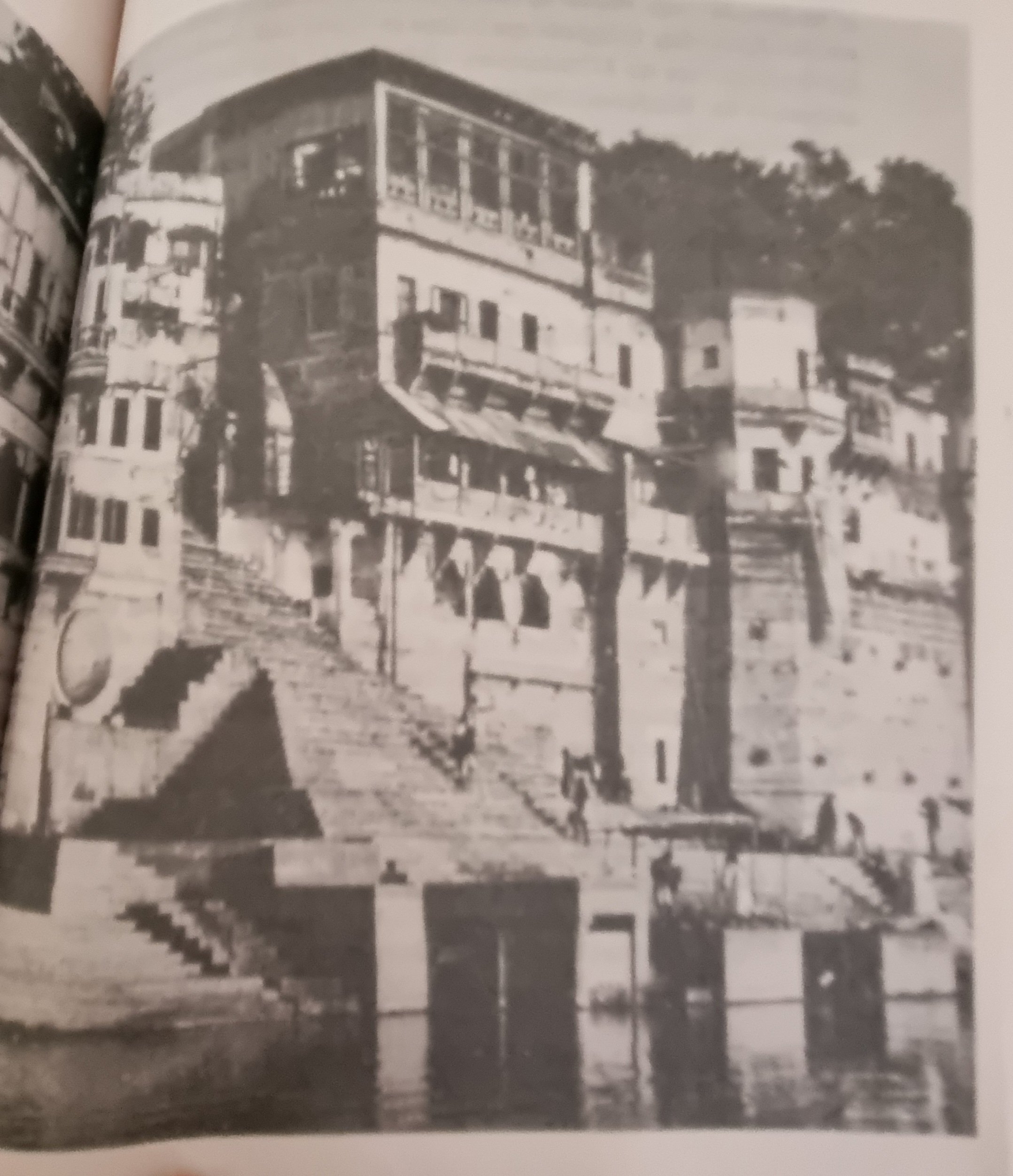
Picture from 'Banaras City of Light' by Diana L. Eck.

An old picture of the Chausanthi Ghat.

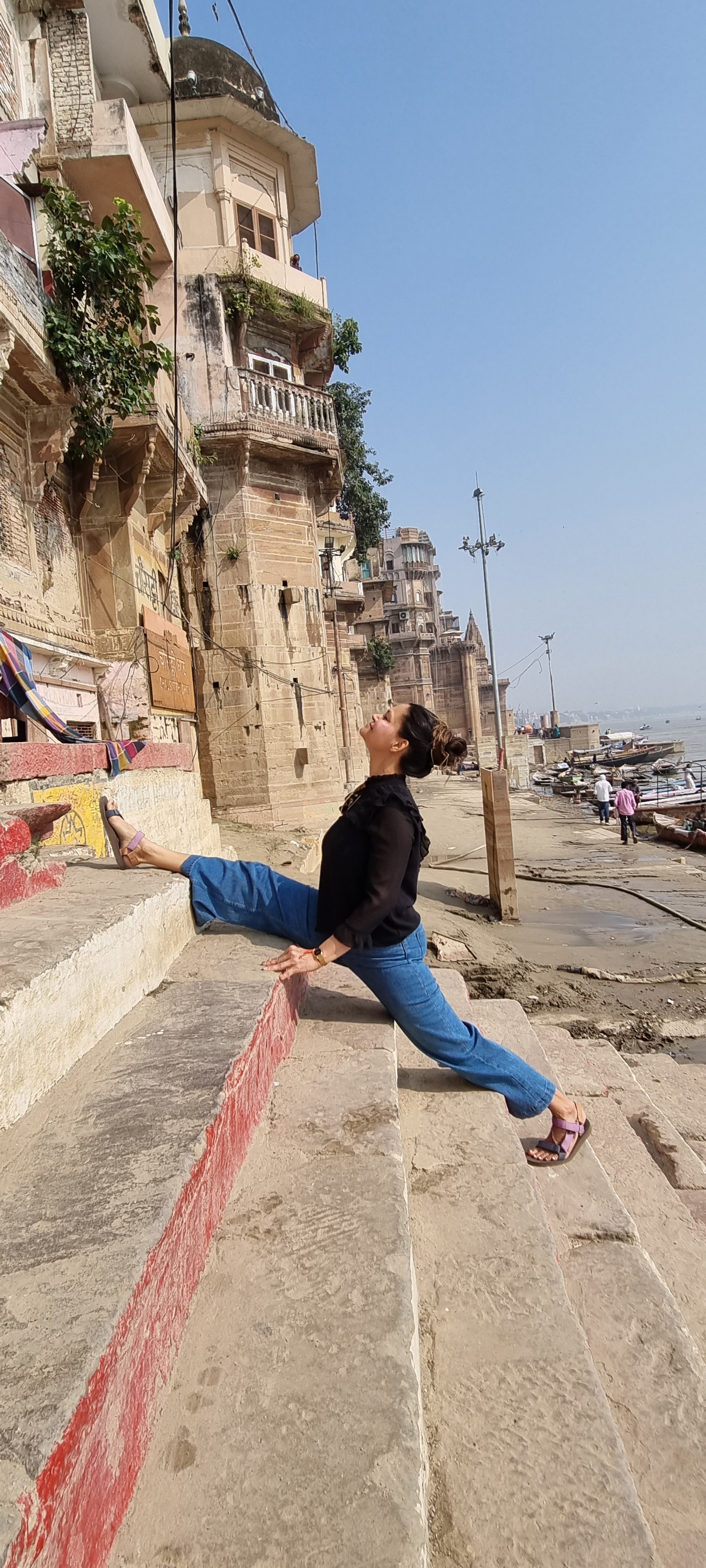
Hanumanasana at the Chausanthi Ghat.

Instagraming at the Chausanthi Ghat in 2022.

[This blog is the final part of a series of blogs about my time in Varanasi. Click here for the previous one.]