Browsing Category

Yoga

Yoga

Teacher in Focus : Deepti Martolia

April 9, 2020

“Come…lose yourself to Dance while finding yourself through Yoga..”
Deepti Martolia

A yoga teacher, an artist, a dancer – Deepti Martolia was born and raised in the mountains of Uttarakhand.

Her pursuit of Yoga dates as far back as her adolescent days and eventually she trained to become a teacher in 2009. Her classes focus on breath, flow and alignment along with the balance between control and surrender – transcending into a mind-body connection nourishing the soul.

In 2014, inspired by the fluidity of movement, symphony of breath and body, and her passion for yoga and dance, Deepti conceptualised and created this unique style – Lyrical Yoga – a blend of yoga and dance. She is also a trained contemporary dancer.

Deepti conducts classes, workshops, courses and retreats with the belief that when you immerse in the path of yoga you commence the journey towards self-inquiry.

She seeks to inspire people to walk into the path of yoga, and be a facilitator – guiding as many – towards leading a happy, healthy and peaceful life.

In her own words, Deepti describes her relationship with Yoga and Dance as “losing herself to dance while finding herself through yoga”.

For more information about Deepti and her classes, visit her on instagram: Yoga with Deepti Martolia
 

RIMYI Experiences

Teacher In Focus : Bhavana Mooteri

April 7, 2020

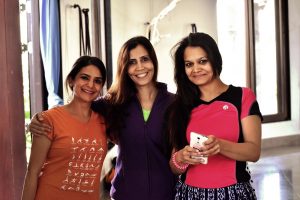
Divya, Bhavana and me 4 years ago at Bellur.

I met Bhavana for the first time when we attended the inaugural yoga workshop in Bellur.  Over the course of the workshop we got a chance to connect quite a bit.  It was a special time for all, as we were meeting Iyengar practitioners from all across the world.  We spoke quite a bit about our personal yoga journeys and even ended up staying in touch.

Bhavana has been practicing yoga since 2009.  She worked in the corporate strata for 15 years before she finally gave in to her passion and decided to devote herself full time to yoga.  She did her TTC from the Sivananda Ashram in Kerala in 2015.  In 2016 she went to RIMYI for a month to learn under the masters of Iyengar yoga.  She does workshops and retreats as well.  And now you can find her classes on line!

For more about Bhavana and her classes visit https://www.yogawithbhavana.com/


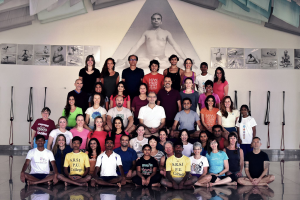
The entire gang for the workshop. Can you spot Bhavana and me?


Yoga

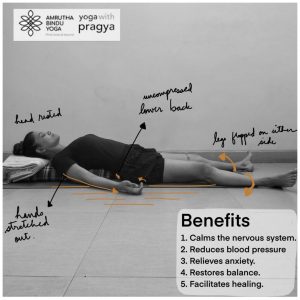
Savasana – The Corpse Pose

March 27, 2020

‘Verse 32 of the First Chapter of the Hatha Yoga Pradipika states: ‘Lying upon one’s back on the ground at full length like a corpse is called Savasana.  This removes the fatigue caused by the other asanas and induces calmness of mind.’ (Light on Yoga, p 422)

And we’re finally at the end of our Immunity Sequence.  In the past few weeks many of us have incorporated these asanas into our daily yoga routines and it’s been incredibly gratifying to see everyone stick to yoga routines and, quite frankly, make the most of a bleak situation.  I do feel that once we’re through this #21daylockdown, we will see that our individual actions actually did make a difference.

Svasana is also called the Mritasana.  Sava and Mrita means a corpse.  Your main objective in this asana is to simulate a dead body.  A dead body has no movement, and no thoughts (wherein lies the challenge).

It helps to:

  • Calms the nervous system.
  • Reduces blood pressure.
  • Relieves anxiety.
  • Restores balance.
  • Facilitates healing.


Contraindications

No contraindications!  Anyone and everyone can and should practice the savasana.


Busting the Myths

Savasana is everyone’s favorite posture.  It’s often treated as a posture where your body rests.  However, in this posture your mind is also supposed to remain still.  And this is what makes this posture the most difficult.   Read on for some practice pointers…

Practice Pointers

  • Initially you may fall asleep during savasana.  This just means that your body needs more rest.  Once your body get the adequate amount of rest, you will be able to bring a meditative quality to your savasana.
  • In a one hour class you must make sure to stay in savasana for at least 10 minutes.


Stay tuned for more from our Yoga to Boost Immunity Sequence.

[ddownload id=”8170″] the Daily Yoga Practice Checklist.

Follow Amrutha Bindu Yoga here.

Follow Medha Bhaskar here.

Follow me (Pragya Bhatt) here.

Wellness

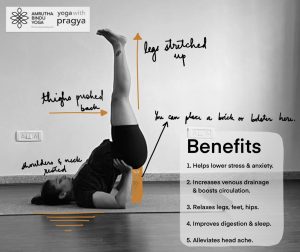
Viparita Karani – The Inverted Pose

March 26, 2020
Legs up the wall pose.

Looks deceptively simple, but isn’t.


There’s a general consensus among modern yogis that Viparita Karani or Legs-Up-The-Wall Pose may have the power to cure whatever ails you. (Yoga Journal)


In Sanskrit Viparita means ‘upside down’ and karani means ‘doing’.  It is practiced widely as a restorative posture.  When I started practicing yoga, I considered this an easy asana, specially the supported version.  The full import of it is just starting to set in.

It helps to:

  • Regulate blood pressure.
  • Treat cardiac disorders.
  • Treat stress-related headaches, including migraines.
  • Gives relief from swollen feet.
  • Relieve nausea.

Contraindications for Viparita Karani

This is an inversion and as such should be avoided if you have serious eye problems such as glaucoma.

Busting the Myths

Although this is actually a restorative and relaxing asana, the final pose is quite difficult for beginners and those with stiff backs.  Read on for some practice pointers.

Practice Pointers for Viparita Karani

  • You can do this asana with your legs on a chair, or even on your bed!
  • It’s a little unwieldy to get the buttocks close to the wall to get the legs up, but there is a technique (see video).

Stay tuned for more from our Yoga to Boost Immunity Sequence.

Download the Daily Yoga Practice Checklist.

Follow Amrutha Bindu Yoga here.

Follow Medha Bhaskar here.

Follow me (Pragya Bhatt) here.


Asana Yoga

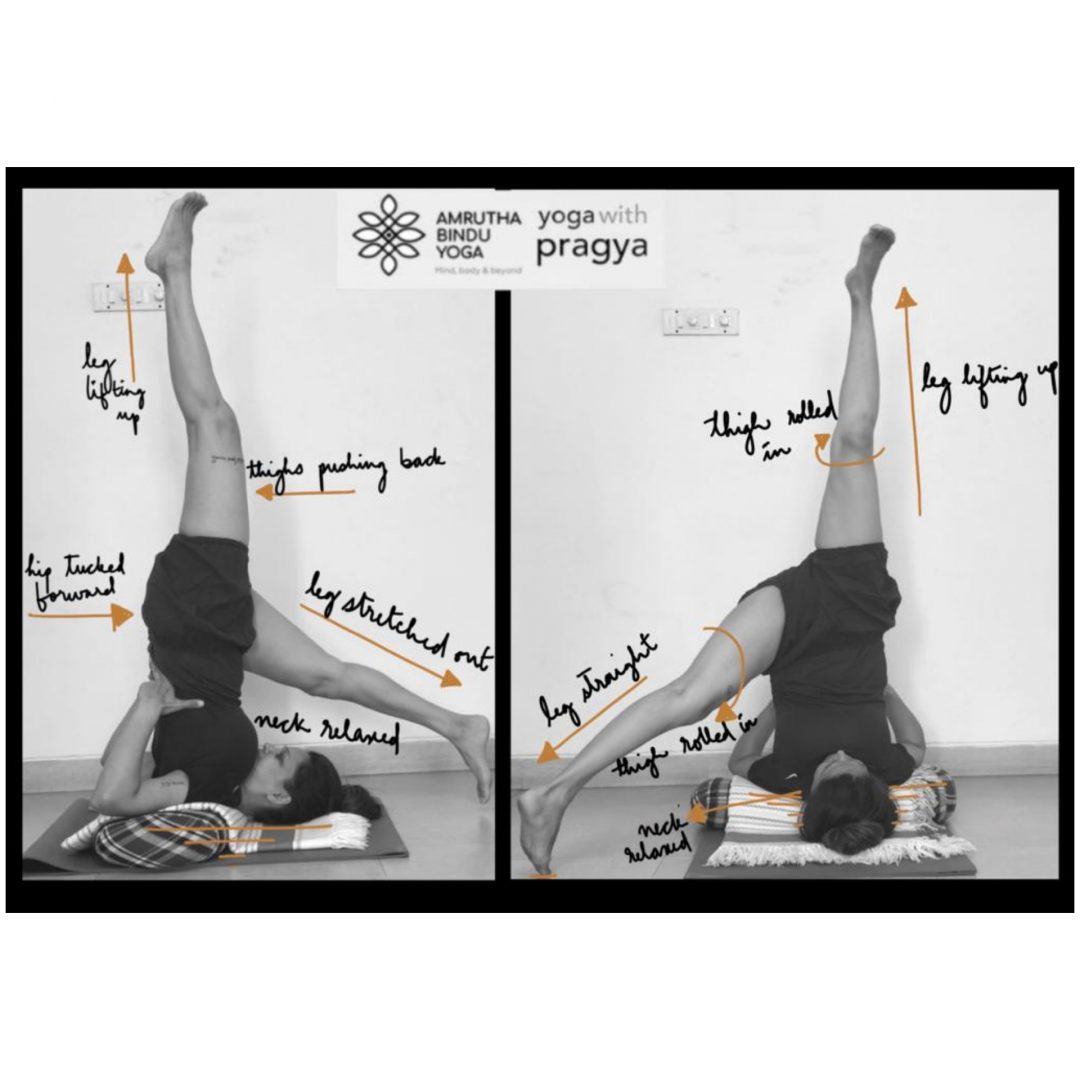
The Sarvangasana Cycle

March 24, 2020
Steps of the Sarvangasana Cycle.

It is one of the greatest boons conferred on humanity by our ancient sages.  (Light on Yoga p 212)

What is the Sarvangasana Cycle?

Sarvangasana is the Shoulder Stand yoga pose. I’ve written about the etymological structure and why it’s called the ‘Mother of All Asanas’ in this blog. It’s an important posture in the Iyengar style of yoga, practiced every day except during the menstrual cycle. Iyengar yoga practitioners practice the sirsasana – sarvangasana – halasana sequence every day. The Sarvangasana Cycle can be practiced once you’re reasonably comfortable with the alignment of the Sarvangasana.

Continue Reading

Yoga

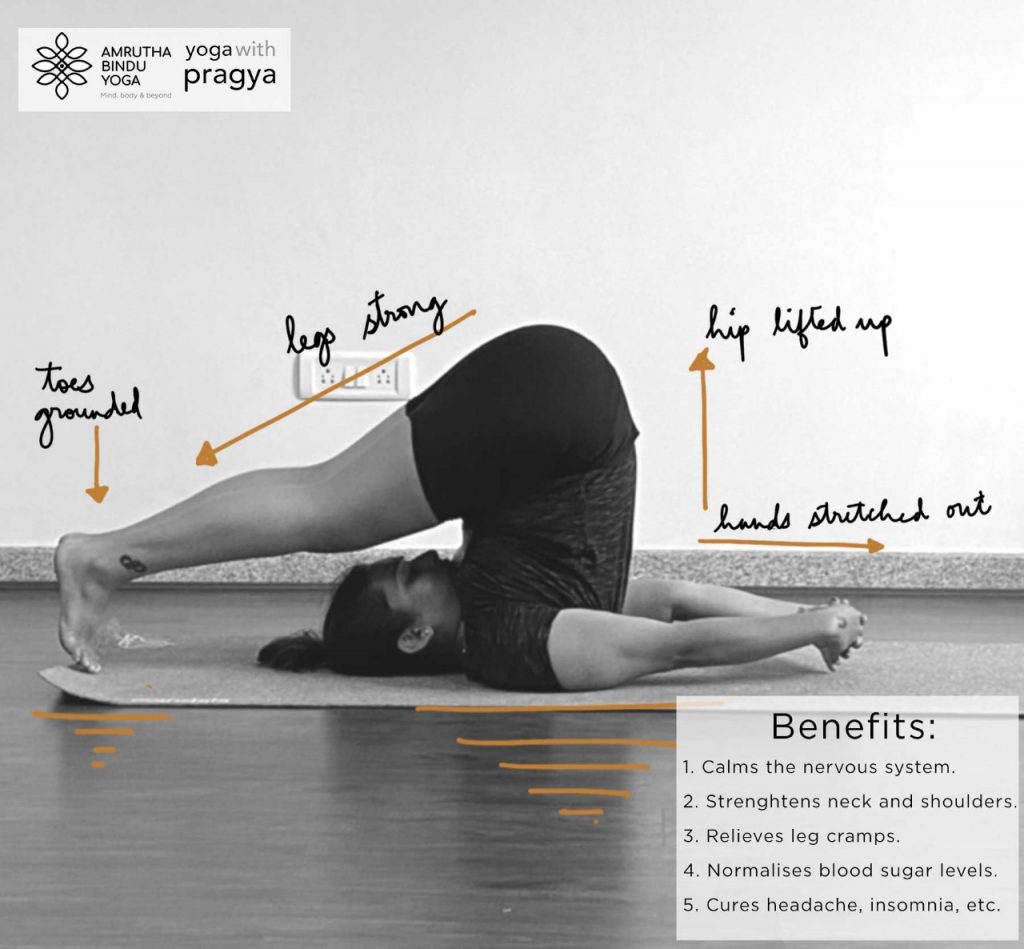
Halasana – The Plough Posture

March 20, 2020

Hala means a plough, the shape of which this posture resembles, hence the name. (Light on Yoga, p 216)


There are asanas we encounter so many times that we don’t realize there is a lot more to them than meets  the eye.  The halasana is one such posture…

It helps to:

  • Relieve backache.
  • Bring flexibility in the shoulders and elbows.
  • Relax the mind and body.
  • Promote better sleep.
  • Improve digestion and appetite.


Contraindications

Don’t practice if you have diarrhea, or are menstruating.  If you have a neck or back injury then wait until you are completely healed.


Busting the Myths

The final posture is usually depicted with the toes touching the floor.  However, if you don’t have the requisite flexibility, forcing your toes to touch the floor can do more harm than good.  Read on for some practice pointers…

Practice Pointers

  • In an attempt to touch the floor with the toes, many practitioners end up  pushing themselves beyond their capacity and injure themselves.  A simple trick is to rest your feet on a chair or a small table instead of on the floor.
  • There is a strong link between the halasana and the paschimottanasana.  When your back gains mobility in one, then the other improves too.
  • Tighten your thighs and roll them in to activate your legs and engage your core.  You are trying to keep the spine extended.


Over the years I’ve studied the nuances of the halasana and that has certainly improved my practice.  I found an older picture of me doing this asana here.

Stay tuned for more from our Yoga to Boost Immunity Sequence.

[ddownload id=”8170″] the Daily Yoga Practice Checklist.

Follow Amrutha Bindu Yoga here.

Follow Medha Bhaskar here.

Follow me (Pragya Bhatt) here.

Asana Yoga

Sarvangasana – The Mother of Asanas

March 19, 2020

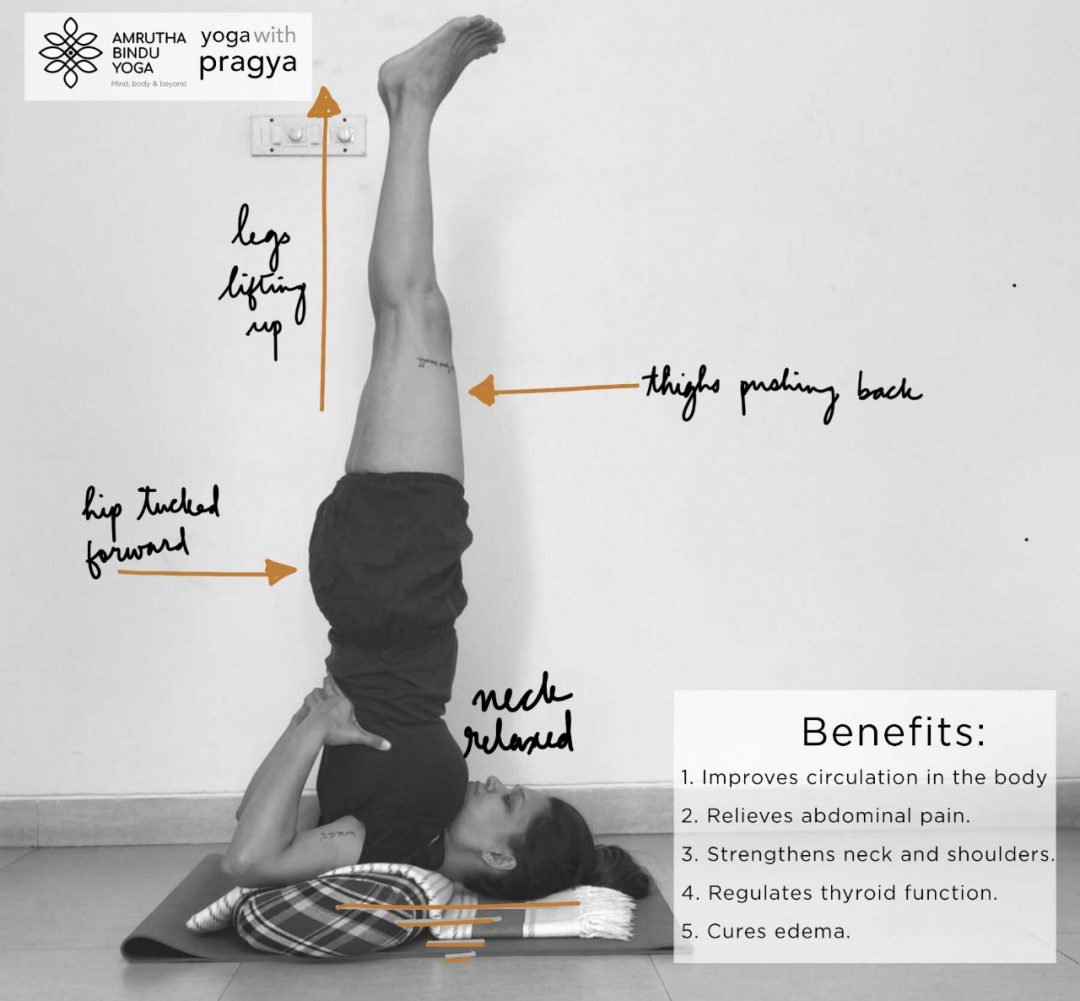
Sarvanga (Sarva=all, whole, entire, complete; anga=limb or body) means the entire body or all the limbs.  In this pose the whole body benefits from the exercise, hence the name.  (Light on Yoga, p 206)

What is Sarvangasana?

Sarvangasana is a yoga pose that is categorised as an inversion because in this pose the body is upside down and supported by the shoulders. It is an integral pose in all styles and lineages of yoga. In the Iyengar style of yoga we emphasise the importance of correct alignment and balance in the pose, often using props such as bolsters, blankets and belts to achieve the correct alignment.

In many old yoga books you will find this posture also called the Candlestick posture because the body is supposed to resemble a straight candle on a candle holder.

Why is it Called the Mother of Asanas?

Continue Reading

Yoga

Dwi-Pada Viparita Dandasana – Two-Legged Inverted Staff Posture

March 17, 2020

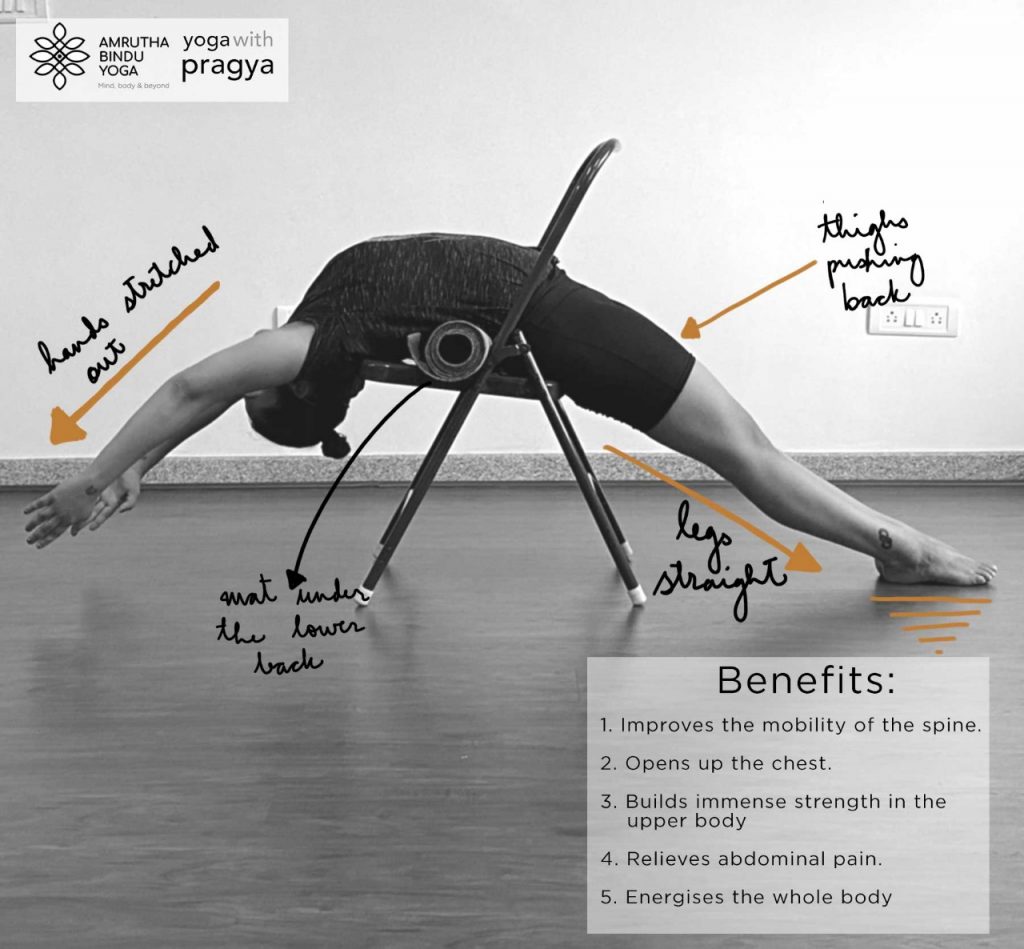
The Hindu devotee prostrates before the Lord lying flat upon the floor, face downwards with hands outstretched.  The Yogi on the other hand prostrates himself in the graceful inverted arch… (Light on Yoga, p 373)

Dwi pada means both feet.  Viparita means reverse or inverted.  Danda means staff or rod, a symbol, authority or punishment as well as the body and its prostration.

It helps to:

  • Expand the chest enabling deeper breathing.
  • Relax an anxious mind.
  • Keep the spine healthy.
  • Relieves pain in the coccyx.
  • Energises the whole body.


Contraindications

Those who suffer from vertigo should practice this with due caution.


Busting the Myths

Many practitioners don’t fully understand the benefit of using props for yoga practice.  Many think they don’t ‘need’ props, feeling that it shows physical weakness to use props.  The truth is that props are akin to a teacher.  Used correctly, props can have a powerful impact on your yoga practice.  Read on for some practice pointers…

Practice Pointers

  • If you feel queasy or dizzy in this posture, adjust the position of your back on the chair and use some support under your head.
  • Tighten your thighs and roll them in to activate your legs and engage your core.


Stay tuned for more from our Yoga to Boost Immunity Sequence.

[ddownload id=”8170″] the Daily Yoga Practice Checklist.

Follow Amrutha Bindu Yoga here.

Follow Medha Bhaskar here.

Follow me (Pragya Bhatt) here.

Yoga

Sirsasana – The King of Asanas

March 17, 2020

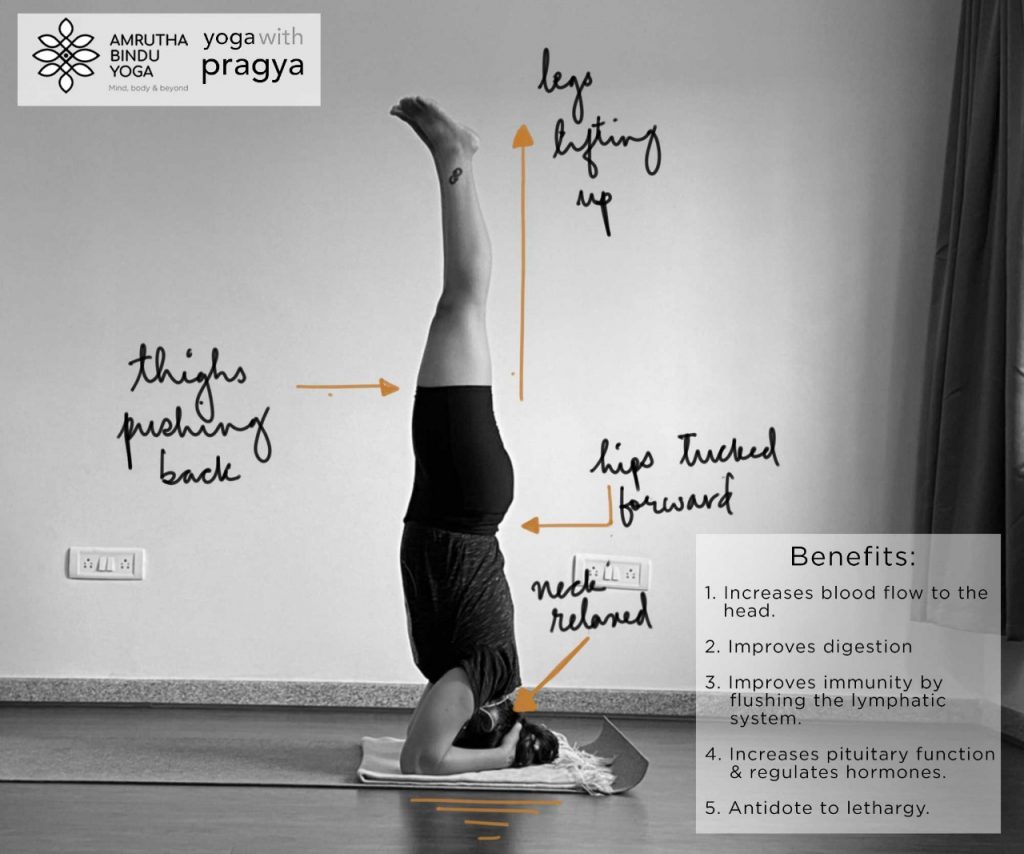
The weight of the body will be felt on the elbows and the position of the head may change.  The face will appear to be flushed and the eyes either strained or puffed.  It is therefore, advisable for a beginner to do the head stand in a corner where two walls meet, placing the head some 2 to 3 inches from either wall.(Light on Yoga, p 182)

The sirsasana is the king of the asanas.  It’s not hard to see why.  Sirsa means head, and this is the seat of the brain.  The brain controls the entire nervous system.  It is where your knowledge, intellect, wisdom and power come from.

It helps to:

  • Increase blood flow to the head.
  • Improve immunity by flushing the lymphatic system.
  • Improve digestion.
  • Relieve fatigue.
  • Improve insomnia.


Contraindications

Those who suffer from high or low blood pressure must never practice sirsasana.


Busting the Myths

Most practitioners think that balance is the only important aspect of sirsasana.  In reality, in this posture we have to keep our awareness on our body alignment at all times and continue to fix it moment by moment.  Read on for some practice pointers…

Practice Pointers

  • In the final position only an area the size of a rupee on top of your head should be in contact with the floor.
  • The head, the trunk, the back of the thighs and the heels should be in a straight line.  Avoid ‘banana-back’.
  • Do not widen the elbows thinking it will give you better balance. In reality this will make the pose weaker and lead to a neck injury.


Stay tuned for more from our Yoga to Boost Immunity Sequence.

[ddownload id=”8170″] the Daily Yoga Practice Checklist.

Follow Amrutha Bindu Yoga here.

Follow Medha Bhaskar here.

Follow me (Pragya Bhatt) here.

Yoga

Prasarita Padottanasana – Wide Legged Forward Fold

March 12, 2020

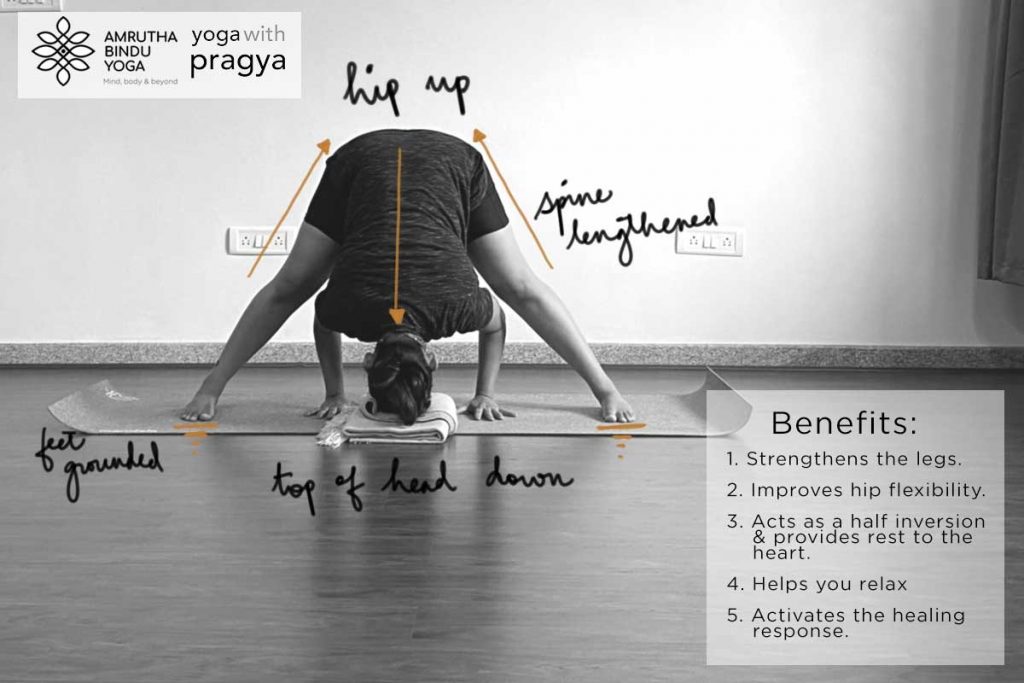
Prasarita means expanded, spread, extended.  Pada means a foot.  The pose is one where the expanded legs are stretched intensely.  (Light on Yoga, p 81)

Are you unable to do the Sirsasana?  But still want the benefits?  Well, this pose is for you!

It helps to:

  • Stretch the hamstrings, calves, glutes and lower back.
  • Gently open up tight hips, thereby helping to increase hip mobility.
  • Improve posture.
  • Relieve fatigue.
  • Strengthen the feet, improving flat foot.
  • Speed up healing.


Contraindications

Avoid practicing the prasarita padottanasana when you have a headache or migraine.  The rush of blood to the head may exacerbate the condition.


Busting the Myths

Widening the distance between your feet will not help you in getting your head closer to the floor.  This just makes your stance unstable.  Read on for some practice pointers…

Practice Pointers

  • The body weight should never rest on the head.
  • Many students compromise on the straightness of the legs in an attempt to bend down more.  Instead of focusing on the head reaching the floor, focus on extending the torso forward.
  • As with Uttanasana, rest your head on a block or a chair to enable further extension.


Incidentally, I wrote about the adho mukha svanasana a few weeks ago.  Check out the blog, it may shed more light.

Stay tuned for more from our Yoga to Boost Immunity Sequence.

[ddownload id=”8170″] the Daily Yoga Practice Checklist.

Follow Amrutha Bindu Yoga here.

Follow Medha Bhaskar here.

Follow me (Pragya Bhatt) here.