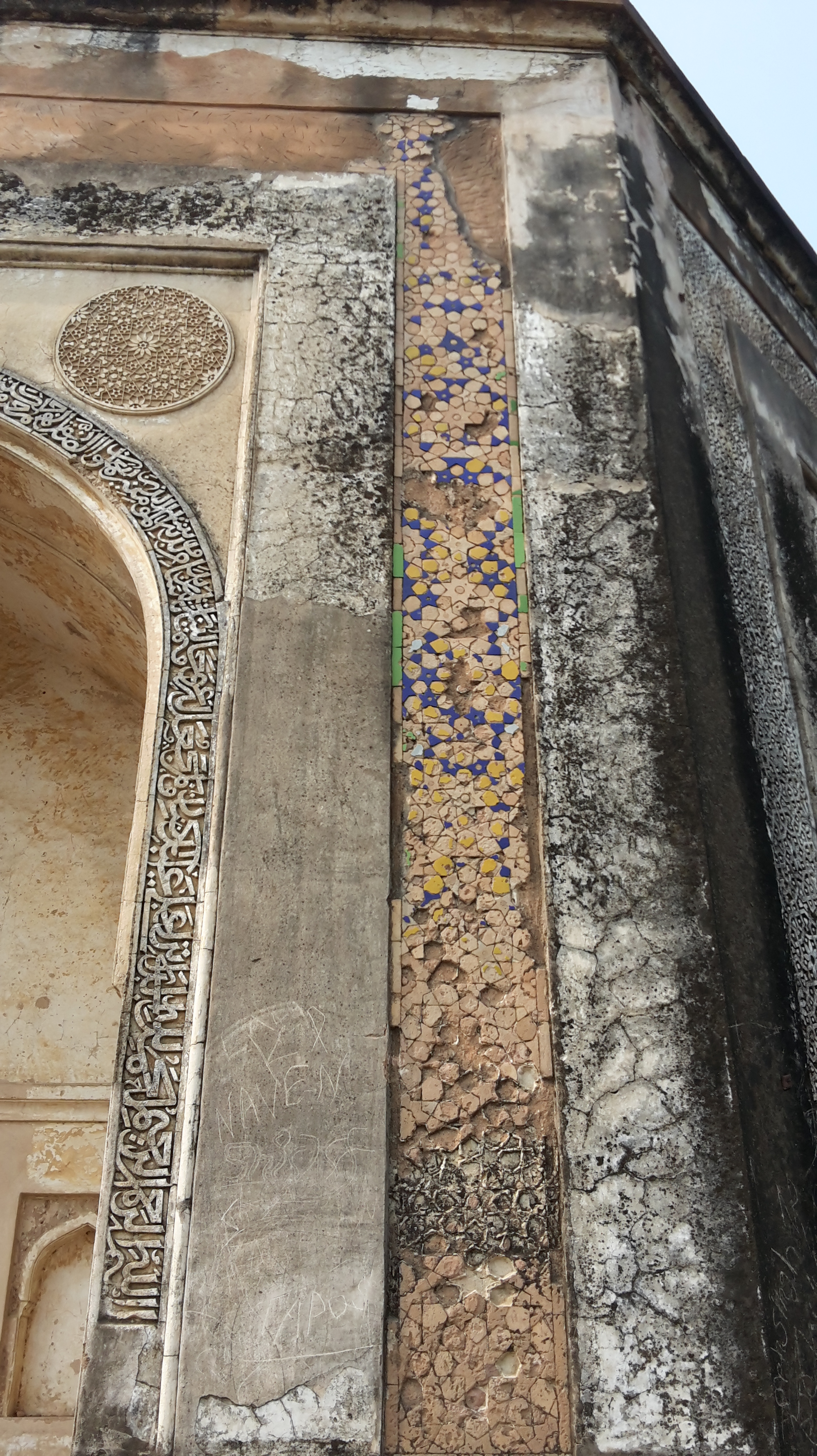
Jamali Kamali
Delhi happens to be the city of my birth, a city that fascinates me, and a city that I just can’t seem to get enough of. Since I haven’t grown up in Delhi, I’ve never actually felt a sense of belonging to the city (although I think it’s quite common for people who move frequently to feel this way). However, I always connect Delhi with history and art and culture (fueled by vacations spent chasing the tritest of tourist trails Qutub Minar, India Gate etc). Lately I’ve started to explore the city a bit more. Every time I visit here, I try and slip out for a day or two to just explore. Explore the bylanes of the old city, walk through the Meena Bazaar, listen to the Qawwals at Nizamuddin….shop for books in Khan Market, hang out at Delhi Haat and fancy myself very ‘cultured’. And to my delight, right before I came to Delhi on this trip, one of my students told me about one Mr. Sohail Hashmi, who is also on a quest. On a quest to share his knowledge of his city with those of us willing to wake up early on a holiday to participate in one of his numerous walks around the city.
 When it comes to Delhi, I’m never ambitious. I feel I have an eternity with this city. To read what others have said about it, to sift through their words in my mind, to walk through the ancient tombs and see if I can actually feel the movement of centuries. So I’m slow to imbibe. I listen, I try to correlate tales of old with contemporary times, I try and understand. Most of all I try to feel. A city which has been ravaged time and time again only to be re-built time and time again. Surely something of old still endures under the rubble of the neglected tombs, and an even more neglected ethos. A certain je ne sais quoi, instinctively felt. Just beyond your fingertips, even if you stretch your arm out until you can’t stretch any more.
So it was a couple of days after reaching that I called Sohail. It was short notice, and his walks are usually on Sundays. Work has me travelling on Sundays. Unable to get a group together (my perpetual complaint, ‘Where are all those people who also want to get to the bottom of this city’s very essence.’), I thought for a while that I would have to trudge back to Bangalore this time without unraveling even a bit of the city’s history. However, Delhi doesn’t disappoint (or at least Sohail doesn’t) and I was invited to join a group of JNU students on a walk near the Qutub Minar. Specifically, amongst the ruins behind the Qutub Minar. Qutub Minar I knew, but the ruins behind the Qutub Minar were new and unexplored. So off I went, dragging my little sister with me. There was a slight nip in the air as the morning dawned on the post Diwali smog. “I come here for work!” exclaimed my sister as we crossed beautiful buildings labelled ‘Sabyasachi’ and ‘Manish Malhotra’ and ‘Evoluzione’ on our way our destination. And once again I was struck by how easily the old blended with the new, if we only let it.
We arrived…about 45 minutes before our guide and his eager students did. So we did what anyone else would
do – had some juice at the stalls across from the monument, walked around the monument a couple of times, people watched and then took a lot of pictures (because smartphones, vanity and ancient monuments.)


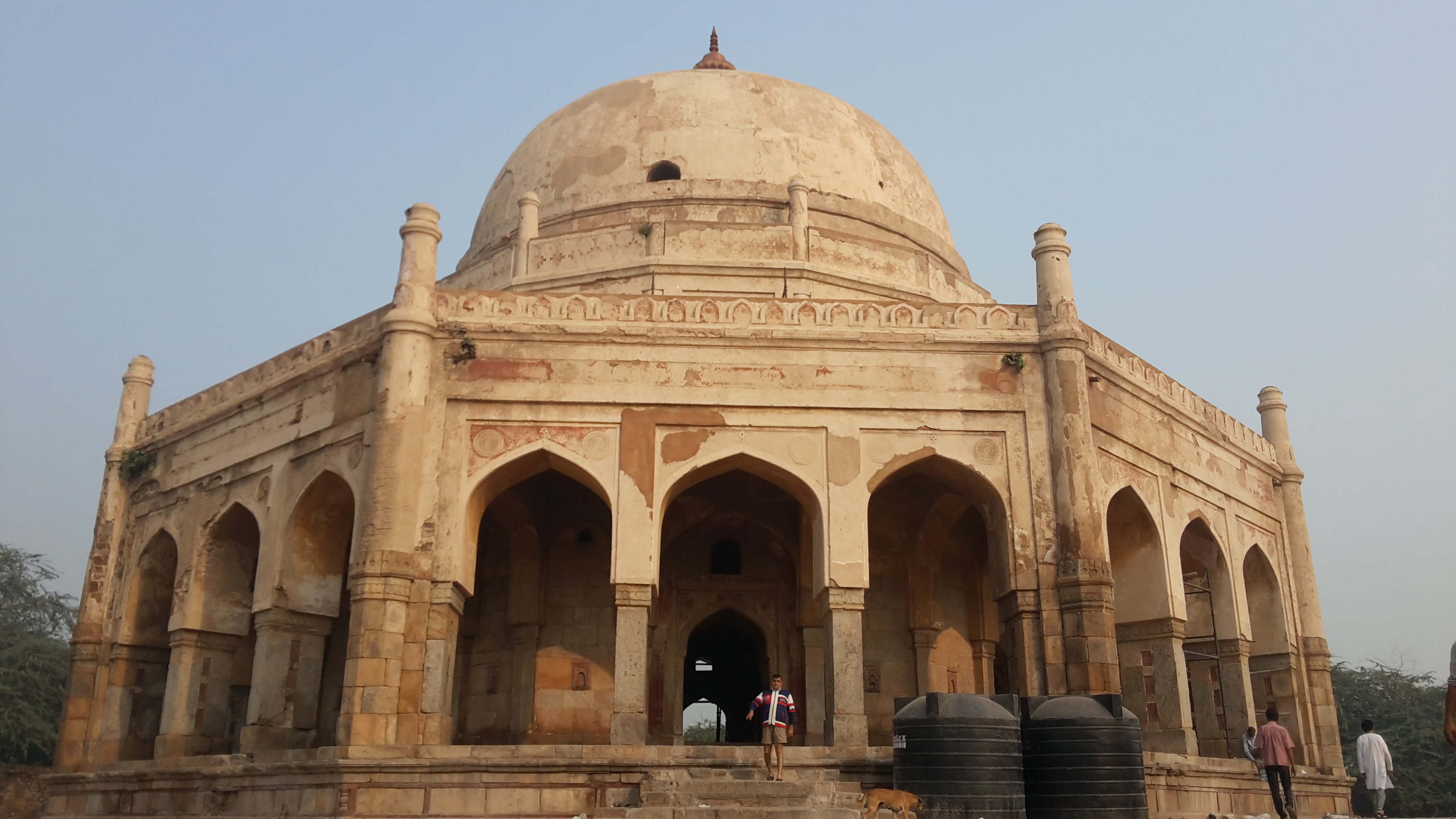
Adham ka Maqbara, where we started our walk.
 And finally our guide and his entourage arrived and it was time to start our walk. To begin with we discovered that the building we were to start with was called the ‘Adham Khan ka Maqbara’. Adham’s mother was Akbar’s wet nurse, and when Adham displeased Akbar in open court, Akbar had him killed. Adham’s mother then asked Akbar for retribution (she having been his wet nurse and all), and Akbar granted her a mausoleum in the memory of her beloved son. And thus sprung forth the Adham’s Tomb. To try and list everything would be very difficult. This morning we were told about the passages running through the walls of the mausoleum, walls and passages which were open when Sohail was a child and used to visit with his family. Sohail pointed out the leaves motif decorating the pillars of the structure, a motif prevalent today in our culture. He showed us the lotus motif and told us how it represented goodness and beauty in muck and perhaps not a particular religion. He showed us the auspicious ‘kalash’ in the pillars at the entrance of the maqbara and related it to the traditional practices of other cultures far away. And finally he showed us the motif of a 6 sided star. Perhaps it was the star of David. Perhaps it is the perfect geometrical figure and so the karighars decided to put it on the monument to increase the aesthetic valu
We took a break here to have samosas and kachoris at a shop nearby. Here too there was a history lesson. We were told that the pla ce we were standing in (Mehrauli) was the first urban area of Delhi. This was the first place where they recorded the first organized market place. And the samosa wallah has his original shop inside the village nearby, and he is rumored to have lines spanning a few kilometres during Diwali. We were only privy to an offshoot of the original shop run by one of his nephews or sons.
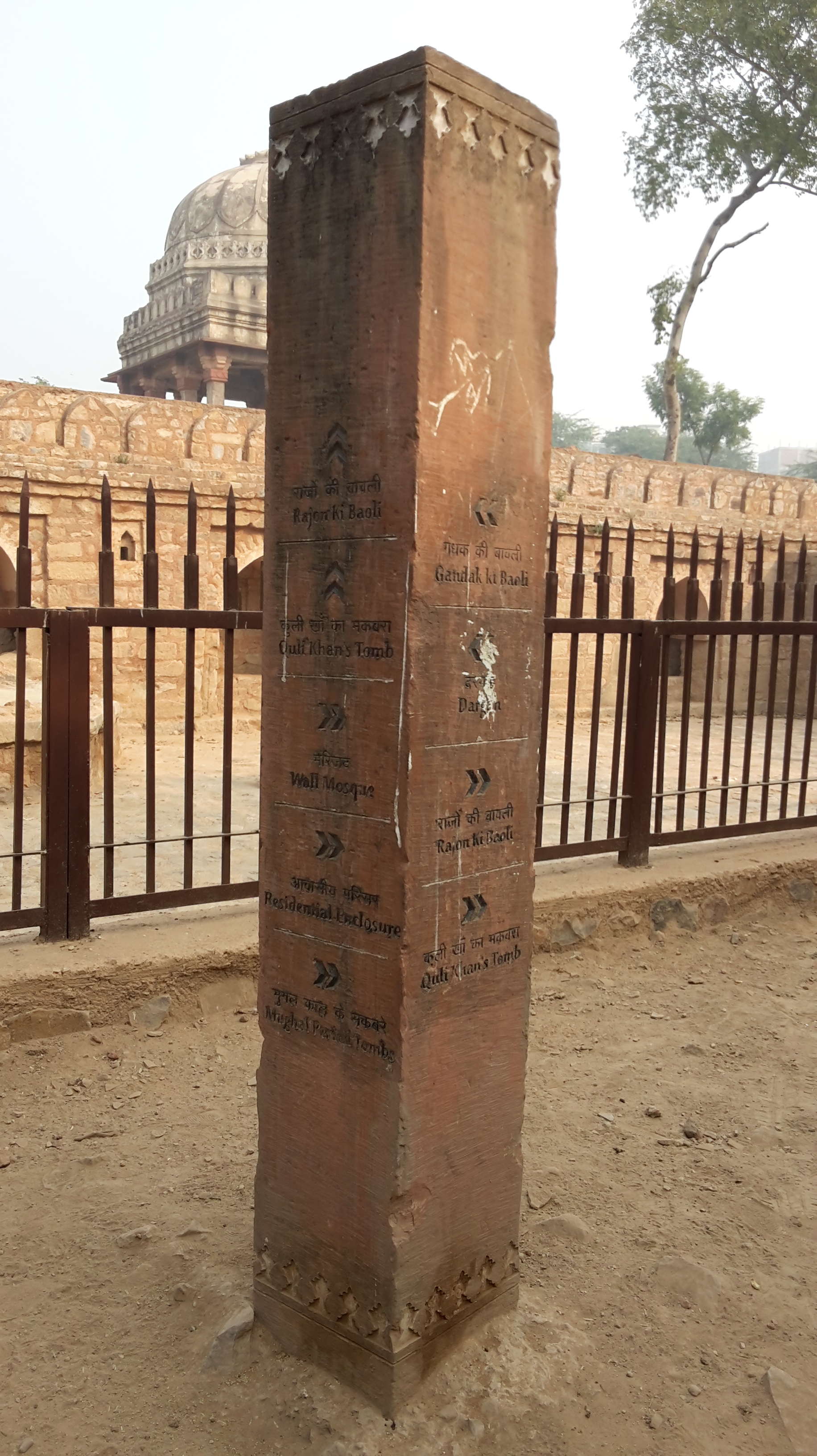
Once we were done with our little snack we headed down the circuitous roads of the hill to the Gandhak ki Baoli. This was a 5 storied structure used by people to bathe and to wash their clothes. 100 steps would lead you to the base of this structure. It was designed with a lot of forethought to ensure that it was useful for one and all. Incidentally the water contained sulphur, which is great for skin. Maybe that’s why there were shrines all around it and we were even asked to take our shoes off if we wanted to get a closer look. What my sister and I noticed was that joints were being openly rolled inside these shrines, and people were sitting meditatively and calmly, busy in their own pursuits.
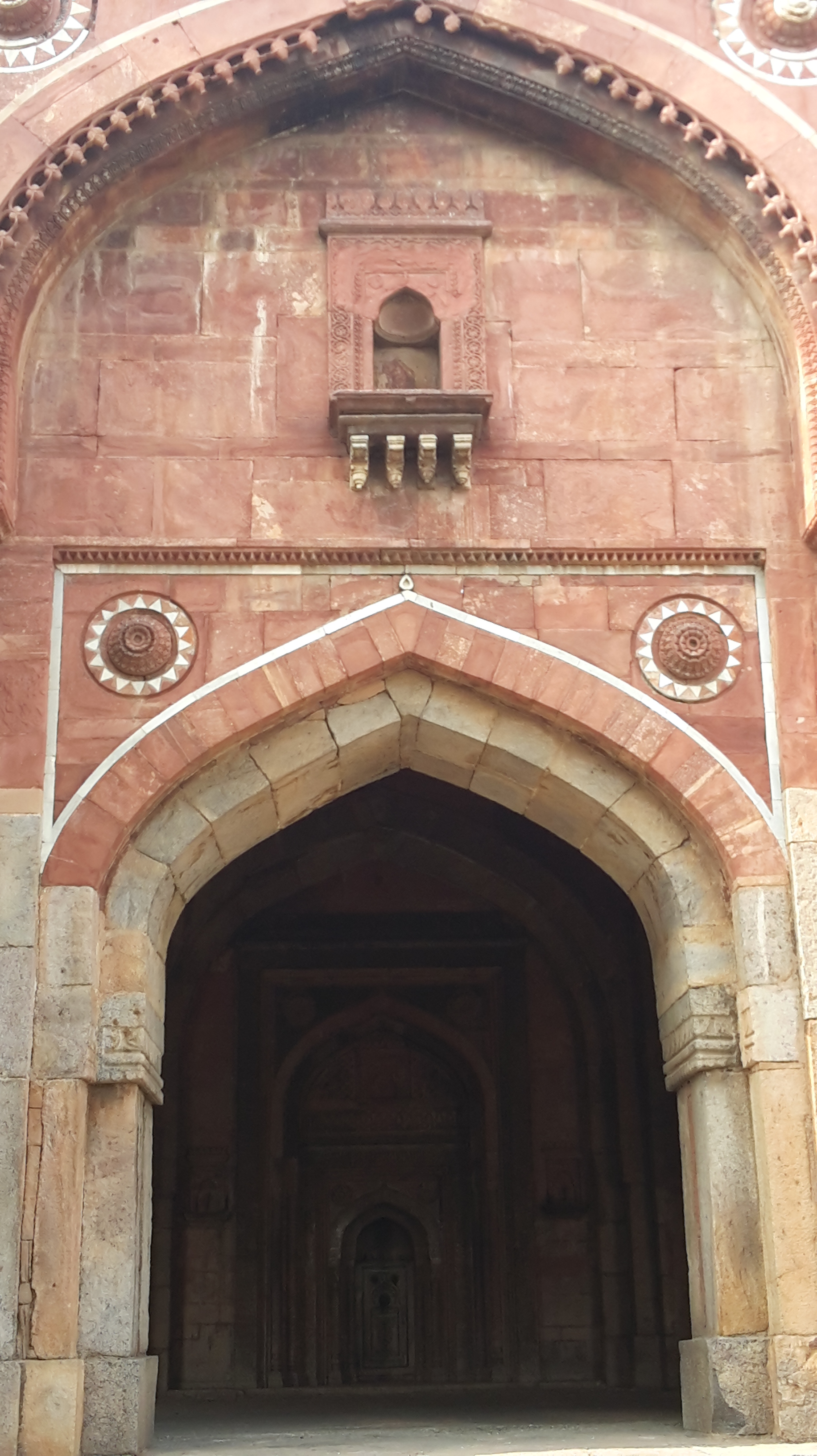
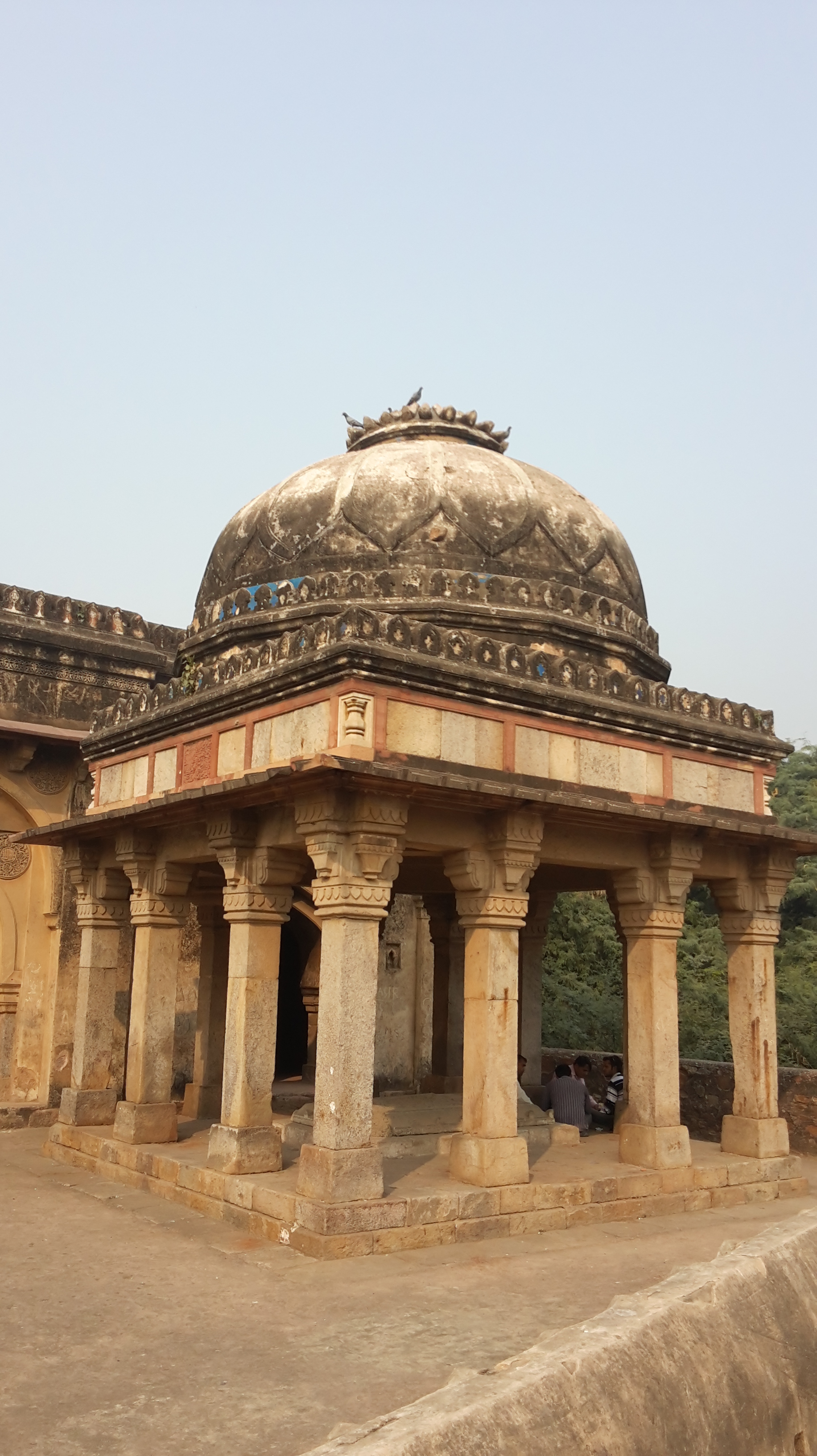
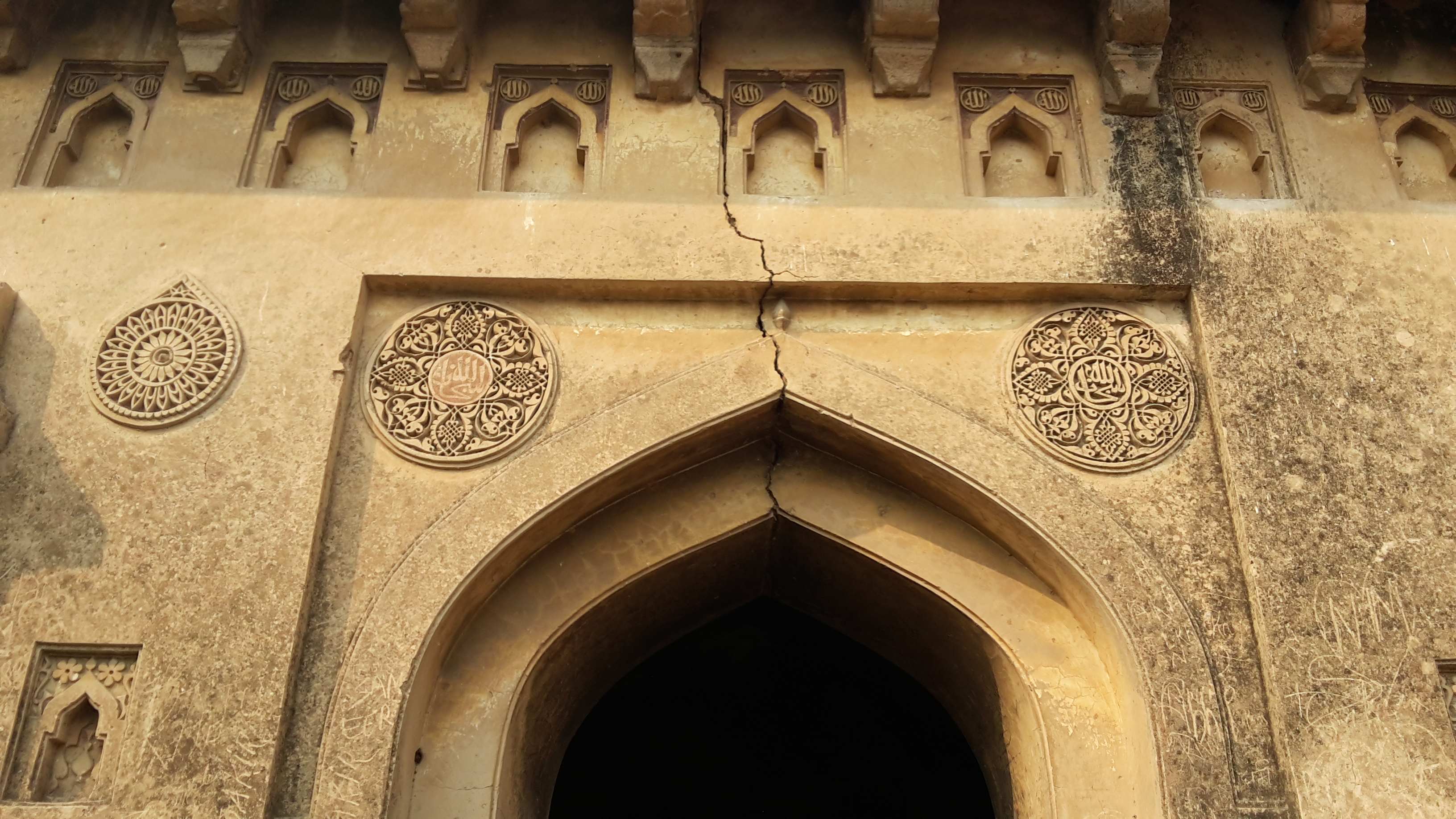
Mosque at Jamali Kamali
Next we walked to a mausoleum built for an unknown noble. When Sohail was a young boy (and I guess that was a long long time ago) there used to be a couplet by Saadi inscribed on the inside of the structure, which was subsequently erased with some restoration work. Here’s the translation:
“I stood up to pray;
I remembered the curve of your brow;
I was lost in the memory of your brow;
That the arch finally reminded me of what I was doing here.”
It’s this couplet which leads us to believe that perhaps this structure was a place of worship.
From here we went to the Rajon Ki Baoli. We sat on the steps while Sohail explained the architecture to us. He explained the  drainage system, and why one side of the baoli had no carvings while the other did. He explained the arches and the intricate carvings on the arches. He explained how the ASI has only 5 crores every year to
  spend on restoration work and that was simply not enough for these magnificent monuments. Along with this he explained to us that human beings created religion and not the other way around. The men who built these large places of worship, of living, of poetry readings and of art were paying tribute to love, to beauty to bravery and to valor. Not to division, to castes to boundaries to oppression to differences.
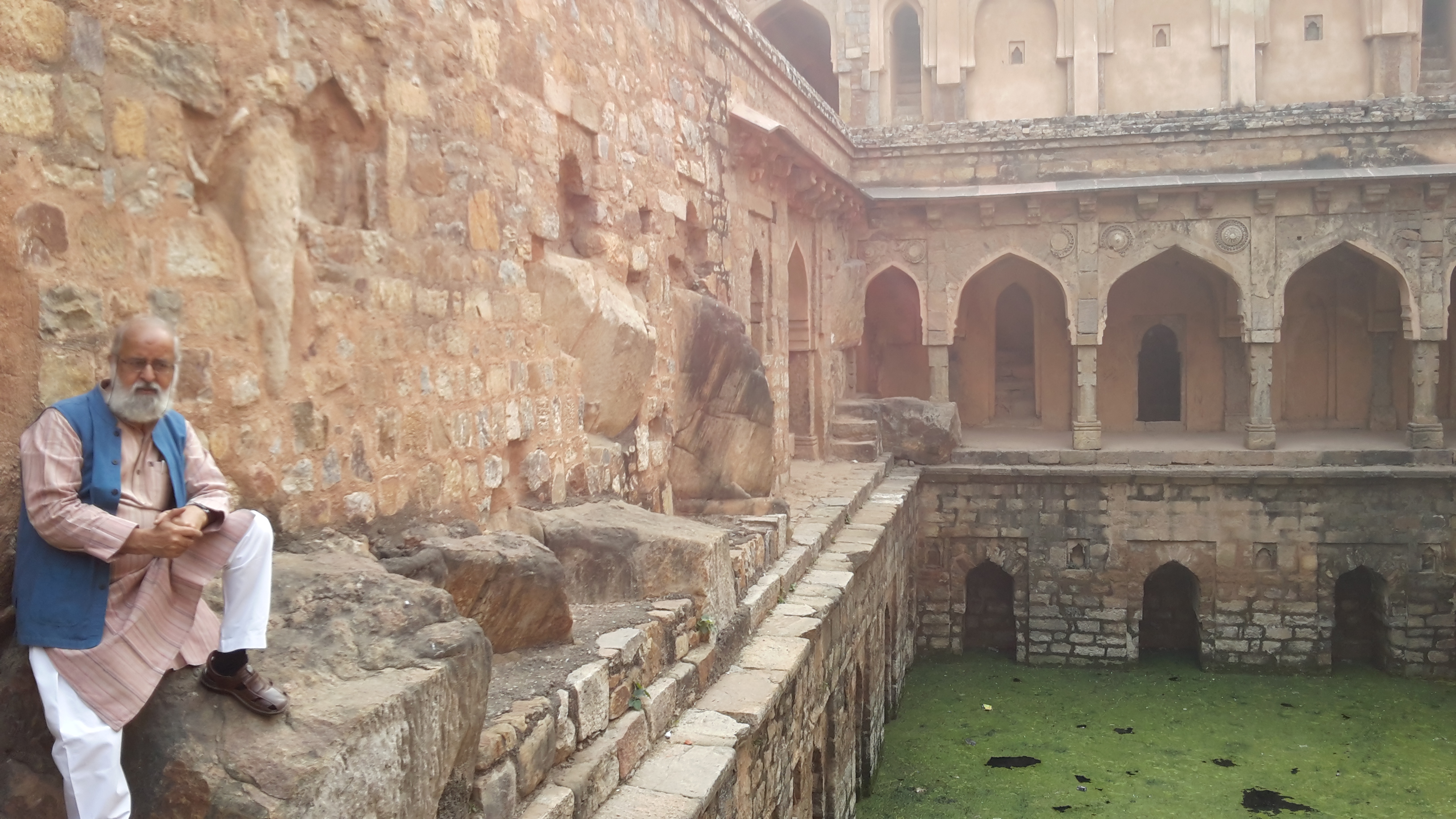
Sohail Hashmi regaling us with stories of eras gone by from his comfortable perch.

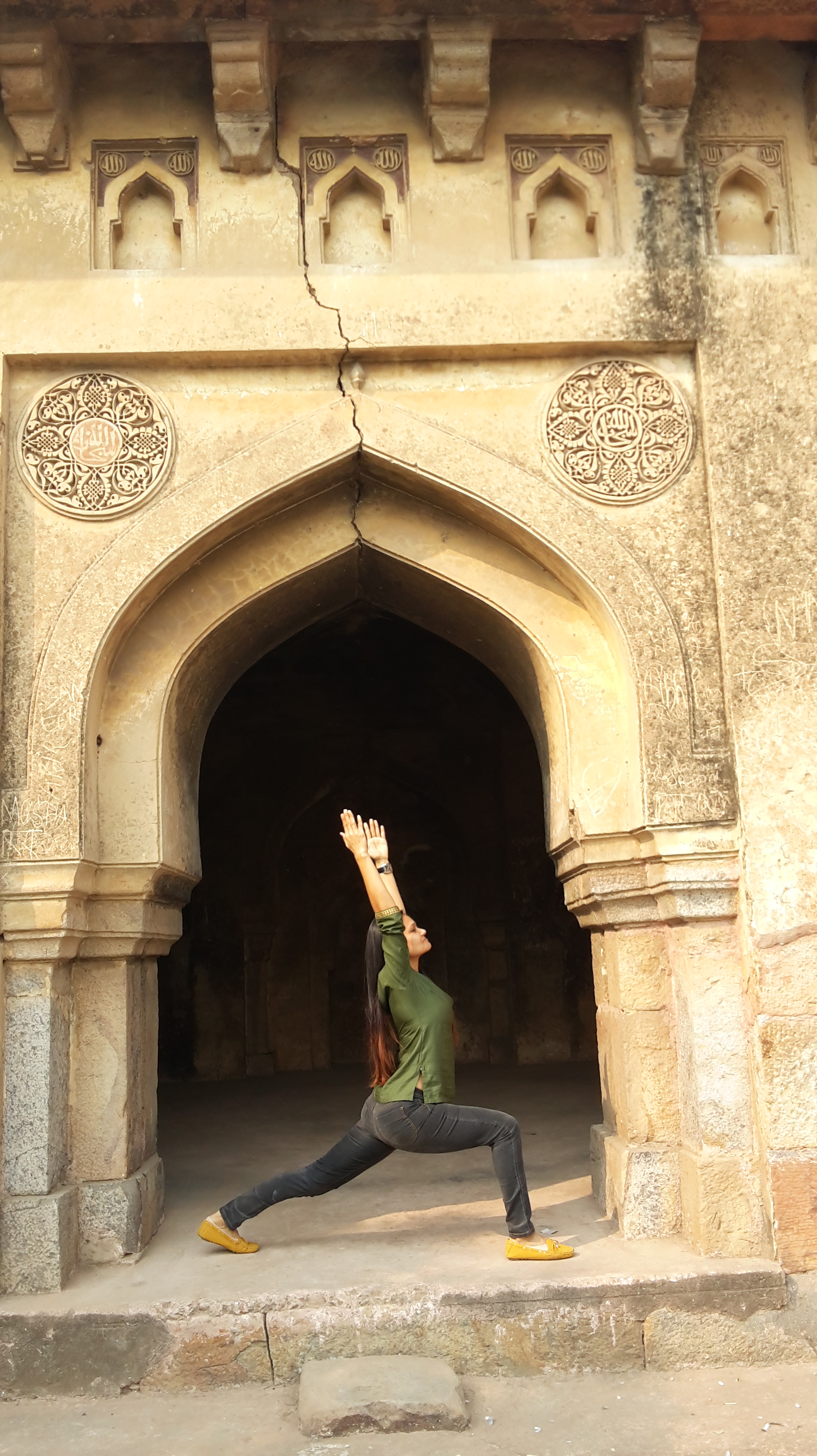
Doing what I hope I do best.

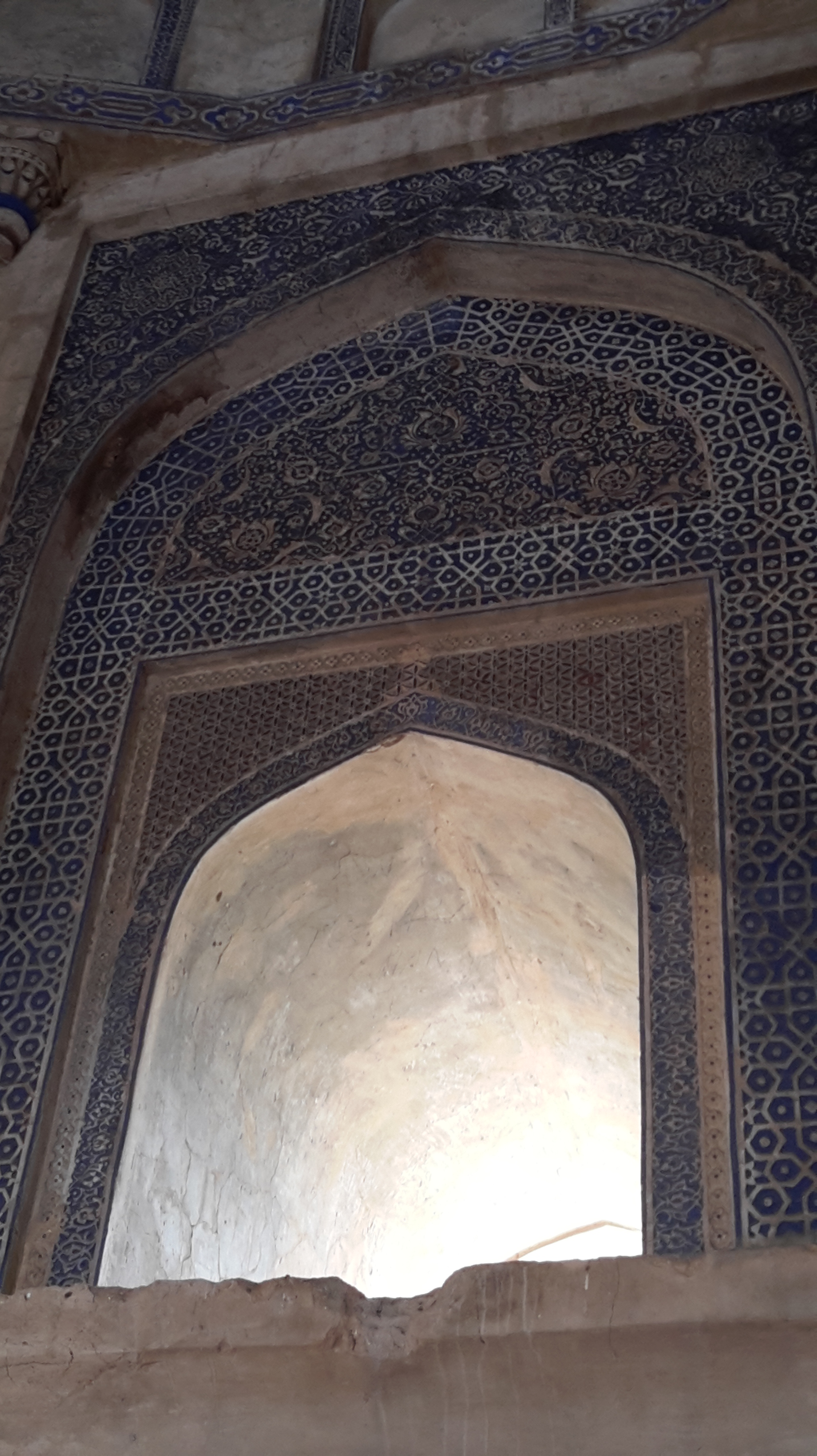
Next we went to the mausoleum of Daulat Khan, with its beautiful inlay work and carvings. Where Veer Zaara was shot (Dr SRK connections abound). Sohail told us about how the artisans and the construction workers of the time used to get the ‘marble  finish’ that we saw on the inside of Daulat Khan’s tomb. He explained about the different architectural influences that we saw inside the tomb. And we followed him up a narrow staircase where the shiny ‘marble finish’ was still in tact because it was protected by the elements and up on to a terrace where we could see the entire hillside. I closed by eyes and imagined the Qutub Minar without the teeming villages which had sprung up all around it. I imagined the Adham ka Maqbara in all it’s glory. I imagined people so artistically evolved that they had to have beauty above all. A naked beauty, a beauty which dictated that if the lotus would be aesthetically pleasing in a the tomb of a Muslim ruler, than the lotus motif it must be that would decorate his tomb. I imagined a time when to take a walk was to lose yourself amidst beauty and nature and art. I imagined a time where men held high moral values and wanted to glorify beauty and
  not possess or ravage it. I imagined a time of understanding and harmony. Of warrior kings and queens and nightly poetry readings. I looked around and hoped that the state of affairs will improve. Where we will once again glorify talent and art and respect writers and artists. Where debates will not end with gunshots. Where people will communicate more than scare. I left hoping that others would go on this walk and know that people of high moral fibre have trod before us here. And that it may just be our cultural responsibility to carry on their superior ideals in our own ways.
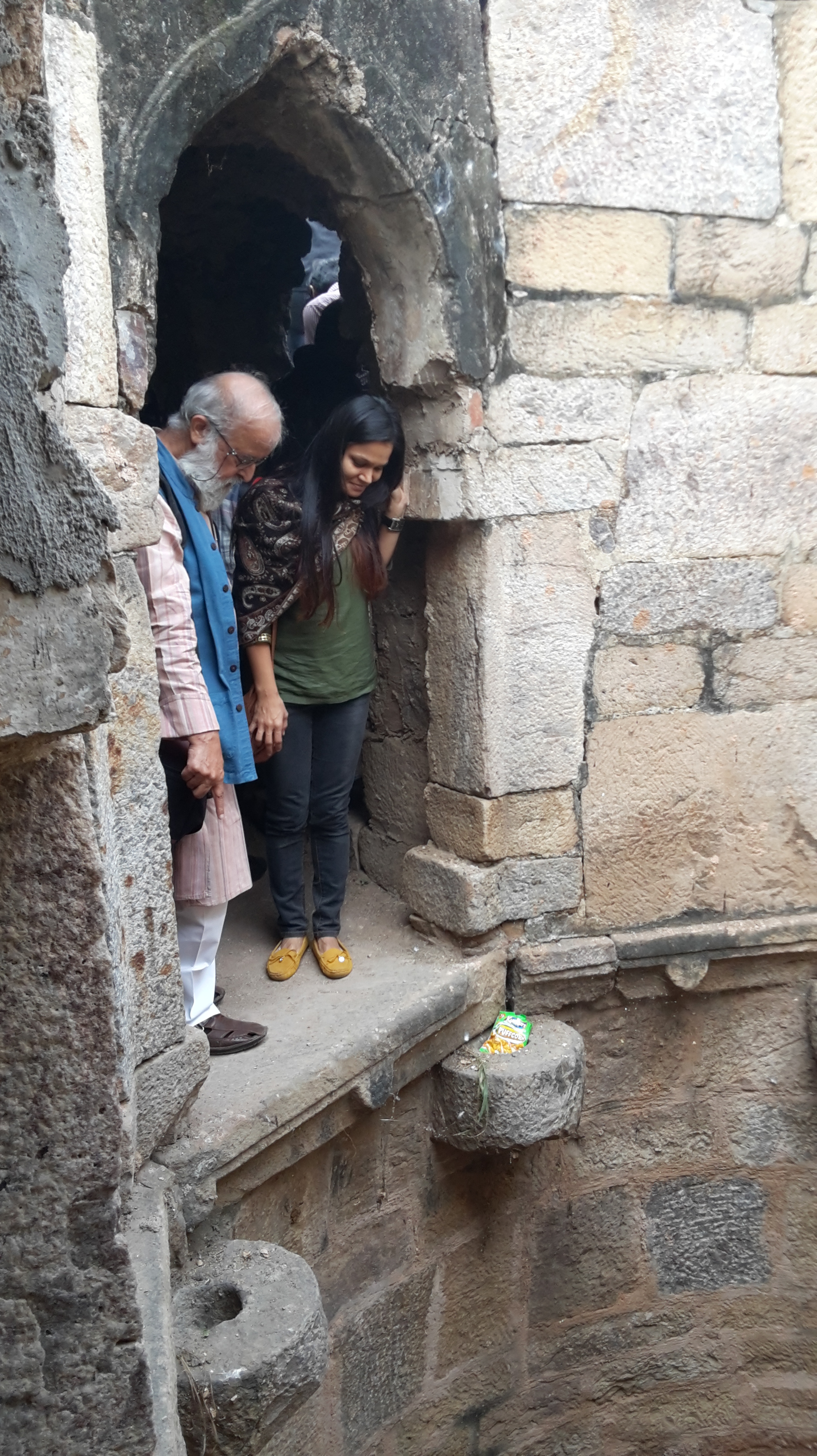
Looking at the beer bottles, chips packets and plastic bags that litter the floor of the well of the Rajon ki Baoli.
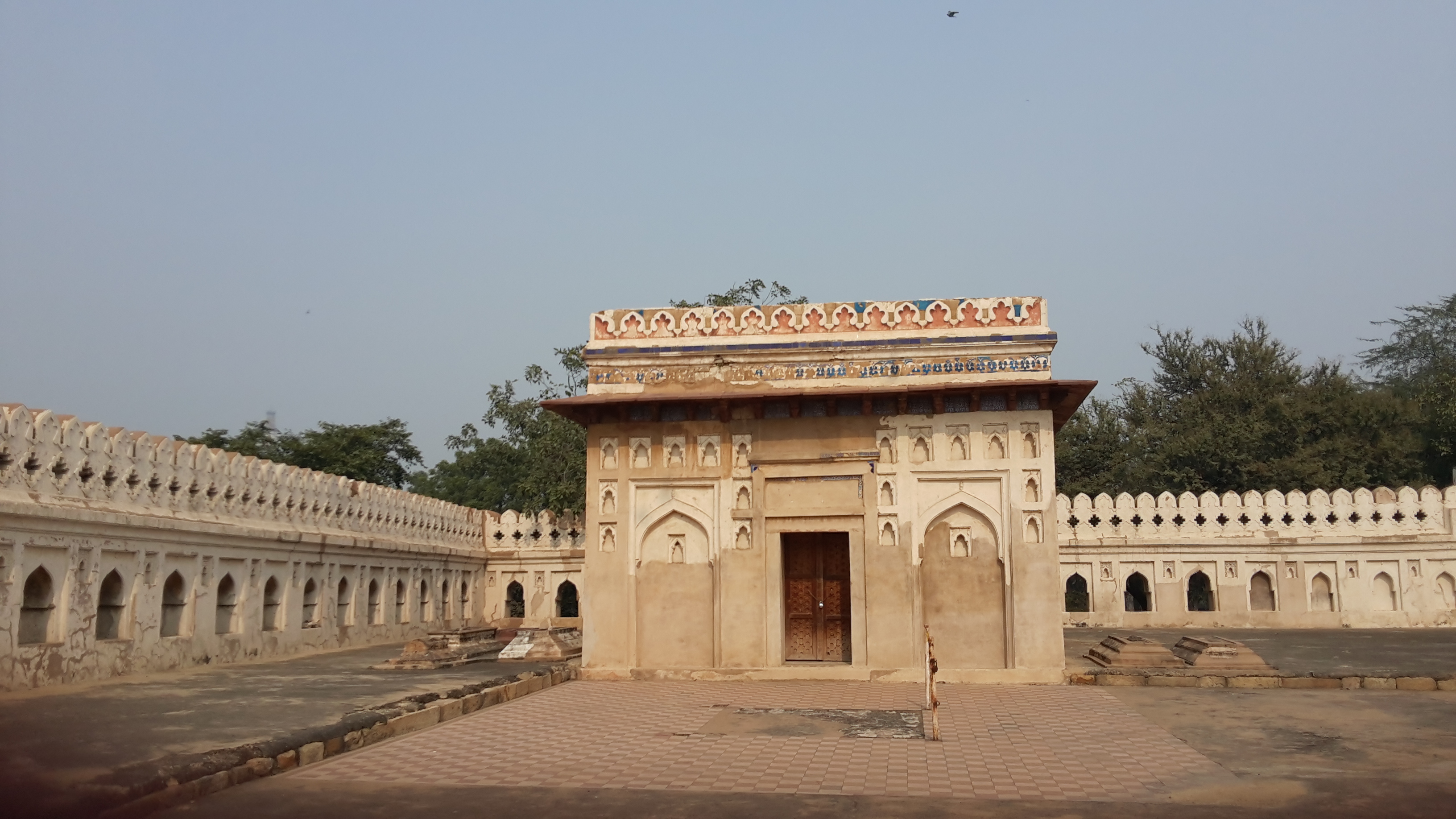
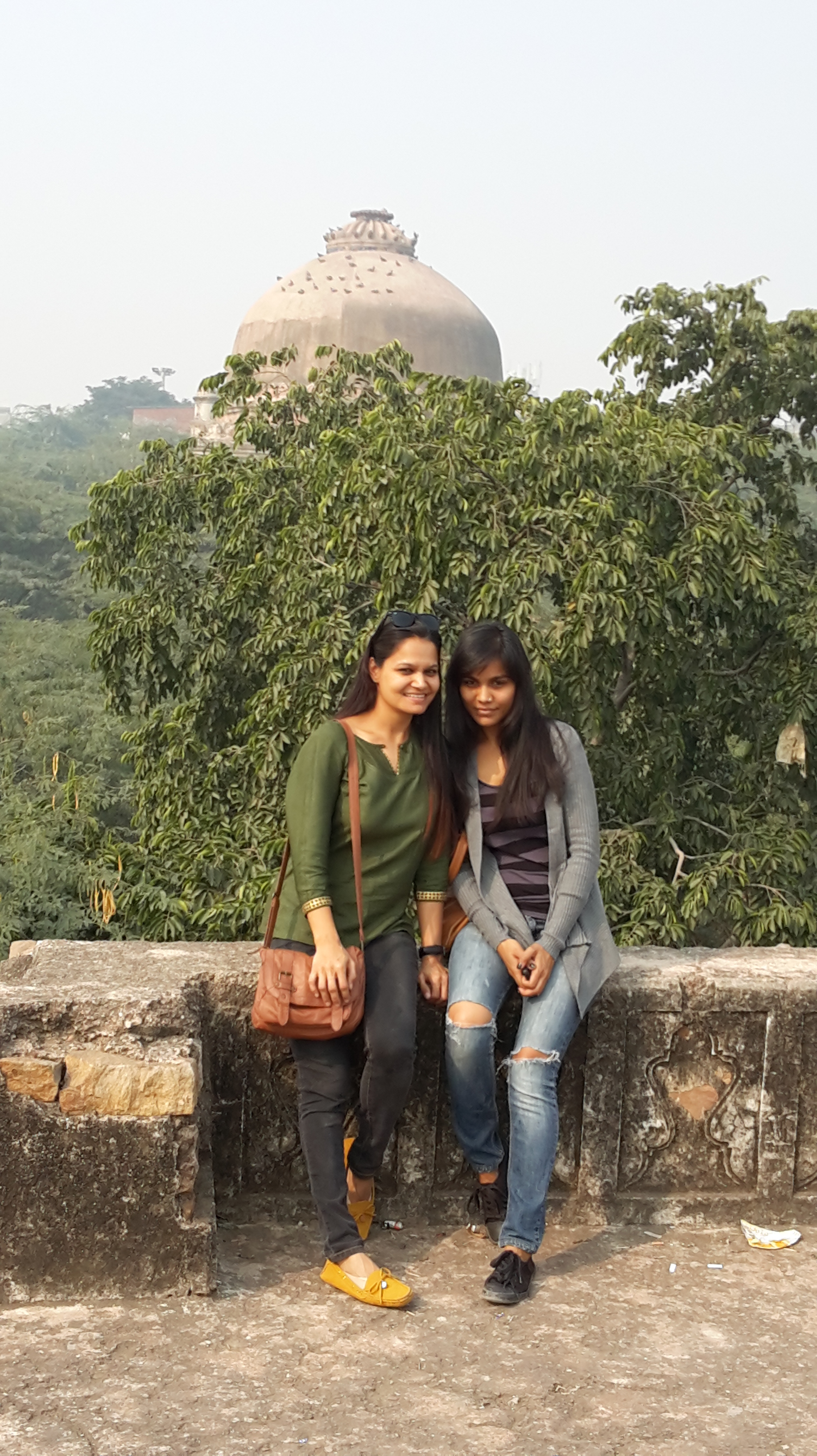
The tomb of Jamali-Kamali. Brothers? Lovers?
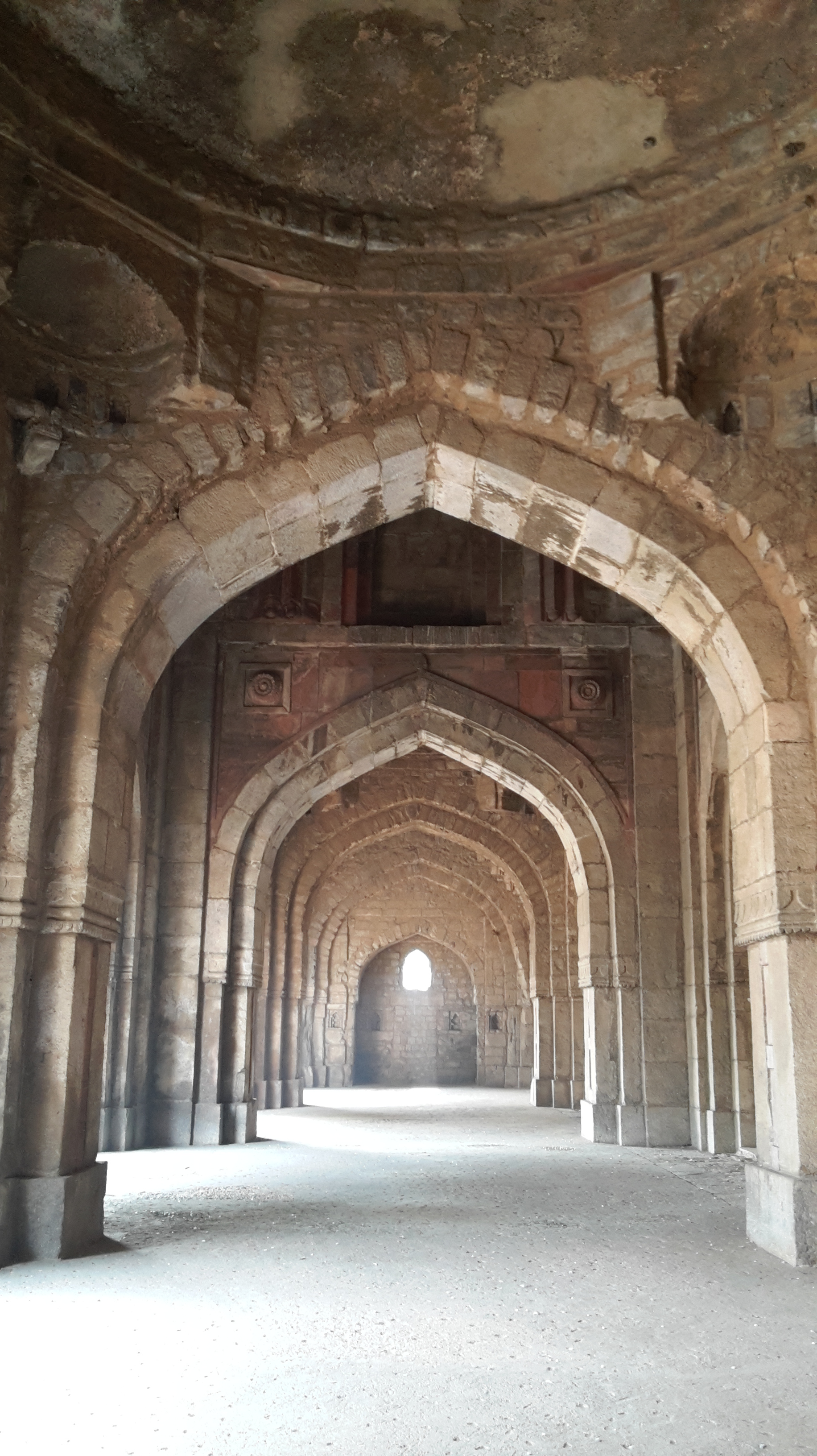
Veer Zaara 🙂
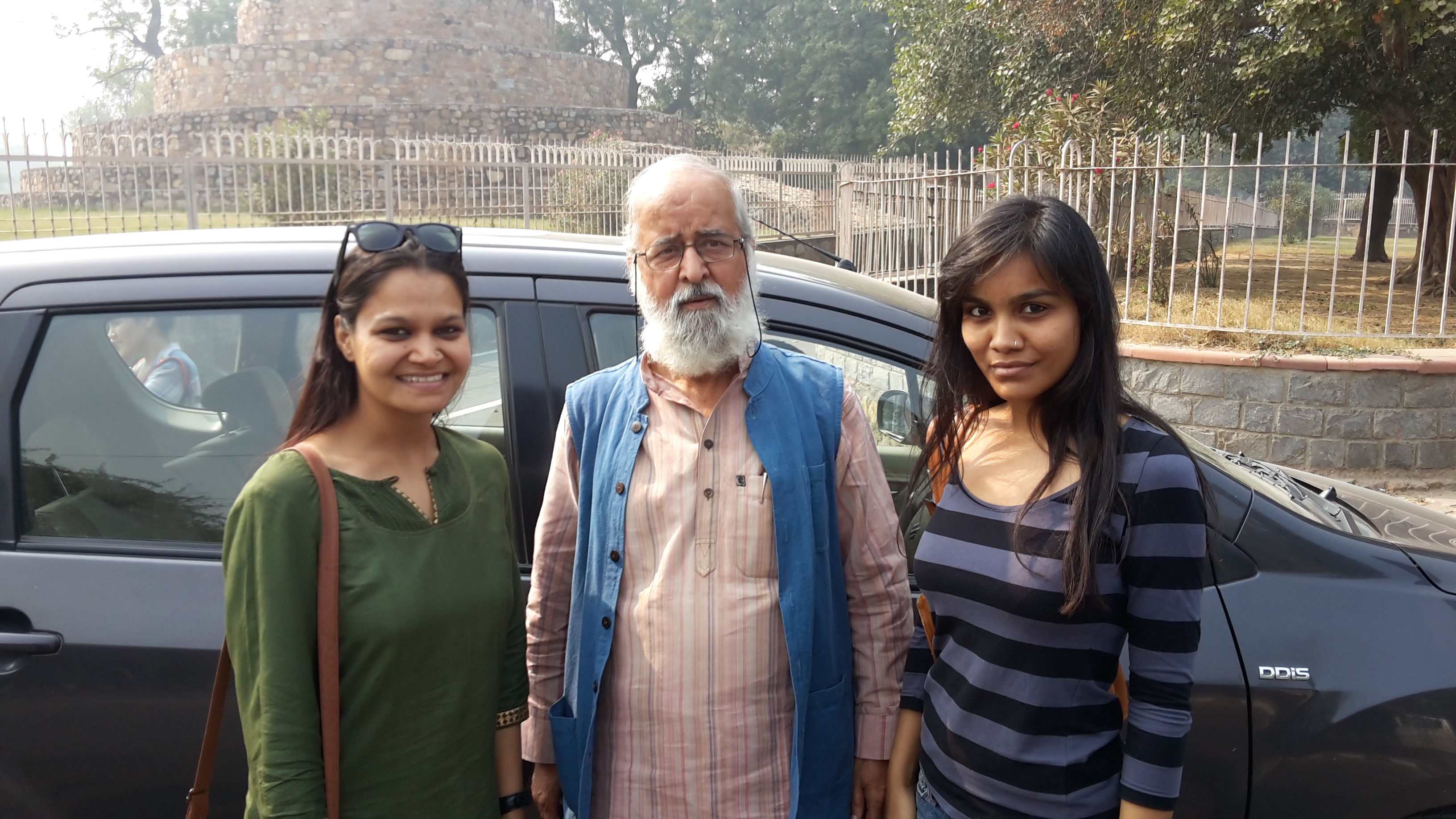
With Sohail Hashmi.
![1[1]](https://yogawithpragya.com/wp-content/uploads/2015/12/11-1.jpg)
![POMELO_20151130105401_save[1]](https://yogawithpragya.com/wp-content/uploads/2015/11/pomelo_20151130105401_save1-1.jpg?w=300) what lay ahead. I made it to Mysore on time and managed to find KPJAYI easily. Basically everyone seemed to know where it was. There were throngs of people who were already there before me to register. Registrations for the advanced class had started, and I had to
what lay ahead. I made it to Mysore on time and managed to find KPJAYI easily. Basically everyone seemed to know where it was. There were throngs of people who were already there before me to register. Registrations for the advanced class had started, and I had to ![POMELO_20151130201506_save[1]](https://yogawithpragya.com/wp-content/uploads/2015/11/pomelo_20151130201506_save1-1.jpg?w=169) wait a while before I could register for Saraswati’s beginners’ class. I joined a queue of people who had never practiced Ashtanga before. We sat on the cool marble floor of the office and shared our pens to fill out our registration forms. People have come here from far and wide. Some have even brought children along!
wait a while before I could register for Saraswati’s beginners’ class. I joined a queue of people who had never practiced Ashtanga before. We sat on the cool marble floor of the office and shared our pens to fill out our registration forms. People have come here from far and wide. Some have even brought children along!![POMELO_20151130201250_save[1]](https://yogawithpragya.com/wp-content/uploads/2015/11/pomelo_20151130201250_save1-1.jpg?w=300) time before heading out again for an early dinner. I managed to find a place. Wasn’t too happy with the coffee nor the organic ‘sprouded’ moong dal dosa. I want masala dosas!!! Hopefully I’ll be able to find a place which serves strong filter coffee and masala dosas a la Adigas.
time before heading out again for an early dinner. I managed to find a place. Wasn’t too happy with the coffee nor the organic ‘sprouded’ moong dal dosa. I want masala dosas!!! Hopefully I’ll be able to find a place which serves strong filter coffee and masala dosas a la Adigas.![POMELO_20151130184201_save[1]](https://yogawithpragya.com/wp-content/uploads/2015/11/pomelo_20151130184201_save1-1.jpg?w=200)
![20151129_200421[1]](https://yogawithpragya.com/wp-content/uploads/2015/11/20151129_2004211-1.jpg?w=300)
![POMELO_20151129154114_save[1]](https://yogawithpragya.com/wp-content/uploads/2015/11/pomelo_20151129154114_save1-1.jpg?w=300)
![POMELO_20151129204651_save[1]](https://yogawithpragya.com/wp-content/uploads/2015/11/pomelo_20151129204651_save1-1.jpg?w=300)



![20150914_133352_-1575466813[1]](https://yogawithpragya.com/wp-content/uploads/2015/09/20150914_133352_-15754668131-1.jpg)
![20150914_133449_570824101[1]](https://yogawithpragya.com/wp-content/uploads/2015/09/20150914_133449_5708241011-1.jpg)
![20150914_133531_2052623839[1]](https://yogawithpragya.com/wp-content/uploads/2015/09/20150914_133531_20526238391-1.jpg)
![20150914_133832_920563252[1]](https://yogawithpragya.com/wp-content/uploads/2015/09/20150914_133832_9205632521-1.jpg)
![20150914_134000_193050774[1]](https://yogawithpragya.com/wp-content/uploads/2015/09/20150914_134000_1930507741-1.jpg)
![20150914_134212_-1596057775[1]](https://yogawithpragya.com/wp-content/uploads/2015/09/20150914_134212_-15960577751-1.jpg)
![20150914_134613_157411077[1]](https://yogawithpragya.com/wp-content/uploads/2015/09/20150914_134613_1574110771-1.jpg)
![20150914_134731_1622070687[1]](https://yogawithpragya.com/wp-content/uploads/2015/09/20150914_134731_16220706871-1.jpg)
![Photo Collage Maker_1CTZOu[1]](https://yogawithpragya.com/wp-content/uploads/2015/09/photo-collage-maker_1ctzou1-1.png)