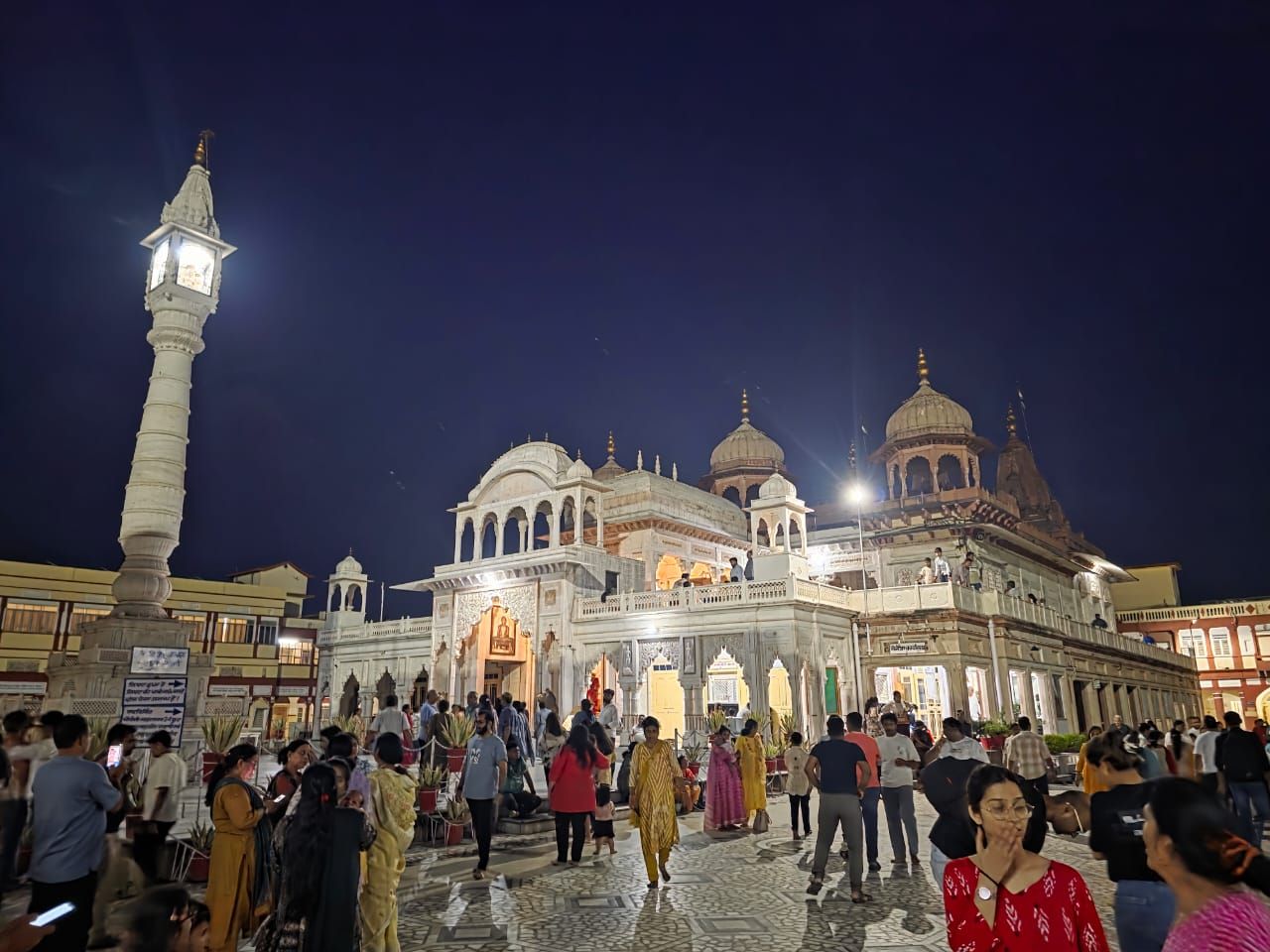
I’ve visited very few Jain religious sites, the most notable being my visit to Shravanbelagola. A few months ago I also got the chance to visit the Shri Mahaveerji temple in the Karauli district of Rajasthan, another important Jain pilgrimage site.
The temple is regarded as a Digambar Jain Atishaya Kshetra, which means signifying a miraculous site within the Digambar Jain tradition. Lord Mahaveer, the 24th tirthankara (an enlightened spiritual teacher who has conquered the cycle of birth and death), is the principal deity here.
The Road to Mahaveerji
…began with a plan.
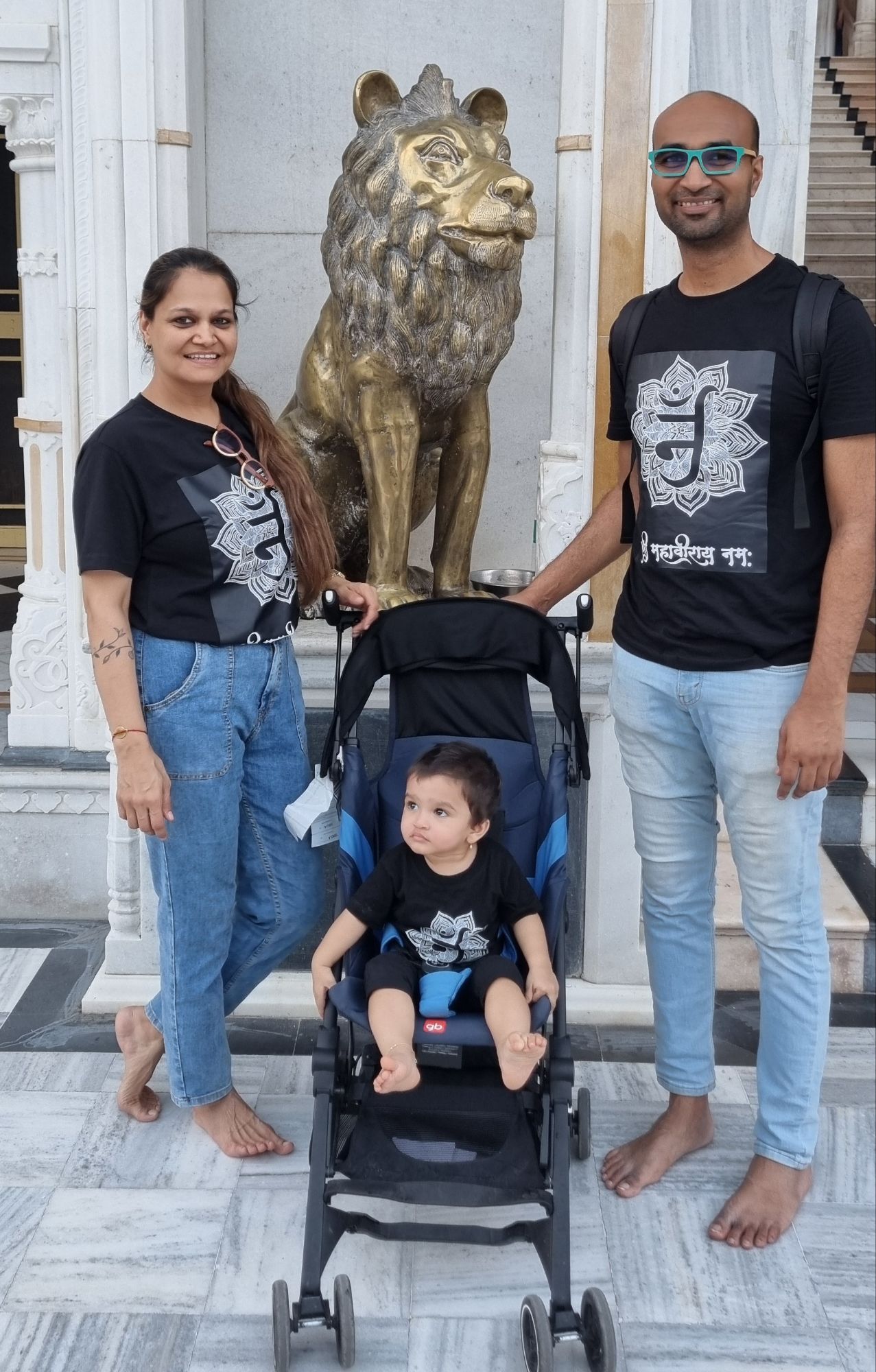
My in-laws had been planning on visiting the Mahaveerji temple for a few years, and on a whim, we decided to ask a few others in the family. Before we knew it, we had a group of twenty ready to go — including two children, matching tees for all the yatris, and a fiercely active WhatsApp group debating logistics and playlists.
Since it was a long weekend, we added Alwar to the itinerary. It’s close to Mahaveerji and offered a nice mix of history, heritage, and relaxation — the perfect balance to a spiritual pilgrimage. This trip had the makings of a fulfilling holiday – history, heritage, devotion and family!
Getting There
We were three families converging at the guesthouse of the temple. Two families were from Bangalore, and we took the Indigo flight to Jaipur. In Jaipur we booked a van to take us on the 3 hour route through the dusty and hot towns and villages of Rajasthan to our destination.
We took turns playing the staple road trip game of India – antakshari. And the silent moments were filled with music blaring from the van’s stereo system (which I wish was a tad bit more pleasant).
We stopped once for lunch along the way and were pleasantly surprised by the cleanliness and authentic flavors of the Rajasthani meal — simple, spicy, and satisfying.
Alwar is about four hours from Mahaveerji, so we decided to keep the van with us for the rest of the journey. It turned out to be a wise choice — make it easier to commute.
First Impressions: Arriving at Mahaveerji
The temple guesthouse sit directly opposite the temple, so you’re literally across the narrow road from the temple. Like all pilgrimage towns, this one is bustling with activity. The van slowly ambled through the people, cows, dogs, fruit sellers – the usual milieu, until we found the parking lot. We had to then hire coolies to help lug our bags to the guest house, because the narrow approach road can’t accommodate large vehicles.
The guesthouse and temple are surrounded with everything that tourist and pilgrims may need or want – restaurants, shops selling everything from bedsheets to locks, and even photo studios where you can get instant prints.
The most well-known story about Mahaveerji is about its discovery. A Jain merchant called Shri Amar Chand Bilala built the temple in the 17th century. The story goes that a Kamadhenu cow poured her milk (directly from the udders) on a mound near the present day temple every day. The cowherd to whom the cow belonged decided to excavate the spot and uncovered an ancient idol of Mahavira. This idol is now enshrined in the temple’s sanctum sanctorum.
As far as religious sites go, I wouldn’t say Mahaveerji is grand or awe-inducing. It’s a modest temple.
I also observed a unique tradition – devotees can perform abhisheka (ritual bathing of the deity) with water or milk, for a fee that can go up to ₹10,000 and beyond! We watched a long line of devotees patiently waiting their turn.
How to be a Devotee: An Interesting Ritual
Purity is an important aspect of Jainism and this includes physical purity. The devotees who perform abhishek snan (the ritual bathing of the idol), wake up early, bathe and change into fresh clothes. These orange or white robes sets them apart from other devotees. Once dressed, they must avoid any physical contact with others; even the slightest touch renders them impure.
There was a long line of pilgrims in the temple, and with the burning lamps and bhajans they gave a tangible sense of reverence.
We attended the evening and morning aarti at the temple and each had a different atmosphere. I find that the evening aarti often feels like a release from the stressors of the day, while the morning aarti brings hope and optimism for the day ahead.
After offering our prayers, we circumambulate the temple. On the walls of the temple are beautiful carvings from the Jain scriptures. Having practiced walking meditation at SVYASA, I can appreciate how the rhythmic movement can put devotees into a meditative state.
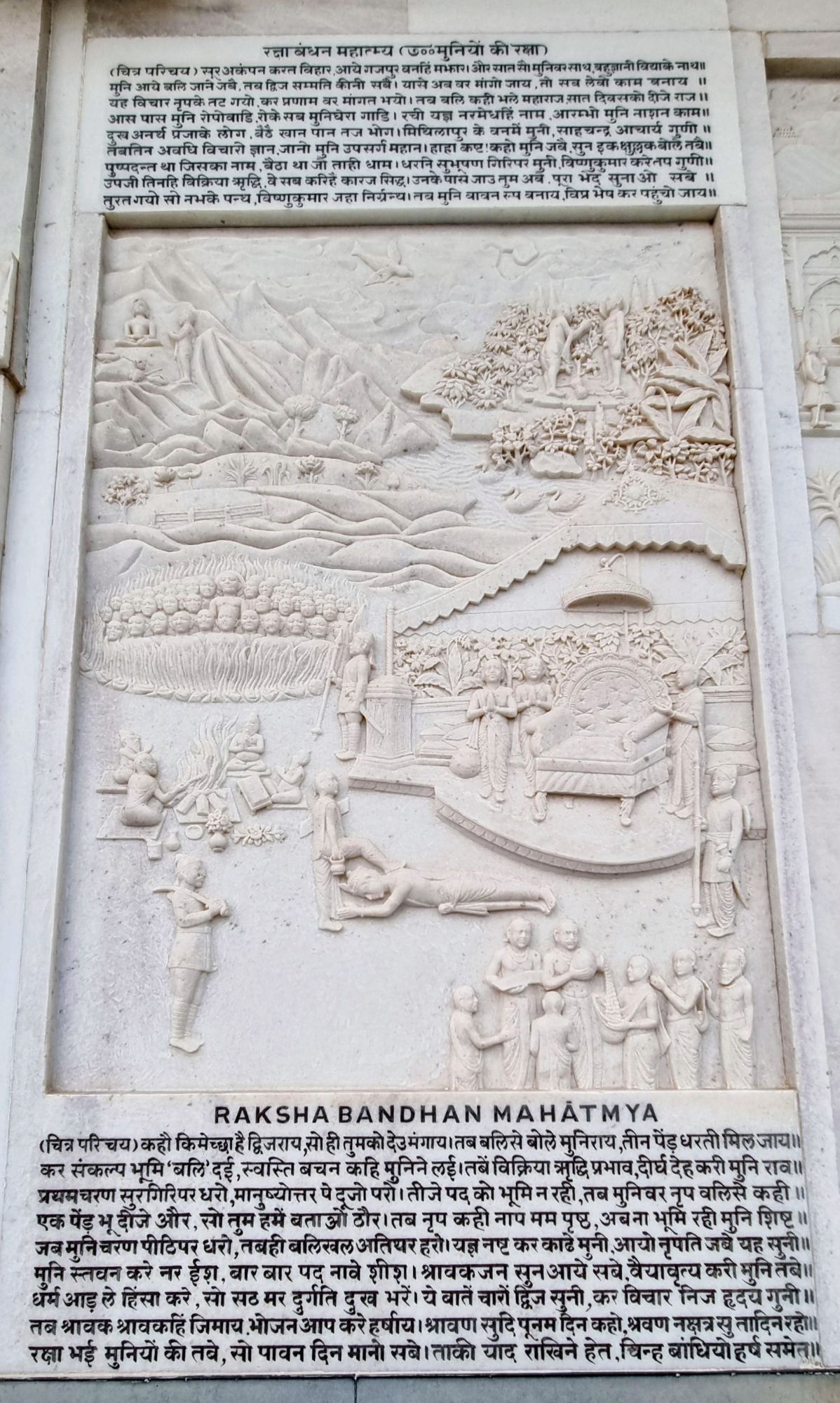
Beautiful carvings depicting scenes from the Jain scriptures on the Mahaveerji temple’s outer walls.
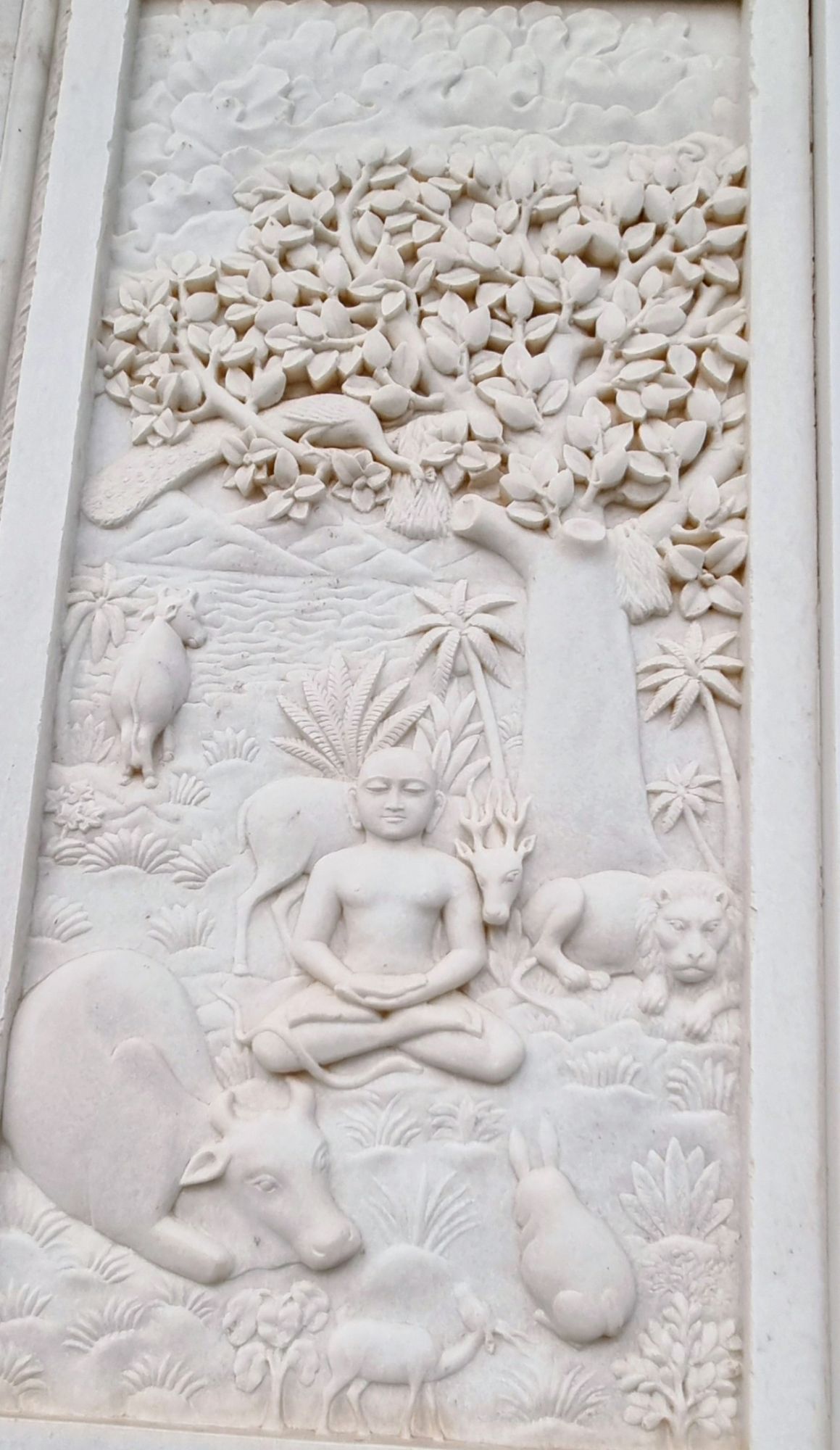
I can’t help but take pictures of yogasanas.
Family Moments
After the darshan we decided to sit for a while, letting the sacred atmosphere of the temple settle within us. It is ironic that pilgrimages in India are often marked by extremes – weather, crowds, discomfort – yet almost everyone can find a moment of serenity that is often missing in everyday life.
I felt like the family was a bit more relaxed, softened by the shared experience. These are moments that we can cherish for a lifetime. It was particularly gratifying to see the intergenerational connection — Kalindi spent valuable time with her cousin and extended family, and the grandparents got a chance to bond with the next generation, introducing them to the importance and values of shared rituals and beliefs.
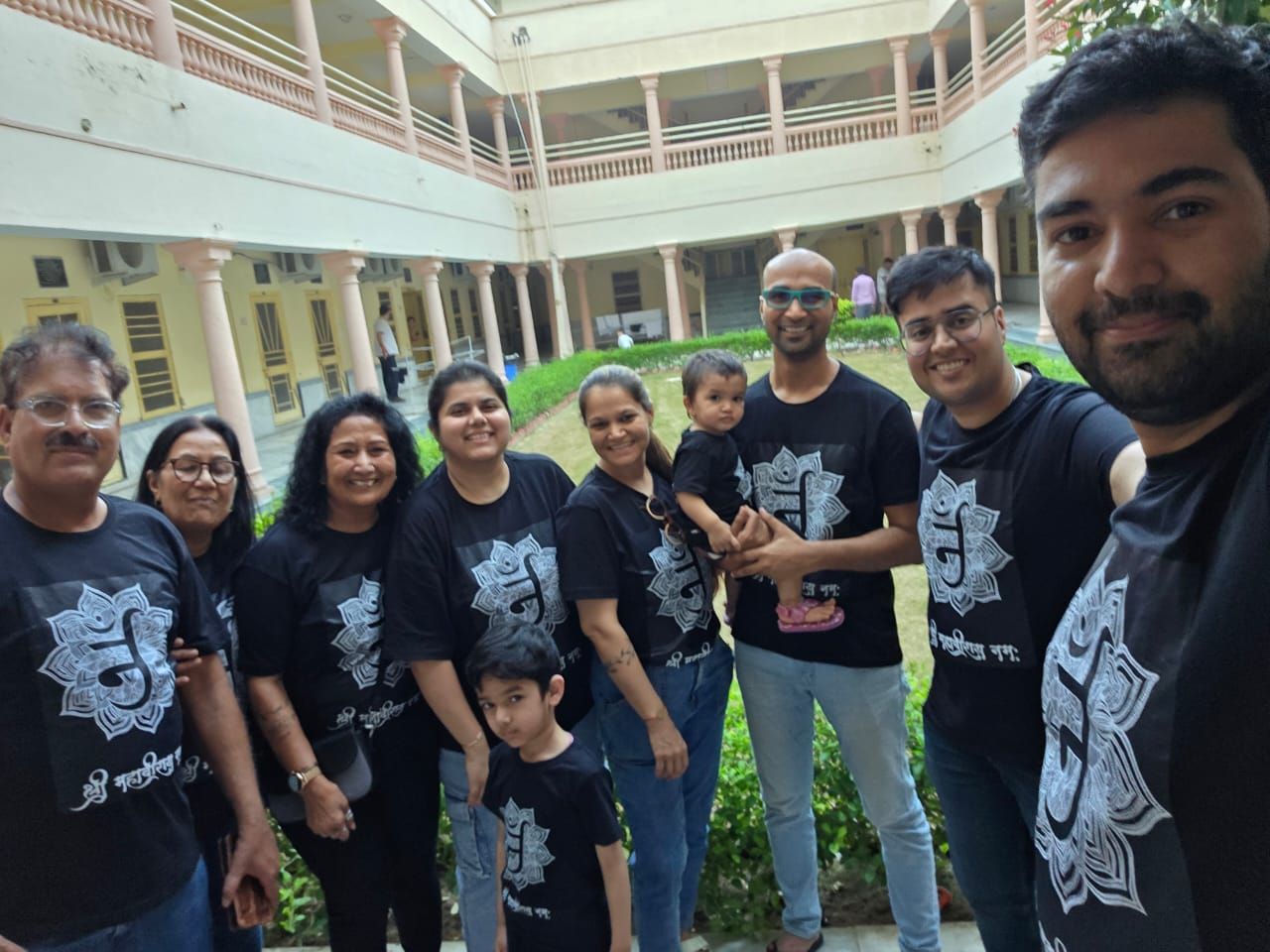
The entire tribe at the guest house – all set for a pilgrimage + adventure.
Alwar: A Serene Contrast
We spent the next few days in Alwar. After Mahaveerji’s intensity, Alwar was about relaxing. Alwar’s blend of ancient forts, palaces, wildlife, and folklore—including haunted sites—makes it a city full of discovery for every type of traveler.
Reflections: What Pilgrimages Mean to Me
Five years ago if someone had told me I would one day actually appreciate pilgrimages, I would’ve laughed it off politely. But in the last few years, as my study of Vedanta has deepened, my perspective has shifted.
I’ve come to appreciate pilgrimages as a way of honoring culture and tradition. India is a land which holds almost all religious faiths, and traveling to different religious sites reminds us of how we are united in our quest for something greater than us. The visceral human longing to find meaning beyond the self.
A Few Practical Tips
- Rajasthan can get very hot and very cold, so plan accordingly. The upside? Fewer crowds during off-season months. But if you visit during pleasant weather or auspicious days, expect long queues and overflowing temple courtyards.
- You can drive down from Delhi or Jaipur.
If you’ve ever been to a temple in India, I’m sure you’ve wondered about the lack of cleanliness. There are spotless Airbnbs and world-class hotels across India, but for some reason, at pilgrimage sites the hotels are dirty, the restaurants abuzz with flies and the waiters plain rude.
Over coffee with my friend Sneha the other day, I asked her about this phenomenon. She has grown up in Tirupati, arguably India’s most famous temple town. Was I just being finicky, was the filth just in my mind?
“They know people will come regardless,” she said matter-of-factly. “Think about it – why would they bother being polite or give you good service? They know that there will always be pilgrims who will tolerate anything just to get to God.”
Have you ever been to Mahaveerji? What was your experience? Tell me in the comments below — and if you enjoy stories like this, explore more of my spiritual (and otherwise) travels on the blog.


No Comments