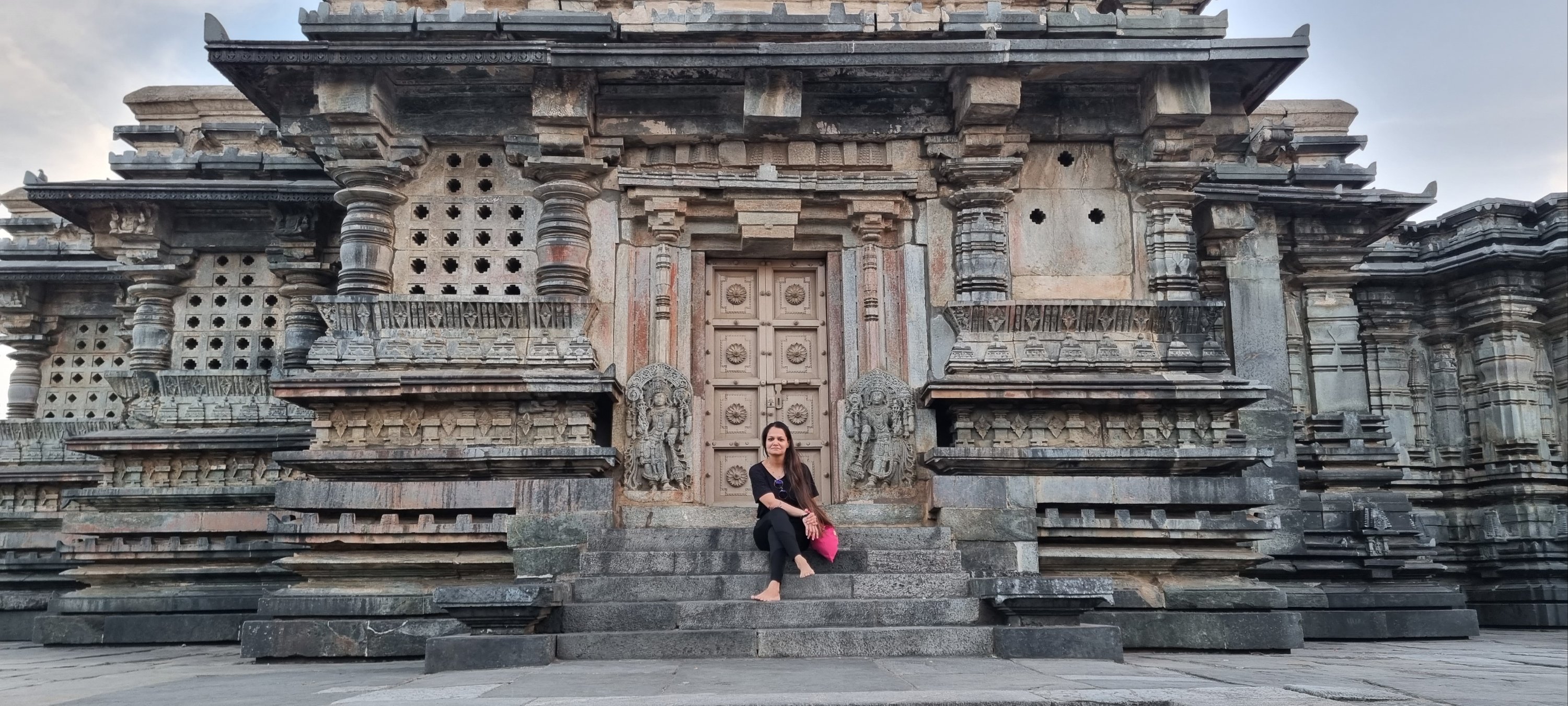
At the beautiful temples of Belur & Halebidu.
The philosophy of yoga and Vedanta sometimes intersect, and I love spotting this overlap in different classes.
During the last RIMYI class I took, Raya spoke about letting go. When we talk about letting go of something, there is an assumption that you’re holding on to something. It’s important to analyse this something. How are you holding on to it? Why are you holding on to it? Once we analyse it, can we let it go?
To make it relevant to the asana practice Raya asked us to ask ourselves what we were feeling in the asana we were holding (Uttanasana). What were we truly feeling? Were we feeling our hamstrings hurting, or was the back hurting, or were we holding the abdomen too tight? When you can identify what you are holding – you can begin to let it go. “I let go of my back, I let go of my abdomen, I let go of….” He asked us to do the same in Sirsasana, but focus on mental conditions/conditionings. He asked: Can letting go be voluntary? Can we actively let go?
He gave us the example of how he came across a ratty old t-shirt when he was cleaning his cupboard. Everyone tells you to let go of this old tee that you don’t even use anymore, but you can’t. We need to understand that it’s not the object that we can’t let go – it’s the memories associated with it that we’re unable to let go.
What are we actually holding on to? Can we analyse that similar to how we analysed Uttansana? Mentioning yoga sutra 1.11 he asked us to ponder over what is the role of memory and cleansing the memory. Can we actively identify and do something about? Letting go of an old t-shirt is easier than letting go of memories. Memories can be good, troublesome, traumatic, ecstatic. How do we deal with this baggage of memories and how does it impact us? Can we let go of attachment to the memory? Can we actively let go of sad memories? Going into parsva sirsasana he asked us to contemplate looking at the memory from a different angle.
अनुभूतविषयासंप्रमोषः स्मृतिः PYS 1.11
Memory is the unmodified recollection of words and experiences.
He spoke about two sutras that he would frequently speak to Guruji about:
सुखानुशयी रागः PYS 2.7
Pleasure leads to desire and emotional attachment.
दुःखानुशयी द्वेषः PYS 2.8
Unhappiness leads to hatred.
A person with a sense of discrimination should strive a balance between sukha and dukha instead of living a the mercy of these two. There are so many triggers in life today – we are all used to certain manners, ways and customs. But can we let go of getting triggered? Raya told us that us to actively open our drawers and pull things out and look at everything that comes out and ask ourselves if we are using it. Have we been keeping certain memories in the cupboard, maybe even in the freezer. And even in the freezer have they become rotten and started stinking? Can we actively bring these memories out, clean them up and throw them away?
How do we throw these memories away? By turning it from klista to aklista.
वृत्तयः पञ्चतय्यः क्लिष्टाक्लिष्टाः PYS 1.5
The movement of consciousness are fivefold. They may be cognizable or non-cognizable, painful (klista) or non-painful (aklista).
The fact that it happened remains, but the feeling associated with it goes. Raya also stressed that we all want happiness, but we remember the sad things more – happiness has a shorter shelf life. Happiness is like camphor or mercury – you can’t hold it, it evaporates.
Next in Sarvangasana, Raya asked us to finally consider what we can let of of intellectually. He spoke of fear and how we’re all fearful of something. But some are able to face their fear because they have practiced handling this fear. Practice analysing your fears and insecurities – once analysed can we let them go? After giving daanam in a temple, we pour water over our hands symbolically ‘washing away’ our attachment with what we’ve given. We need to let go of claiming things – ‘I’ did this, ‘I’ own this etc. The most difficult thing is to let go of this claim. After letting go of these claims, can I let go of the ‘I’ itself?
When one moves from the grossest to the subtlest, neither the beginning is seen nor the end.
My Vedanta teacher always stresses the importance of balance in life. It is important for us to seek pleasure, but also to accept that pleasure and pain come together. As seekers we are encouraged to go after our dreams and desires, but we need to remember that the result of our pursuit depends on many factors. Therefore, we can’t be swayed by victory or defeat, sukham or dukham. We should pursue life according to dharma, and with the best of our physical, emotional and intellectual intent. And surrender the results, fruits, fear and even happiness to a higher purpose.
What is left to surrender when I have surrendered everything?
My teacher explained the idea of surrender using verse 18.66 of the Bhagawad Gita.
सर्वधर्मान्परित्यज्य मामेकं शरणं व्रज |
अहं त्वां सर्वपापेभ्यो मोक्षयिष्यामि मा शुच: ||
In this shloka Lord Krishna is asking Arjuna for the ultimate surrender – the surrender of the ‘I’ or the ego. Letting go of the ‘I’ in all the claims that I make. Once I have surrendered everything, I surrender the ‘I’ too. And in that way I merge with the One, the universal consciousness.
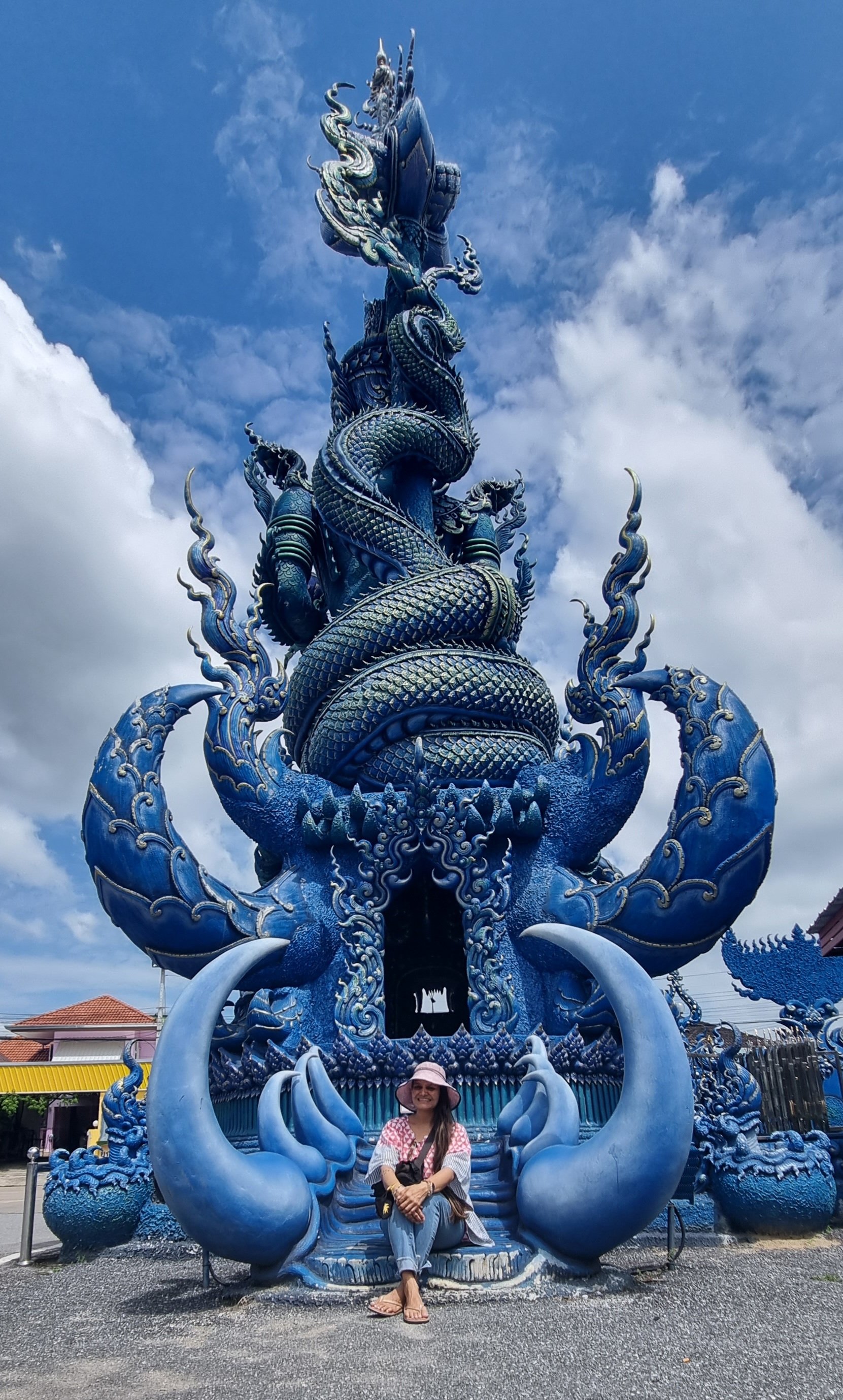
At the Blue Temple, Chiang Rai.
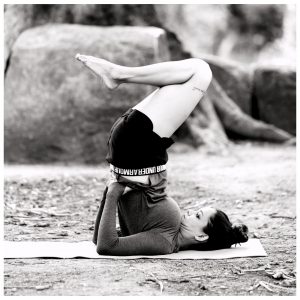
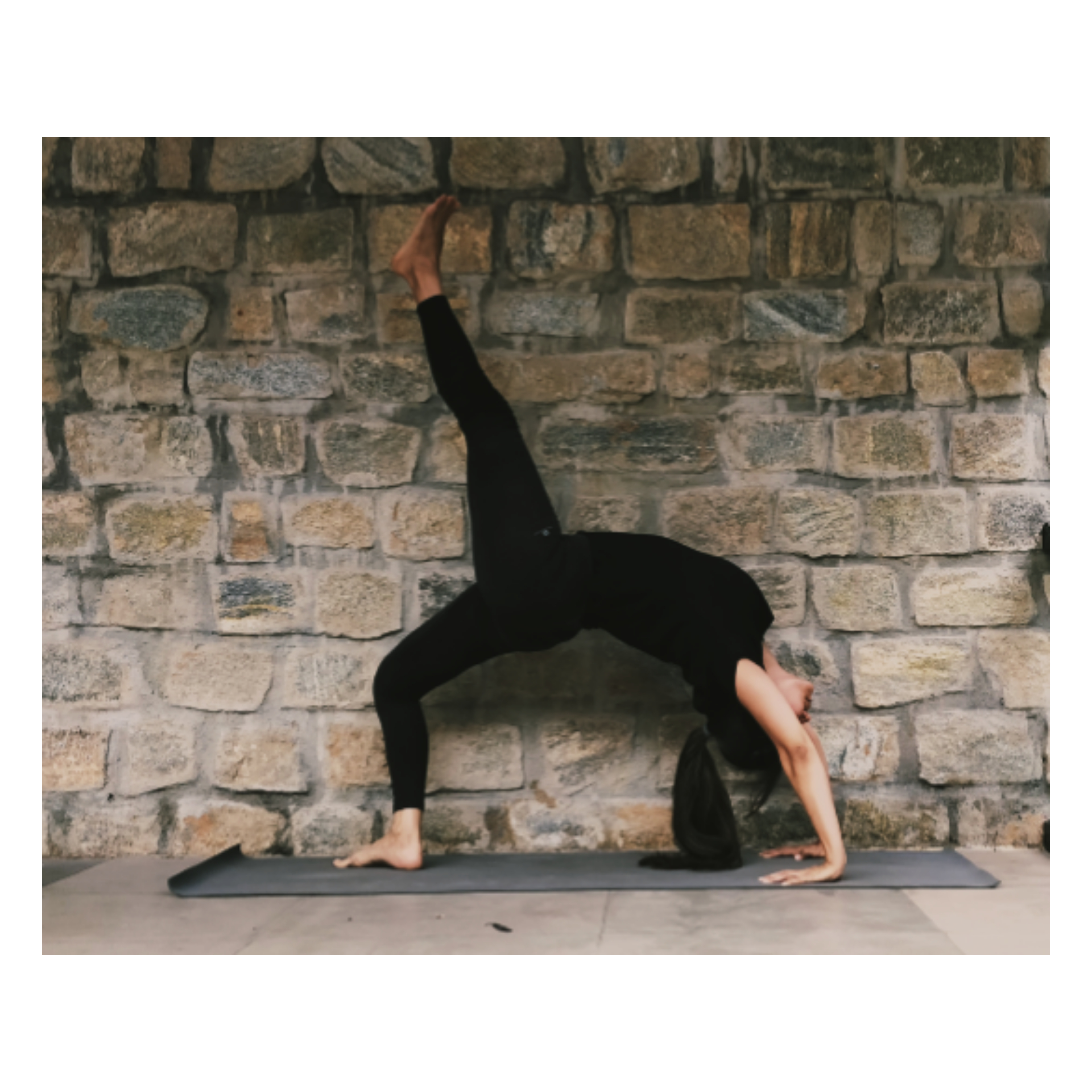
 I’m staying at the same place I stayed in last time. For some reason, ever since I got here, I’ve been unable to get a restful sleep. When you spend a lot of time upside down during the day, you just feel like crawling into bed. There have been times when I felt like I should sleep during the day, but strangely, I wouldn’t be able to! Then one day while walking home after a super long self-practice session, I realized what was happening. The backbends that I have been practicing daily are the culprits. I’ve observed that whenever I practice backbends, I am an emotional wreck for a while. It’s not something that I can distract myself from with inane stuff on Netflix. It’s a bit more serious. And it happens to a lot of other people as well. When you bend backward, your emotional centre is exposed and open. Sometimes this causes the flood gates to open. You remember insignificant things and start to feel bad about them. Or events that you thought you’d already dealt with come to the fore and you realise that things aren’t ok. It’s a barrage of emotion that erupt and possess you and bring you to tears. But if it’s an emotional detox, then it’s probably good to get this stuff out of your system to clean up your space. So despite the fact that I absolutely dread backbends, I keep pushing through. I figure that once I’m done purging all this emotion I’ll be able to sleep better. At least I hope so. Time will tell.
 students brought along thick mats with them. Those thick mats (sort of like workout/gym mats) were a novelty here in India and localites were very curious about the mats. BKS Iyengar, being the innovative man he was, thought of different ways to use the mats. His creativity and love for his subject was such that he was constantly thinking of how to make the poses better and more accessible. That is how he came up with different ways to use ordinary objects such as chairs, blankets and blocks. According to Pandu there are 250 ways to use the Setubandhasana box. He also added that if he were conducting the teachers’ exam he would fail everyone because nowadays teachers aren’t as innovative as they used to once upon a time (referring to the fact that we don’t know the 250 different ways of using a prop).