Pragya Bhatt | yogawithpragya

Browsing Tag

amrutha bindu yoga

Travels

Teacher in Focus: Medha Bhaskar

April 9, 2020

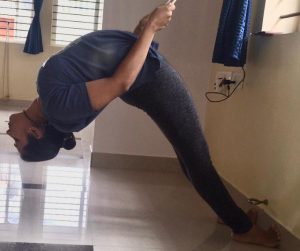
Back bending goals.

I started my Master’s in Yoga Therapy last year.  I didn’t know anyone else in the program and found the whole thing quite overwhelming.  There were huge crowds in the admissions office, we waited for an incredibly long time for hostel rooms to be allotted.  Our days were long and full of numerous classes and the resulting information overload.  Certain subjects had me needing a dose of strong coffee, and I soon found a friend for that in Medha.  Her knowledge of the subject, curiosity about it and her frank and open nature drew me in.  Later we were even selected and inducted into the same Vedanta class and I started to feel that maybe, just maybe, this Master’s program wouldn’t be too difficult.  Since then Medha and I have talked, collaborated, practiced and philosophized at length.

Our latest collaboration was a beautiful video to explain the yoga for immunity series designed by RIMYI.  Here’s the video:


Medha is one of the founder teacher at Amrutha Bindu Yoga, one of the most popular yoga studios here in Bangalore. Fascinated by the mind-body connection in traditional movement arts, Medha bring compassion and warmth to every class.  Check out her online training schedule and join a class!
Need to try this sometime!


Wellness

Viparita Karani – The Inverted Pose

March 26, 2020
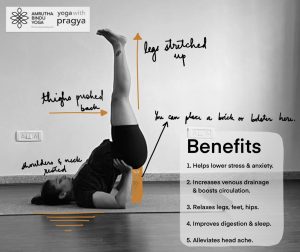
Legs up the wall pose.

Looks deceptively simple, but isn’t.


There’s a general consensus among modern yogis that Viparita Karani or Legs-Up-The-Wall Pose may have the power to cure whatever ails you. (Yoga Journal)


In Sanskrit Viparita means ‘upside down’ and karani means ‘doing’.  It is practiced widely as a restorative posture.  When I started practicing yoga, I considered this an easy asana, specially the supported version.  The full import of it is just starting to set in.

It helps to:

  • Regulate blood pressure.
  • Treat cardiac disorders.
  • Treat stress-related headaches, including migraines.
  • Gives relief from swollen feet.
  • Relieve nausea.

Contraindications for Viparita Karani

This is an inversion and as such should be avoided if you have serious eye problems such as glaucoma.

Busting the Myths

Although this is actually a restorative and relaxing asana, the final pose is quite difficult for beginners and those with stiff backs.  Read on for some practice pointers.

Practice Pointers for Viparita Karani

  • You can do this asana with your legs on a chair, or even on your bed!
  • It’s a little unwieldy to get the buttocks close to the wall to get the legs up, but there is a technique (see video).

Stay tuned for more from our Yoga to Boost Immunity Sequence.

Download the Daily Yoga Practice Checklist.

Follow Amrutha Bindu Yoga here.

Follow Medha Bhaskar here.

Follow me (Pragya Bhatt) here.


Yoga

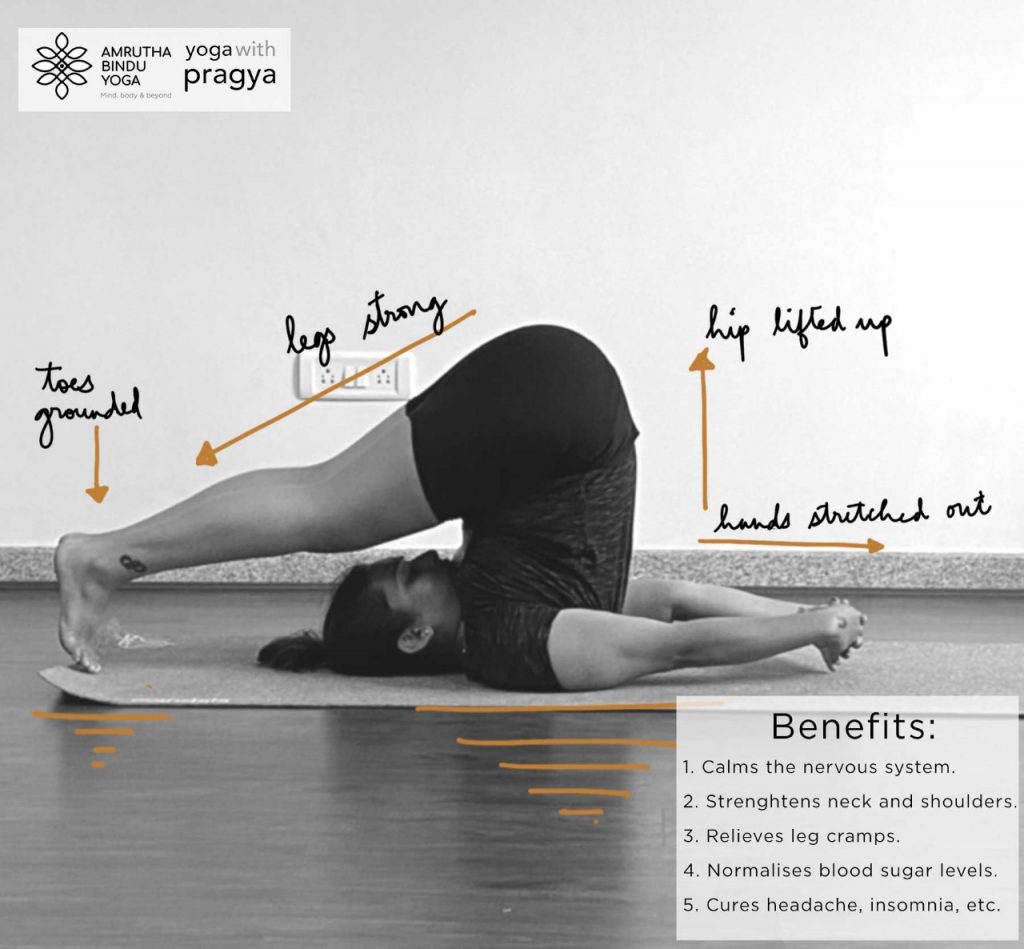
Halasana – The Plough Posture

March 20, 2020

Hala means a plough, the shape of which this posture resembles, hence the name. (Light on Yoga, p 216)


There are asanas we encounter so many times that we don’t realize there is a lot more to them than meets  the eye.  The halasana is one such posture…

It helps to:

  • Relieve backache.
  • Bring flexibility in the shoulders and elbows.
  • Relax the mind and body.
  • Promote better sleep.
  • Improve digestion and appetite.


Contraindications

Don’t practice if you have diarrhea, or are menstruating.  If you have a neck or back injury then wait until you are completely healed.


Busting the Myths

The final posture is usually depicted with the toes touching the floor.  However, if you don’t have the requisite flexibility, forcing your toes to touch the floor can do more harm than good.  Read on for some practice pointers…

Practice Pointers

  • In an attempt to touch the floor with the toes, many practitioners end up  pushing themselves beyond their capacity and injure themselves.  A simple trick is to rest your feet on a chair or a small table instead of on the floor.
  • There is a strong link between the halasana and the paschimottanasana.  When your back gains mobility in one, then the other improves too.
  • Tighten your thighs and roll them in to activate your legs and engage your core.  You are trying to keep the spine extended.


Over the years I’ve studied the nuances of the halasana and that has certainly improved my practice.  I found an older picture of me doing this asana here.

Stay tuned for more from our Yoga to Boost Immunity Sequence.

[ddownload id=”8170″] the Daily Yoga Practice Checklist.

Follow Amrutha Bindu Yoga here.

Follow Medha Bhaskar here.

Follow me (Pragya Bhatt) here.

Yoga

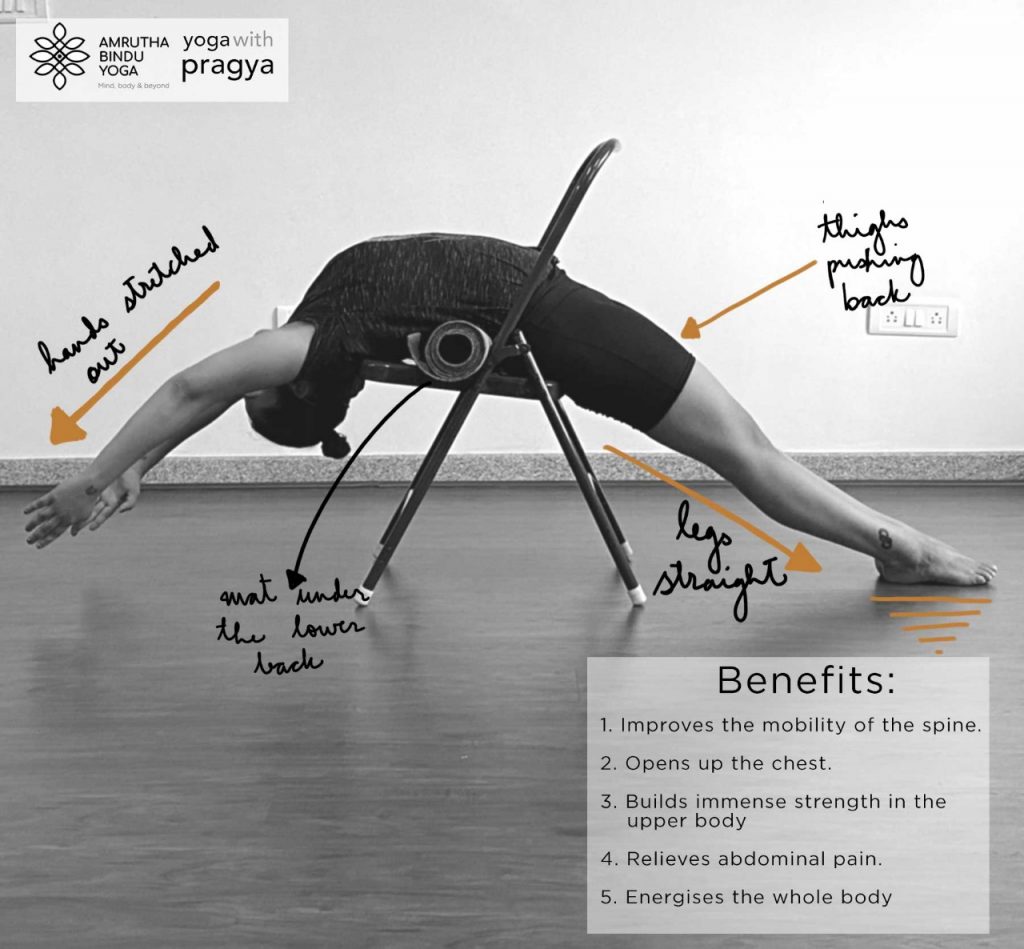
Dwi-Pada Viparita Dandasana – Two-Legged Inverted Staff Posture

March 17, 2020

The Hindu devotee prostrates before the Lord lying flat upon the floor, face downwards with hands outstretched.  The Yogi on the other hand prostrates himself in the graceful inverted arch… (Light on Yoga, p 373)

Dwi pada means both feet.  Viparita means reverse or inverted.  Danda means staff or rod, a symbol, authority or punishment as well as the body and its prostration.

It helps to:

  • Expand the chest enabling deeper breathing.
  • Relax an anxious mind.
  • Keep the spine healthy.
  • Relieves pain in the coccyx.
  • Energises the whole body.


Contraindications

Those who suffer from vertigo should practice this with due caution.


Busting the Myths

Many practitioners don’t fully understand the benefit of using props for yoga practice.  Many think they don’t ‘need’ props, feeling that it shows physical weakness to use props.  The truth is that props are akin to a teacher.  Used correctly, props can have a powerful impact on your yoga practice.  Read on for some practice pointers…

Practice Pointers

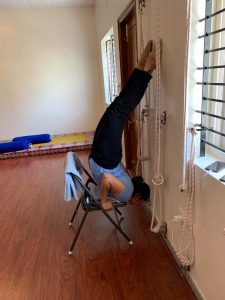
  • If you feel queasy or dizzy in this posture, adjust the position of your back on the chair and use some support under your head.
  • Tighten your thighs and roll them in to activate your legs and engage your core.


Stay tuned for more from our Yoga to Boost Immunity Sequence.

[ddownload id=”8170″] the Daily Yoga Practice Checklist.

Follow Amrutha Bindu Yoga here.

Follow Medha Bhaskar here.

Follow me (Pragya Bhatt) here.

Yoga

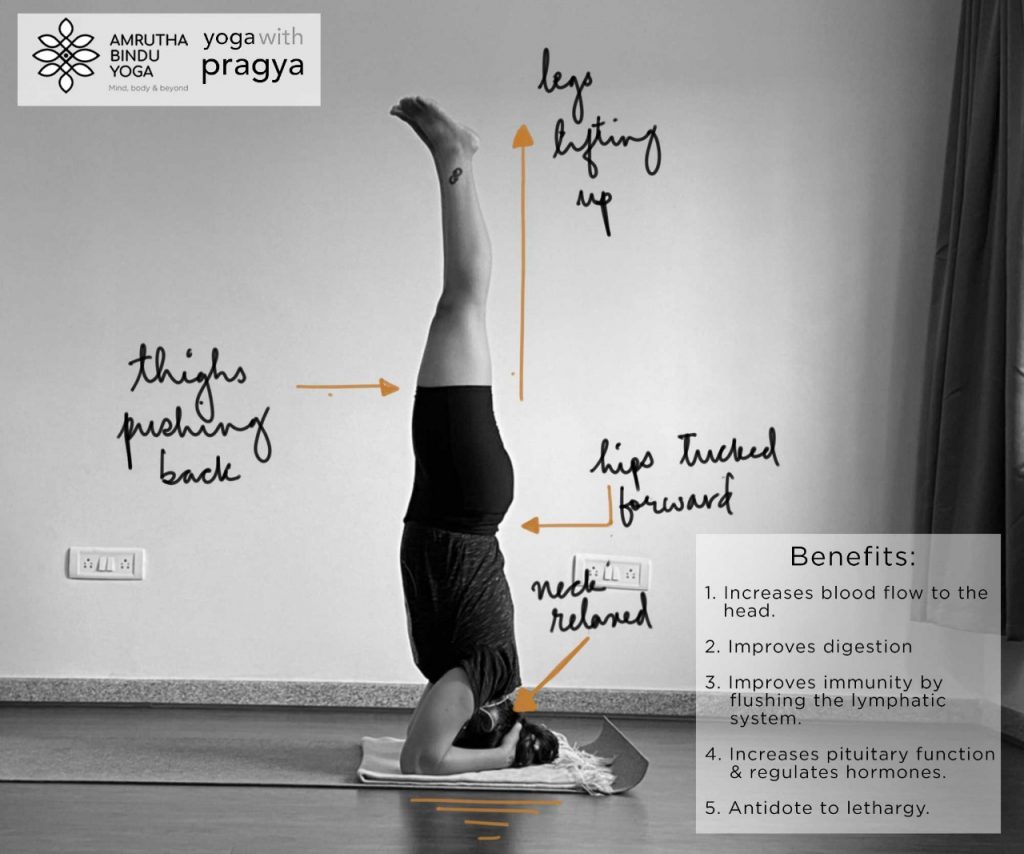
Sirsasana – The King of Asanas

March 17, 2020

The weight of the body will be felt on the elbows and the position of the head may change.  The face will appear to be flushed and the eyes either strained or puffed.  It is therefore, advisable for a beginner to do the head stand in a corner where two walls meet, placing the head some 2 to 3 inches from either wall.(Light on Yoga, p 182)

The sirsasana is the king of the asanas.  It’s not hard to see why.  Sirsa means head, and this is the seat of the brain.  The brain controls the entire nervous system.  It is where your knowledge, intellect, wisdom and power come from.

It helps to:

  • Increase blood flow to the head.
  • Improve immunity by flushing the lymphatic system.
  • Improve digestion.
  • Relieve fatigue.
  • Improve insomnia.


Contraindications

Those who suffer from high or low blood pressure must never practice sirsasana.


Busting the Myths

Most practitioners think that balance is the only important aspect of sirsasana.  In reality, in this posture we have to keep our awareness on our body alignment at all times and continue to fix it moment by moment.  Read on for some practice pointers…

Practice Pointers

  • In the final position only an area the size of a rupee on top of your head should be in contact with the floor.
  • The head, the trunk, the back of the thighs and the heels should be in a straight line.  Avoid ‘banana-back’.
  • Do not widen the elbows thinking it will give you better balance. In reality this will make the pose weaker and lead to a neck injury.


Stay tuned for more from our Yoga to Boost Immunity Sequence.

[ddownload id=”8170″] the Daily Yoga Practice Checklist.

Follow Amrutha Bindu Yoga here.

Follow Medha Bhaskar here.

Follow me (Pragya Bhatt) here.