Now that I teach Vedanta, many students ask me how I got into it. Most are surprised to know that I didn’t grow up with the stories and mythology of Hinduism. In fact, I grew up in a house where even rituals weren’t given too much importance. Religion was always present, but always in the background. It was quiet in its dignity, accepted and unchallenged.
I believe this gives my teaching a freshness which is what prompted my teacher to encourage me to teach, despite a life lived largely away from the culture and birthplace of Vedanta darshana. My approach to Vedanta is shaped by my approach to literature, where we endeavor to understand ourselves and our lives though the characters we are reading. A student of literature analyses and empathises, and in the process learns how to to think critically about human values and behaviour and to even make allowances for human nature.
Which is why when we started studying the Bhagavad Gita and my teacher told us to put ourselves in Arjuna’s shoes, I slid seamlessly into them. And once I did, the Gita came alive for me.
Behind every story are emotions. And when you tap into these emotions then the raw human experience is revealed. That’s when myths become relevant.
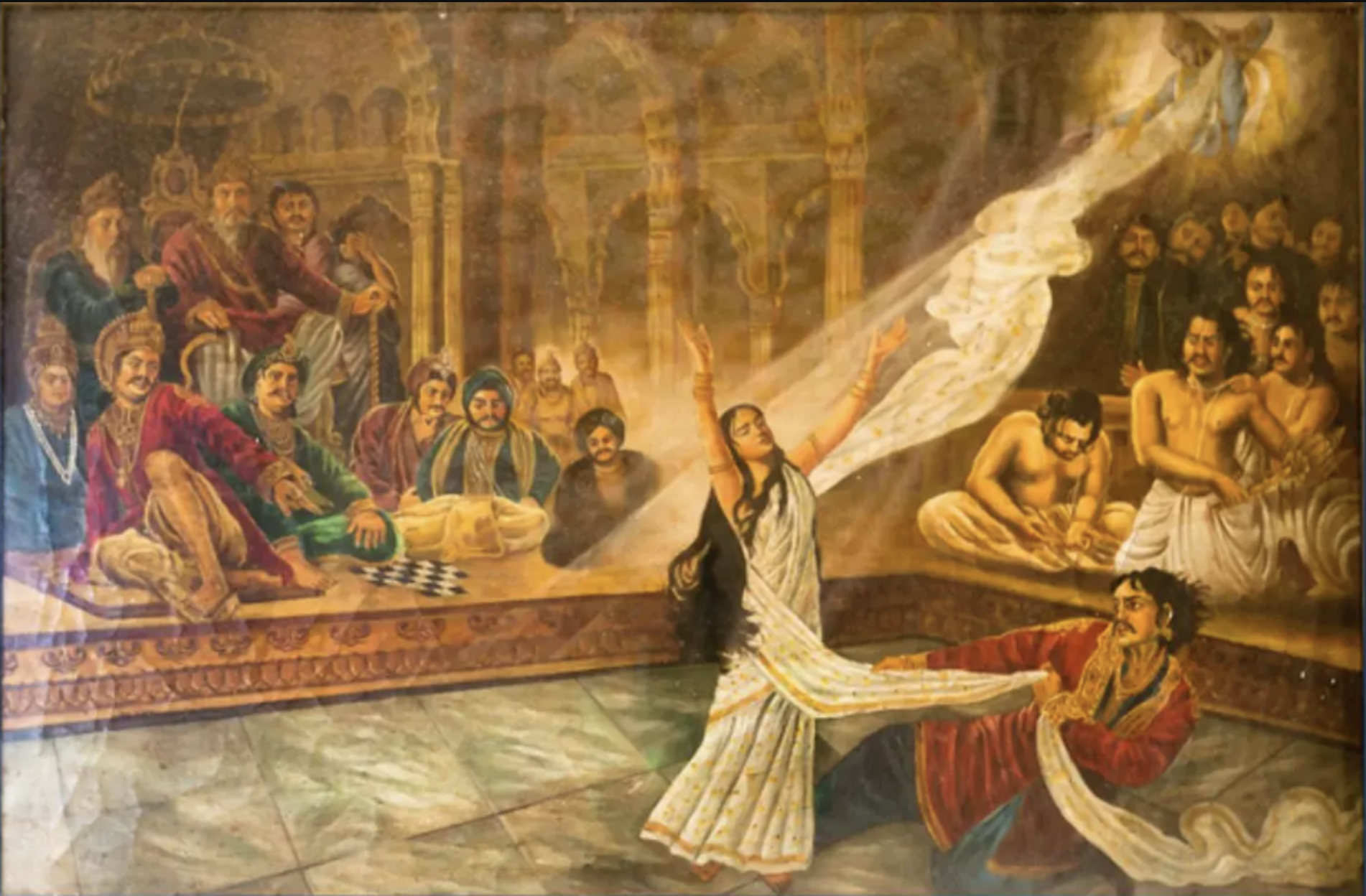
Draupadi’s Disrobing in the Mahabharata
A popular scene from the Mahabharata and which most women find disturbing is the scene of Draupadi’s disrobing. I’ve taught this scene often and each time her vulnerability, the public humiliation, her frightening helplessness – all become more vivid to me. But the scene is actually more layered. Draupadi is not only being disrobed, but she is also being denied by society. She is being denied dignity, respect and a voice. She cries out – a powerful princess put in this precarious situation through no fault of hers – and the powers that be all have reasons for not coming forward to help. This scene depicts the isolation women experience when they are violated or disrespected.
A student once shared with me that he can see things from Duryodhana’s perspective too. After all, to him, the kingdom was his father’s legacy. And it was his dharma to protect it. I remember telling him that when I think of Duryodhana I see only the quintessence of depravity – and that for me is beyond redemption. Nothing justifies violence towards women.
How Vedanta Shifts Your Perspective
What Draupadi’s disrobing scene asks of readers is to think deeply about helplessness and fear. For women this is a real physical experience that they go through daily. Women are routinely unprotected, unheard and denied all the time. Along with teaching us dharma, the shastras also sensitise us to the human experience. This sensitisation is what brings about real change.
I am not Draupadi, but her plight stirs something in me – to write, to question, to seek new perspectives, or to uncover how I may have erred.
Why You Should Study Vedanta
Vedanta isn’t a set of dead philosophies and ancient stories. In fact, the study isn’t for armchair philosophers (as many academics tend to be, but that’s for another blog). Vedanta is lived. Draupadi isn’t someone else – she is in you, me and all of us. Duryodhana isn’t someone else – he is in you, me and all of us. But how can we create harmony within these characters within us so that we can walk the path of dharma in today’s world?
This is the question that intrigues me the most – and drives my weekly Vedanta classes.
Are you familiar with the Draupadi episode? What is your take on it? Would you like more reflections on my Vedanta studies? Let me know in the comments!



No Comments