Pragya Bhatt | yogawithpragya

Browsing Tag

pragya bhatt

Yoga

Untying the Knots

October 9, 2015

A couple of weeks ago I had a student in Supta Baddhakonasana.  That’s Lying Down Bound Fixed Angle Pose, a supine variation of a pose popularly called the ‘Butterfly Pose’.

As the relaxation came to a close, I gave the instruction to keep the eyes closed and to come out of the pose in the easiest and most comfortable way possible.

The student started to undo the belt binding his legs in the pose.  He realized that he couldn’t reach far enough to actually undo the belt easily.  He started to reach around and fumble with the belt a bit more.  All the effort made him want to open his eyes, but he wasn’t going to not follow the instructions.  Finally he managed to twist and turn enough to grab a hold of the buckle and wrest the belt off.  Once done he sat upright and relaxed his tightly closed lids.  Hmmmm….

Sometimes a student’s behaviour on the mat is highly indicative of his/her approach to real life.  Does a student twitch and move a lot when relaxing?  Post Savasana do they quickly jump up and run out to meet the rest of their day?  Do they fall asleep during relaxation?  In this case, the student had to complete his relaxation and face the real world.  One which, at that point, literally had him up in knots.

When faced with sticky, frustrating, tight, claustrophobic, rigid etc situations, our first reaction is to fight for dear life.  So we close our eyes tightly and twist and turn and try to grab that which we feel is smothering us and wrench it away from us.  However, if you breathe deeply and instead of struggling, you work on accepting that you are in a bind (in this case quite literally), then you may have an easier time getting out of the unpleasant situation.

Someone once told me that you can consider roadblocks to be either problems or  constraints.  You can choose to dwell on your problems and try to (unsuccessfully) wish them away.  Or you could think about how you can carry on with your life’s work with the existing constraints.  I believe that changing your perception is all it takes to change your life, and this forms a huge part of that philosophy.  So next time you’re in a conundrum, think, do you want this to be a problem, or do you want it to be a constraint.
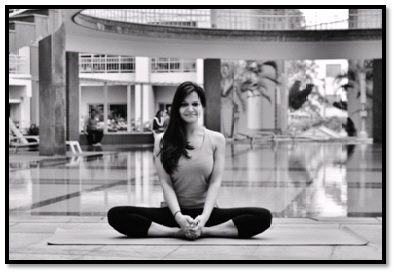
badhakonasana

The Supta Baddhakonasana is when you lie down on your back and keep your legs in this position.

Yoga

Vegan For a Day

September 3, 2015

I got invited to a full day workshop about veganism this past weekend.  We were invited for a detailed talk about what it is and why it’s good for us.  We were going to be treated with a vegan breakfast, lunch and snack.  And we were surprised with a goodie bag at the end of the session to enable us to continue on our Vegan journey without a stop.  The session was quite intense, but there were a few things that stood out and they made sense to me as well.  What I’m trying to say is that it wasn’t all mumbo jumbo.  Some of the ideas were logical.  And I’m going to try a few of the things they spoke about.  And in no particular order these principles were:

  1. Eat a whole plant based diet.  Vegetarian food is high in fibre.  Not only is animal based food high in fat, it is high in cholesterol as well.  Because only animals produce cholesterol.  So effectively cholesterol is a hormone made by animals.  And ghee happens to be 100% fat.
  2. Good sources of fat are nuts and seeds.
  3. Meat and milk are equal.  Both contain hormones, antibiotics and pesticides.  On top of this milk contains IGF – Insulin-like Growth Factor.
  4. It is a common misconception that we are a milk drinking nation.  We are consuming more milk now than ever before.  Historically in India, people used to have one cow and not feed it hormones to give more milk.  The milk that humans would consume would be the one left over after the calf had finished nursing.  So that would be very less, not gallons upon gallons that we consume today.  Krishna was stealing other people’s milk products because he wasn’t drowning in milk and ghee himself.  Even though he was quite wealthy and had no reason to steal anything.
  5. The body gets enough protein on a whole plant based diet.  Think about it, very few people report protein deficiency.
  6. Plants are better sources for Calcium than milk.  Only 30% of the calcium in milk is assimilated.  And anyways, you need Vitamin D to absorb Calcium into your bones.  So having only milk doesn’t mean that you will assimilate all the calcium in the milk.  What you should do is ensure that you have adequate Vitamin D so that all the calcium you provide to your body is assimilated.
  7. Eat whole foods because refined foods lose a lot of nutrients.
  8. Replace animal milk with soy, rice, almond peanut etc milk. (Basically plant based alternatives.)  Sesame seeds have more calcium than milk.
  9. Say no to sugar.  Have dates and raisins instead.  Fruits have plenty of natural sugars.  And jaggery and honey not allowed because they aren’t whole.
  10. Replace plain butter with peanut butter, cashew butter, sesame butter or almond butter.
  11. Replace paneer with tofu.
  12. Don’t have curd made of animal milk.  Make your curd out of soya, peanut milk etc.
  13. No meat.
  14. Replace white rice with unpolished rice.
  15. Replace maida with atta, jowar, bajra, nachni etc.
  16. White salt with Himalayan salt, rock salt or sea salt.
  17. Don’t fry your food because vegans don’t use oil.
  18. Have smoothies for breakfast.  So blend bananas, coriander and mint and have that for breakfast.
  19. Avoid tea/coffee because the increase blood sugar and stress.
  20. People tend to say that sugar causes diabetes, but it’s actually fat that causes diabetes.  so avoid fat in your diet.  The technique to eliminate fat is to eliminate all refined fats.  Refined fats are those without fibre.  Animal products don’t have fibre.  But coconuts do, so coconut fats are good.  After a fatty meal your blood thickens and fat cells get deposited in the arteries.  If you remove the fat, your blood will start flowing again.  Meat has free radicals which can damage the inner lining of muscles.  Plants on the other hand contain anti oxidants.
  21. People think that Diabetes and Hypertension are hereditary, but that’s false.  Both these conditions are lifestyle related and directly related to your diet.
  22. Honey and Jaggery are not ok.  Both are not whole.  However, you can eat sugar cane is good because it’s whole and unrefined and natural.
  23. Cheese is 70% fat.  Cheese is like Vaseline.  Your system can’t ingest cheese, it can’t ingest Vaseline.
  24. Have only 10 nuts a day.  However, peanuts are not nuts.  They are legumes.  So you can have more than 10 a day.
  25. Whole foods have complex carbs.  They take longer to digest and keep you full longer.  Hence you end up eating less.  Refined foods have simple carbs.  They digest immediately and you want to eat more.
  26. Don’t have two grains in one meal.  So don’t have rice and roti together.
  27. Broccoli has more protein than steak.  Excess protein causes osteoporosis and kidney disease.

So the two things you should ask yourself if you want to aim to eat vegan is whether what you are eating is plant based, and whether it is whole.

Yoga

Week 2 Day 2 – Extend the Sides

February 11, 2015

Most gym rats will tell you that you should work on sides and abs on alternate days.  What makes yoga a great workout is that most yoga classes have varied routines and you will end up engaging different body parts even if you attend the same class 5 times a week.  Some days it may be abs intensive, on other days, perhaps, arms.  But, for the most part, you will use your body as a whole instead of just working out isolated body parts.  So while you’ll work on sides pretty much in all your yoga classes, there are a few moves that you can do with a bit more awareness next time so that you can get the most out of them.

The Side Plank or the Vashishtasana

Most people tend to put most of their body weight on their arm and wrist when they do the side plank.  Are you one of those?  If your wrists hurt when you do this move, then the answer is yes.  The key to improving your form and increasing the amount of time you can hold this move is in how you engage your arms.  Tightening the musIMG-20150209-WA0016[1]cles of your arms helps in taking the pressure off of your wrists.  To do this you can try and spread your fingers out wide on the floor.  And the  push your shoulders away from your ears.  So on hand reaches all the way up to the sky and you stretch your shoulder blades as well.  The other hand pushes into the floor, so you try and dig your fingers into the floor also.  The neck should be relaxed.  Sometimes you may not realize that your neck is strained.  A good way to ensure that your neck is easy is to smile and allow your face to relax.  This relaxes the neck as well.

Once your arms take on the proper form, you can start to work on your sides.  Keep your stomach tight at all times and then gently push your hips up towards the sky.  This gives you a little elevation and also ensures that you keep your awareness on your core.  That little lift makes a huge difference, else you may tend to sag down closer to the floor, which will put more strain on the shoulders.  Finally, keep your knees locked.   This will ensure that you are engaging your legs in maintaining the balance as well.

The Trikonasana or the Triangle Pose

Despite years of practice, I feel that it is only now that I’ve really started appreciIMG-20150209-WA0003[1]ating this pose.  All yoga poses give you a sense of release and relaxation post the practice.  If you don’t feel it now, with consistent practice, you eventually will.  The key to the Trikonasana is doing it step-by-step.  Many students go into the pose with the end picture in mind.  Yes, many experienced students as well.  But that just leads to a compromise with the geometry of pose.  Do it stepwise and when you finally bend down make sure you bend from the waist.  Your torso should be parallel to an imaginary wall.  Try and get both shoulders in one line and reach up to the sky and down to the floor almost drawing your shoulder blades apart.  Make the pose active right through your fingertips.  Focus on your feet as well.  The inner edge of the front foot will go into the floor and the outer edge of the back foot will be pushed into the floor and this will give you stability in this pose.

Note on this pose.  Iyengar said in an interview that even after countless years of practice, writing books and articles, conducting workshops all over the world etc, he is still working on getting his awareness to his smallest toe in the Trikonasana.

The Parsvakonasana or the Side Angle Pose

The base work in this pose is similar to the Trikonasana.  What you need to take care of most in this pose is that the knee is right above the ankle.  The inner edge of the foot should be strong on the floor.  Keep the thigh parallel to the floor.  Extend your arm out and keep it close to your ear.  Keep your gaze on your fingers but relax the neck.  Feel the extension on the side of the body, from your foot all the way to the finger tips.

IMG-20150209-WA0005[1]

Questions? Queries?  Let me know!

Yoga

Week 2 Day 1 – Abs Are Made in the Kitchen…

February 8, 2015

…But you have to work on them in yoga class too!  So for Day 1 of Week 2 do a bit of abs work.  The great thing about yoga (and particularly about our classes) is that most yoga moves involve the core.  Every single time you do a rep of the Surya Namaskar, you’re utilizing your core strength.  So today practice a few rounds of the Surya Namaskar to warm up and then start with your leg raises.  You can do 3 sets of 15 each.  Take a small break and repeat twice more.  You can choose to plank and side plank as well.  These moves engage the core and strengthen the arms as well.

The Naukasana (The Boat Pose) is an awesome way to strengthen the abs and also to test your balance.  Start with lying down on the floor and raise your torso and legs up at the same time.  No jerky movements.  Keep your legs absolutely straight.  Push your shoulders back and try and expand the chest.  Elongate the neck.  Breathe.  You should be balancing on your tailbone.

2015-02-03 13.47.14[1]

Setubandhasana (The Bridge Pose)

2015-02-03 13.36.53[1]After the Naukasana you can start to stretch your abs a little bit.  Start with the Setubandhasana.  Start with keeping your feet about hip width apart.  Keep your arms on the floor next to your body with your palms flat on the floor.  Push into the floor with your hands and press your feet into the floor and raise your hips up.  Tighten your glutes to take the load off of your back.  Make sure that your ankles and knees are in one line and perpendicular to the floor.  Once your hips are as high as you can take them lift your hands and place them on the small of your back.  Your fingers should be facing each other and thumbs should be on the outside, circling your waist.  This helps in strengthening the arms and wrists.  Try and get your elbows as close to each other as possible.  Your shoulder2015-02-03 13.38.31[1]s should also be pushed back and chest should be expanded.  You should also experience the Jalandhar Bandha.


Chakrasana (The Wheel Pose)

After the Setubandhasana, the Chakrasana is a great way to deepen the stretch on the torso.  As a prep, you can practice holding the Bhujangasana.  After this lie down on 2015-02-03 13.40.17[1]the floor on your back.  Bend your arms and place your hands under your shoulders.  Bend your legs and bring your feet as close to your hips as possible.  Lift your hips up first just like you did in the Setubandhasana.  Then start to push your hands into the floor and raise the shoulders up as well.


The Halasana or the Plough Pose

When you practice back bends its important to do complementary poses as well.  The complementary pose for the Chakrasana is the Halasana.  In the Halasana yo2015-02-03 13.45.16[1]u must try and get your spine straight.  The Jalandhar Bandha in the Halasana is a deeper and stronger one than the one in the Setubandhasana.  Keep your elbows locked and arms clasped.  Push your shoulders away from your ears.


Try this cool variation as well:

2015-02-03 13.43.55[1]


Remember after all this you must go into the Savasana and allow your spine to rest and relax.


Yoga

It’s Never Too Cold to Workout

January 14, 2015

This morning I woke up and instinctively curled into a tight ball under my blanket.  It was so so cold.  I checked the temperature and sure enough it was 15 deg with dense fog in Bangalore today.  I lingered under the covers for a while and finally had to get up for class.  And there was bleak attendance for today’s 8-9 am session.  The fact is, even though you may be 100% committed to your fitness goals, getting up in the AM and throwing the covers back to get up is not child’s play.  But small changes can lead to big results.  So here are a three things you can do to make it a bit easier to get out of bed in this chill.

1.  Plan what you’re going to wear the night before and have it out ready.  The path from your bed to your workout clothes must not have the obstacles of decisions and doors.  Preferably keep your clothes ready in the room where you change in.

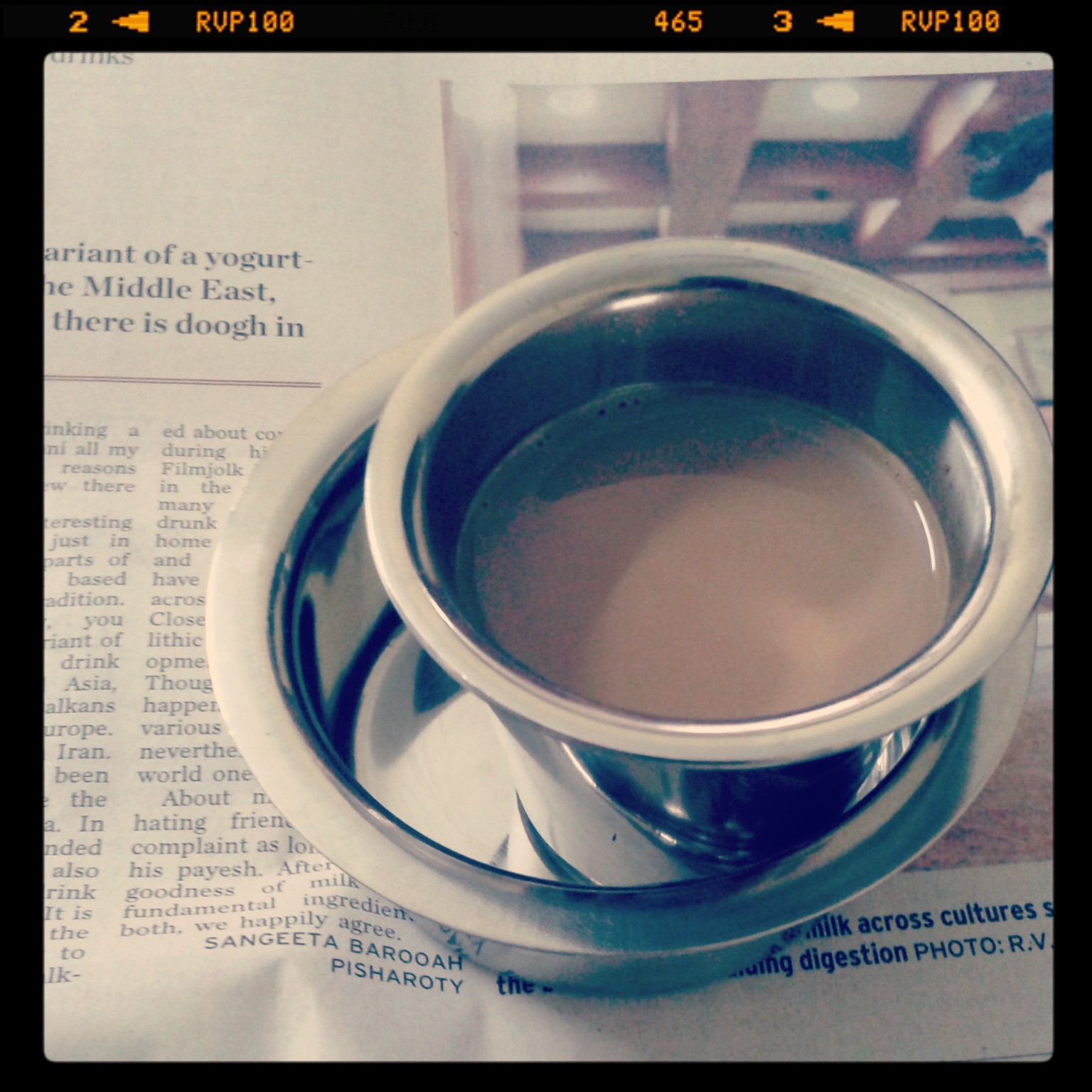
2.  Make yourself a cup of really really strong coffee or tIMG_20130923_085420ea.  I prefer tea and these days I add loads and loads of ginger, black pepper, cardamom…and pretty much any other heating spice to it.  This not only warms you up from the inside but also wakes you up.  Remember, go easy on the sugar.  Also, you want to have enough so that you wake up, but not so much that you’re unable to move in yoga class!


3.  Being self-motivated is IMG_20150114_085733great.  But it’s easier to workout regularly in a group class.  So, join a group class, make friends with the others and motivate each other to brave the winters!