Pragya Bhatt | yogawithpragya

Browsing Tag

iyengar yoga

RIMYI Experiences

The Pune Diaries – Day 1

August 1, 2018


I got in really late to Pune last night and after some dinner could hardly keep my eyes open.  I drifted into a deep long sleep….

…and woke up this morning to head to the institute for registration.  This year I have a mixed bag of teachers and most of my classes are in the morning.  Practice times remain the same, as always.

As I was telling some other students who registered along with me, the month in Pune always has a lot to teach you.  The learning curve is steep and you learn more than you can sometimes process.

I’m still not done with the registration formalities.  I have to submit a letter from my landlord, some kind of identity proof and the duly filled out registration form.  However, in the true RIMYI spirit of ‘practice first and everything else will follow’, I’ll go for the evening self-practice.  As Pandu told me this morning, ‘Aap shuru to karo.  You’re a known face here.’

“Ok sir, theek hai.”


Yoga

Practice Yoga Like You Practice Life

May 21, 2018

A few weekends ago I attended a friend’s house warming party.  In India there is always an element of ritual.  So while a housewarming can be a little party for a bunch of close friends, here it becomes an event of larger significance.  So a purohit is called.  You get the stuff for the puja together, you plan for caterers, you send out invites….

When we celebrate a house warming or a ‘griha pravesh‘ we celebrate new beginnings.  We hope that the new abode brings the owners good luck and prosperity.  Some incense, a few mantras, a coconut and some ‘lucky’ plants and we actually start to feel better about the house.  These are all the accoutrements of the ritual of cleansing a space of any negative vibes so that the new owners can live peacefully.

Big celebrations so dressed to the nines.

A yogi’s abode is the body and mind.  Since we get only one body and mind per lifetime, we need to exist within them peacefully and authentically.  A yogi is constantly torn between one more drink or slice of pizza and an early morning twists or backbend practice.  You control yourself from snapping at a pesky sibling and try to stop fuming at the guy who just cut you off in traffic.  But the disturbances in the mind have already been created, and they now impact your being.

How can we maintain equanimity while living in a world designed to trouble us?

The answer lies, as usual, in the practice.  Every morning when you step on your mat and start at the beginning, you create a new story.  Each day gives you a chance to start at the beginning and go somewhere different.  Yesterday’s limitations don’t exist today and today’s won’t exist tomorrow.  This impermanence can be a deterrent for many, but for the yogi it means hope.  You return to your practice throughout a constantly changing life.  You practice life like you practice yoga, with a spirit of exploration and the core belief that this too shall pass.

Practice and detachment are the means to still the movements of consciousness. (PYS 1.12) Picture taken at the Bhoga Nandishwara temple at the foot of Nandi Hills.


Yoga

Repetition of vs Repeating (an Asana)

April 29, 2018

Your body exists in the past and your mind exists in the future. In yoga, they come together in the present. – BKS Iyengar

The other day one of my students mentioned (rightly so) that in my class he spends a lot of time in Adhomukha Svanasana. Other classes he’s attended didn’t repeat asanas as much our class.

Why the repetition?

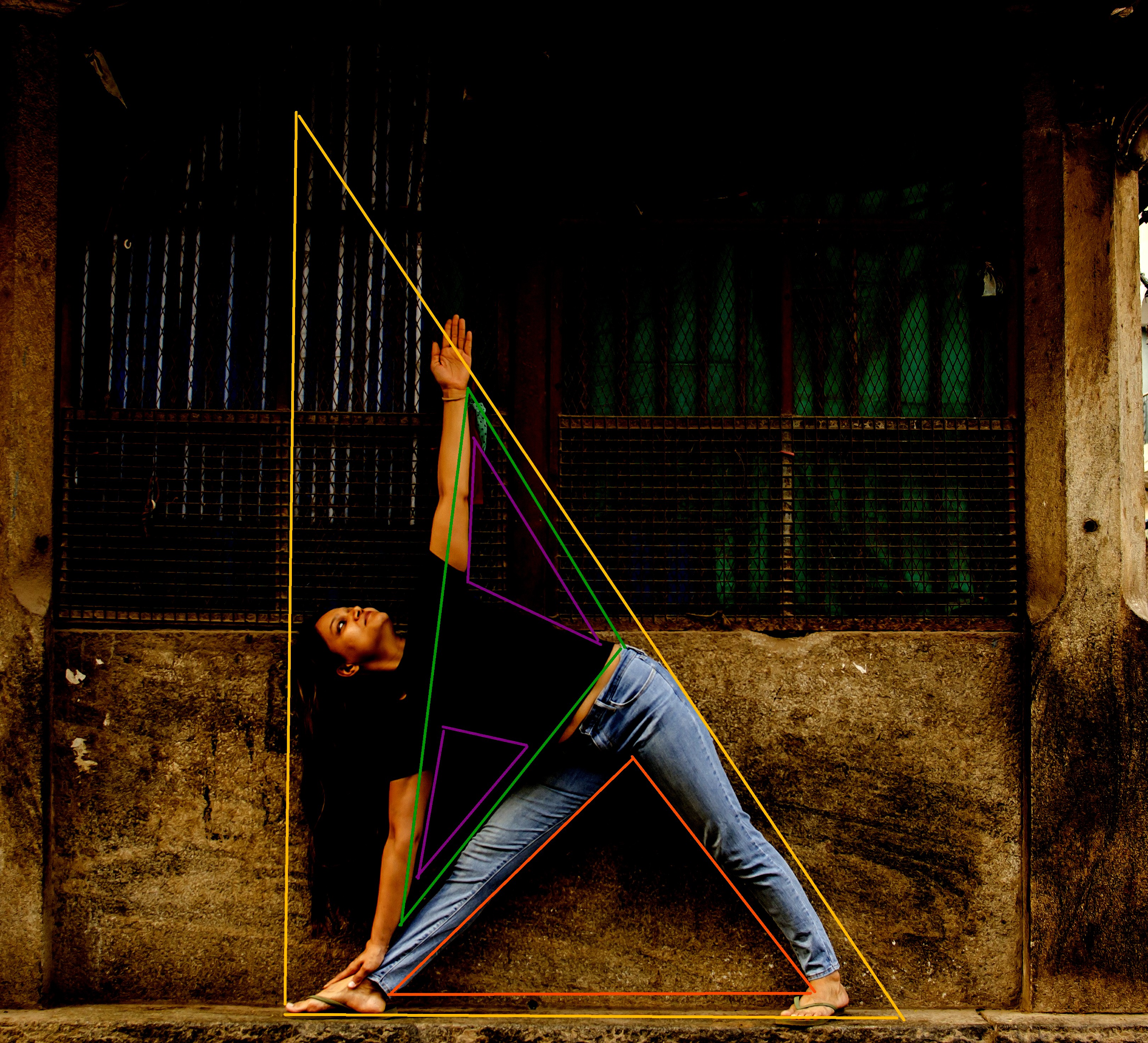
The thing is, we might be doing the same asana over and over again, but we’re not actually repeating it. Emotionally, physically and mentally, the asana is different every single time we redo it. Each time we execute it, we go deeper. We look at nuances, uncover hidden depths. It’s a new asana every time. In Trikonasana, for instance, I can focus on the alignment of my ankles, or on my shoulder blades, or the rotation of my spine, my drishti, or the alignment of the femur and shin, or even the extension of the metatarsals and soles. To maintain awareness simultaneously on all the factors that build the Trikonasana is hard, and we practice to achieve that. And, if for a moment we attain that state, we meditate upon what it taught us, what we learned.

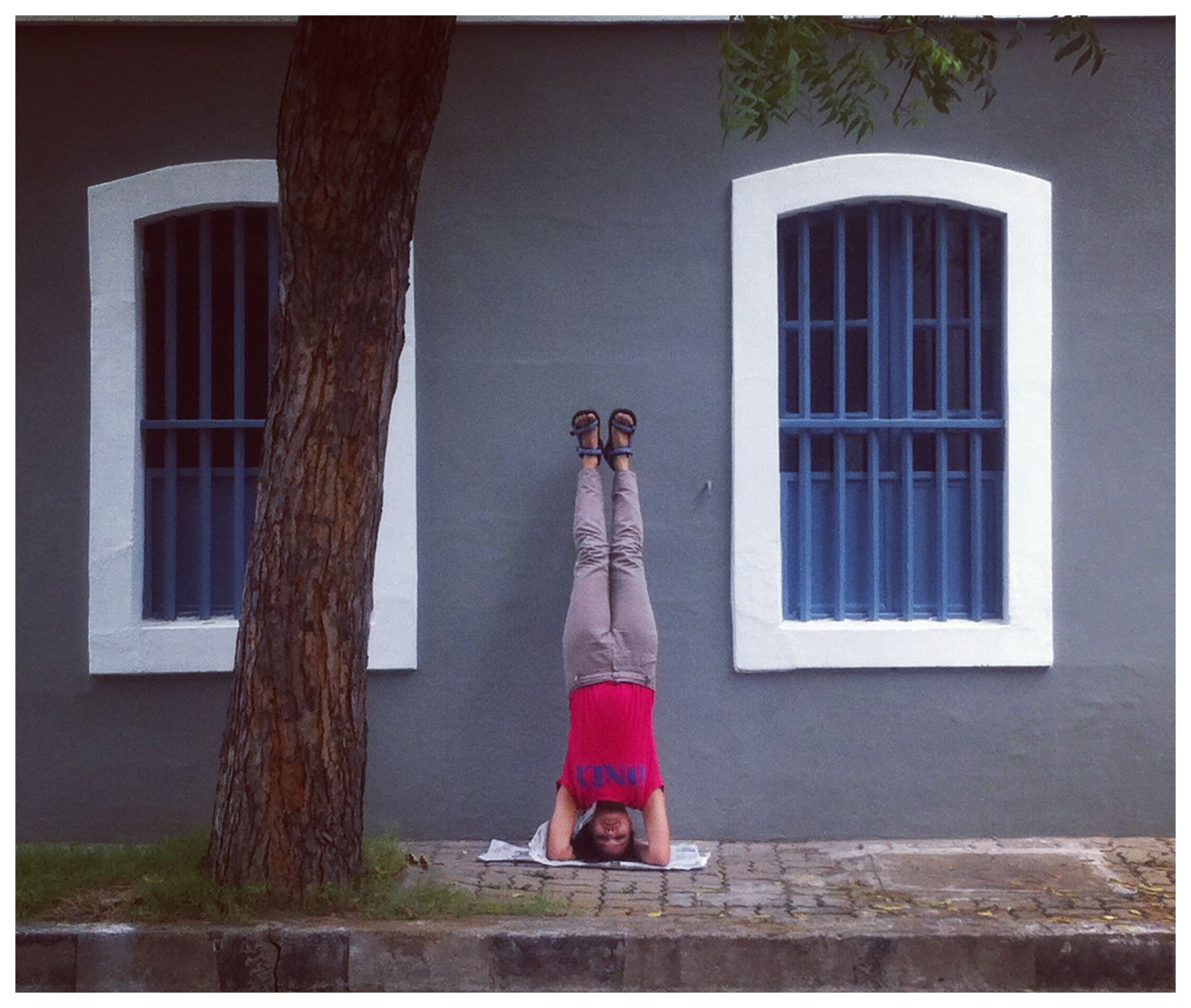
I frequently come across posts on social media about ‘flipping your perspective’ or ‘get a new perspective’ and usually such posts are usually accompanied by pictures of Sirsasana (headstand) or Adhomukha Vrikshasana (handstand). In an Iyengar yoga class, you will gain new perspective and flip existing ones while doing basic asanas repetitively, constantly, consistently and persistently. To gain new perspective, we don’t really need to look beyond what we already have. Perhaps all we need is to be more attentive.

Take the Trikonasana above for instance. We can always focus on bending to the side and making contact with the toes/foot/ankle/ground. Or we can focus on bringing out the various triangles in the posture more distinctly and intensely.

Your focus will determine the quality and maturity of your practice and your life.

Yoga

Becoming the Asana

March 15, 2018

I think of myself as a yoga student first, and then a teacher. When I don’t practice, I feel like I’ve missed something. If, on a rare day, I have no classes, I feel like I’m on vacation.

I make it a point to go to my teacher twice a week. It’s a big class, with at least thirty of us at various levels of practice. The average age of students must be between 45-50. So I find arranging my limbs into an asana a little easier than the rest of the students.

However, yoga goes beyond your expertise at making shapes with your body. And every once in a while, specially when I’ve drifted away from the here and now, I’m pulled back and propelled towards new insight. Doesn’t happen very much, but frequently enough.

Forward Bends denote our ability to surrender to situations that Life brings forth. The Kurmasana has been on my ambitious pose list for years. As a teacher I believe that with consistent practice, any pose can be conquered. As a student there are poses that I judge. I will never ‘own’ this pose. Will I ever own this pose? It’s too difficult for me. This pose is easy! And so on and so forth.

Yesterday towards the end of the class, the teacher asked us to stretch our legs out in the Paschimottanasana and widen them. Then reach forward and grab the sides of the feet. Bend the elbows to the side and stretch the torso forward. I did. And continued working, thinking ‘Kurmasana’. Finally, my teacher started gently coaxing my torso forward. Deeper. Further. More. Eventually there was no sense of the practitioner as being separate from the practice. My forehead touched the floor. I exhaled. Surrendered. I became the asana.

Yoga

How to Manage Your Fears and Face Them Head On

November 2, 2017

When I needed a wall behind me for the Sirsasana.

Halloween got me thinking about fear.  As a society we value fearlessness.  As people we take pride in saying, “I’m fearless.”

But I’ve never met anyone who is fearless.  Some fear pain, some fear solitude, some fear poverty, some fear for the safety of their near and dear ones, aging.  Over the years I’ve heard of the fear of pigeons, fear of sprouts, fear of going bald.

A strategy that used to work for me was to avoid the cause of my fear.  But, it turns out, there are some fears you can’t avoid.

When I was ill I wasn’t able to practice for what felt like a very long time.  My teacher once told us that if you don’t practice for a day, it’s equivalent to putting your practice back by seven whole days.  As each day passed, I thought of all I learned in Pune.  With so much time on my hands I became increasingly anxious, nervous and fearful.
In the path of Yoga there are inevitable roadblocks and problems.  But Yoga is a holistic practice so the solution also lies in the practice.  The first limb of the Ashtanga (8 Limb) yoga practice is Yama.  The Yamas are  set of 5 ethical principles that practitioners must adhere to.  One of the Yamas is aparigraha or ‘non-attachment’.  As yogis we become too attached to the practice.  Some of us feel guilty if we are unable to practice.  Others push themselves too hard.  Some pride themselves on the asanas that they can do.  We stop enjoying the journey, we focus only on the destination.  And in the process become attached to the destination.

I am very attached to my asana practice. I spend a lot of time trying variations, reading, watching and experimenting.  When I can finally do an asana I feel a sense of accomplishment.  There is nothing wrong with feeling good about finally attaining something that you’ve worked hard for.  But if you beat yourself for not attaining the final asana despite a rigorous practice; or start to lose faith in the path because your goal seems far, far away; then you need to take a fresh look at your attitude and approach.

I was fearful of discovering the state of my yoga practice post illness. If you’ve read this blog, then you know that I was significantly weakened by the illness.  Waking up every day to practice felt like an exercise in futility.  It was scary to try asanas and not know if I would be able to do them.  Asanas which I ‘owned’ before.  But I guess by force of habit I kept on returning every morning…to fail.  Until one day I started improving.

And that’s when I realized that fear can’t be ignored.  You can’t not think about the object of your fears.  It doesn’t help to face fear head on.  Fear can only be managed, one day at a time.  You don’t have to look at the entire marathon, you need to look at the Majaa run first.  You don’t have to dwell on whether you’re going to get the job, you only need to work on giving the best interview ever.  You don’t have to worry about the Sirsasana (Headstand), you just have to work on doing a very good Adhomukha Svanasana (Downward Dog).

BKS Iyengar once told Patricia Walden (who was struggling with a heavy case of depression) to ‘Take one step no matter how small.’  I realize this is what I have been doing ever since I’ve gotten back on the mat.

Do you have a strategy to deal with fear?