Pragya Bhatt | yogawithpragya

Browsing Category

Yoga

Yoga

What Pune’s Weather Taught Me

September 15, 2017

DSCF3986-W

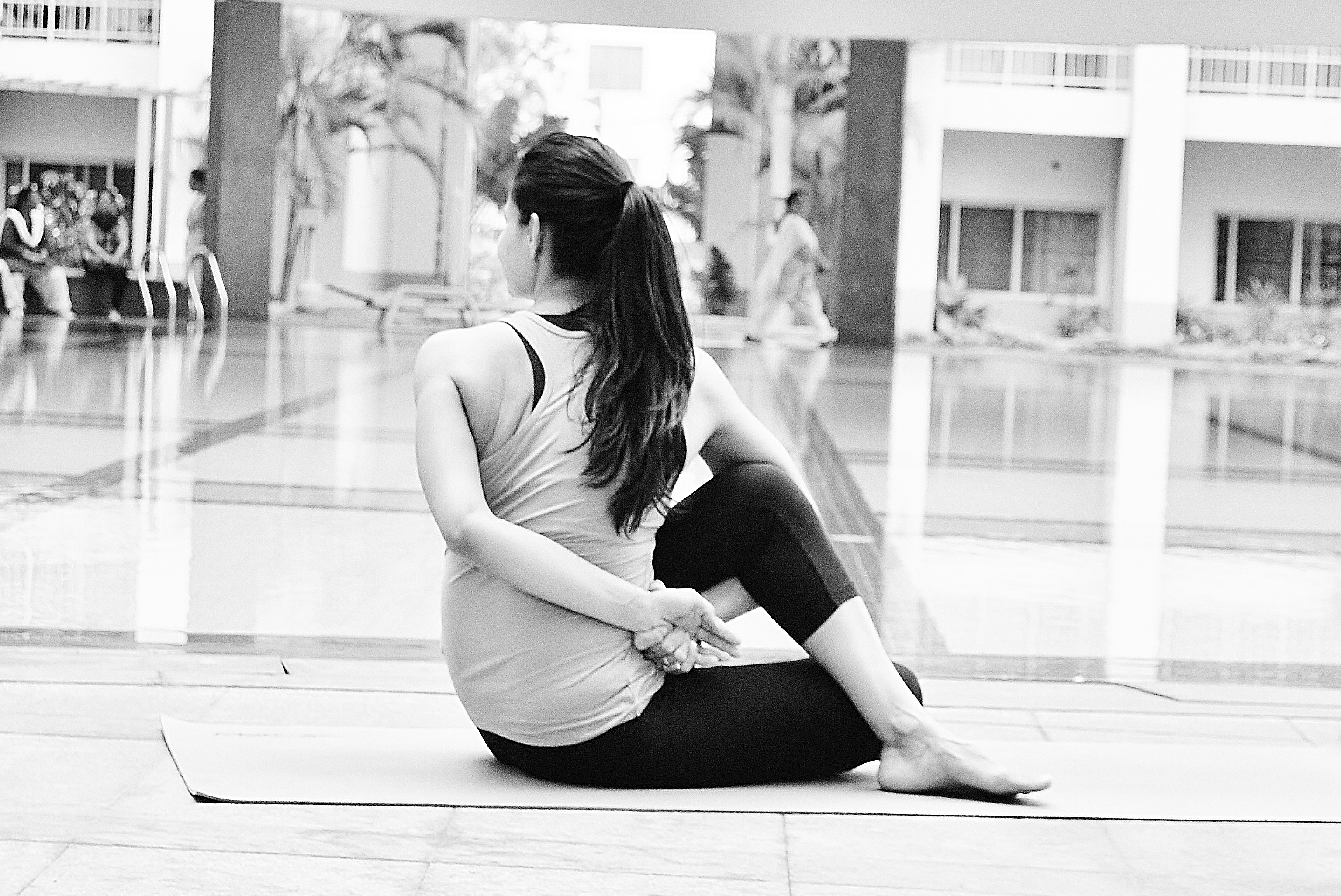
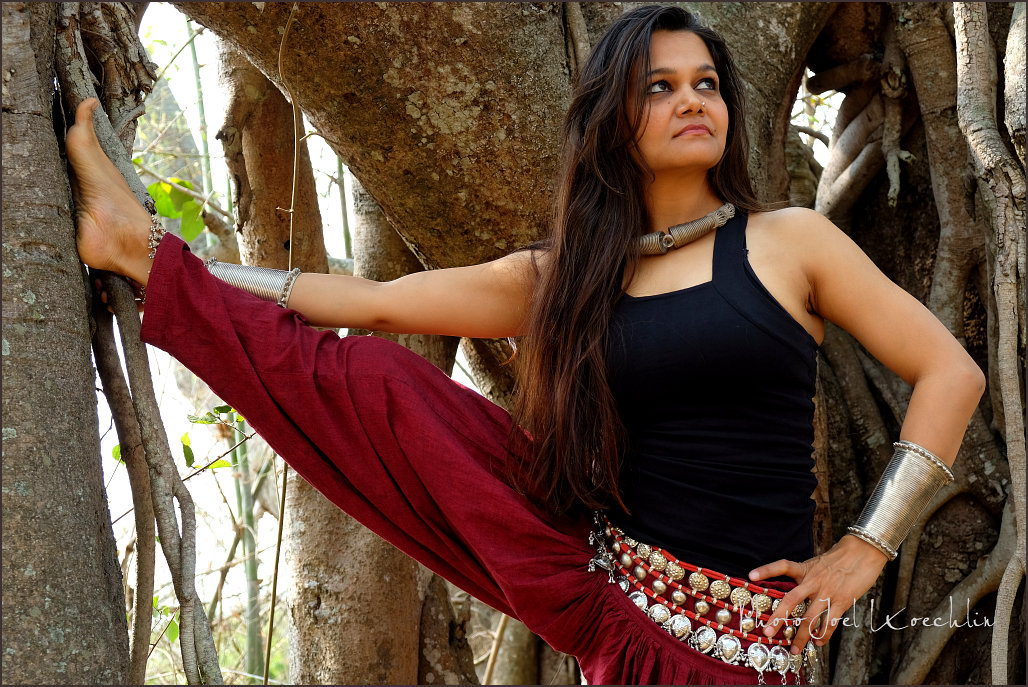
pc: Joel Koechlin


Until today I had been lucky to avoid getting drenched in Pune’s sudden downpours.  Today I went out for lunch with another and on our walk home the pleasant drizzle steadily and surely grew into a monstrous torrent.  Too much for my little umbrella to handle.  My capris were all wet as I pulled the umbrella low over my head and waded through the veritable rivers that the streets had become.  As I walked I noticed the cobbler who was calmly trying to prevent his entire business being washed away in the rain.  I noticed the fruit and vegetable wallahs covering their carts with waterproof sheets.  I noticed the coconut bhaiyya had shut shop.  I crossed the road and got on the sidewalk of the Agriculture college.

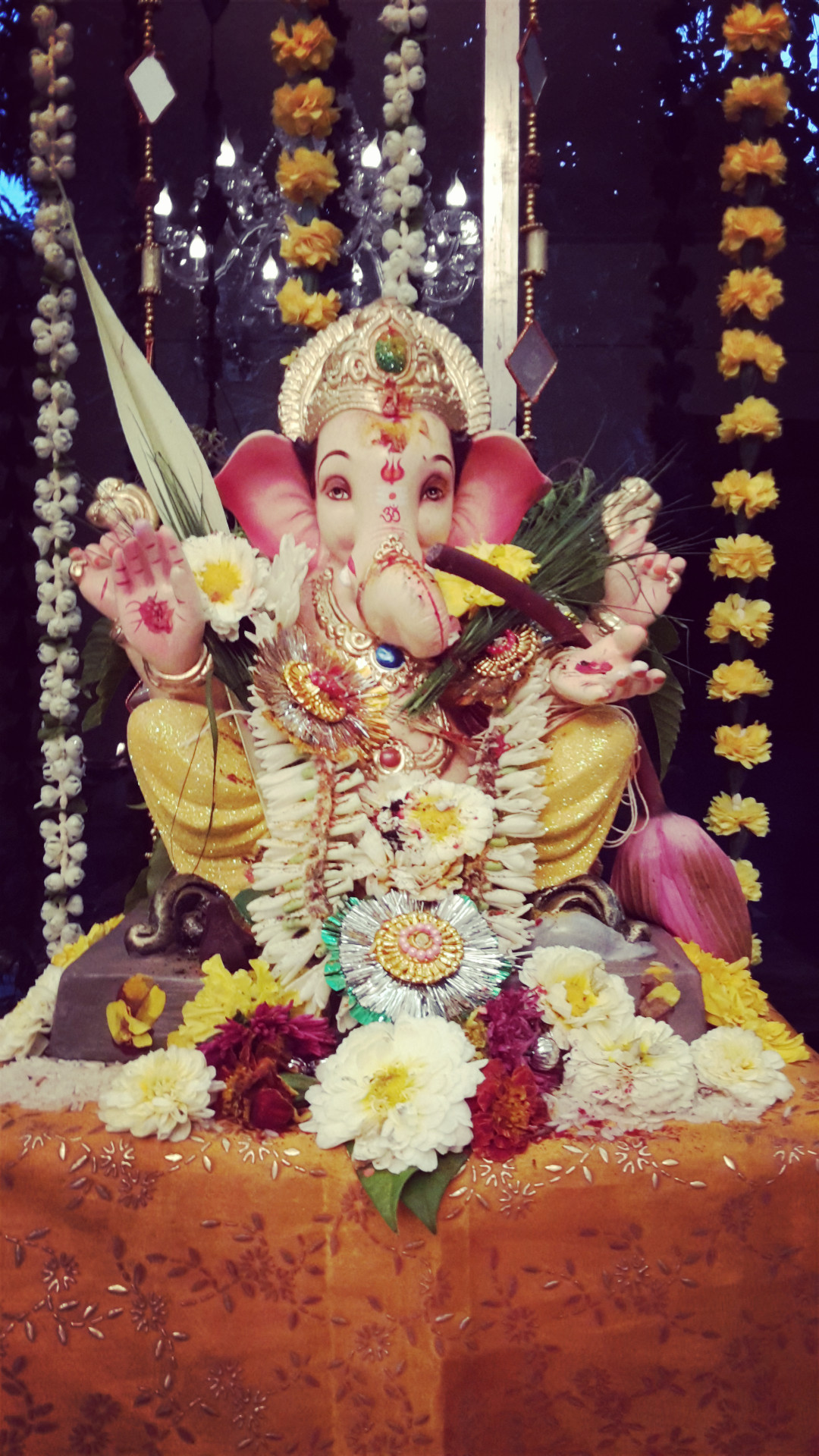
When I have the 7 am class I walk across someone sleeping on this sidewalk.  This person is always wrapped head to toe in a blanket.  I’ve never seen him stirring in his sleep.  The early morning traffic doesn’t seem to bother him.  When it rains he props an umbrella up and hopefully it keeps (at least) his torso dry.  Once when I was walking to class (in the middle of the day) a yellow snake slithered out from the bushes and, perhaps realizing that it had lost it’s way, slithered back into the bushes.  Slimy serpents don’t seem to bother this person.  I’ve seen him there after a night of nonstop torrential rain, after a hot and humid night, after the Ganpati celebrations, on a Monday morning, on a Saturday morning…

To renounce everything and find peace in a remote cave in the Himalayas is easy.  To stay ethical and honourable in the absence of temptation is no big deal.  If we want to quieten the chitta, we must accept the noise that is creating the vrittis.  If we want some rest, we must get it despite the traffic, fear of snakes, the rain or the heat.  If we need to find peace, we must do so in the midst of chaos.  Wrapped in a threadbare blanket under a tattered umbrella.  Because that’s where we need it the most.
RIMYI Experiences

Finally some progress…

September 11, 2017

POMELO_20170902051303_save

Our goals form the blue print for our lives.  As kids we think of  growing up and becoming so and so.  Once we become so and so our goals change to the kind of cars or houses we want.  The kind of person we want to be with.  More common goals are to lose 10 kgs before year end, learn how to swim, run a marathon, travel the world, complete a reading challenge.

My first ever goal in life was to be Nancy Drew when I grew up.  As I grew up I became more laid back and wanted to spend all my time reading and writing.  My only goal in life was to spend as much time as possible reading as many books as possible.  I also wanted to write books for a living.  I finally ended up writing code for a living and that period of my life is conspicuous by a total lack of goals to aspire to.  Everyone else wanted promotions, raises, onsite trips.  People were flaunting cars, homes and eligible marital prospects.  One day I realized that if I didn’t start working out I would have nothing to wear since I had steadily outgrown many things in my closet.  That led me to the gym and then to yoga class.

As with most yoga students my first goal was to touch my toes.  I remember that I was elated when I first did that.  Even more when I touched my forehead to my knee.  Today I cringe at how bad my form was then.  Lots of people want to do the headstand and handstand.  Studying at RIMYI has made a lot of my goals accessible to me (Kurmasana for one).

As an Intermediate 2 practitioner you are expected to be comfortable in many variations of sirsasana.  You’re upside down in all classes (unless you’re menstruating), so headbalancing is crucial for an Iyengar practitioner.  There are bound to be many who topple over or come down for a little break.  When this happens you hear everything from ‘Shouldn’t have had so many modaks’ to ‘You call yourself teachers!!!’ to ‘In Intermediate 2 for so long and still not able to sustain?!’  Usually accompanied by a barrage of Marathi.

When I was here last year I used to fantasize about holding the headstand for 10 minutes.  I knew that was a prerequisite for the next level.  I’d heard of classes where students have been upside down for 20 minutes at a stretch.  All of last month I’ve worked on steadily increasing the amount of time I stay up.  I started with 5 minutes and then held it for 8 minutes for a while.  Then this morning I decided to be a little more adventurous and see if I could hold on for 10 minutes.  And I did!!!

Needless to say, it felt amazing!!!  Achieving these goals only prove that with only a little bit of discipline and smart work you are closer to your goals than you think.  Even goals that are mere fantasies for you right now.


POMELO_20170902051541_save

Aga Khan Palace


Yoga

A New Vrkshasana

September 6, 2017

POMELO_20170906094735_save

I love the basics.  Even though advanced yoga poses can be exciting, there is still something lovely about the simplicity of the basics.  Basic asanas are like the comfort food of yoga.

My schedule has changed a little bit for this month, so I now have Devki’s class on Wednesdays from 7.45-9 am.

In today’s class we focused on the groin.  I’ve been here for a month and so far I haven’t done a blog on any class I’ve attended, but today’s class was different from any so far.  We focused on the spine and the root of the spine (moola).  We were supposed to grip the spine and the root throughout the sequence.  We started with the Swastikasana and went on to the Baddhakonasana. 


The class had a pleasant tempo.  It didn’t feel like I was struggling in the asanas and pushing my limits.  Yet, as the class progressed I could clearly feel that I was settling into the asanas rather than fighting my way into them.  As though my limbs were moulding and unfolding effortlessly.  I feel I was discovering what the body can do when the mind is quiet and the ego recedes.  By the time we got to the Trikonasana I felt light and lithe and it was the best Trikonasana I’ve done while here in Pune.

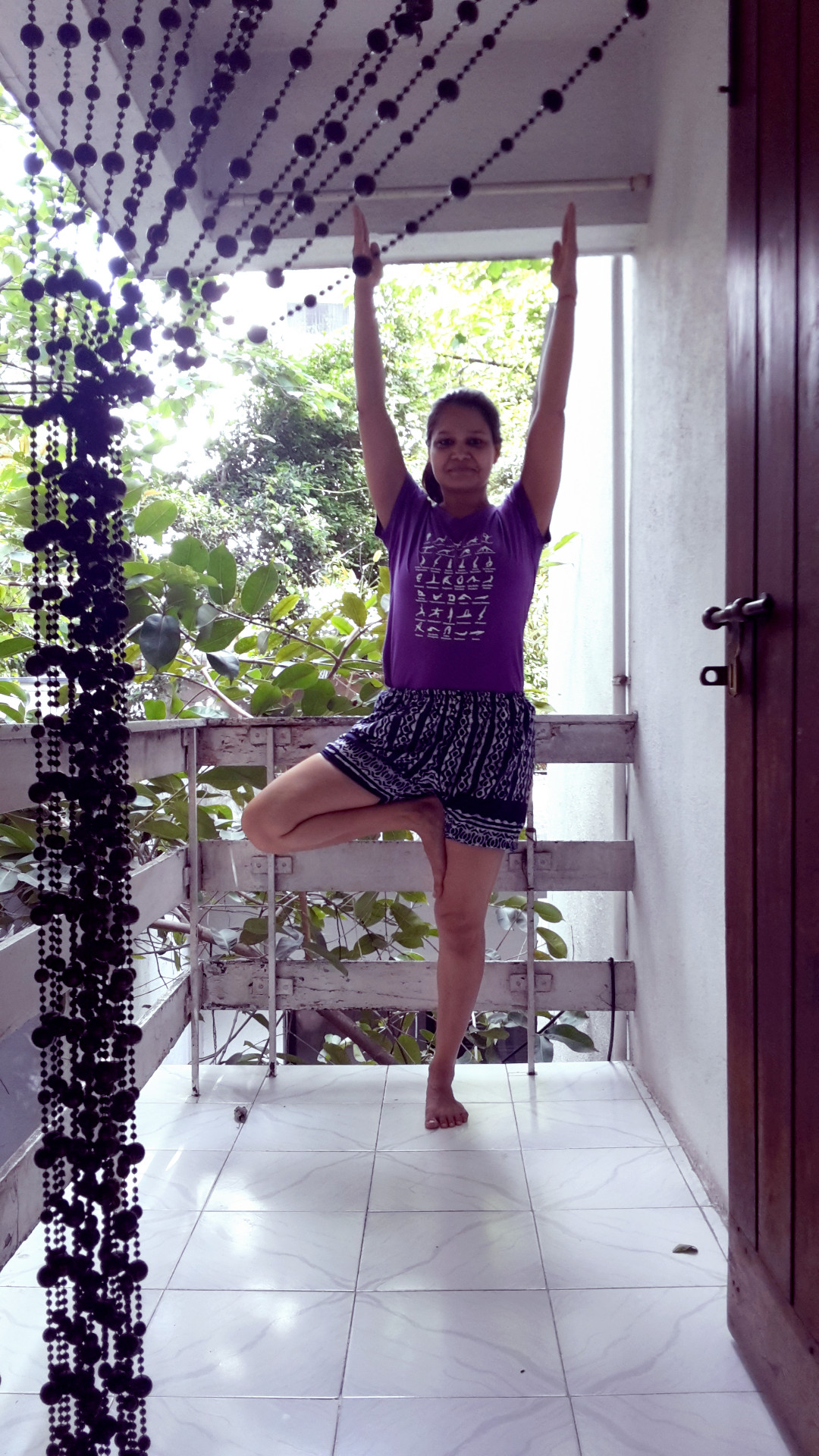
I always learn something new in Devki’s class.  And it’s always something fascinating.POMELO_20170906094836_save  The Vrkshasana/Tree Pose is perhaps the first balancing posture that we learn in yoga class.  Over the years I’ve heard a lot about the symbolism associated with this pose.  The more common ones are to be rooted and strong and to find balance despite what is happening around you.  But today Devki said be like a tree and provide shade and protection to all that come to you.  A tree doesn’t judge a good person or bad, an animal or a human.  It provides shade, protection and relief to one and all.
Although as human beings we are constantly evolving and growing (as we should), we can also be like the tree and ensure that external factors don’t diminish our light or detract us from the work that we are meant to do.  We should be compassionate towards all who we come in contact with and see the larger picture even in the midst of the most sticky situations.  The tree that provides protection is larger than those that come to it for relief and has a greater purpose.  Think about this when practicing your Vrkshasana next time.

Towards the end of the class we went into Baddhakonasana once again and performed it like the Savasana – with the intent of relaxing the body.  I couldn’t help but smile when I realized my spine, the root (moola) of the spine and the posture had all come together effortlessly in the Baddhakonasana.

POMELO_20170906094807_save

Yoga

Paying Homage

August 24, 2017

POMELO_20170824110508_save

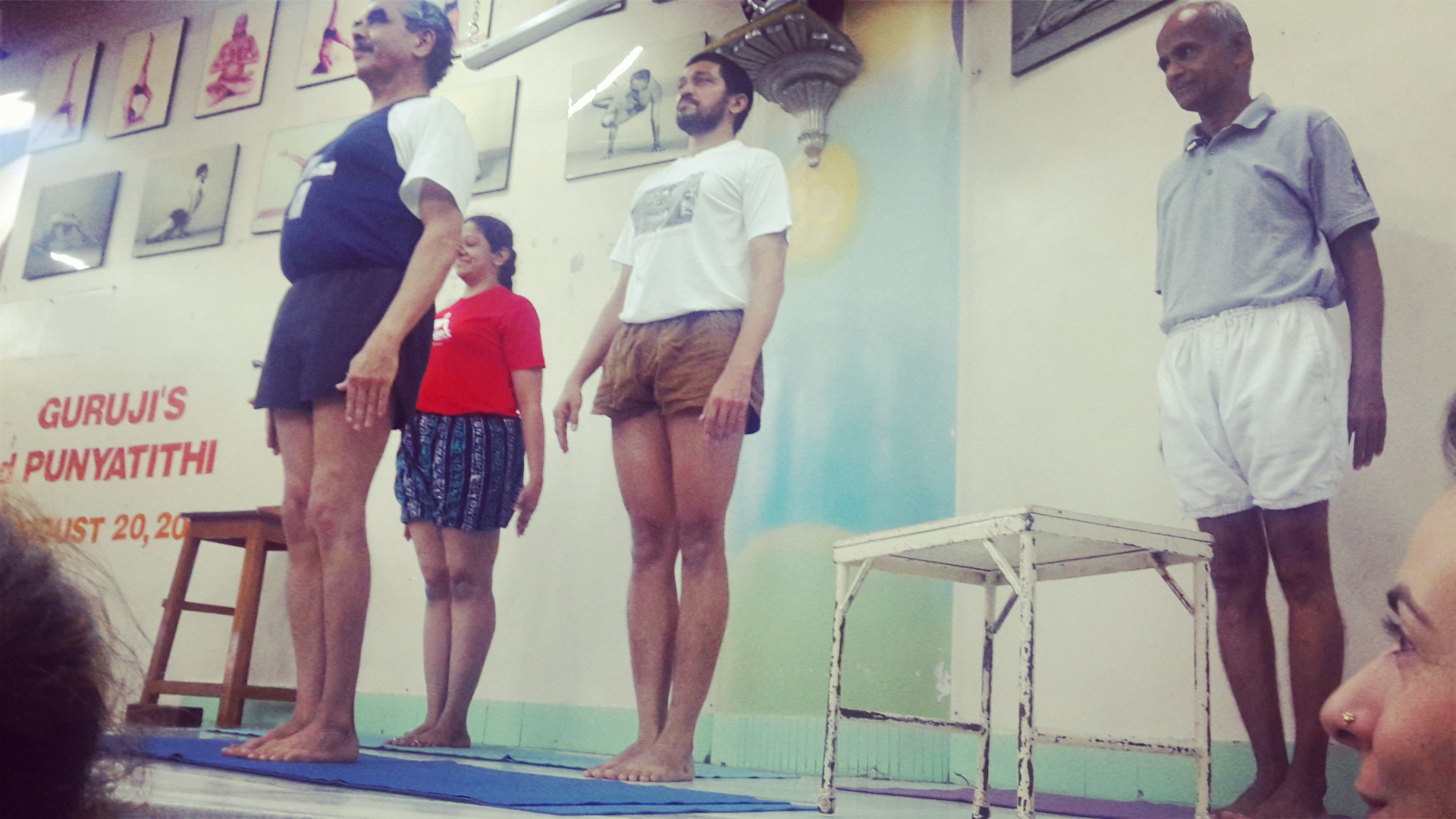
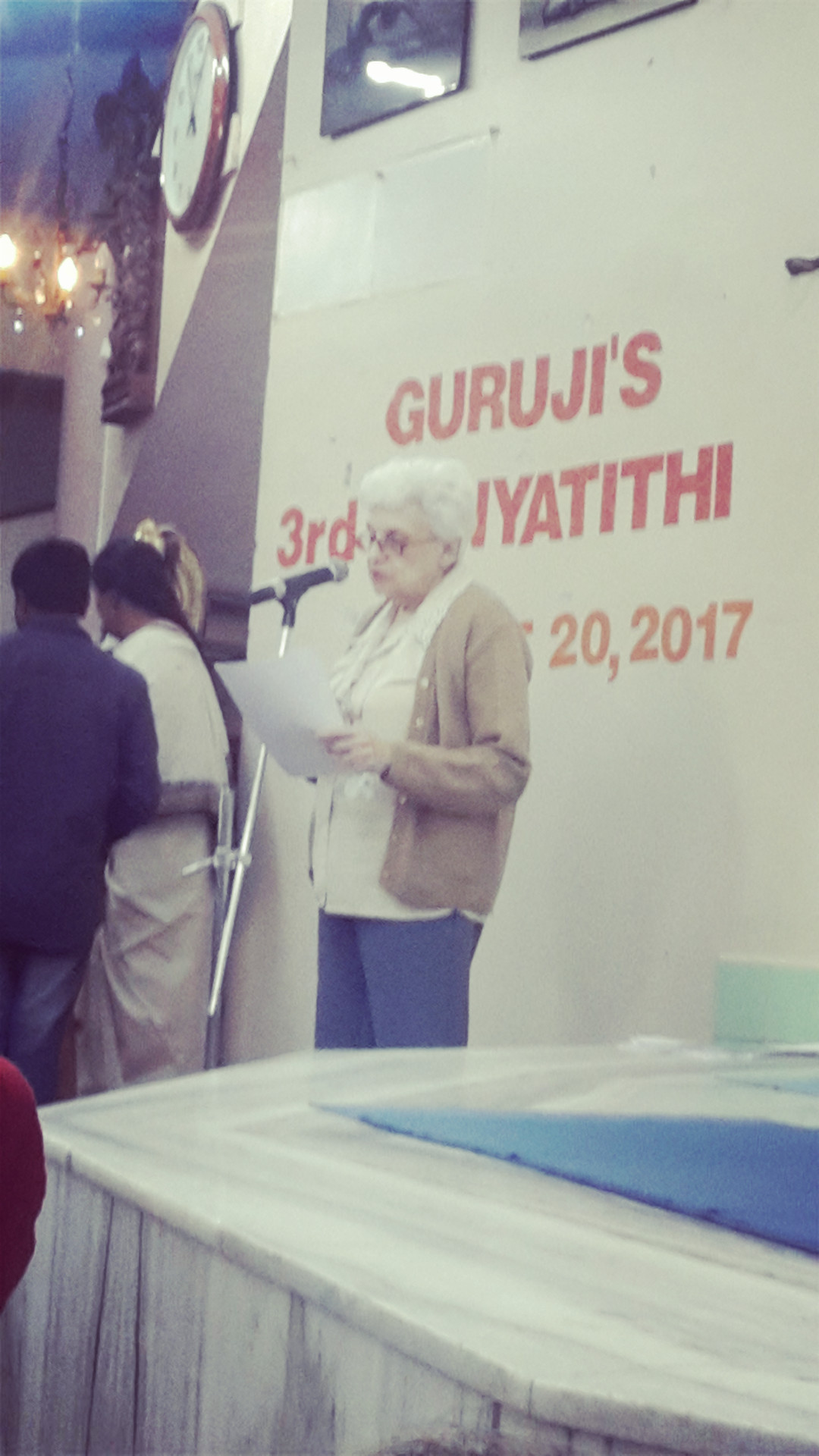
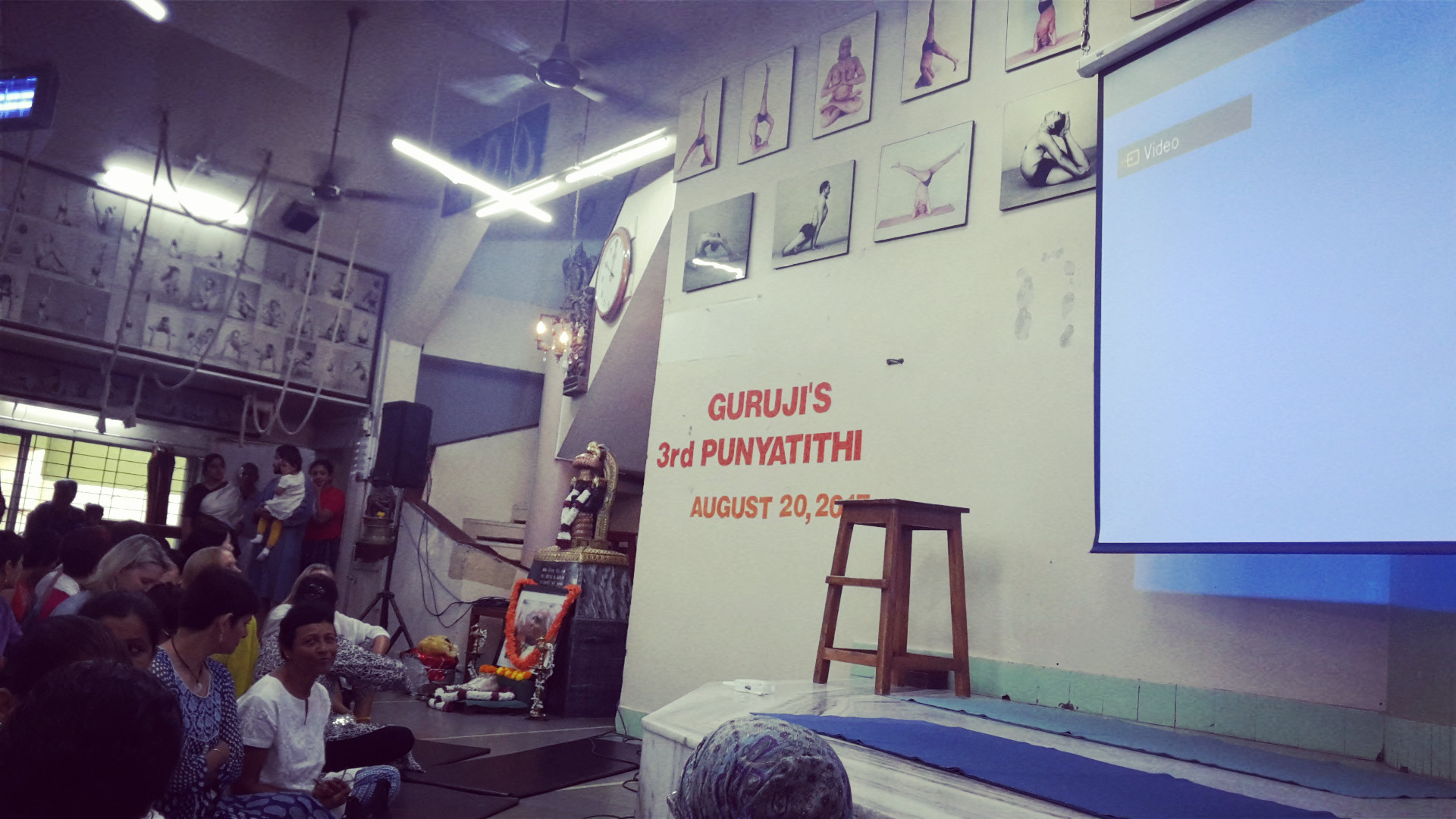
Last Sunday was BKS Iyengar’s punyatithi (death anniversary).  There was a function organised by the institute in which Abhijata spoke.

When I got to the institute (half an hour early), it was buzzing with activity.  Students were helping to arrange mats on the floor for all of us to sit on and technicians were taking care of the audio/video system.  The program started with the invocation to Patanjali and then Abhijata took the stage.

Her speech was a combination of personal memories of her grandfather, his approach to yoga, his method of teaching, his commitment to the subject and his belief system.  A nice little addition was the re-enactment of scenes from BKS Iyegnar’s classes, where the rest of the teachers went up on stage and pretended to be students as Guruji taught.  Abhijata did her best impersonation of the disciplinarian Guru while we tried to imagine our teachers in the plight that we so often find ourselves in.

POMELO_20170824110406_save

What I really liked about Abhijata’s speech was how she wove the lessons learned with personal anecdotes.  When talking about how Iyengar yoga helps us in cultivating a sense of peace or understanding who we really are, she said the Guruji had once said ‘My sole and soul is the same.’  Meaning that it is through the understanding and awareness of the gross body that he was able to cultivate insight.  You need to work so hard, make your body so potent that you can escape gravity.  Although anatomy is a rigid structure, you can’t pinpoint where the body ends and mind begins.  Your inner working has to be revealed through your outer self.

She also said that yoga is a living art.  Asana is a metaphor for life.  Yoga teaches you how to navigate through problems in life.    Chitta vritti has to come so that you can learn how to deal with it.  Action can’t guide, reflection does.  The prakriti has infinite potential, so it is possible to change our lives.  As an analogy think of a farmer laying the groundwork for his crops.  He does his best without thinking of the mechanics of how the seeds will sprout.  He lays the groundwork and the seeds sprout on their own.  Similarly, we must put in the practice, and everything else will also fall in place.

Life is to live.  Your sensitivity to yourself and the world around you increases through the practice of yoga, and this heightened sensitivity helps you to solve your problems.  For this your tapas has to have fire.  Your practice should have drive, passion and zeal.

It was fitting then that Abhijata ended her speech a little teary eyed and saying ‘He taught me how to live.’


POMELO_20170824110443_save

Recounting experiences with BKS Iyengar


RIMYI Experiences

Notes From Pranayama Class

August 17, 2017

A valuable addition to my schedule this year are the Pranayama classes.  To the masses Pranayama consists of vigorous breathing patterns to be done for 10 minutes daily and designed to keep your skin glowing, hair shiny and body young.  Unlike the heavy panting/wheezing breathing we see recommended on many a popular TV show, here Pranayama is all about subtlety.

POMELO_20170727201317_save

I had my third pranayama class last night and so far all the classes have followed a fixed pattern.  We’ve spent most of the class in the Supta Swastikasana/Savasana and almost played with the breath.  While we try to gently ‘tame’ and understand the breath, Devki reiterates why it is important to build a solid foundation for pranayama practice.

Yesterday she used the example of a clay pot.  If the pot isn’t properly baked, then anyIMG_20170728_205903_201 amount of water you put into it won’t stay in it.  Similarly our bodies have to be ready for Pranayama for it to be effective and not harm us.  Devki said that many times students ask her why we aren’t doing seated pranayama.  The reason is that most of us aren’t able to maintain a straight spine throughout the practice.  With a crooked spine the breath is constricted and the organs of breath are uncomfortable.  (BKS Iyengar has said:  Crooked body crooked mind.)  The organs of breath need to be disciplined before we can start to control the breath.  For this reason we spend almost 90% of the class in a supine position using bolsters and blankets.
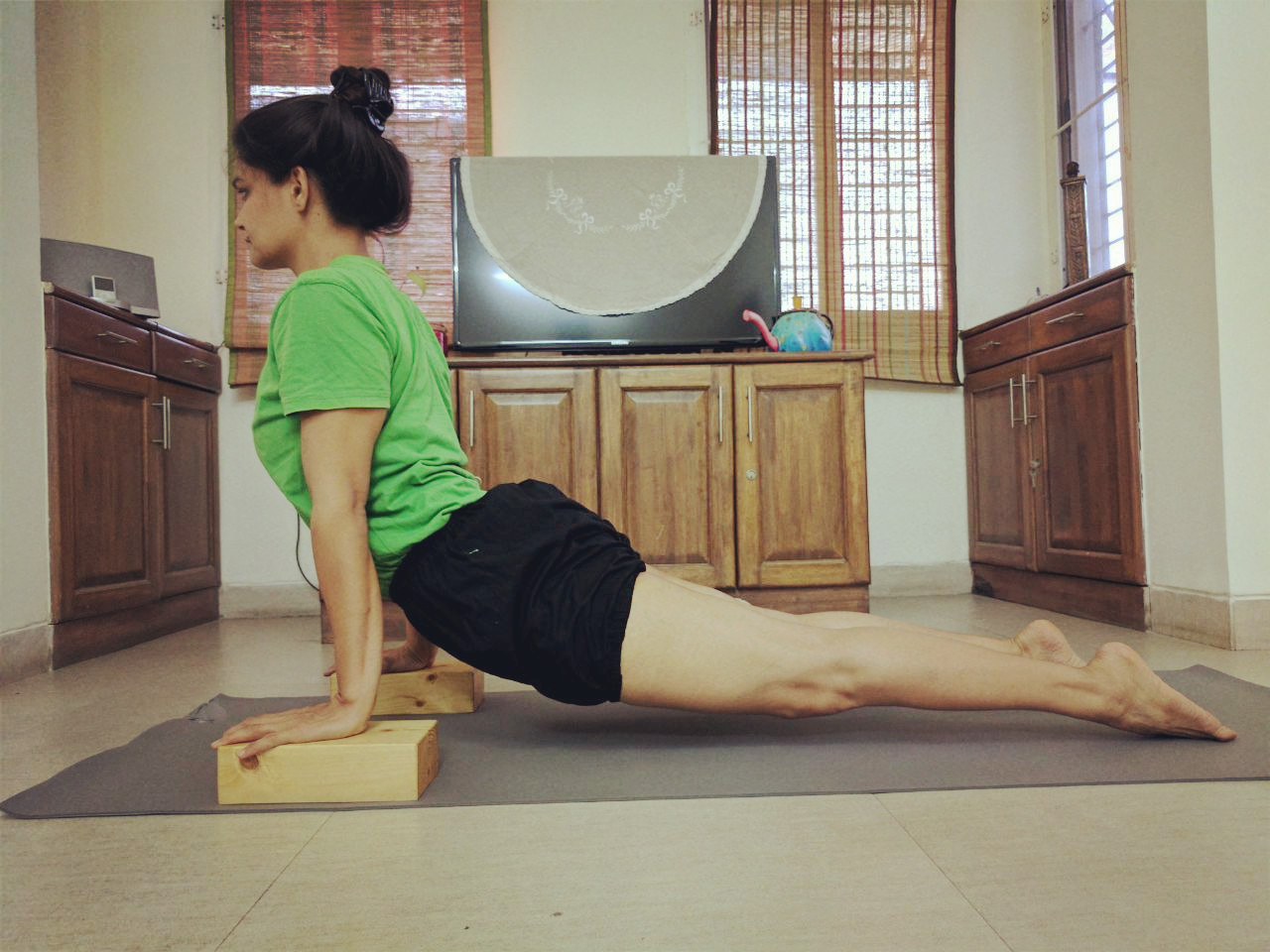
POMELO_20170817210148_saveAs we are settled in our positions with bolsters and blankets, Devki talks us through what we are doing and the importance of it.  In yesterday’s class she said something relevant to what I wrote about in my previous blog.  I received a comment on that blog about the relationship of backbends to emotions.  (Incidentally, backbends are also invigorating and energizing.  I missed practicing them today and I’m yawning despite the cup of coffee that I’ve fixed for myself.  On the bright side, not in tears or any other depressing mood.)  She said that there are emotional granthis (knots) in our thoracic spine.  The aim of asana and pranayama is to remove these granthis from our bodies.  Whether these granthis are in the brain or in the heart, we need to eliminate them to move forward in our yogic journeys.  These granthis are not just of memories accumulated in this lifetime, but memories of several lifetimes.  There are many who believe that we inherit these memories from our parents and ancestors, and the practice of yoga digs deep to rid us of these blocks.  Granthis are also called samskaras.)
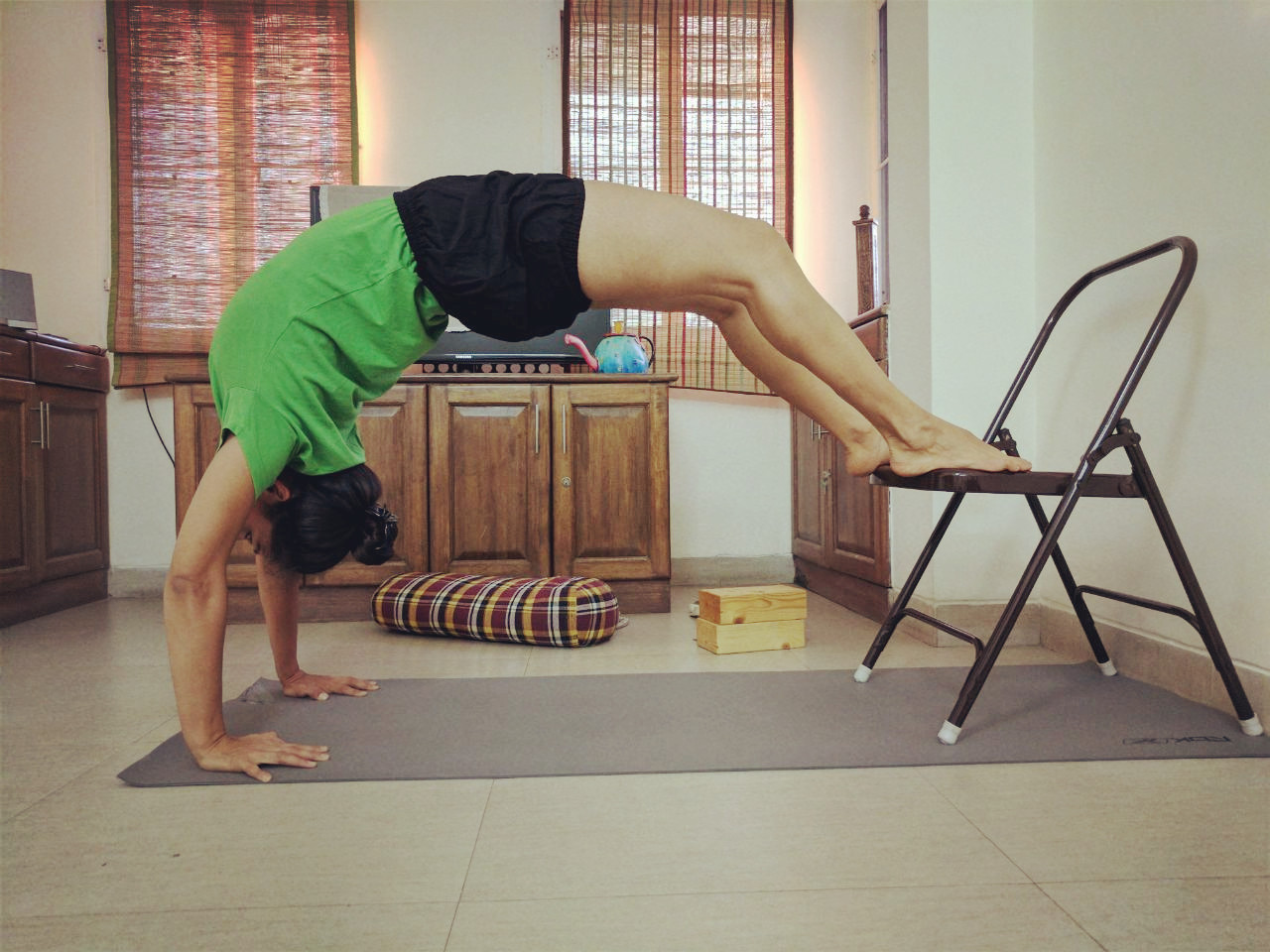
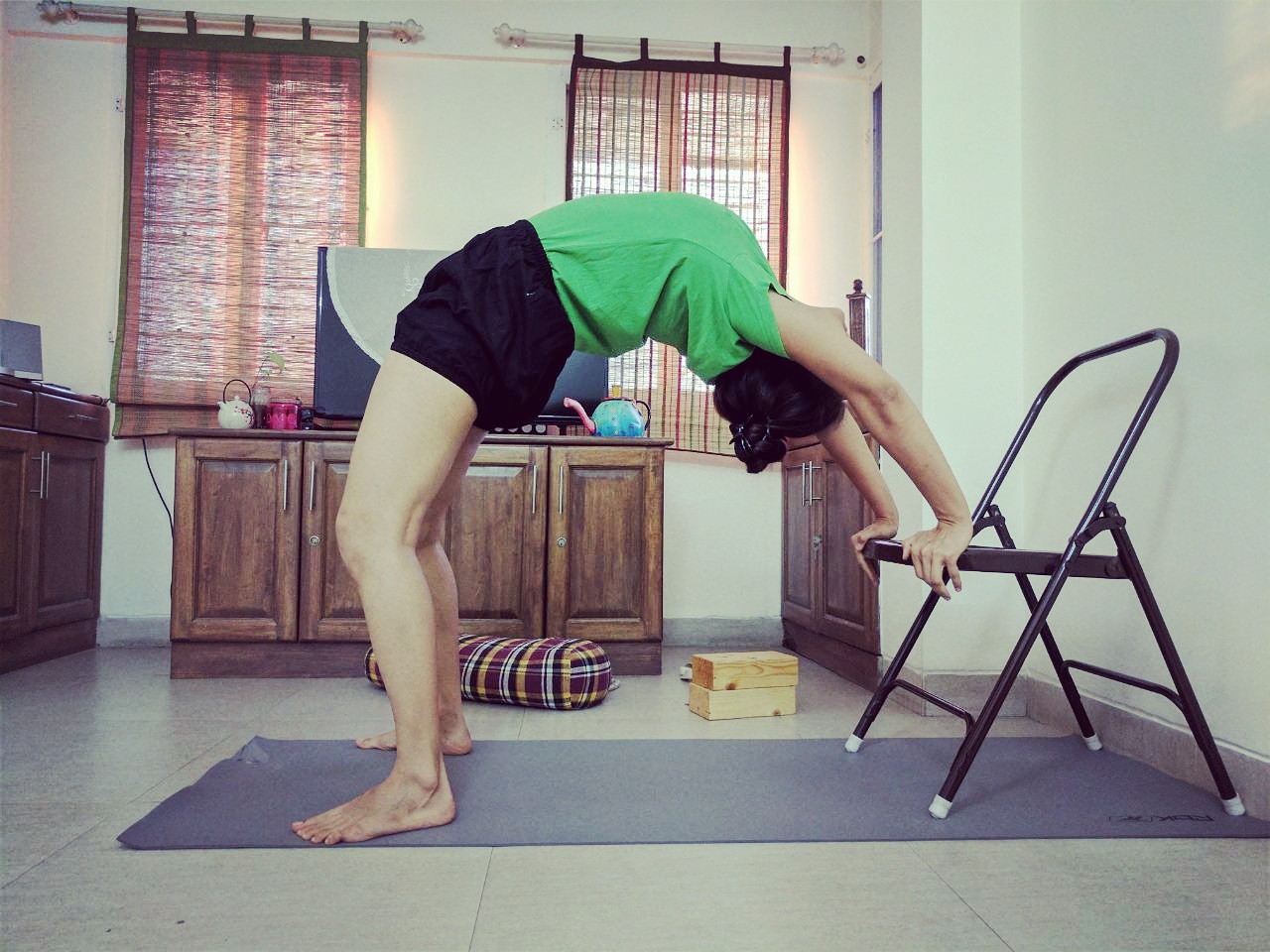
When we practice backbends, it is these granthis that we are confronting.  By opening upPOMELO_20170817205505_save the chest, we allow a metaphorical ‘airing out’ of stale and painful emotions.  Everything that happens to us results in shaping our world view and behaviour.  Sometimes what happens to us is painful and unfair.  Unfortunately, these events make an imprint in our minds and effect our behaviour.  We sometimes never let go of painful memories and they fester in our subconscious brain and almost always result in psychosomatic pain.
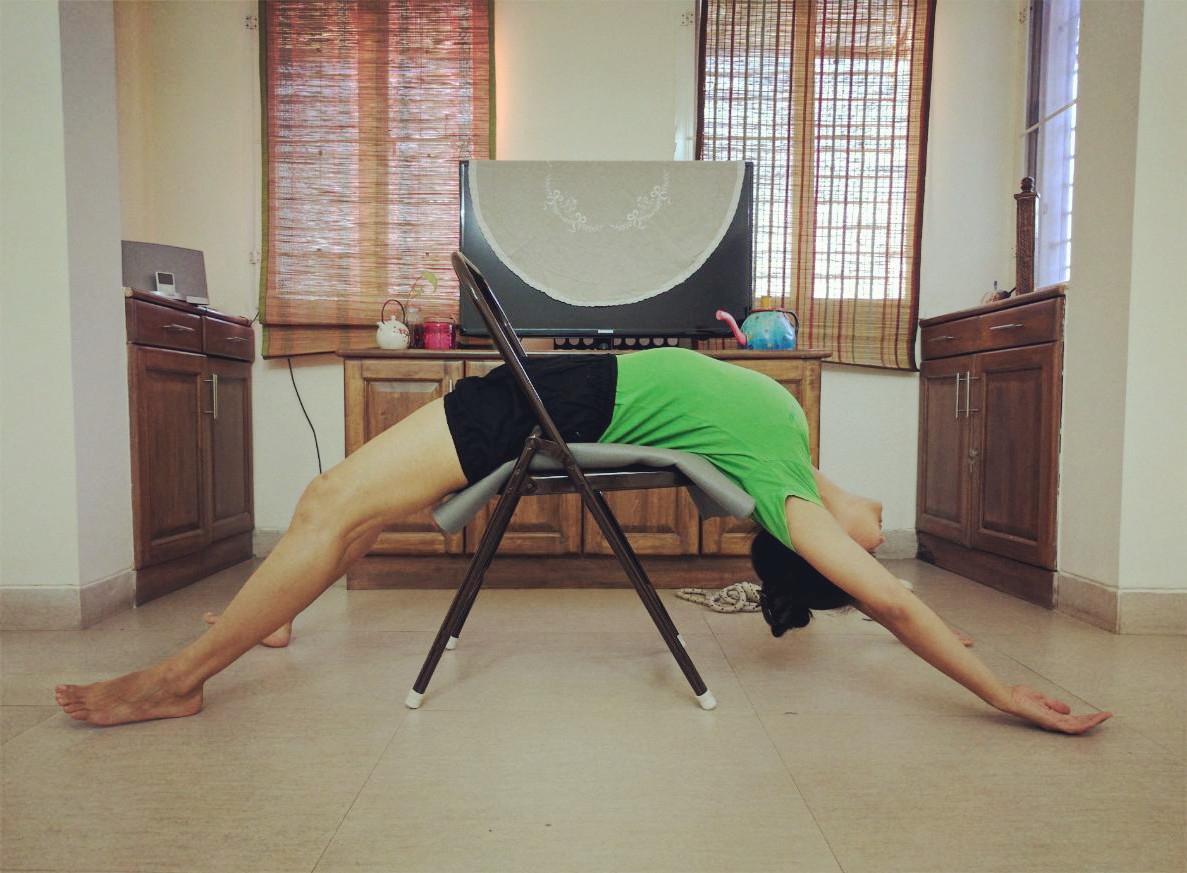

In the study of yoga, backbends come after a certain level of proficiency and practice.  I feel this is for two reasons.  The first reason is that our body has to have a certain level of strength and flexibility before we can start more challenging body work.  The other reason is that we need a certain amount of mental clarity and maturity to deal with the emotions that will surface.

‘Bending backward’ also means going out of your way to accommodate a person or a situation.  It implies putting yourself on the backburner.  If you analyse the quality of your backbends, it might give you insight into how much you allow others to influence your life, or how assertive/aggressive you are about yourself and your opinions.

POMELO_20170721044702_save