Pragya Bhatt | yogawithpragya

Browsing Tag

yoga with pragya

RIMYI Experiences

Don’t Go After the Stretch

September 10, 2019

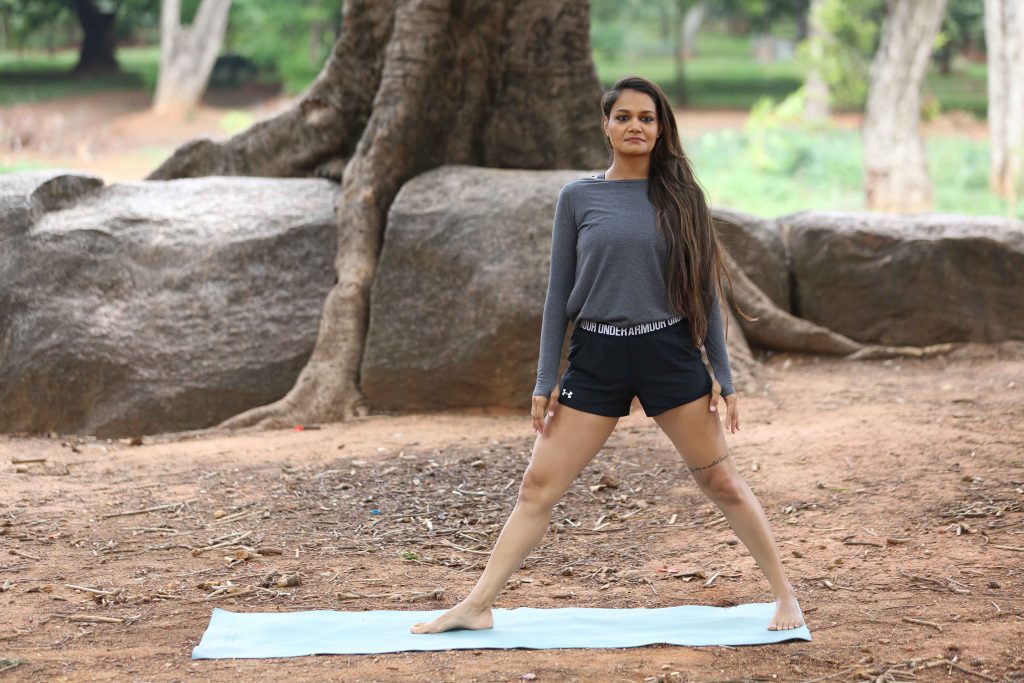
pc: @khan.clicks @deavalin_david_dsouza makeup: makeupbyhennaanbaree location: Cubbon Park

I had a late class yesterday.  It started at 7.10 pm and went up to 8.40 pm.  The teacher was new to me.  After the usual queries (“Where are you from?  Who’s your teacher?”) I spread my mat and got ready for a class.

All the teachers at RIMYI have a distinct style of teaching.  The strong teacher-student tradition of yoga ensures that your attitude, approach and philosophy towards the practice reflects that of your teacher.  Your students will be able to see the ‘Iyengar’ or ‘Ashtanga’ shades in your classes.  If you go to multiple teachers/don’t go to any teacher – that is pretty evident too.

There isn’t much of a crowd at RIMYI this year.  Last night’s class had about 15 students.  We had enough space to spread out.  The class was quiet.  It wasn’t action-packed or fast paced.  We did very few asanas.  We held each asana for a very very long time.

As you continue to hold, you’re able to go deeper into the pose.  You can intensify the stretch.  You can observe which limbs are working, which are sleeping.  I worked on lengthening and opening my torso in Trikonasana – I noticed that I could actually activate the hamstrings more.  Similarly in Parsvakonasana.

“You may be feeling a stretch in your hamstrings and on your groin,” said the teacher.  “But feel the quietness in your abdomen.”

I blinked a couple of times. It’s a mannerism Ive noticed recently.  It’s an automatic response if I’m surprised or intrigued.

“Most of us go after the stretch.  We think asana works only if we feel the stretch.  But all asanas bring quietness in the abdomen too.  Find this quiet.”

And with these few sentences, he changed my asana practice forever.
 

Yoga

Cut Through the Noise and Find Your Centre

September 9, 2019

I recently enrolled for a Master’s program in yoga studies.  I went back to SVYASA (Swamy Vivekananda Yoga Anusudhana Samsthana).  It is a university dedicated exclusively to yoga and holistic health.  In 2012 I registered for their YIC (Yoga Instructor’s Course) never dreaming that in 2019 I would be back for a masters.

Two months ago I went to the university to attend a few lectures.  My days there were reminiscent of my Infosys Mysore training.  Until now yoga has largely meant asana practice for me.  Philosophy is intimidating.

I think this master’s program may just bridge the gap for me.  The faculty at SVYASA comes with a long list of achievements and experience.  All the members are well-known experts in their chosen area of study.

Our Yoga Therapy professor, Dr. Uma gave us some enthralling lectures.  She lectured on the importance of an integrated approach to health care.  One day the discussion turned to vegetarianism, veganism and other lifestyle related food choices.  She told us about her personal conflict with milk.  For years she had adamantly supported the consumption of milk.  She holds an MBBS, MD as well as a BHMS.  Milk is a panchamrit (five elixirs). However, latest research shows that milk is not good for you.

“Then I realized that milk as we know it now is not the milk Ayurvedic texts are talking about.  The cows, the environment, the people were different, and so the milk was also different.  Now I don’t have milk.”

“Nowadays disseminating information is easy.  You will find 100 opinions on everything under the sun.  What to eat, when to eat.  What to drink, when to drink.  Why to eat, why not to eat.  Why to drink and why not,” she said.  “You must not listen to everything.  Find what resonates with you.  What do you believe in-spite of all the information that you are being bombarded with?  You must cut through the noise and find your center.”


Travels Yoga

Who’s the Teacher?

September 5, 2019

“When the student is ready, the teacher appears.”

I’ve heard this phrase countless times, and even uttered this platitude a few times myself.  But a conversation with a friend of mine (another yoga teacher and owner of a yoga studio) made me take a fresh look at the teacher-student relationship.

When we say this phrase our emphasis is always on the teacher appearing.  That the teacher should know when the student is ready and then magically appear.  But what a student does/is doing while they are waiting for the teacher to be conjured is also important.

I’ve noticed two kinds of students-in-waiting:

  1. Those who have searched for a yoga class or a teacher and haven’t found one.  This is usually because there are no classes in the neighborhood or because they didn’t like any of the teachers available to them.  These students usually throw up their hands and deem that ‘it’s not time yet’.  In such scenarios your teacher may never appear, because a student who sees distance as an impediment isn’t really a student.  Also a student who looks at a teacher as mere commodities are searching for a bar of soap and not a human being who will guide them on possibly the most difficult journey in life.
  2. Then there are students who demand the teaching from the teacher.  They may ask to work on advanced asanas or work towards a specific asana.  These students demonstrate little regard and zero respect for the teachings being imparted.  The desire to learn advanced postures is only justified if it is accompanied by hours and hours of relentless self-practice.

The most important aspect of any practice is the practice itself.  Your yoga practice is your teacher.  If you aren’t visiting your teacher daily then you’re not a student nor a seeker.  Your desire to practice advanced asanas isn’t an indicator of your interest or your passion – it’s actually a measure of how tamasic you are.  You are looking at an external force to help you achieve your goal, instead of putting in your own sweat, blood and tears.

Finally, the teacher-student (guru-shishya) relationship is very much driven by the student.  The student must offer himself up first.  The surrender happens, and then the learning commences.  Until the student is able to turn off his ‘I-ness’, he will forever flail, grasping blindly for knowledge and wisdom which will always elude him.

Pictured below is my 11-12th grade English teacher.  Those of you who know me know that I went to different schools around the world until I landed in Dhaka, Bangladesh.  At the American International School/Dhaka I had the double privilege of not only studying literature but also writing innumerable essays under the guidance of Ms. Spisso.  Here she is with books written by her alumni.  I like to think this is my guru dakshina to her.


RIMYI Experiences

The First Class

September 4, 2019

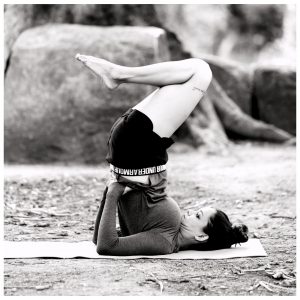
How many times have you quickly gone up into sarvangasana? Do you remember to pull the shoulders back, open the chest, activate the thighs and lift the tailbone up? Seemingly small modifications can change the entire posture.

Perhaps it was nervous excitement or maybe anticipation, but my first class was amazing.  By the end of the class my blood was singing and my body felt like it was thrumming (to the beat of my blood?).

I am a sucker for simple classes.  I believe if you focus on the simple stuff everything else falls into place.  This class focused on the tailbone and sacrum region.  We started the class with adhomukha virasana.  Rajalakshmi asked us to continue to extend the arms.  “This extension isn’t because you are lengthening your bones!!!” she boomed into the mike.

“The bones never extend!!!  It’s impossible for you to extend any of your bones!!!” she continued.  “Pay close attention to the parts of your body that make the extension possible!” she said.

She encouraged us to pay close attention to the tailbone-sacrum region and observe how it participates in forward bends and twists.

The most interesting part of the class was dissecting the parivritta trikonasana or the revolved triangle posture.  There are three movements that make this asana possible: the extension of the side, the bending forward keeping that extension intact and finally, the opening of the chest.  And once we were in the final posture we were asked to pull the tailbone and sacrum in to the body.

At one point Rajalakshmi caught me looking at my hip.  I realize I do this unconsciously every time I practice this asana.  I use my eyes to ensure that my hip is pushed back, which detracts from the overall experience of the asana.  “Your side is compressing and you’re becoming a ball,” Rajalakshmi explained patiently.  “Extend your chin forward and away from the sacrum.  Open the sacrum and lengthen the side!” she boomed again.

This is the magic of the annual pilgrimage to RIMYI.

RIMYI Experiences

Registrations at RIMYI

September 3, 2019

Finally getting the hang of this.

I headed to the institute at around 9 am this morning.  In previous years I’ve always registered in the evenings so I wasn’t sure what to expect.  I decided to wear my practice shorts just in case.

The person at the front desk smiled and nodded his head in recognition. He suggested I go practice first and come back later to get the registration forms.

Self-practice sessions at RIMYI can be intimidating. Alhtough you have people of all levels you tend to look only at those who are busy defying gravity. Today there were students going from adhomukha svanasana to urdhva dhanurasana and back again.

Watching students who have a better asana practice than you can be intimidating…or extremely inspiring. As a yoga student the one quality that has been of immense help to me has been that the only ‘I’ I take with me to a class is ‘I am a yoga student.’ Besides this I don’t think, ‘I can’t do back bends’ or ‘I have a mean urdhva kukkutasana’. I’m willing to explore what I already know. And willing to wrestle with prejudice, fear and doubt to discover new movements.

Besides the above two things, the other things I should mention for a month in Pune are:

  1. Don’t bring your yoga mat. You have every prop ever created available for use.
  2. Do bring comfortable walking shoes, preferrably ones that can withstand the rains. Pune is known for its sudden showers (it’s pouring as I write this).  Don’t forget a trusted umbrella.
  3. Students generally bring skirts or loose pants to wear over their practice shorts rather than changing at the institute.
  4. Don’t forget your passport photos (along with the other documentation such as visa copies, passport copies etc). It had completely slipped my mind that I needed passport photos, but luckily had some extras in my wallet.
  5. You can pay your fees through cash or card.
  6. A lot of students like to have a coconut post class. I would recommend bringing your own re-usable straws rather than using the disposable plastic ones.

These are the few things that come to mind right now. In case you have specific queries, drop a comment.

Post practice I got my schedule. I have evening classes three times a week, and today happens to be an evening class. Fingers crossed for a good class and an awesome month.