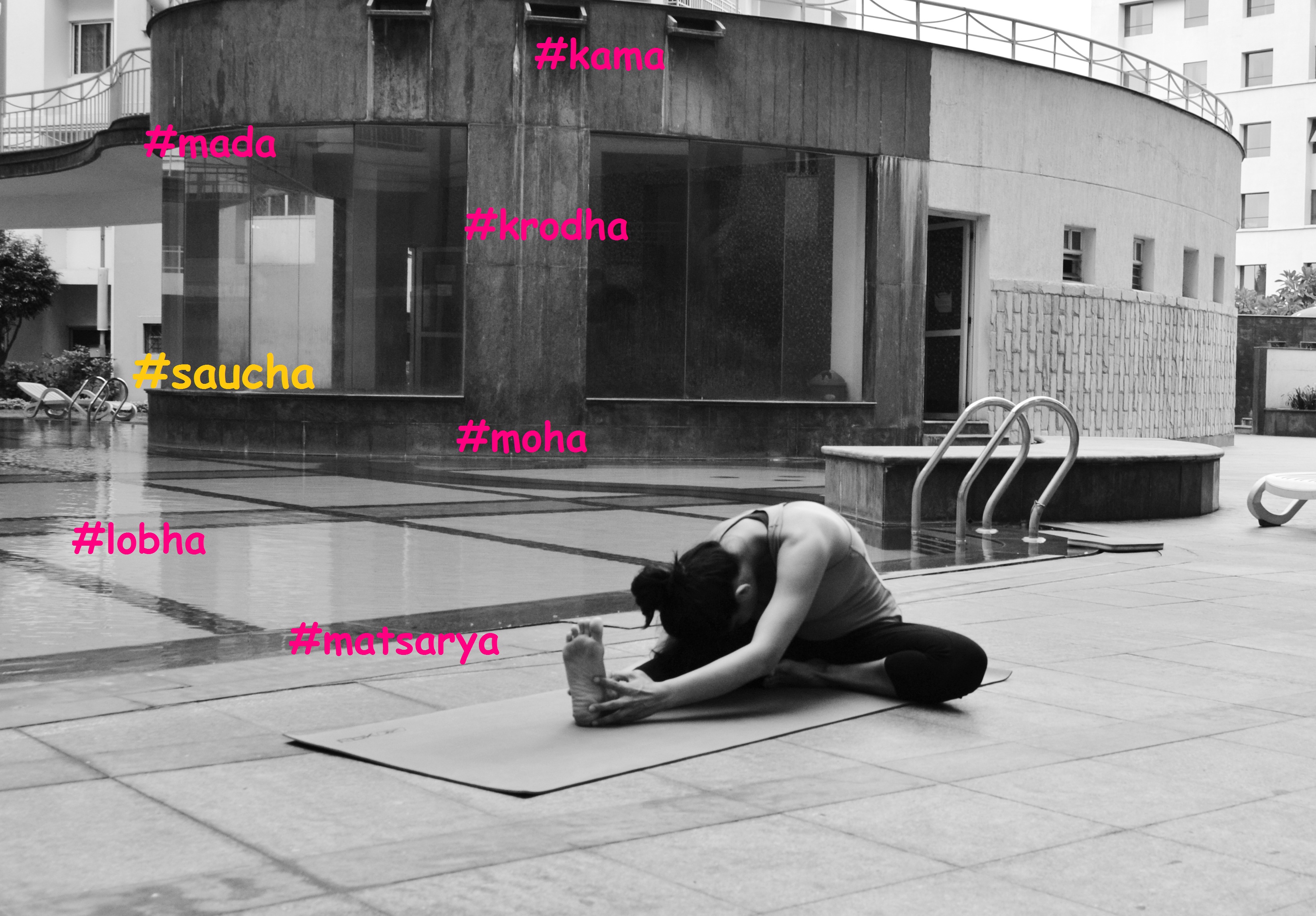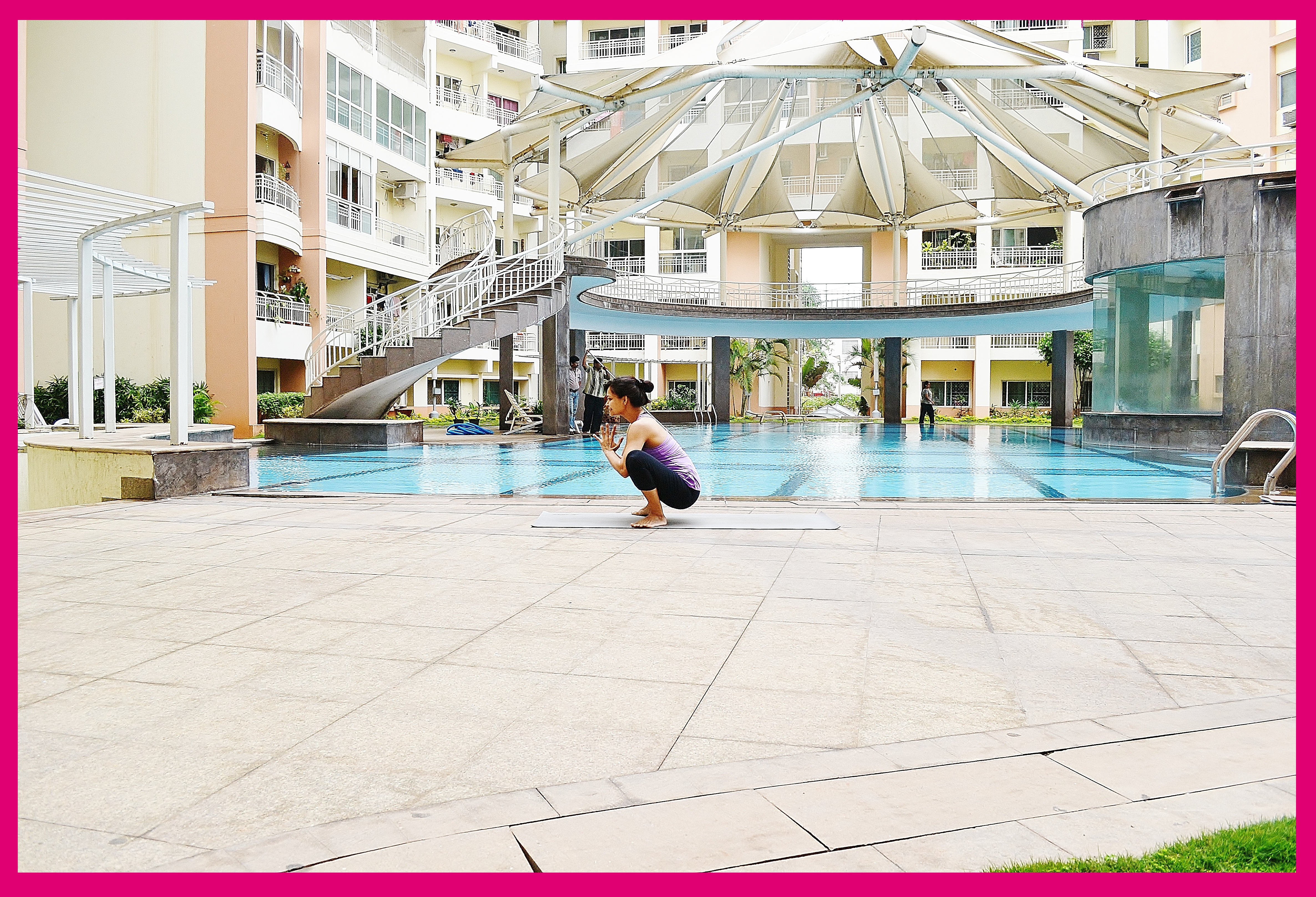
The niyama we’ll focus on today is Saucha – or cleanliness. At the grossest level this is about keeping our living and office spaces clean. At a little more subtle level this is about wearing clean clothes and keeping our bodies internally and externally clean. At a still more deep level this niyama is about living as truthfully and purely as you can. Your behavior, words and actions should reflect the truth and purity you believe in. Is your house really clean and organized? Or are there cupboards you’d be mortified if your guests saw? Do you have beautiful laundry hampers that contain months of of dirty laundry? When you go to your yoga class, do you make it a point not to step on other people’s mats and props? At a deeper level, do you constantly share your feelings of helplessness, anger, hurt, depression etc with others? We all go through a hard time once in a while, but do you constantly crib whenever you find a listener? Analyze why you do that, and then stop doing it. You are disturbing someone else’s peace and creating an imbalance in their energy. Look around you and analyze if you live clean, think clean and eat clean. If you don’t, make the change today.
Saucha can be divided into internal and external saucha. Today we’ve covered how we can implement saucha externally. From tomorrow we’ll look at internal saucha. To maintain internal cleanliness and purity we must get rid of: kama, krodha, lobha, moha, mada and matsarya. One each day, so tune in every day! 🙂
I met Louise in Wellington, when I first started teaching yoga. After a couple of months, I held her up as an example of ‘balance’ to the class. She is in her early 40s, has two beautiful childern, a rocking career, wonderful marriage…and she still found time for her yoga, tennis, hiking, reading etc. The credit for making her life so rich and full goes to no one but Louise. After all, she could also sit back and complain that she had wanted a career/tennis/amazing body/(fill in the blank) but had to give it up because of: children are too small/husband has a transferrable and demanding job/has other familial obligations/(fill in the blank). Granted Louise comes from a culture and country different from 95% of my students, and many who are reading this are thinking “well you know in our culture (fill in all the perceived limiting factors of being a married woman with kids in India)”.
Now I have an example of an Indian woman (yes, married to a man who has a demanding and transferrable job; yes, has two
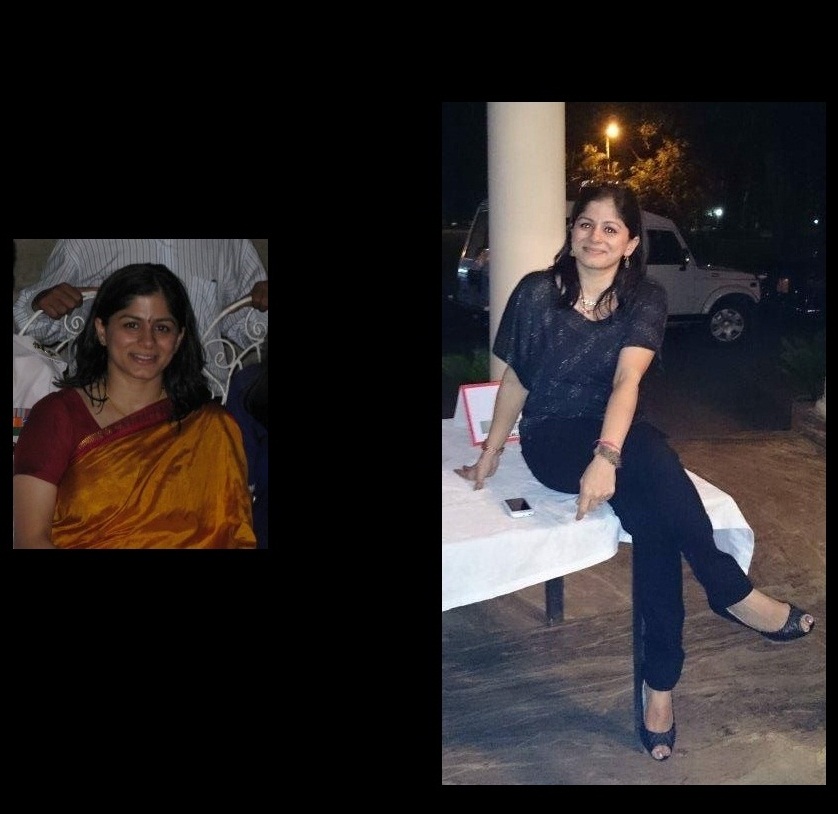
growing children who demand/want time/attention; yes, has all the familial obligations that come with being from our culture) who reminds me of Louise. Sharmishta Vardhan has been regular in my class from Day 1. When I got to know her better, I found out that she’s a Bharatnatyam dancer. When there’s no yoga she goes for a walk. She’s an amazing swimmer and has been swimming since she was 8 years old. (Incidentally, she taught me how to swim within 10 days. I’m confident standing on my head on land, but 10 days ago I would list drowning as my biggest fear.) Here’s an Indian woman, in her 40s, married for 9 years, two crazily energetic boys (I’ve seen them in the pool), who defies the ‘Indian woman married with two kids’ convention. She reads, sometimes travels to pursue her hobbies, gets in her daily swim before heading home for dinner, cultivates her own friends circle with whom she goes for movies, exhibitions, fairs etc. You can see the results of daily yoga in her before-after.
So next time you think you don’t have time for yoga remember that there are women like Louise and Sharmishta who are busy living the lives they love, and making time for yoga as well! 🙂
Today is the last day of our gratitude challenge. Today lets take a moment to appreciate all the mistakes we’ve made in life. After all, mistakes teach you a lot about yourself and the world around you. Mistakes help you understand what you actually want in life. They take you on adventures that make you who you are. If it weren’t for mistakes we wouldn’t have so much to be grateful for!