Pragya Bhatt | yogawithpragya

Yoga

For All You Goddesses…

March 8, 2016

POMELO_20160301144135_save

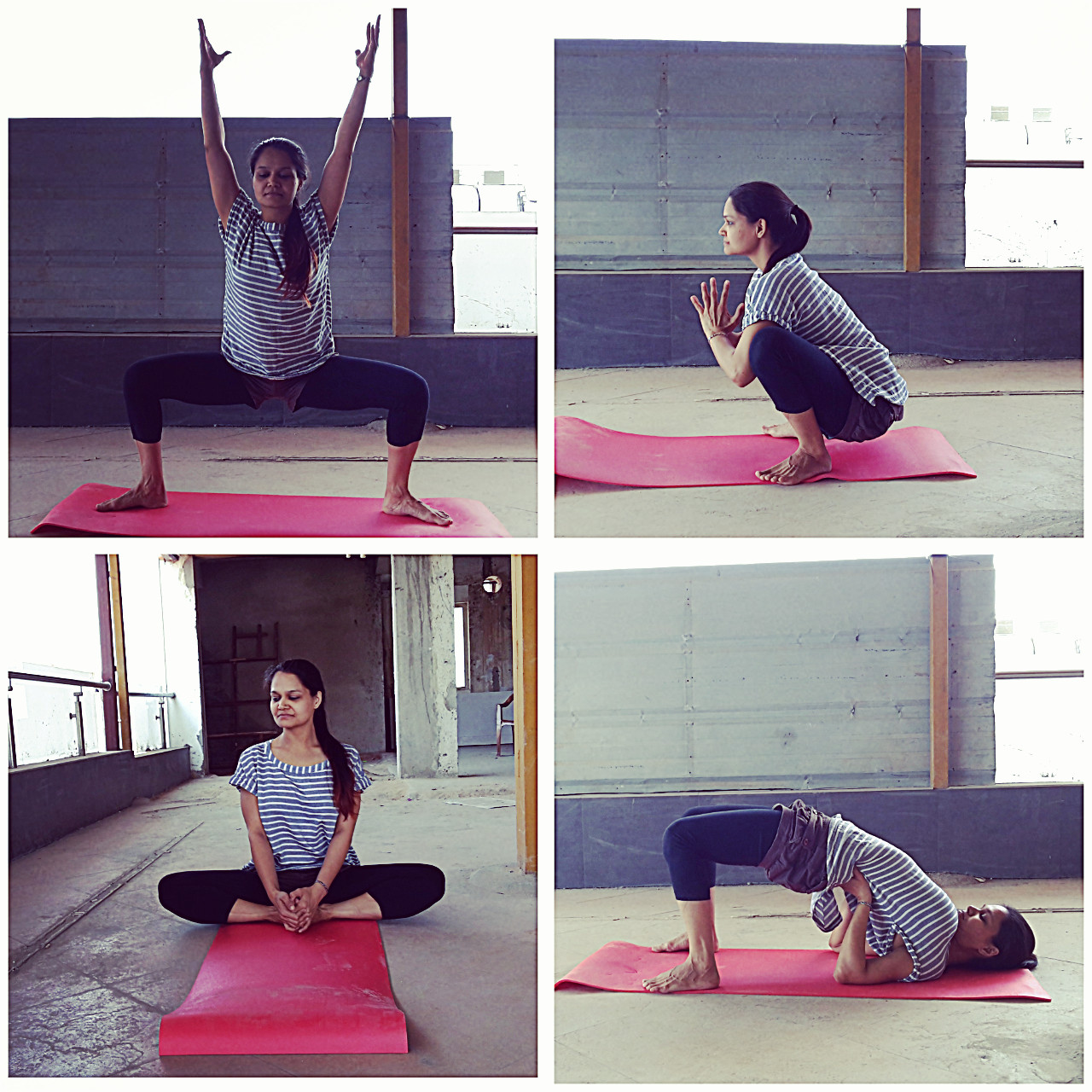
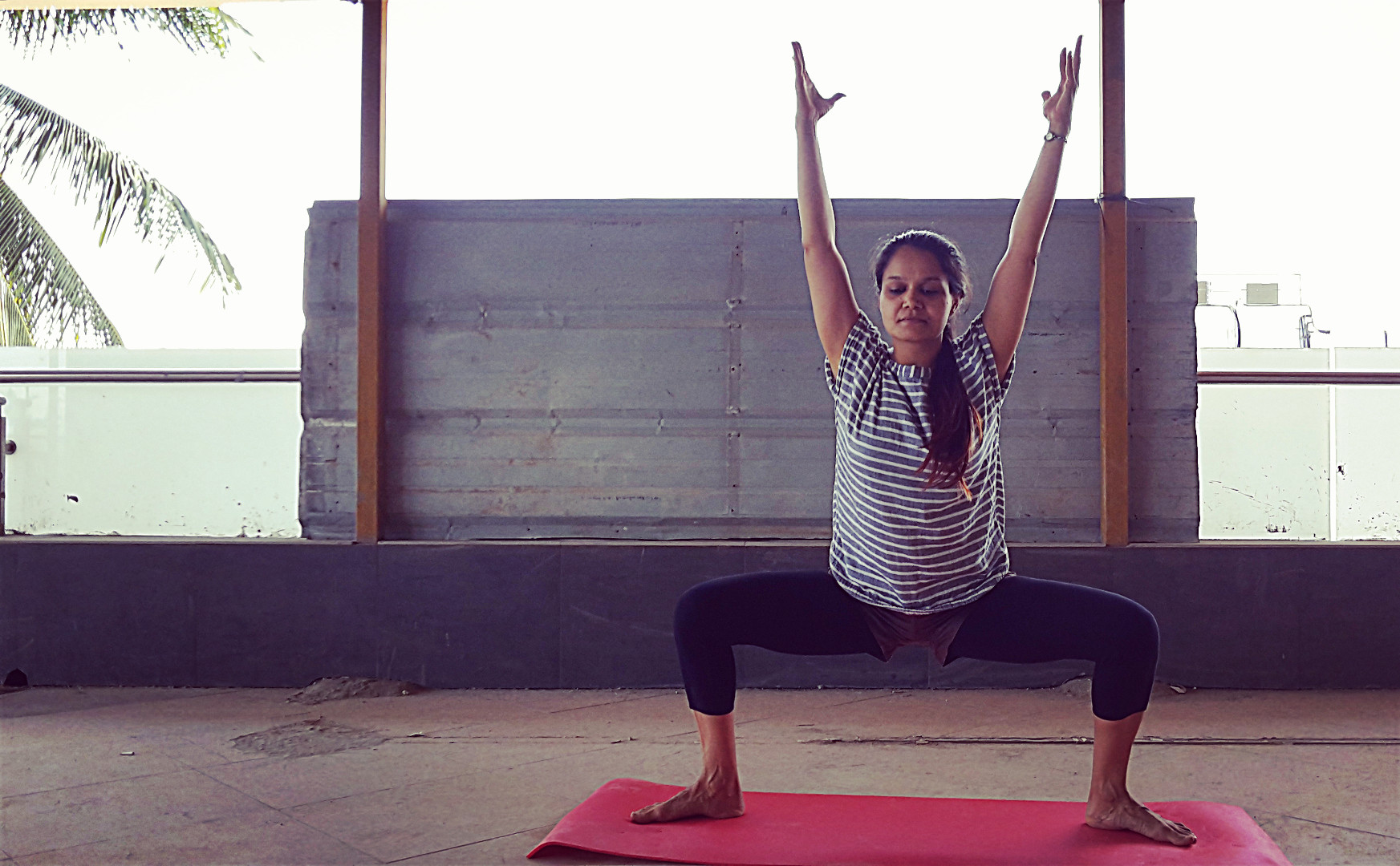
And the last pose for this series is, befittingly, the Goddess Pose.  The Sanskrit word for this one is Utkata Konasana (I did have to look this up).  Of all the hip openers in this series, this one is the most intense.  The simultaneous movement of  opening up the hips and sinking the hips down to the floor ensures that the stretch is deep and intense.  Reaching up with the arms also helps in opening up the chest to enable better breathing.

Benefits:

  • Great stretch for the hips and the groin.
  • Strengthens the core.
  • Holding for long periods will help in strengthening the legs
  • Opens up the shoulders and chest and makes you feel like a Goddess.
  • Helps in preparing the body for childbirth so can be done by pregnant women all the way to the end of the pregnancy.
Those of you with stiff ankles, hip and knee joints will face some discomfort when practicing this pose.  My suggestion is to use blocks or roll up blankets and place them under your ankles.  This will give you a stronger stance.  Gradually you will be able to do this pose without the help of props.
pomelo_20160307190835_save.jpg
Yoga

Pose #7 for Women – Baddhakonasana

March 7, 2016

POMELO_20160301144135_save

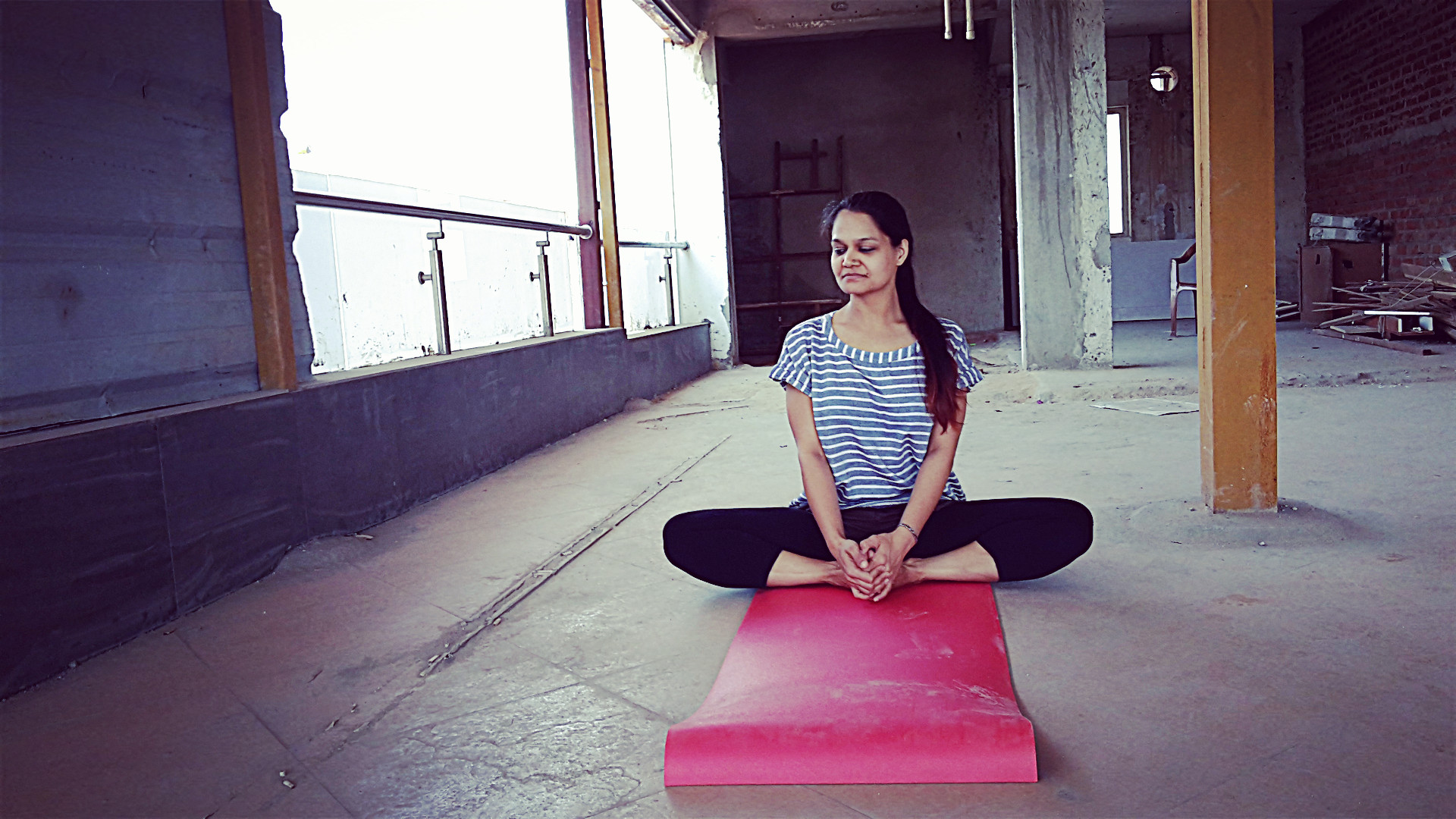
Contrary to popular belief – Baddhakonasana isn’t’Butterfly’ in Sanskrit.  Literally translated Baddhakonasana means Bound Angle Pose.  A lot of people call this the ‘Cobbler Pose’ as well.

Benefits:

  • AWESOME FOR TENSION AND STRESS RELIEF.
  • Stretches the thighs, groin, hip joint and knees.
  • Great for relief from sciatica pain.
  • Reduces menstrual discomfort.
  • Great for keeping the hip joint flexible which helps in preparing the body for childbirth.

POMELO_20160307144836_save


If you have a groin, hip joint or knee injury you may want to exercise caution when practicing this pose.

And here’s a video explaining the Baddhakonasana.

Yoga

Pose #6 for Women – Malasana

March 6, 2016

POMELO_20160301144135_save

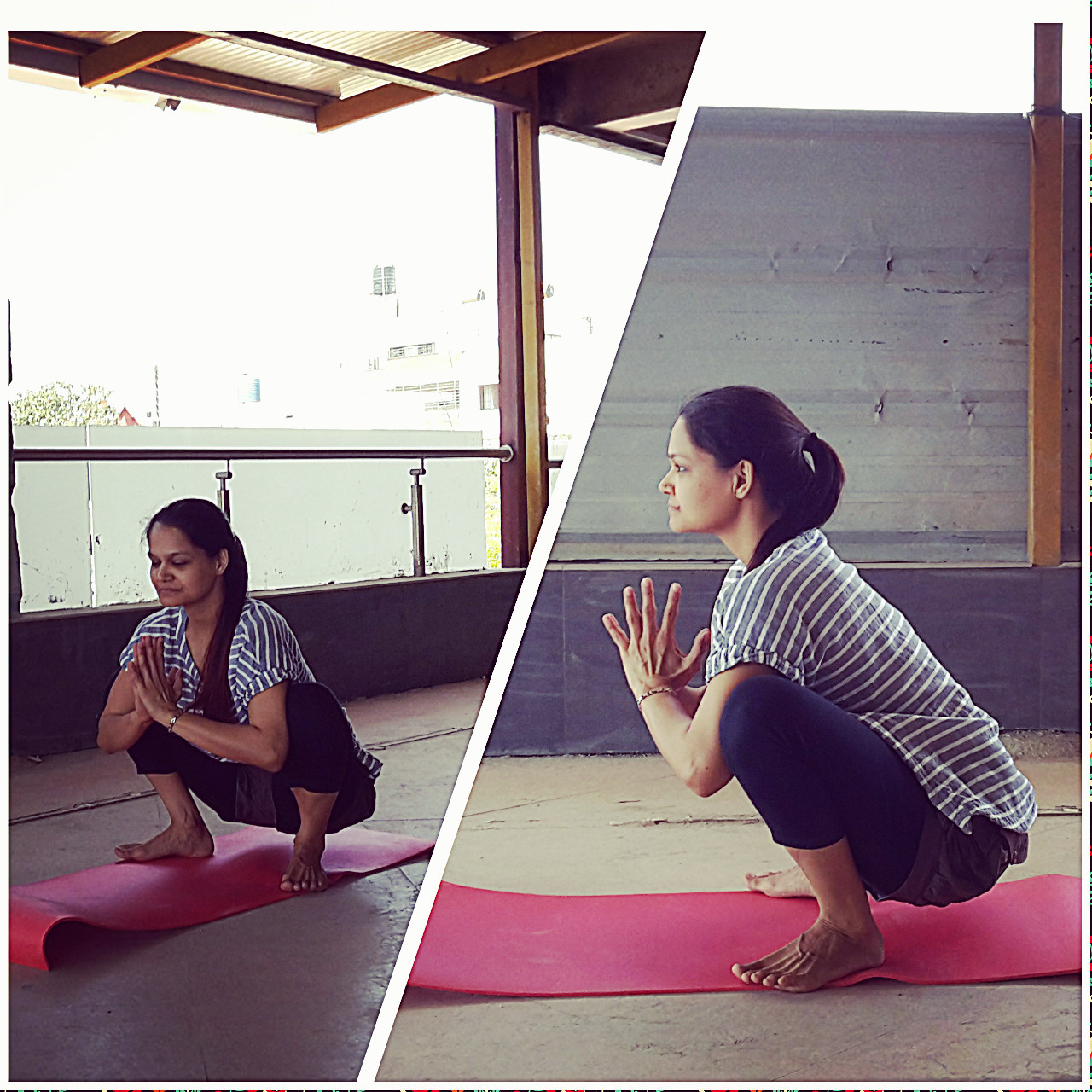
Today’s pose is awesome because it’s one of those poses that our bodies have been designed to do, but because of how our lifestyles have changed in the last 50 years, we’ve lost the mobility and the range of motion to perform the Malasana or the Squat.  The fact that it’s taken only 50 odd years for our bodies to ‘forget’ a basic and intuitive movement is unsettling.  After all, the last 50 years is a minuscule time frame in the history of human evolution.  Imagine the kind of effort required to undo the effects of millions of years of evolution!POMELO_20160306192112_save

There are some contraindications for the Malasana.  If you have a knee, ankle or hip injury then I would suggest that you practice with props.

Benefits of the Malasana:

  • Great to open up the hip joint.
  • Massages the abdominal and digestive organs and stimulates elimination.
  • Strengthens the legs, ankles and knees.
  • Helps  in reducing back ache, even for pregnant women.
  • Conditions the lower body for child birth.


Yoga

Pose #5 for Women – Setu Bandhasana

March 5, 2016

POMELO_20160301144135_save

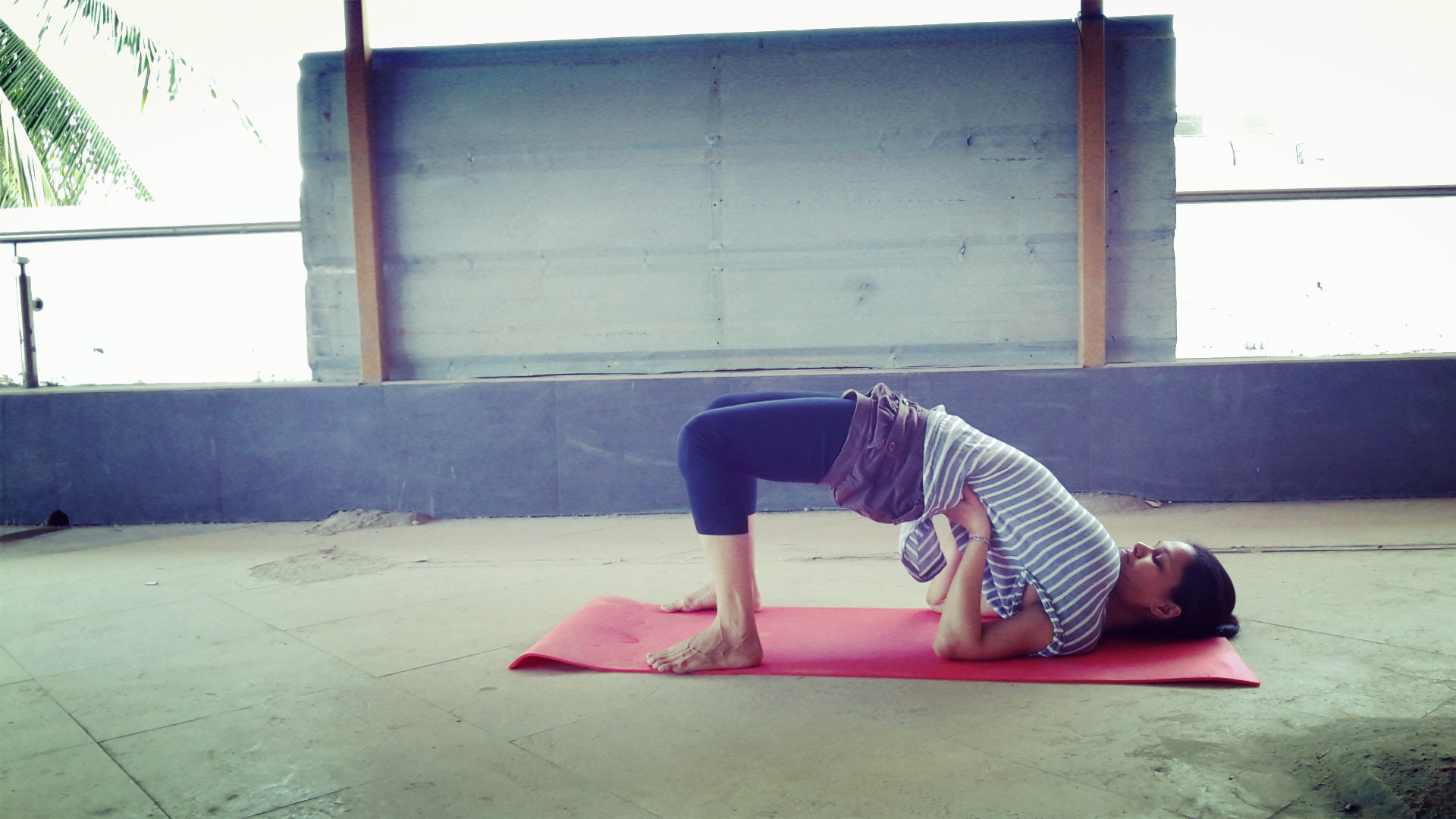
I remember when I first started practicing yoga, the Setu Bandhasana (Bridge Pose) used to be my least favourite pose.  It felt really uncomfortable and even gave me a back ache sometimes.  I put it down to being overweight.  I thought that because I was heavy, my hands were unable to support the weight of my lower body.   Of course now I know better.  And now I come across so many people who don’t!  So many people tell me that their arms are not strong enough or their thighs/hips/butt are/is too big/heavy which prevents them from doing this pose well.  Study your technique.  The key to any yogasana lies in the technique.  Study your technique.

Benefits of the Setubandhasana:

  • Stretches the chest, neck, and spine
  • Strengthens the core muscles and the legs.
  • Enables blood flow to the brain and this helps in reducing stress and bringing about a feeling of rejuvenation and wellbeing.
  • Provides an excellent massage to the abdominal organs.
  • Massages the Thyroid gland.
  • Helps in reducing discomfort during
  • Reduces discomfort and pain during menstruation.

To avoid making the mistakes I did when practicing this asana remember to:

  • Evenly distribute your weight on the soles of your feet.
  • Push your soles into the floor evenly.
  • Engage the thighs and the core muscles.
  • Roll your shoulders back and away from your ears.
  • Using your legs push your chest closer to the chin.
  • Keep the back of your neck long and pushed against the floor.

POMELO_20160305164205_save


Yoga

Pose #4 for Women – Trikonasana

March 4, 2016

POMELO_20160301144053_save

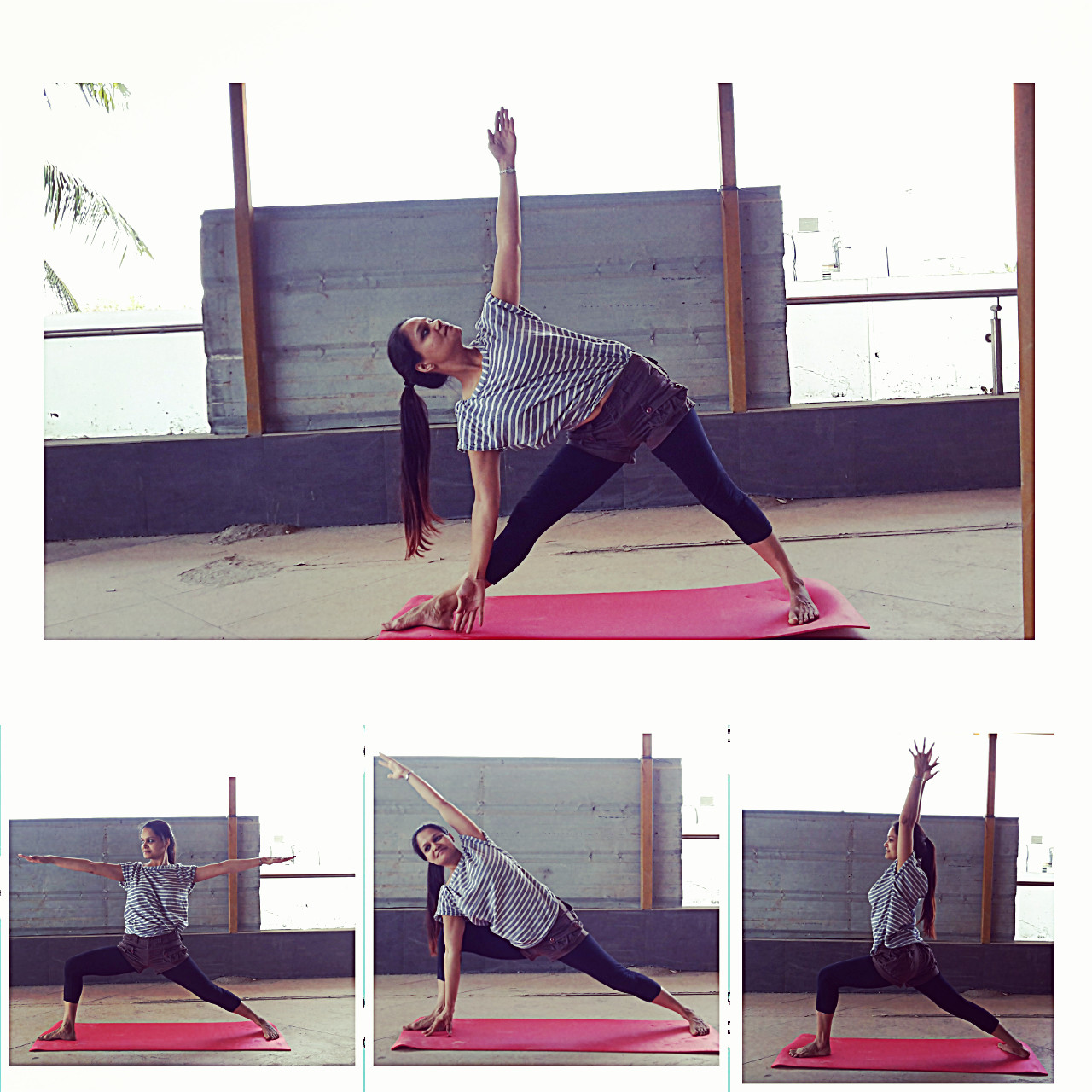
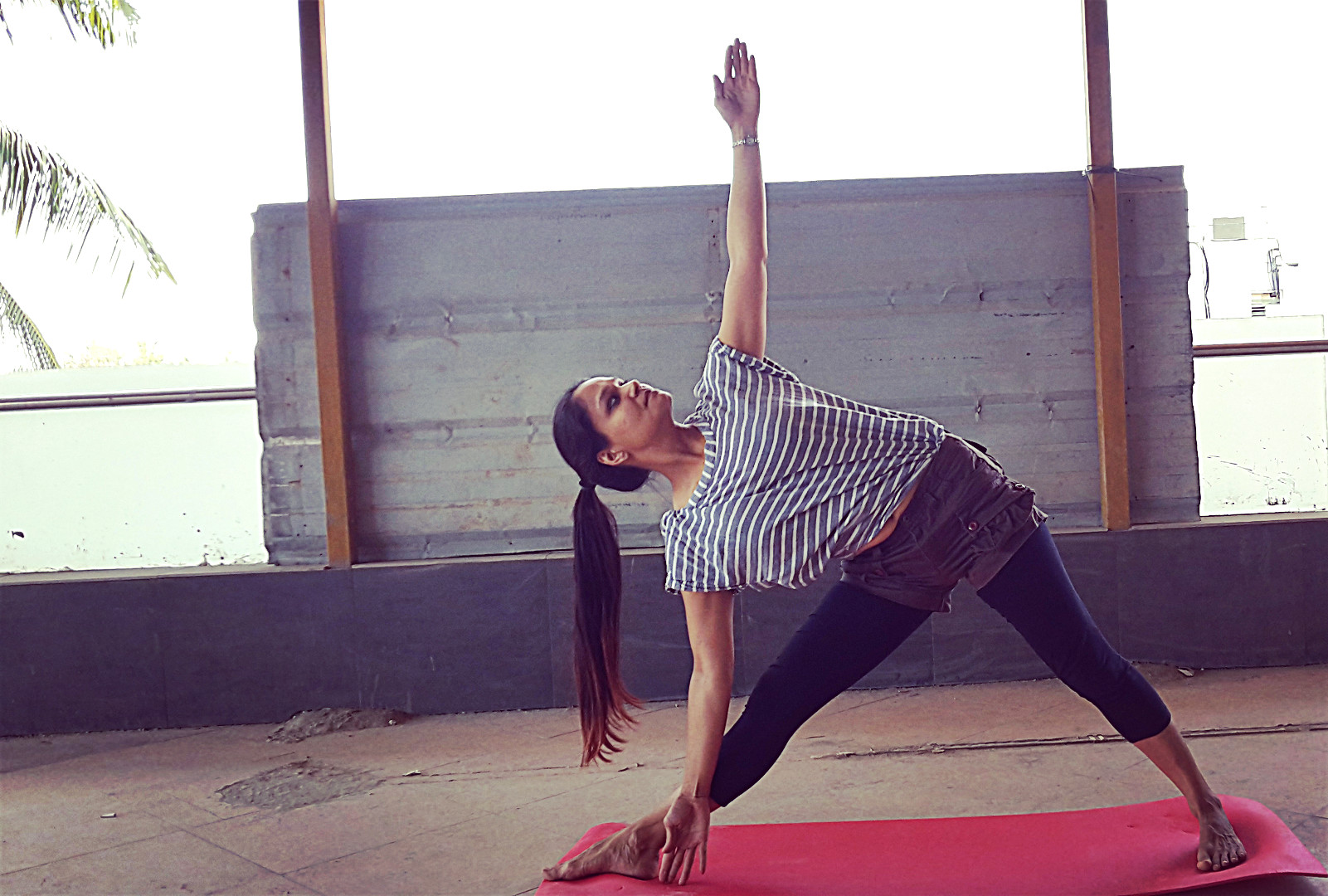
In an interview with Prannoy Roy, BKS Iyengar said that he was still working on his Trikonasana.  In my yoga class we work on Trikonasana every day and the teacher always frowns in disapproval.  In an interview I watched a couple of weeks ago Maty Ezraty talks about how she can judge the level of a student by how they perform the Trikonasana.  Personally, the Trikonasana has a heavy influence on my practice.  Some days I break into the asana with great ease.  Other days (like this morning) there’s some stiffness and soreness and I creak through the asana.  Maybe it’s a combination of shoulder and hip opening.  Or maybe it’s the stretch along the sides of the body or the release of tension from the shoulders….but this pose makes me want to linger.

Benefits

  • Great for the legs and torso.
  • Relieves pain and tension from the lower back.
  • Maintains the flexibility of the spine.
  • Provides a great massage to the abdominal organs and stimulates them.
  • Good for digestion since it provides a massage to the abdominal organs.
  • Relieves backache, especially through second trimester of pregnancy
  • Helps in managing flat feet (I’ve seen it even reduce the condition).
  • Helps in managing and preventing osteoporosis and sciatica.


When practicing the Trikonasana, remember to:

  • Keep the legs straight.
  • Keep the chest open.
  • Keep the spine long and strong.
  • Bend the torso laterally (from the hip).
  • Keep the hip joint open.
  • Reach out with both hands.
  • look down if you get migraines or have a BP condition.
  • look down if you have a heart condition or neck pain.

POMELO_20160304121812_save